




Fossil hunter who ‘cried T. rex’ brings the real deal home to Colorado dinosaur museum
For dinosaur museum curator Anthony Maltese, a quarter-century spent scouring thousands of miles of fossil fields in the American West had yielded a wealth of prehistoric finds, including a triceratops, as well as a standard joke that never failed to elicit eyerolls from his colleagues.
No matter how the day’s field work had gone, his reply to inquiries was always the same: “Oh, I found a T. rex.”
If you’re a paleontologist, you totally get it.
For everyone else, here’s an explainer from Maltese’s friend and longtime fellow fossil hunter Jacob Jett:
“The joke works because it’s a stupid thing to say. Like, ‘No, you didn’t, because nobody did,’” said Jett, who now works in sales and operations for Triebold Paleontology in Woodland Park. “A lot more people have been on the starting lineup of the Denver Broncos than have found a T. rex.”
Imagine Jett’s surprise when the man who cried T. rex whipped out photographic evidence — and then actual evidence — to back up a career of wry, but hopeful, humor.
“People use the phrase ‘once in a lifetime,’” Jett said. “This is not that because really most people go their entire careers in paleontology and never find a T. rex.”
Colorado town to love in winter: Durango
What Maltese found, on the last hours of the last day of an expedition to fossil fields in the Hell Creek Formation in South Dakota this summer, were the partial remains of a juvenile Tyrannosaurus rex, scattered under soft mud in an area the Triebold team had been excavating, on and off, for the last 30 years.
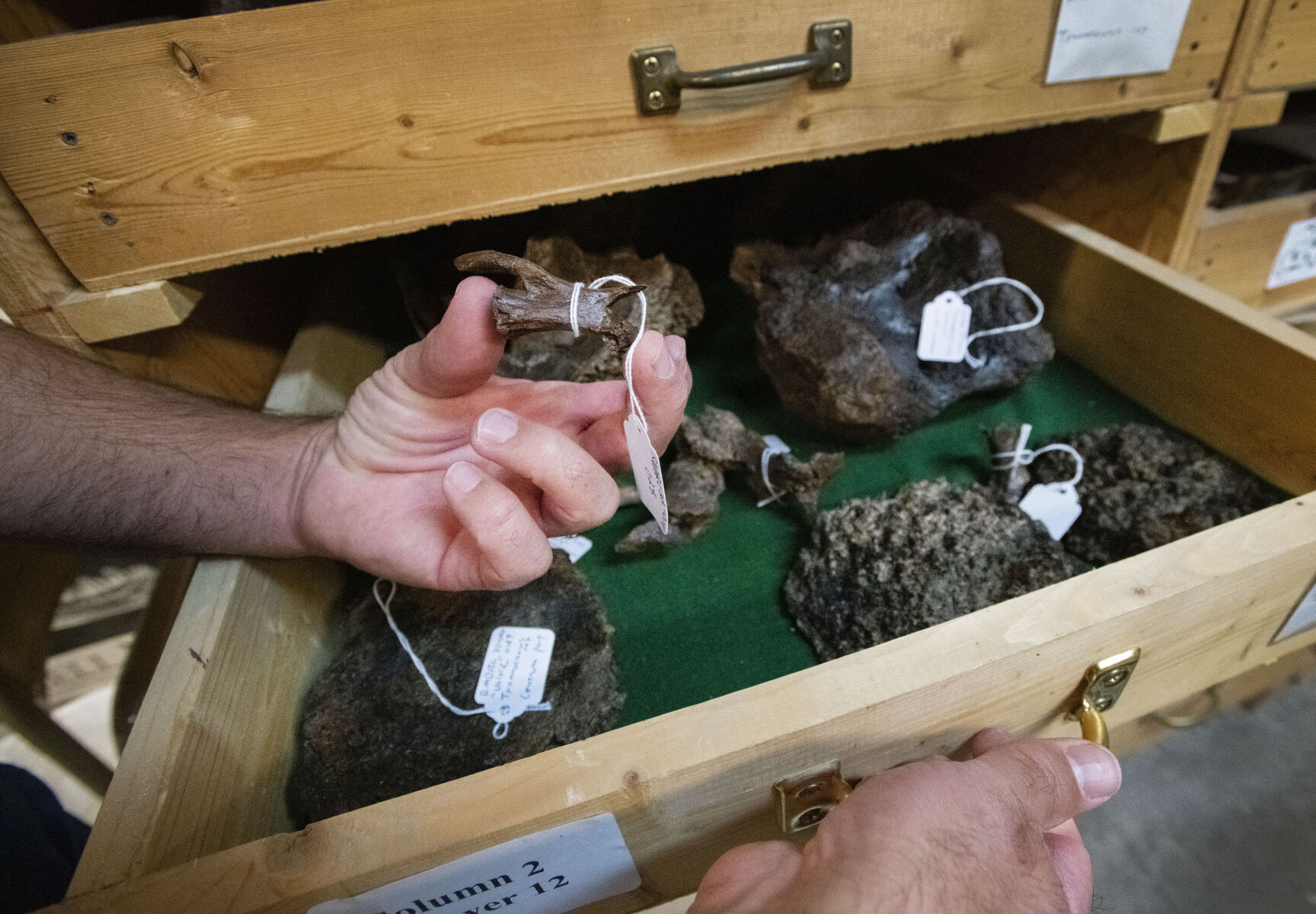
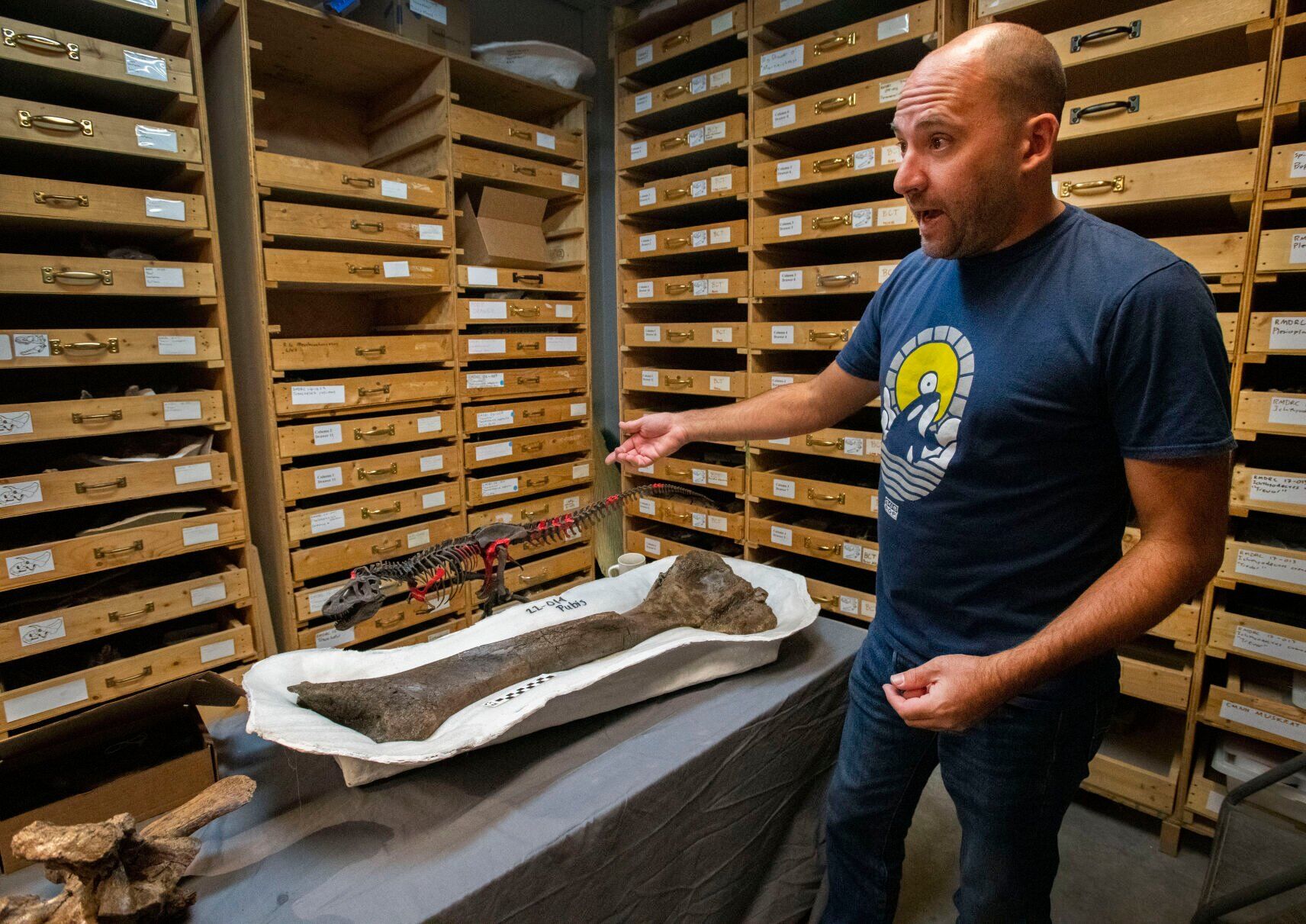
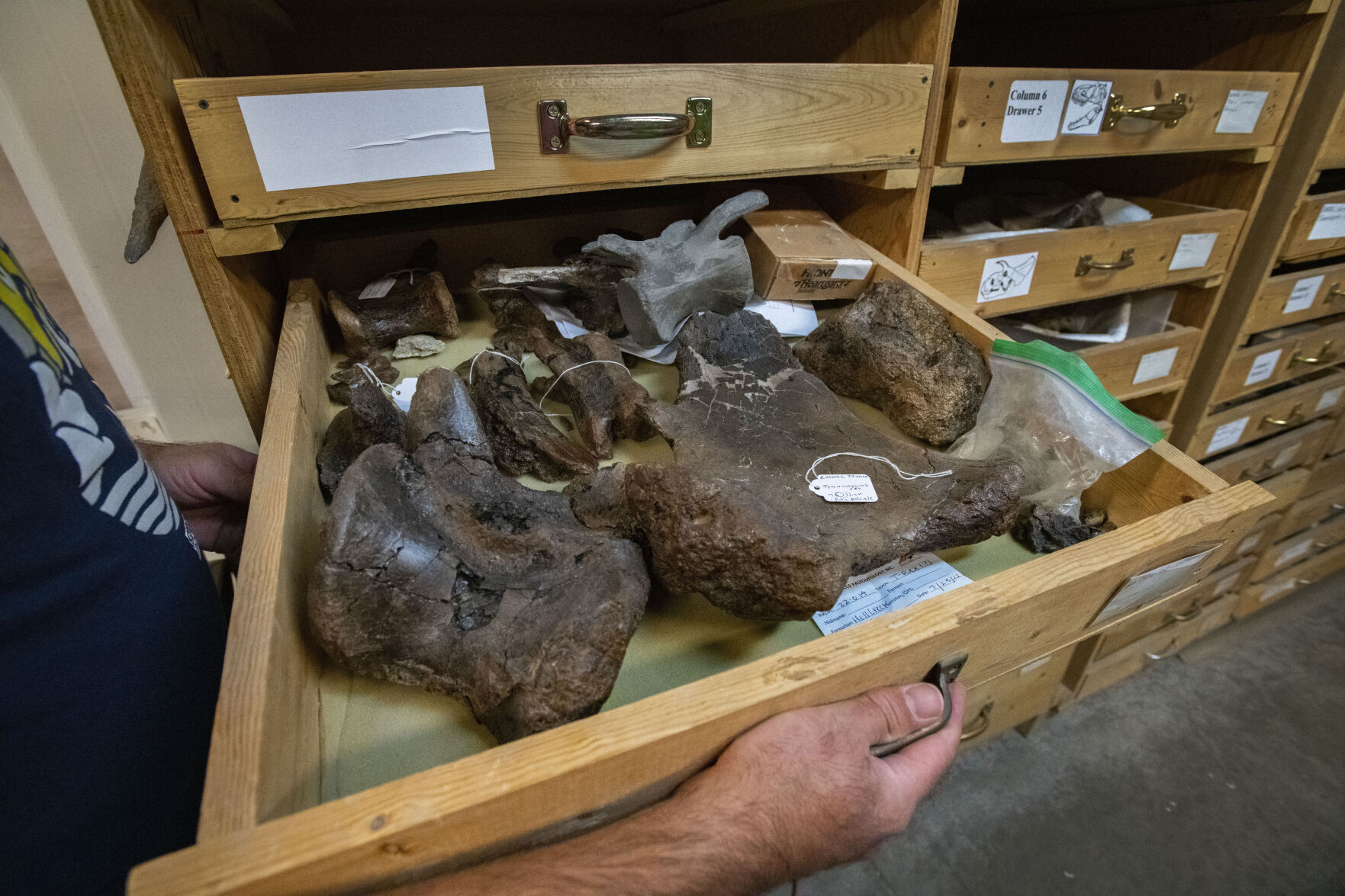
“I was checking an area where I had vague recollections that I had seen some bone chunks coming out before,” said Maltese, gesturing to a few fist-sized bones on a table at Triebold’s lab, behind the scenes at the Rocky Mountain Dinosaur Resource Center.
The bones, fossilized through a process called permineralization, easily could pass for rock fragments to the untrained eye. They were almost dismissed by an expert who knew what he was looking for.
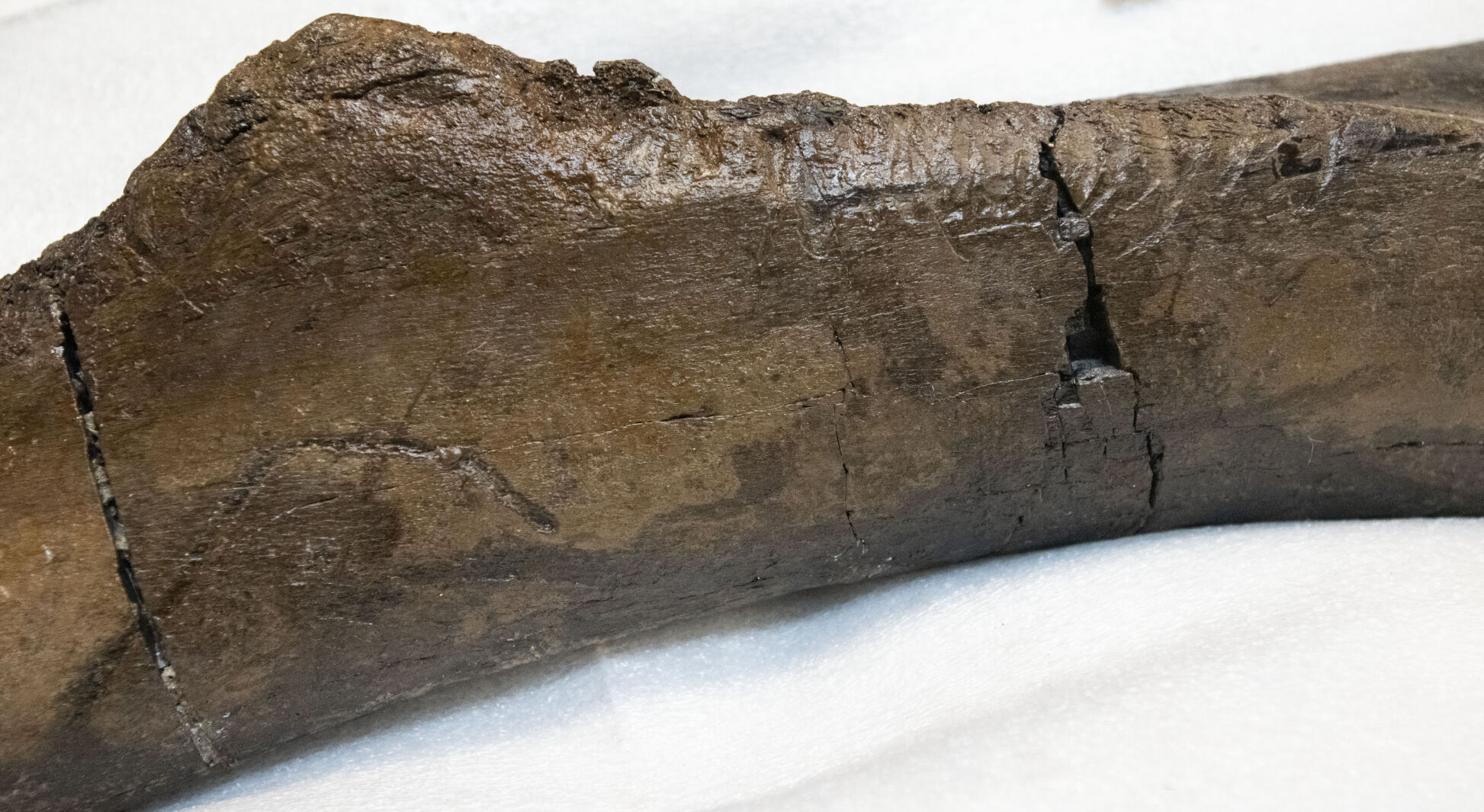
“I thought, ‘Oh, those are kind of concrete-looking triceratops pieces,’” Maltese said of a prehistoric animal whose bones are traditionally hard to excavate and usually yield a specimen that’s “not the greatest.”
A bit farther on, when he came to a rise in the valley floor and spotted two Tyrannosaurus rex vertebrae jutting from the ground, Maltese said he had to “recalculate what I thought about the site.”
A few hours of excavating that first day yielded about a dozen bones. By the end of a series of summer expeditions to the site, Maltese and the Triebold team had recovered 55 bones from different parts of the animal’s body — tail, hips, shoulders, ribs and skull, or about 15% of the total skeleton — and transported them back to the Woodland Park center for cleaning and preservation.
Frozen in time: A brief history of ice harvesting in Colorado
The skeleton is thought to be the remains of a 30-foot-long teenaged T. rex which, based on the teeth and gnaw marks on its bones, likely was predated on by other carnivores after its untimely demise some 66 million years ago.
That damage, as well as the parts of the skeleton that are missing, tells a far richer story than one of found bones alone, said Triebold Paleontology owner and museum founder Mike Triebold.
“It’s not the fact that it’s just a T. rex that is exciting to me, because there’s probably close to 70 of them now that have been discovered,” Triebold said, “but that this particular one happens to be in a size range that we believe is in between the smallest … and adult … which gives us a little bit more information about the changes in the body. And in addition to that, we’ve already discovered just in the initial preparation of this animal that it had some diseases. It had a rough life and possibly even was cannibalized at the very end.
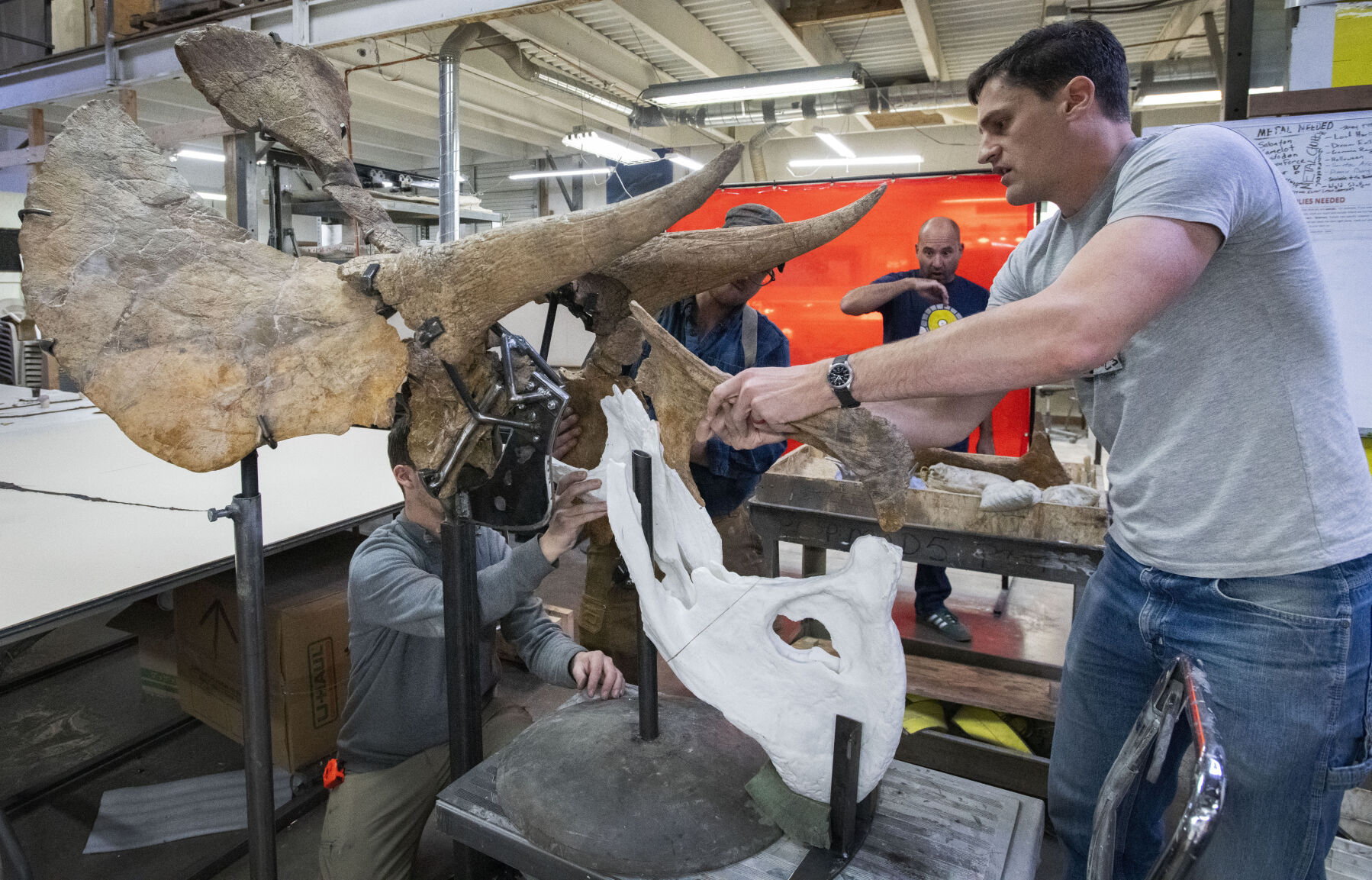
“It’s the kind of things we are discovering about the life of the animal that is most exciting to me,” said Triebold, whose labs have provided mounted fossil skeletons and skeleton casts to about 200 museums around the world.
For now, the juvenile T. rex — nicknamed “Valerie” after Maltese’s wife — continues to undergo preservation work in the lab at the headquarters of Triebold Paleontology, with several upcoming events for the public to see the specimen.
Valerie is Maltese’s first major T. rex find, but certainly not his or Triebold Paleontology’s first close encounter with one of the Late Cretaceous Period’s most infamous predators.
It’s not uncommon for a fossil hunter to find individual bones or T. rex teeth in the fossil fields that remain of a prehistoric coastline that runs through the western part of North America, Maltese said.
He also had a hand in helping preserve one of the largest and most-intact T. rex skeletons ever discovered. “Stan,” found in South Dakota’s Hell Creek Formation in the late 1980s — not far from Valerie’s final resting place — fetched a colossal $31.8 million at auction in 2020.
Since 1929, this Colorado family has perfected the cherry pie | Craving Colorado
Before it was sold to an unidentified buyer, Triebold Paleontology was hired by the auction house to redo the steel armature on the original reconstructed skeleton.
“For about a year, Stan was in our back room while we were reworking it. We couldn’t say anything about it … until Christie’s, the auction house, released us from that part of the (nondisclosure agreement),” Maltese said.
A model of Stan, made from casts of the original bones, is on display at the Woodland Park center.

Get OutThere
Signup today for free and be the first to get notified on new updates.
PREV
PREVIOUS
Still no return of Ice Castles in Colorado for 2022-23 winter
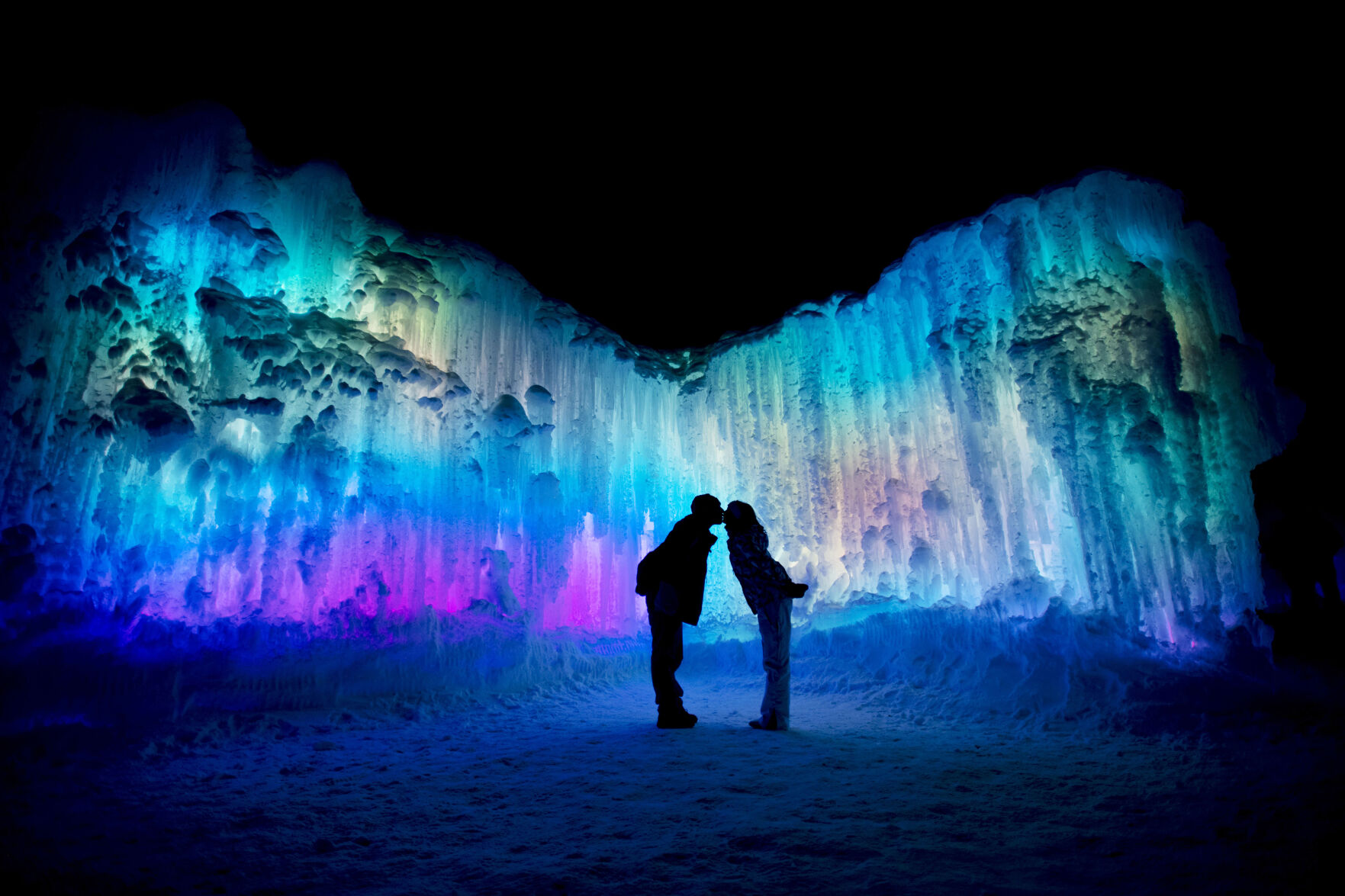
A winter attraction that gained masses of admirers in Colorado will once again not be returning for the season. The colorful, cathedral-like playground called Ice Castles had been annually made in Dillon Town Park starting in 2017. Last year, though, renovations at the park along with some local angst led operators to explore the possibility […]
Coffin races and festival in Manitou Springs an annual nod to the spirit of Emma Crawford
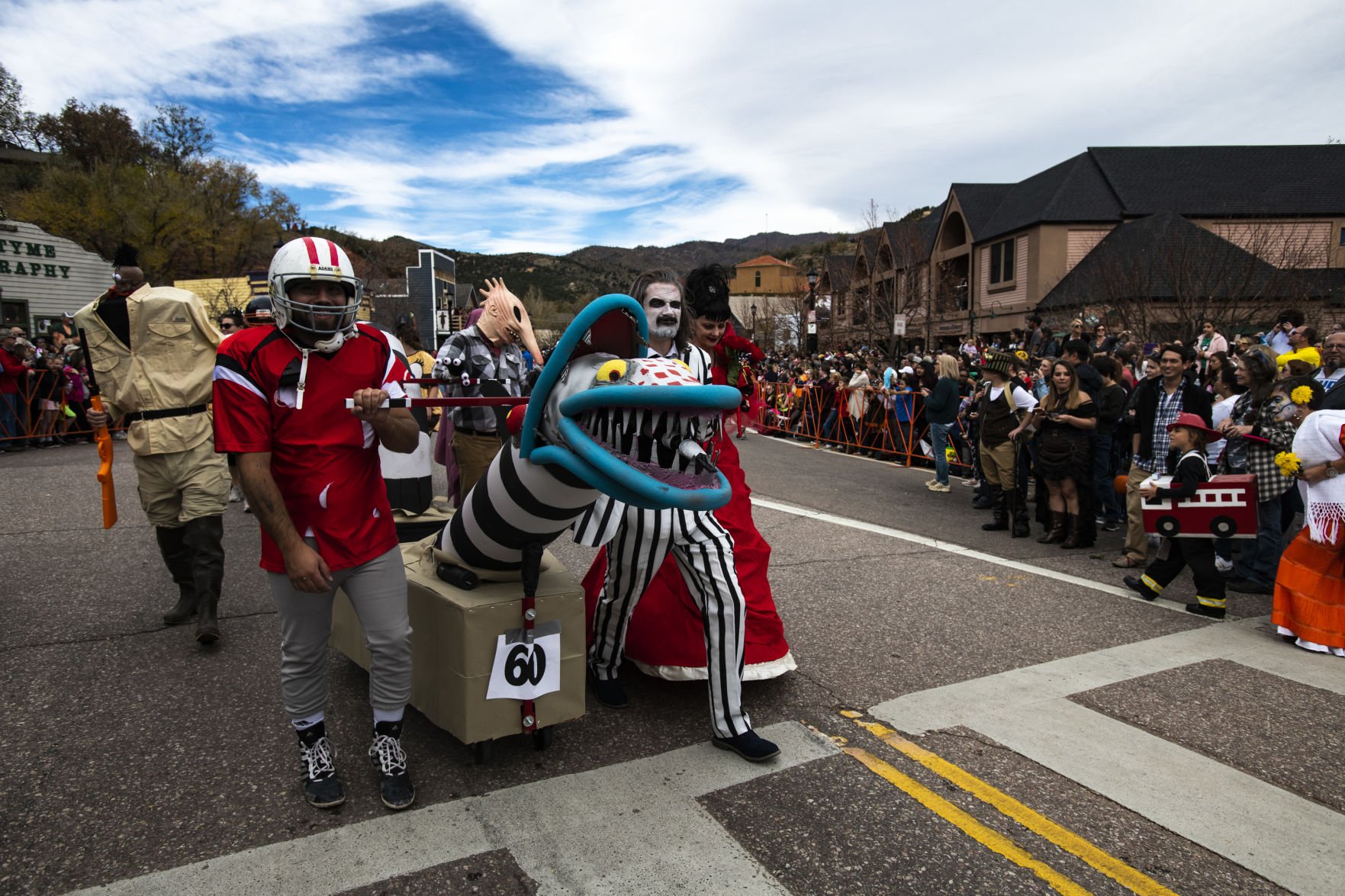
Colorado is home to a host of kooky festivals that frolic with the macabre. Consider: Frozen Dead Guy Days, named for the relic of a failed backyard cryogenics undertaking in Nederland. And Fruita’s Mike the Headless Chicken fest, honoring a chicken that lived for 18 months after botched meal prep left him headless but still […]