







Is slowing down the key to staying safe on snowy Colorado roads?
MILEHIGHTRAVELER/iSTOCK
Denver’s first snow has come, but with great powder comes great responsibility.
On the roads and highways especially.
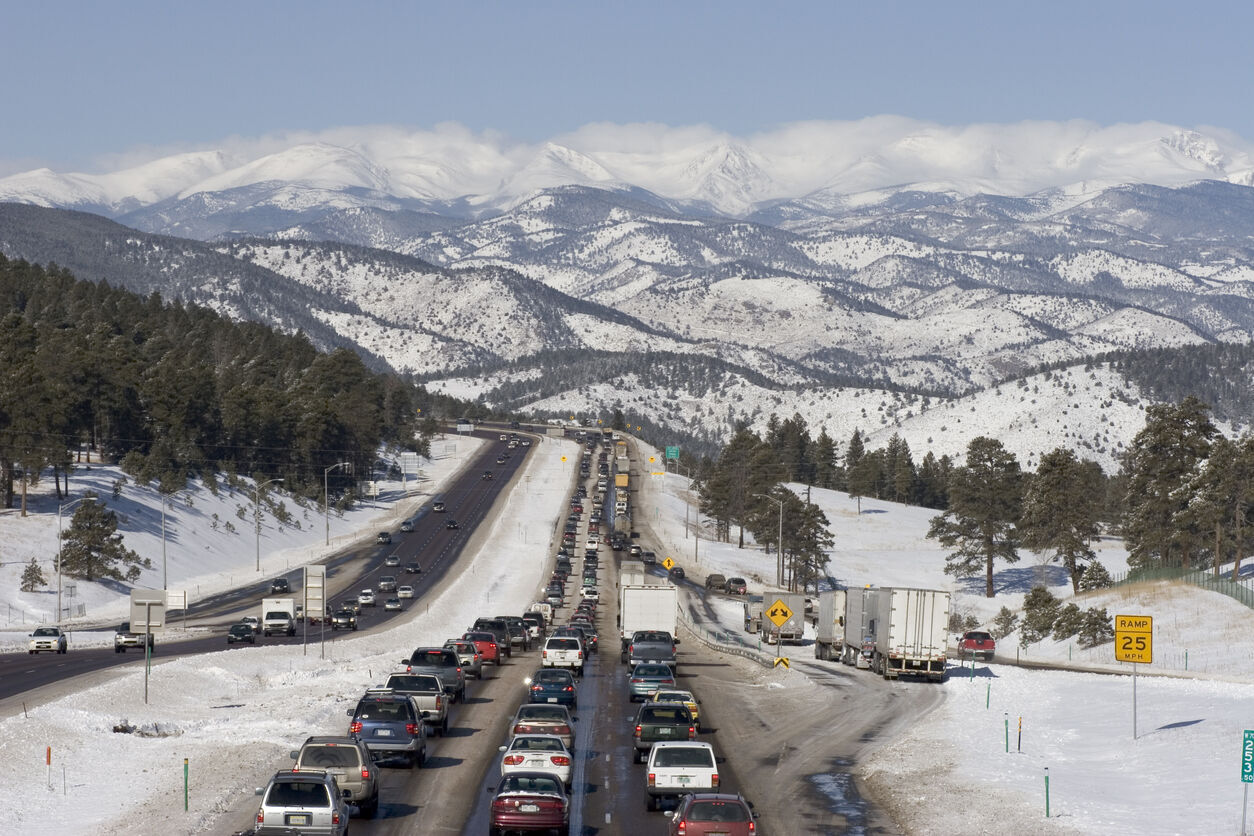
Though the Front Range streets were mainly just wet Thursday, mountain driving appeared treacherous as a fatal crash caused I-70 westbound to close for hours. U.S. Highway 40 at Rabbit Ears Pass will close Friday morning so the Colorado State Patrol can clear a semi-tractor trailer that slid off the road Wednesday.
Snow and ice buildup creates dangerous driving conditions. But according to multiple agencies, like AAA Colorado and the Colorado State Patrol, everyday commuters can make Colorado’s roads safer for everyone.
“The number one piece of advice is always going to be slow down,” Skyler McKinley, the regional director of public affairs for AAA, said. “You are much more likely to lose traction if you’re doing things very quickly. So in everything that you do, do it more slowly and more deliberately; Do it gradually.”
McKinley recommends drivers take steps to “winterize” their cars. This can be something as simple as changing your windshield wipers to putting your snow tires on. For those without snow tires, McKinley said to make sure they are mud and snow rated, which is a requirement from the Colorado Department of Transportation.
The Colorado Department of Transportation also requires a minimum tread depth of 3/8″. If a vehicle doesn’t meet these requirements, CDOT says they are required to carry chains. Violations of these policies can result in a fine of $100, according to CDOT.
This is different from previous years according to Andrew Hogle, a spokesperson for CDOT’s Winter Wise campaign.
“The requirement used to be 2/16″, but we changed it to be halfway between a bald tire and a new tire,” he said. “If your tires are closer to halfway new, you’re in compliance, but if you measure at 1/16 or 2/16, you’re running the risk of getting in an accident or being cited under traffic law.”
Nobody wants to be the person who causes a 3-hour backup on the highway because their tires under-performed at the worst time, Hogle said. Balding tires result in longer stopping distance, which gives drivers less time to react — especially if they’re driving quickly.
The chain law went into effect for 2022/23 season on Sept. 1. It will expire May 31. The chain law requires commercial vehicle drivers — that is a vehicle and/or trailer that weighs more than 16,001 pounds or carries 16 or more passengers — to have chains. The law applies to all state, federal and interstate highways.
But for drivers going to work in Denver, or into the mountains for fun in the snow, the laws require much less: Just four or all-wheel drive or appropriate all-season tires if a two wheel drive car.
Both McKinley and Hogle cautioned over-reliance on four wheel or all wheel drive.
“Four wheel drive does not mean four wheel stop,” McKinley said. “The equipment is really not equipped to allow you to drive 60 mph when everybody else is driving 30 in snowy conditions.”
Both said if driving to the mountains, motorists should assume the worst and pack accordingly. Take everything you think you may need: Flashlights, a change of clothes, food and water, and blankets.
“If your preparation turns out to be excessive and you don’t need those items, that’s great,” Hogle said. “Expect you’ll be stuck, and think about what you want if you can’t keep heater running and there’s no way to get food.”