Grant boosts Denver Water plans to replace as many as 84,000 lead water pipes
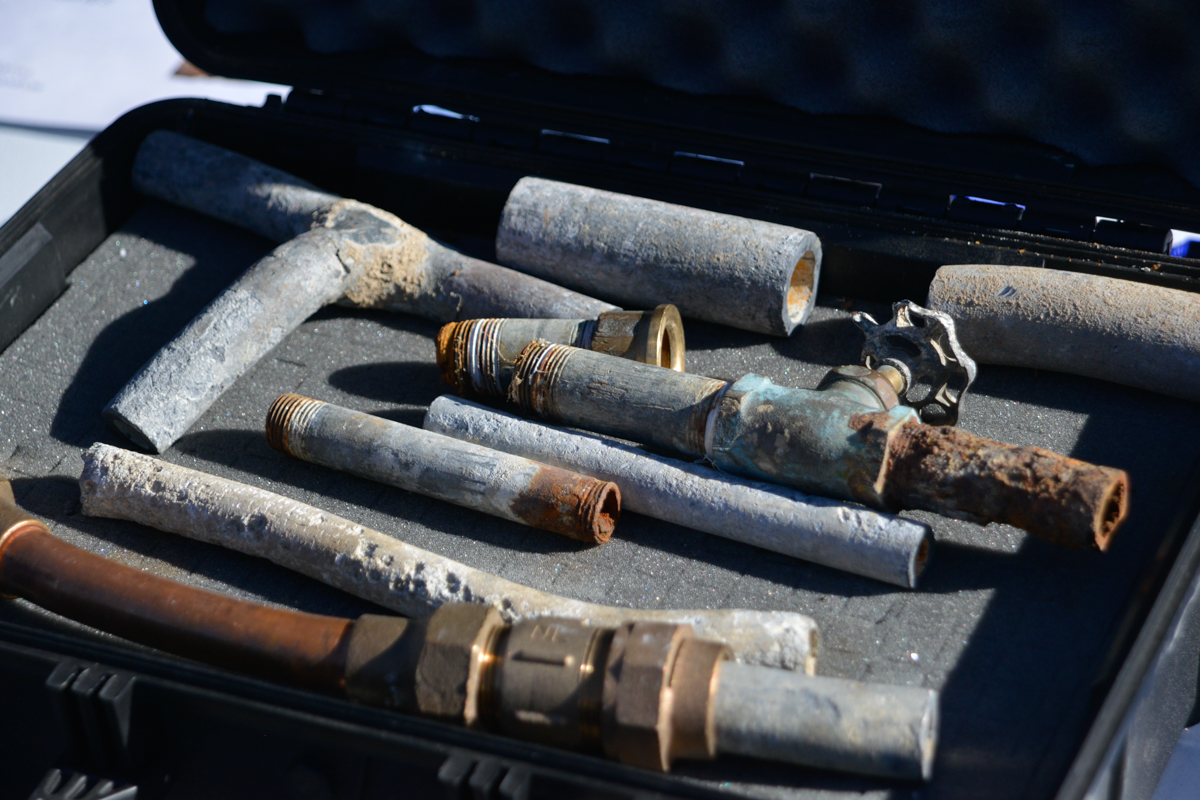
A program to replace every lead water pipe in Denver’s water system without charge to property owners, underway for the last three years, received a $76 million boost from the federal Infrastructure Improvement Act.
Colorado Sen. Michael Bennet joined Denver Water, local community advocates and Environmental Protection Agency officials Friday to tout what Bennet calls a “national model” for protecting people, and especially children, from the risk of lead in their drinking water.
“No parent in America should have to worry about the water their kids drink,” said Bennet at a press event highlighting Denver Water’s process for finding and marking lead water service lines for replacement. “The reason we have lead pipes in Denver and across America is that for decades, we have not made critical investments in our own country.“
At a project site near 44th and Lowell in the Berkeley neighborhood, Bennet was joined by EPA Regional Administrator and former Colorado Speaker of the House KC Becker; Jim Lochhead, CEO of Denver Water; Sandra Young of the Denver NAACP, and Fernando Pineda-Reyes, CEO of CREA Results, a minority advocacy organization.
Bennet said that the $76 million from the federal government is “nothing compared to what Denver Water is actually spending,” which, Bennet said is more than $700 million over the 15-year life of the project.
It wasn’t easy for Denver to decide to replace lead water service lines that run between the Denver-owned water main and the building. First it had to ask for a waiver from the existing lead management techniques already approved by the EPA.
“EPA approved a variance for the Safe Drinking Water Act that allows Denver Water to continue to implement actions that work together to reduce lead in drinking water across the utility service area, including here in northwest Denver,” said KC Becker, Regional Administrator for the Environmental Protection Agency.
“Denver Water could have chosen to take a few smaller actions, like adding more chemicals to the drinking water system, which could have brought the lead levels down, but ultimately it wouldn’t solve the underlying issue and lead pipes would continue to create challenges.”
Becker said more than 15,000 lead service lines have been replaced in the last three years. Affected residents have been given pitcher water filters to use for drinking water for a year after the work, just to ensure no dislodged lead is ingested. She also said the money will help Denver Water replace between three and five thousand additional lines in 2023, on top of nearly 5,000 lines already planned for replacement next year.
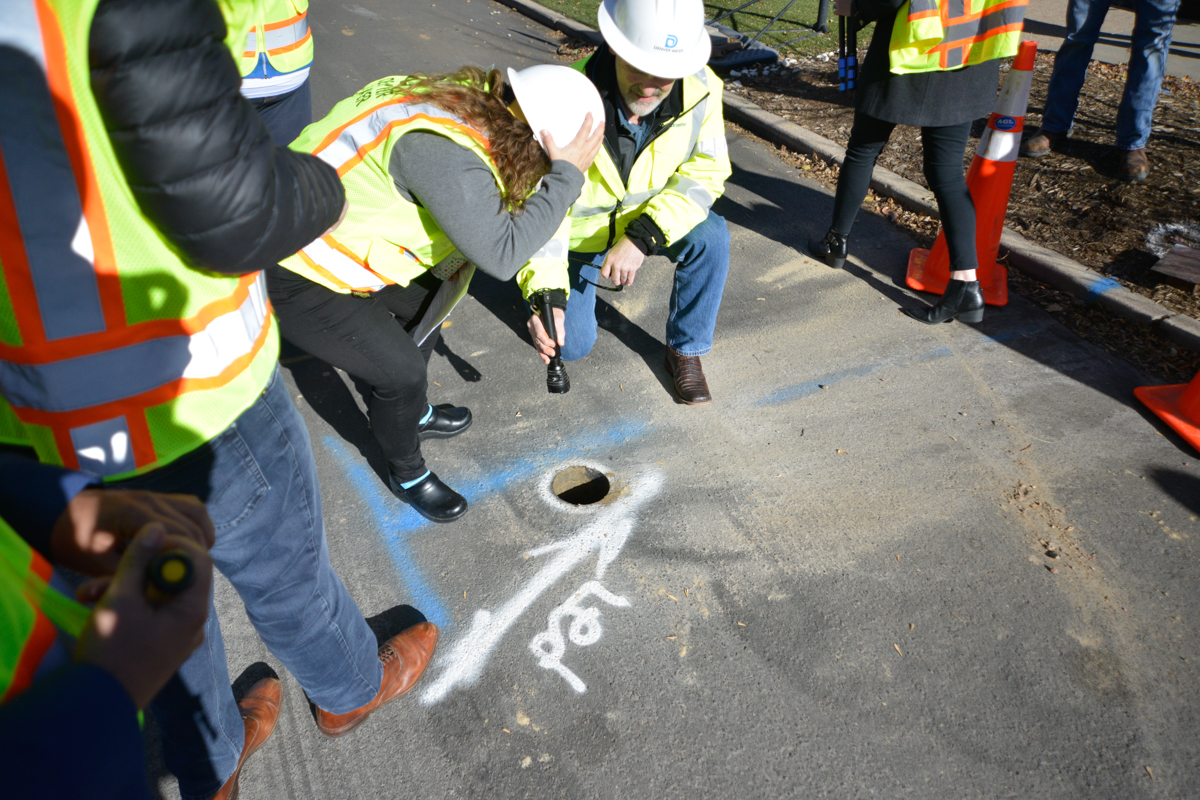
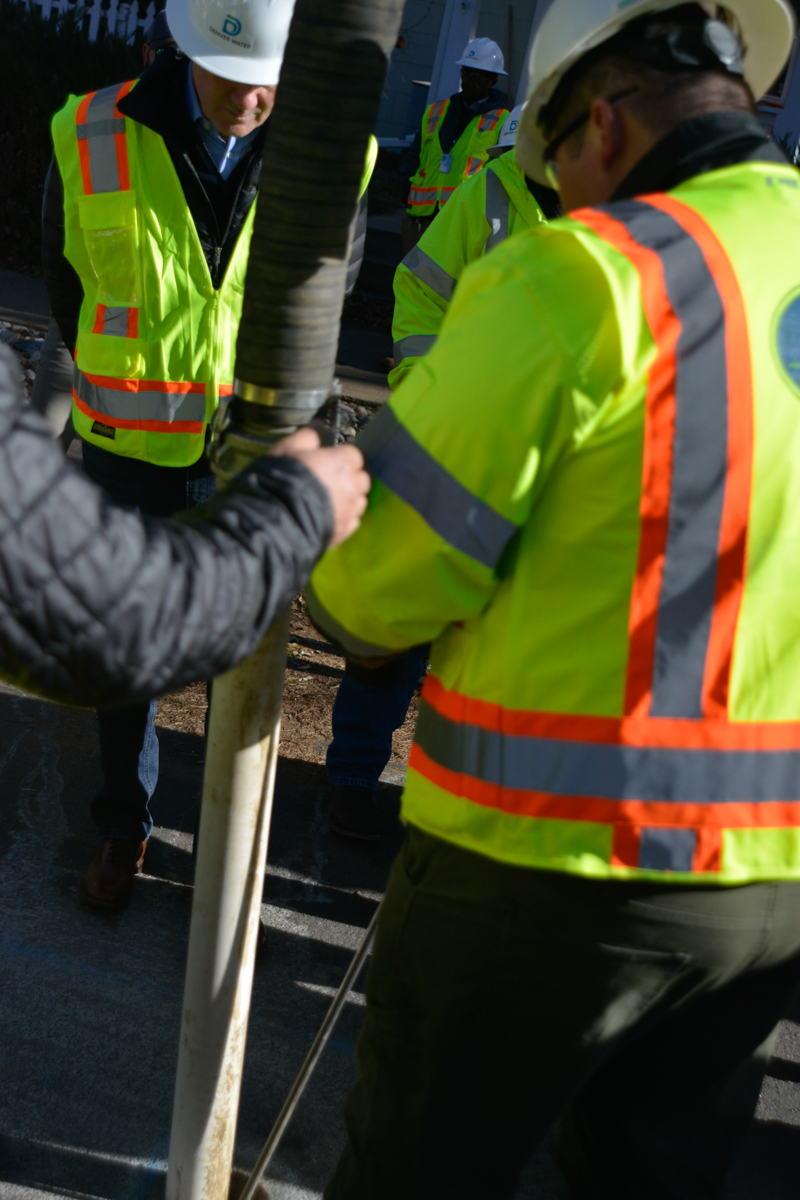
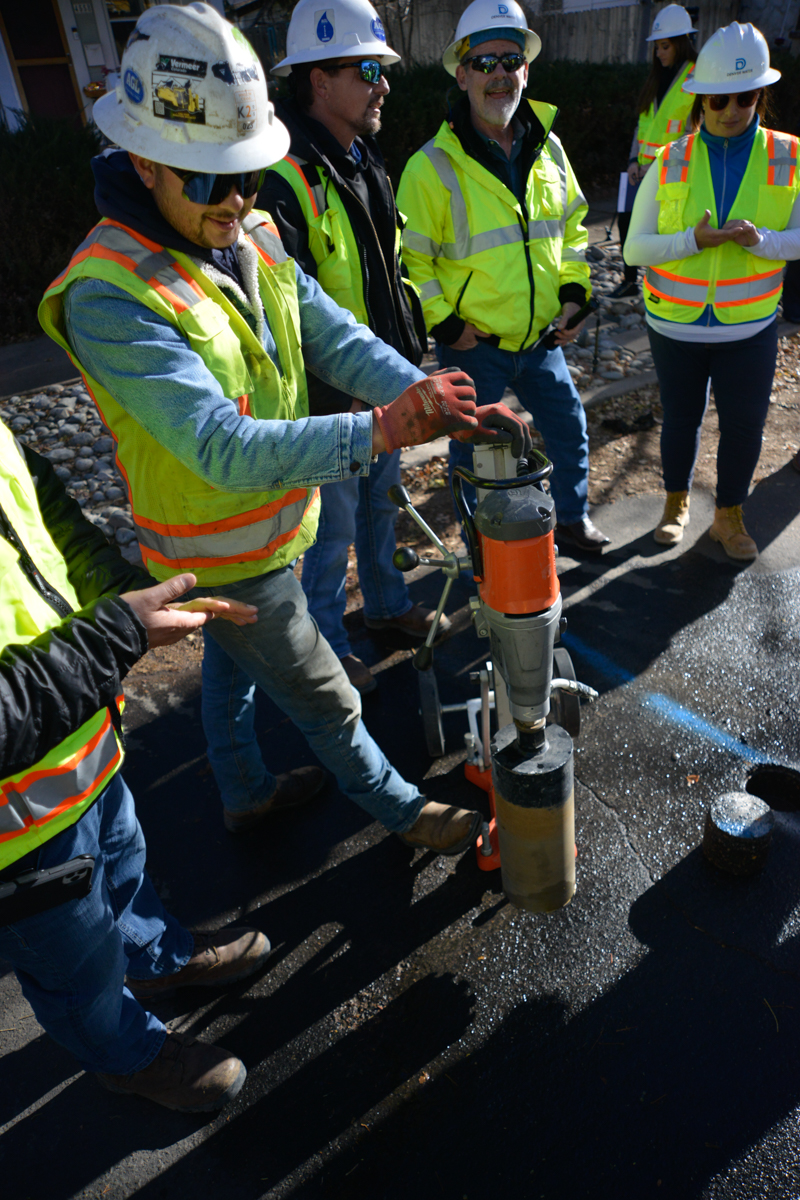
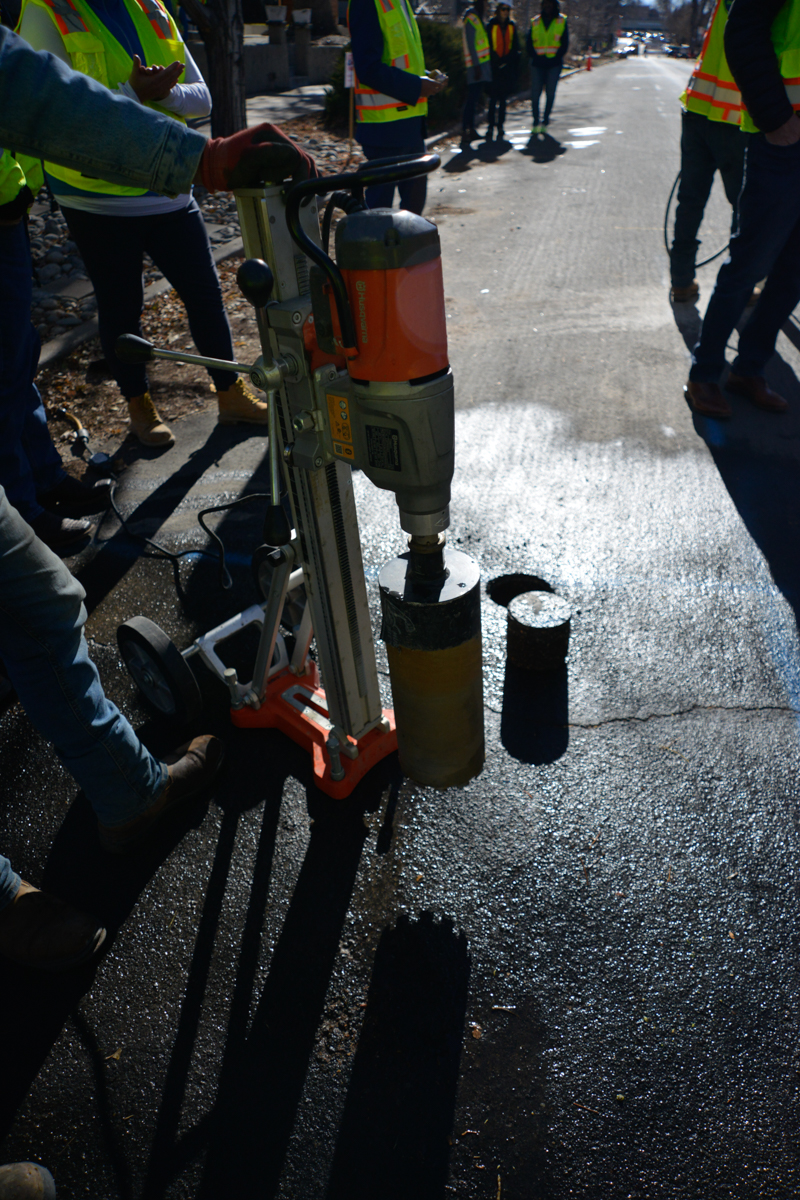
“There’s no lead in the water that we deliver,” said Jim Lochhead, CEO of Denver Water. The lead, he says, comes from the service lines. Not every house has lead service lines, but Denver Water is systematically inspecting all service lines by boring holes through the pavement to inspect every Denver Water customer’s line.
Denver Water doesn’t own the service lines from the water main to the house, those are owned by the property owners, and ordinarily property owners would have to pay the cost of installing new copper lead-free lines to their buildings said Lochhead.
“The health of our customers is our first priority, and we know that it wasn’t the right thing to do to saddle those customers with the cost of those lines,” Lochhead continued. “The average cost of these lines is about $10,000. Many homeowners don’t even know they have lead service lines in the first place. This is a public health issue and it’s a part of our treatment process. So, it’s important that Denver Water undertake this cost holistically and not have the individual homeowners bear that burden.”
Standard EPA response protocols call for the addition of chemicals like ortho phosphate to the water supply to create a coating on the inside of the lead pipes to prevent leaching of the lead into the water, but Lochhead said that was not a solution to the problem.
“We needed to tackle this problem at its source,” said Lochhead. “The EPA and the State Health Department took a chance on us by approving our variance, and we validated that trust by successfully implementing this program over the last three years.”
During that time homes and businesses where the lines were replaced were regularly sampled to ensure the lead had been eliminated. The results of this testing were reviewed by the EPA to make sure the plan works and can be completed as advertised before granting the variance for what is a novel and untested program, according to Becker.
“I’ll tell you something, there’s no community in America that’s replacing its lead pipes at a greater rate of speed than Denver is today,” said Bennet. “As Jim mentioned, they’ve committed to replace every customer owned lead pipe over the next 12 years, and they’re doing it at no direct cost to customers.”
With the infrastructure law, we’re finally ensuring that families have safe drinking water, and we’re lifting up the exceptional work of Denver Water,” Bennet continued. “So, I couldn’t be prouder to be here today.”