







The story of the year in Colorado has been fentanyl | Vince Bzdek
Looking back though all the journalism the Colorado Springs Gazette, the Denver Gazette and Colorado Politics have focused on in the last year, nothing has been more important than shining a light on one single scary substance that is responsible for the worst drug crisis in our state’s history — and our country’s — fentanyl.
It started with one of the worst mass overdoses ever, when five people were found dead in an apartment in Commerce City after a party-gone-horribly-wrong that left seven children orphaned. The partiers thought they were doing cocaine, but the coke was laced with fentanyl, a synthetic opioid that is up to 50 times more powerful than heroin and is being injected by dealers into every drug out there, including marijuana. No illegal drug is safe now, and one pill can kill.
Fentanyl family: Colorado’s deadly overdose siege had mom and pop roots
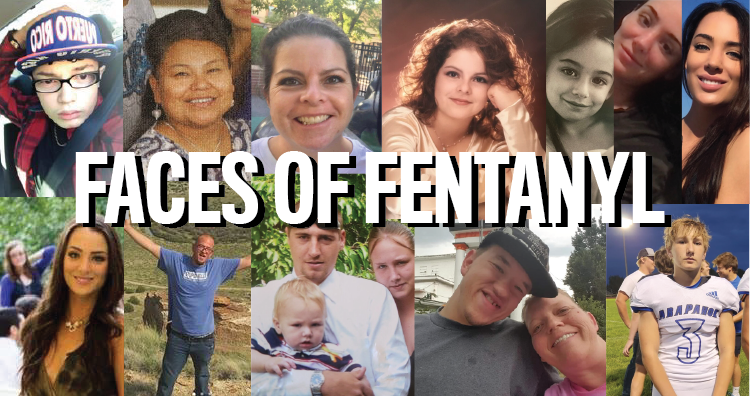
More than 107,000 people have died in the United States last year by overdosing on illegal drugs, which is more in one year than ever before. Two-thirds of the deaths were attributed to fentanyl. One of the most heartbreaking stories we did in the last year was a piece by Carol McKinley on Colorado’s 462 faces of fentanyl, profiling and humanizing the lives lost in 2022 to this scourge.
Interstate routes make Colorado a ‘fatal funnel’ for narcotics smuggling
Colorado might not technically be a border state, but we have learned in the last year that in this drug crisis, we are living in border states. We learned that the Denver area, where two major interstate highways intersect, is becoming a transportation hub for fentanyl shipped into America’s bloodstream by Mexican cartels.
The Washington Post just launched a new series of stories that amplify our Colorado coverage, chillingly spotlighting the mistakes Washington has made in its slow, inadequate response to this killing spree.
The Post investigation found that during the past seven years, “strategic blunders and cascading mistakes by successive U.S. administrations allowed the most lethal drug crisis in American history to become significantly worse. Presidents from both parties failed to take effective action in the face of one of the most urgent threats to the nation’s security, one that claims more lives each year than car accidents, suicides or gun violence.”
To chronicle fentanyl’s runaway rise, Post reporters compiled data from more than three dozen federal, state and local sources in the U.S. and Mexico on drug seizures, overdose deaths and reversals, border crossings and fentanyl potency.
Particularly disturbing were the Post’s findings on how easily fentanyl streams across the border:
• Fentanyl is not being tunneled in, smuggled in by migrants or flown by drones over the border. It is streaming in right through our legal border crossings. More than 228,000 cars and trucks are entering the United States each day from Mexico, but Border Patrol officers are scanning only about 6% of commercial trucks and 1% of passenger vehicles, the Post found. Federal officials estimate they are capturing 5%-10% of the fentanyl crossing from Mexico, but they acknowledge it could be less.
• The amount of fentanyl seized along the U.S. southern border has jumped ninefold during the past five years. Since July, border seizures of fentanyl have averaged 2,200 pounds a month, meaning U.S. authorities are confiscating more fentanyl in a single month than they did during all of 2018.
• The Department of Homeland Security, whose agencies are responsible for detecting illegal drugs at the nation’s borders, failed to ramp up scanning and inspection technology at official crossings, instead channeling $11 billion toward the construction of a border wall that does little to stop fentanyl traffickers. A border security plan that emerged in 2019 set a goal for border agents to scan 72% of commercial trucks and 40% of passenger vehicles entering from Mexico with sophisticated new scanning equipment. But the equipment requires officers to conduct labor-intensive reviews because the patrol lacks the ability to automate the process with artificial intelligence software and centralized command centers. A House Appropriations Committee report published in June chastised the agency for its failures.
• The DEA has struggled with staffing during the past decade, losing nearly 1,300 staffers, 700 of them agents. Today, the agency has more than 800 vacancies.
• The U.S. has also been hampered by a dysfunctional relationship with the Mexican government. Andrés Manuel López Obrador assumed the presidency in 2018 vowing to end the U.S.-backed war on drug kingpins, which he blamed for an explosion of violence. He promised to focus instead on the government corruption that allowed traffickers to flourish. As a result, security and counter-narcotics relationships with the United States have gone cold.
• The Post found that the federal government was in many ways flying blind in its fight against fentanyl after crucial programs to monitor drug use were dismantled. One, the Arrestee Drug Abuse Monitoring Program, which gathered urine samples from recent offenders, was scuttled in 2013 by budget cuts. The Drug Abuse Warning Network, which collected drug use and overdose data from hospitals and emergency responders, was eliminated in 2011. The government brought back a version of the program in 2018, but by then, the fentanyl crisis was out of control.
• Harm reduction is also part of this fight, and the Biden administration has launched a plan to improve the reach and effectiveness of substance abuse programs. But the Post found that only 1 in 20 people who need the help are able to get it today.
I spoke recently to a Monument father of two sons, Andrew and Stephen Riviere, who died on the same day at ages 21 and 19 after taking what they thought was OxyContin.
“This is an epidemic,” Matt Riviere said. “Fentanyl is the No. 1 killer of adults ages 18 to 45 now.” He made the point that if a 737 jetliner was crashing every day the country would be up in arms.
Yet that is exactly what fentanyl is doing — killing an airliner full of people every day.
Riviere also believes the U.S. border needs to be made more secure to help curtail illegal drug trade. And, he said, “We’ve got to raise awareness, especially with our youth and families, and get the conversations started.”
“It’s not like this is a little thing that’s going to go away,” Riviere said. “It’s everywhere.”
