




Newly approved $40 million Colorado venue targets 2024 for first concerts

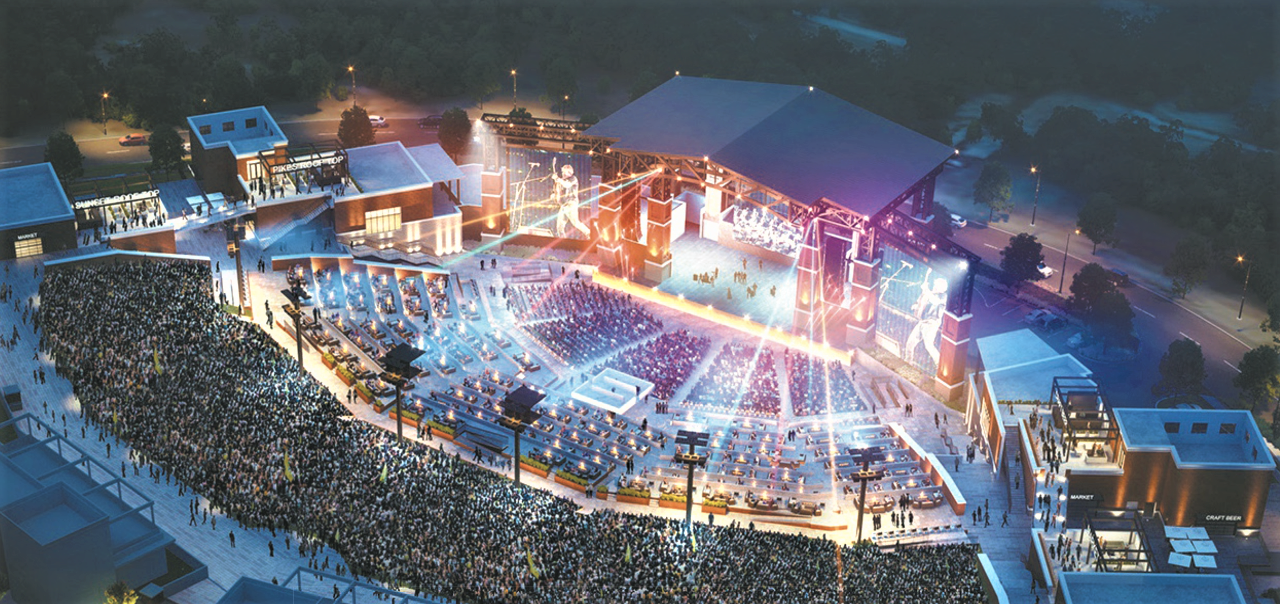
A new 8,000-seat, outdoor music and entertainment amphitheater in Colorado Springs will host its first concert in summer 2024 after the controversial project received near-unanimous City Council approval early Wednesday following six hours of often passionate debate.
The Sunset, as the amphitheater will be called, will be built against a scenic backdrop of Pikes Peak and the Air Force Academy within the nearly 200-acre Polaris Pointe commercial development, southeast of Interstate 25 and North Gate Boulevard on the city’s north side. The venue will take shape on 18 acres along the far west side of Spectrum Loop, south of the Powers Boulevard extension that runs through Polaris Pointe.
Notes Live, a Springs-based entertainment company that proposed the amphitheater, says its $40 million project will be a world-class music venue that will attract top-name acts and performers, while it offers concert-goers upscale amenities such as VIP stadium seating and luxury fireplace suites.
The outdoor setting and atmosphere will rival that of Red Rocks and Fiddler’s Green in the Denver area, while it offers Colorado Springs residents a chance to enjoy their favorite shows and music without a one-hour drive to the north, company officials said.
Trails, open space and parks tax question headed to April ballot
“My intention — and I will not waver — I’m going to build the most luxurious amphitheater in history,” J.W. Roth, Notes Live’s founder, chairman and CEO, said Wednesday after the City Council’s approval. “That’s what I’m going to do. And it’s going to sit at the base of ‘America’s Mountain,’ across the street from the United States Air Force Academy.”
Notes Live is poised to begin site grading over the next few weeks — removing a dirt hill that effectively will create the amphitheater’s concert bowl, Roth said. Construction should begin by the summer, he said, and he expects the first concerts to take place in July or August of next year.
“When people think of Colorado,” he said, “they’re going to think of the legendary Red Rocks, and then they’re going to think of the most luxurious amphitheater in America, and that’s going to be The Sunset.”
Notes Live proposed the amphitheater last year as part of an entertainment campus at Polaris Pointe that includes the company’s existing Boot Barn Hall at Bourbon Brothers, a 1,000-seat indoor venue that hosts smaller concerts and other events, and its Bourbon Brothers Smokehouse & Tavern restaurant.
The Sunset would play host to 30 to 40 big-name acts over 100 days each year, with the majority of events taking place from roughly Memorial Day through Labor Day, Notes Live officials said. The venue also could be used for graduations, weddings, church services and other activities.
In addition to a scenic venue for concerts and shows, Notes Live officials estimate The Sunset would create 500 jobs and pump $100 million a year into the local economy from ticket purchases, restaurant meals, hotel stays and the like.
The new venue would join Polaris Pointe’s restaurants, stores and other entertainment venues, such as a TopGolf driving range, the iFly indoor skydiving facility, the AirCity360 family entertainment complex, the indoor Overdrive Raceway go-kart track and the Magnum Shooting Center. The amphitheater also would complement a new visitors center and hotel being built at the Air Force Academy, company officials said.
But the venue’s 8,000-seat size and outdoor setting drew almost immediate opposition from homeowners in nearby neighborhoods such as Northgate Highlands, Grey Hawk and Flying Horse.
Though some said they liked the concept, they feared the amphitheater would bring unwanted noise into their backyards and homes — especially when they have their windows open on summer nights. Concerts would run until 10:30 p.m. on weekdays and 11:30 on weekends, Notes Live officials said.
Colorado Springs delays vote on updated zoning code
Homeowners also worry that concert-goers would park on their neighborhood streets and even return to their cars at night, drunk and disorderly. Event traffic, homeowners also said, would clog nearby roads, especially the north-south Voyager Parkway that runs along the east side of Polaris Pointe.
Notes Live, however, argued that it has taken several steps to mitigate noise, and will provide parking well in excess of the 2,000 spaces required under city code for an 8,000-seat venue.
Though on-site parking would be limited, the venue would use Spectrum Loop for on-street parking and off-site lots at The Classical Academy charter school, Bass Pro Shops and the Compassion International ministry. Those off-site parking sites would help disperse event traffic and avoid chokepoints at Voyager Parkway intersections, company officials said. Shuttle buses and shared-ride services also would reduce the number of vehicles on area roads, they said.
City planners approved the amphitheater proposal, saying the Polaris Pointe property is considered a regional commercial center. A 2009 rezoning classified the property as a planned unit development and an accompanying concept plan for the site identified future mixed uses, including an entertainment center, restaurants, commercial development and a shopping mall.
The amphitheater also supported Colorado Springs’ updated comprehensive plan goals of achieving unique places, a thriving economy and a renowned culture, city planners had said.
Because of the project’s scope and public interest, city planners sent it for review to the City Planning Commission.
On Nov. 9, the commission approved an amphitheater development plan and OK’d variances to relax parking requirements for the project. Specifically, the variances allowed shared parking for the amphitheater on properties within 2 miles of the venue, instead of 400 feet; reduced the number of on-site parking spaces required to 300 from 700; and extended by one-half mile the length of Spectrum Loop where vehicles can be parked.
Nearby residents appealed the commission’s decision to the City Council.
Colorado Springs water rule that could block annexations approved
Among several objections, a group of project opponents criticized the Planning Commission’s decision because it said the amphitheater failed to meet city code criteria in several cases to qualify for the parking variances. The group also argued that sound studies submitted by Notes Live consultants were misleading and that sound levels from the amphitheater would violate the city’s noise ordinance and disturb nearby homeowners.
At the same time, several homeowners told the City Council that loud venue noise would harm their children and family members; concert-goers driving to events would create gridlock on roads; and the venue would diminish the homes and neighborhoods they invested in.
“Is entertainment more important than housing? I don’t believe so,” Jed Fuqua, a homeowner in Grey Hawk east of the amphitheater site, told the council.
The council also heard from several project supporters, including Mayor John Suthers’ Economic Development Office, tourism agency Visit Colorado Springs and the Colorado Springs Chamber & EDC, whose president and CEO, Johnna Reeder Kleymeyer, said the amphitheater would help attract younger people that many employers want to hire.
“This project is vital to ensure that our community remains a business-friendly environment, remains open and ready for young people to want to locate to our region,” Reeder Kleymeyer said. “Most people are 18 to 34 that are likely to relocate; that’s our target market when we’re trying to bring people to our community. And a concert venue matters to them.”
Council members, whose regular meeting began at 9 a.m. Tuesday and included a handful of long agenda items, began their consideration of the amphitheater around 6:30 p.m.
After watching the clock turn past midnight and push toward 12:45 a.m. Wednesday, council members in a series of 8-1 votes rejected the homeowners’ appeal of the Planning Commission decision, which paved the way for the amphitheater to go forward.
Several council members focused more on the attractiveness of the amphitheater as a city amenity and its potential economic impact over the homeowners’ quality-of-life concerns.
High-tech manufacturer plans Colorado Springs expansion — and hundreds of new jobs
District 2 Councilman Randy Helms, who represents the north side and lives in Northgate Highlands near the amphitheater site, said he believed Notes Live’s plan to disperse parking to satellite locations would alleviate the potential logjam of 2,000 vehicles entering and exiting the venue site. He also said he was convinced that sound mitigation efforts by Notes Live would reduce potential noise problems.
Concert-goers parking in neighborhoods, however, remains a worry, Helms said.
Bill Murray, an at-large councilman, said New Life Church a few miles to the south has thousands of people attend its Sunday services and park on site, yet he’s been impressed at how those vehicles empty out of the church’s parking lots without trouble. Murray said he is, however, concerned about potential traffic jams on Voyager Parkway.
Murray conceded that he came into the council meeting “definitively against” the amphitheater and ready to support homeowners’ appeal , but changed his mind.
“In the end, I don’t see it as being an absolute negative,” Murray said. “I have empathy, I have sympathy, but in all honesty, I think in the end you’re going to like this. … I’m looking at what’s really best for the overall community. I see people shaking their heads and saying, oh, he doesn’t understand. And I’m sorry about that. But I do care and I’m still going to support it, because I think in the end, we’ll all benefit from it.”
Murray and Helms were joined in their support for the project by Council President Tom Strand and council members Yolanda Avila, Stephannie Fortune, Nancy Henjum, Mike O’Malley and Wayne Williams.
District 1 Councilman Dave Donelson was the lone project opponent. He said he wasn’t convinced that Notes Live qualified for the variances that will relax its parking requirements for the venue.
He also said he worried about the impact on homeowners and that the quality of housing and neighborhoods is critical for the city and, to him, equally important as business development and other goals.
“I do think that neighborhoods are — I’ll get hokey here and say they’re precious and they’re delicate,” Donelson said. “And they can be harmed pretty easily. And sound can be one of those things, especially here in Colorado where, at my house we don’t have air conditioning and we keep the windows open at night.”
Get OutThere
Signup today for free and be the first to get notified on new updates.
PREV
PREVIOUS

Here's your chance to comment on Colorado's wolf reintroduction plan
Perhaps nothing splits Coloradans more than their opinion on wolf reintroduction. Passed by a narrow vote in 2020, with the Denver area leading the charge for approval, residents of the Centennial State continue to debate whether or not the initiative will be beneficial or harmful to the state. While the reintroduction is set to happen […]

The obscure regulator (and political scion) who sparked the furor over gas stoves
Consumer Product Safety Commissioner Richard Trumka Jr. ignited political frenzy this week when he said in an interview that the agency was weighing a ban on gas stoves due to health hazards, breaking with all other members of the commission and ultimately forcing the CPSC chairman to publish a statement walking back his remarks. Here’s […]