Colorado coroner’s love of scary movies, childhood prepared him for career
On his way to the morgue, Dr. Leon Kelly changes his shoes.
He switches out his regular walking shoes for a pair of skull-decorated Crocs. They’re old and spattered with all the stuff you might associate with the kind of work he does.
“They’re covered with 15 years of blood, bodily fluids, brains and probably poop,” said Kelly, a forensic pathologist who reclaimed his seat as El Paso County coroner in November. He first won the elected position in 2018, though he joined the office as deputy chief medical examiner in 2008. He and his staff of 30 provide autopsy and toxicology services to 22 counties.
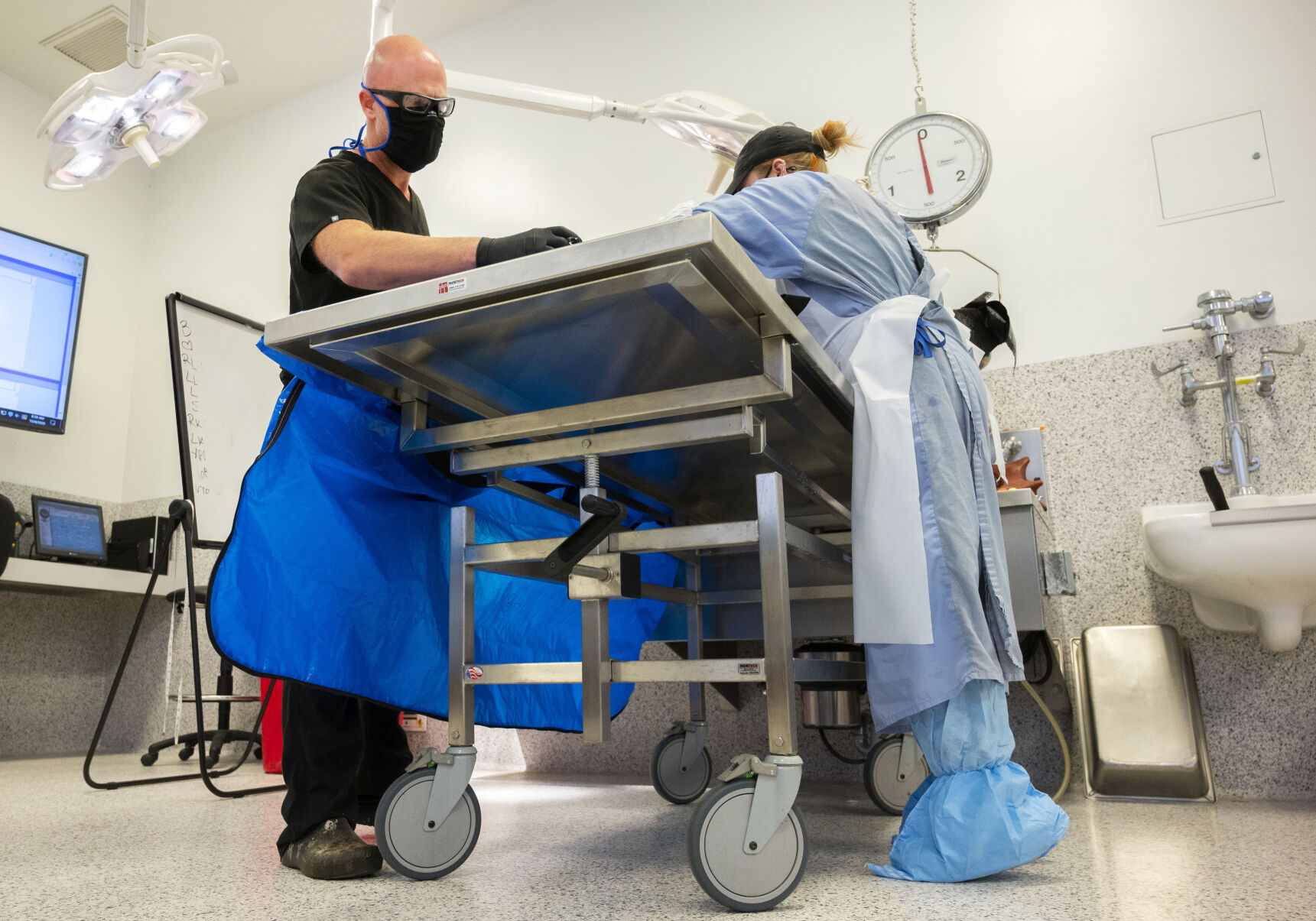
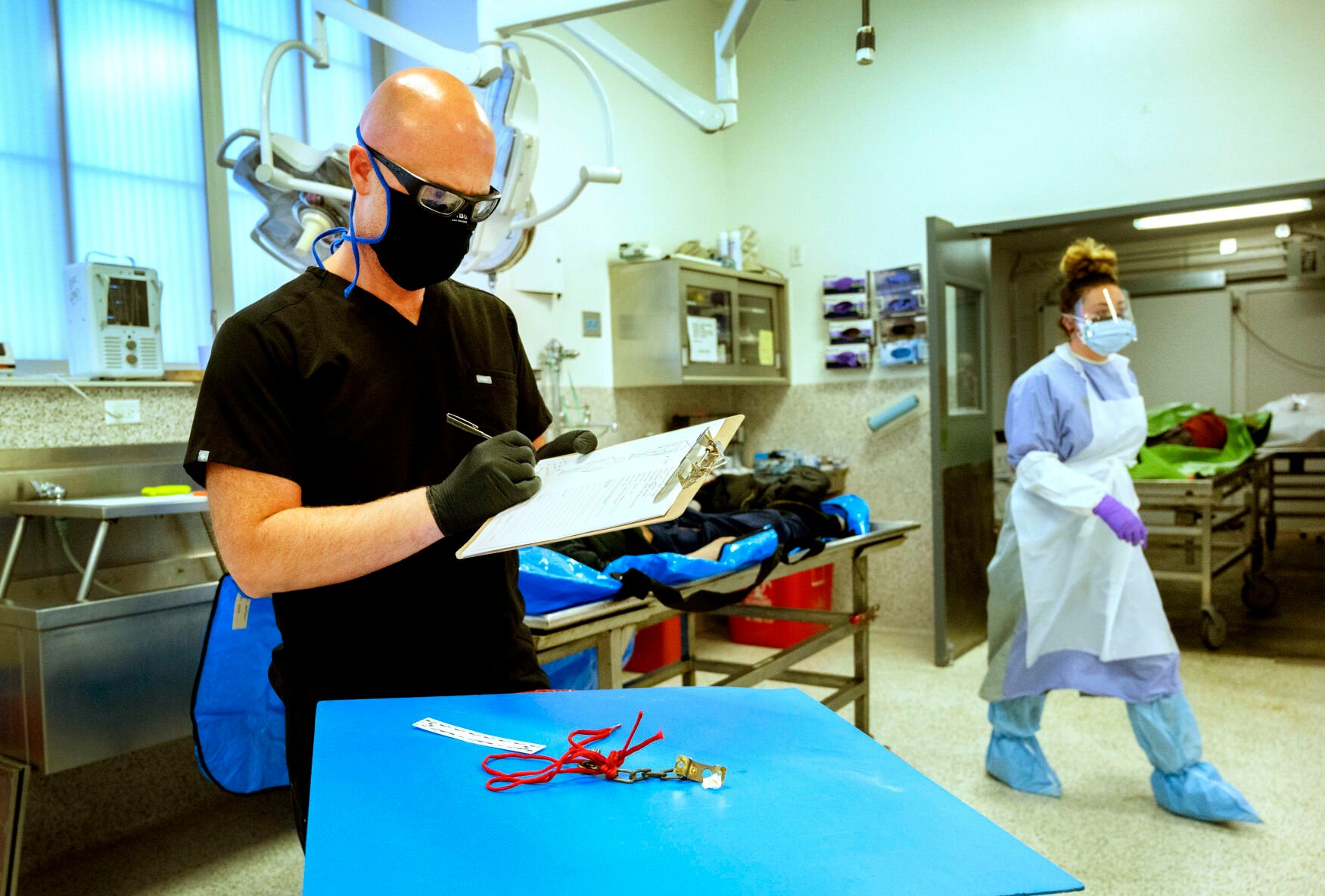
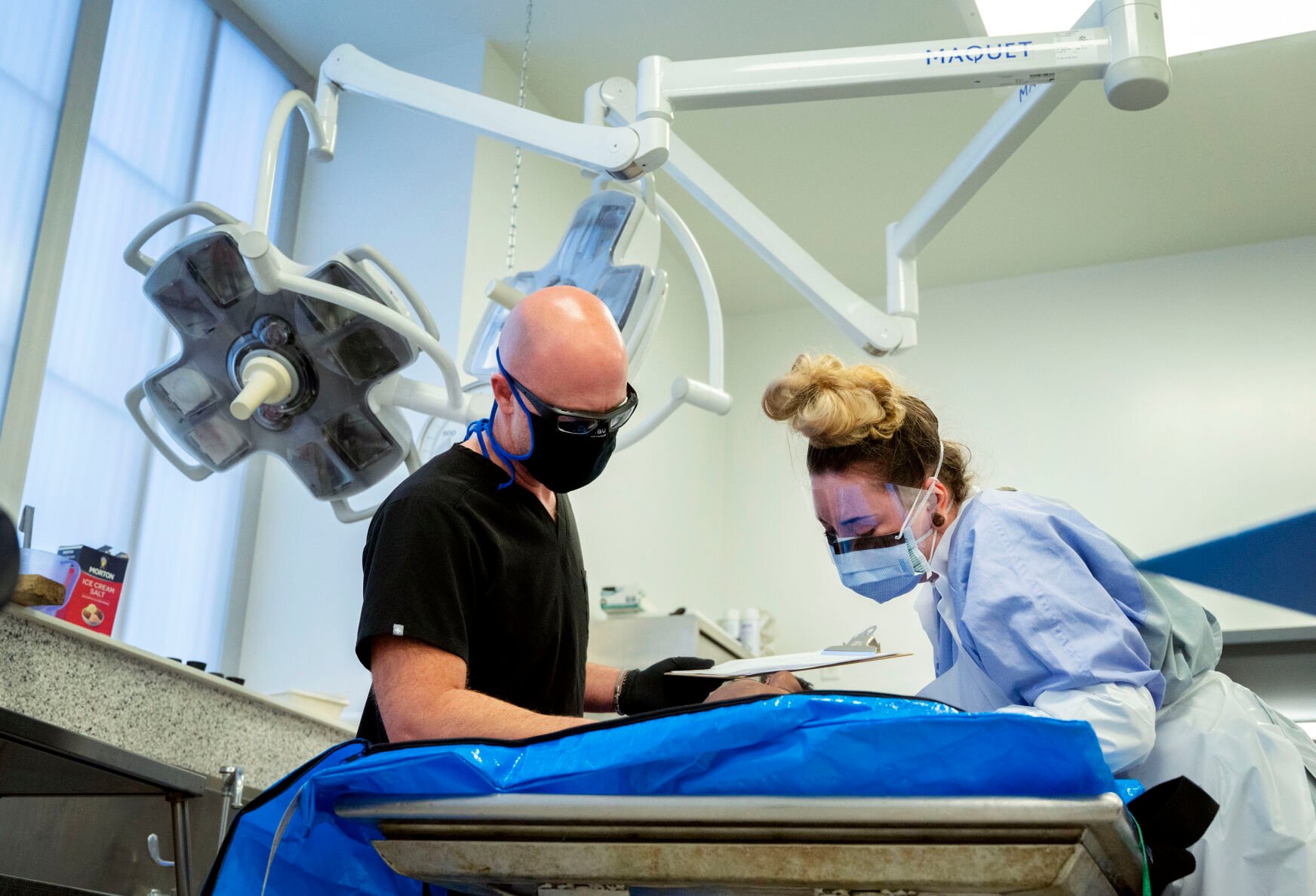
The Office of the County Coroner morgue holds four stations where five medical examiners, including Kelly, conduct autopsies. Kelly did about 210 of last year’s 1,500, on top of his elected official obligations and administrative duties, including media relations and working with public health and law enforcement.
A short walk brings you to a frigid storage room, where body bags wait to be picked up by funeral homes. Nearby is an autopsy room for bodies that need extra privacy.
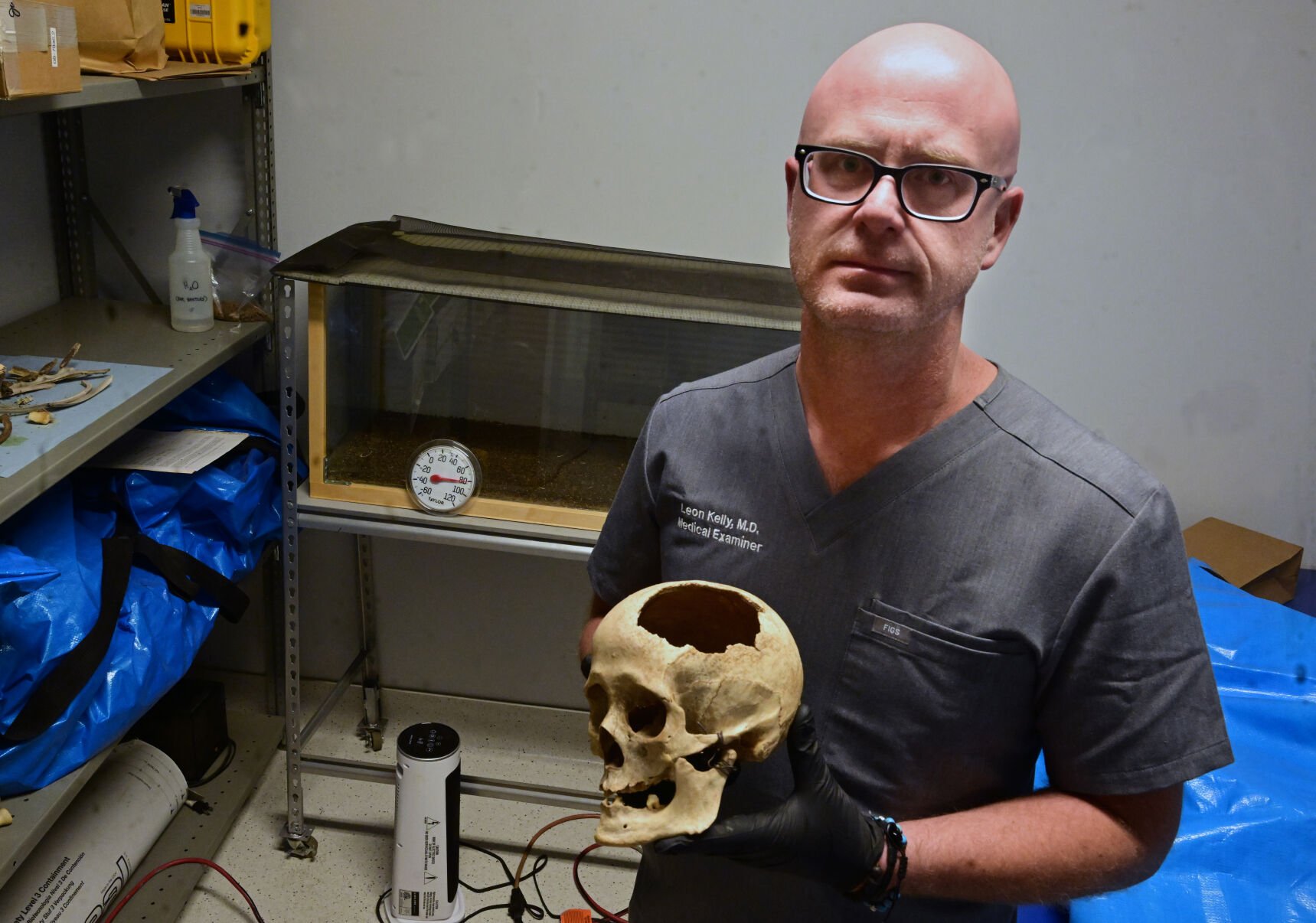
And then there’s a tiny storage room, packed with bags of old bones and boxes of skulls, that houses a creature feature: a large aquarium of flesh-eating beetles the coroner’s office got from the Cheyenne Mountain Zoo. A thick layer of barely moving bugs nestles at the bottom of the tank, hungrily waiting for a meaty human bone. They gnaw the meat off in record time, leaving clean bones medical examiners check for trauma. The bugs are a boon. Before their arrival, bones were boiled in crock pots for days and then scraped, causing damage to the bones.
Down the hall is the wet tissue storage room with endless stacks of containers: “Each jar is one human,” Kelly said.
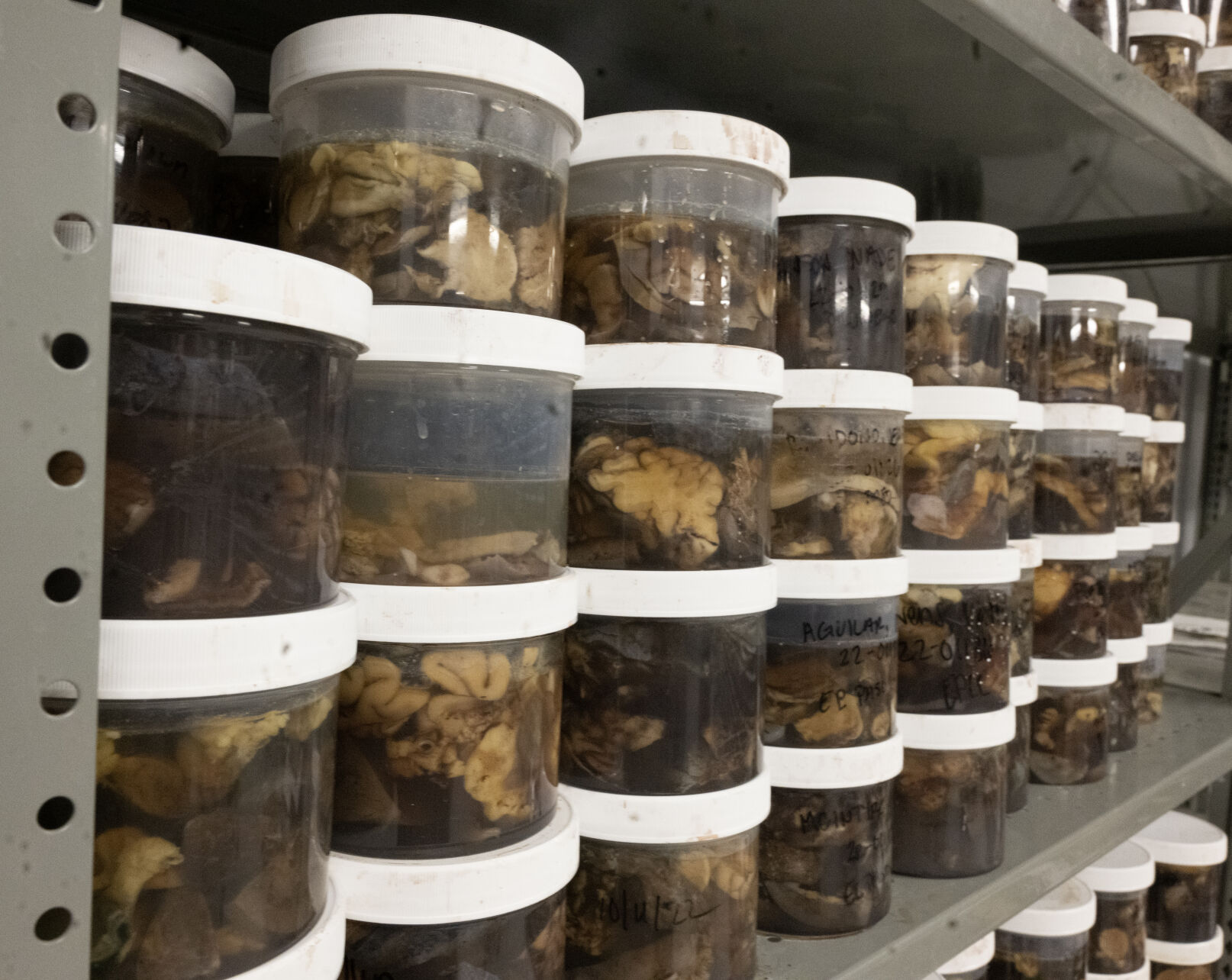
The containers, packed with pieces of tissue cut from each organ, are kept for three years, then incinerated, unless it’s a homicide or unsolved case, in which case they’re kept forever or until solved.
The toxicology lab is quiet. A few staff members work at their stations. And in the evidence room are bins of bagged fentanyl pills, prescription bottles of drugs, knives, drug paraphernalia and, maybe the most devastating, the bin of suicide notes, each one kept in a sealed envelope. Family members receive a copy of the note, while the office keeps the original due to whatever bodily fluids or evidence might be contained on the letter.
“Isn’t that the saddest thing you’ve ever seen?” Kelly said.
A few Ouija boards decorate the walls here and there. There’s no real reason for their presence, though Kelly speculates it’s maybe the only way they can communicate with the dead. Gallows humor must be allowed for in such a grim, yet life-affirming, environment where every day is spent solving mysteries.
“You would think this is a depressing job, but we have a good time,” Kelly said. “You’re with friends and we’re helping make a difference. It reminds you how precious life is. I’ve seen people die in ways you couldn’t imagine. It puts the rest of life in perspective, particularly the unnecessary drama we’re fixated on, the things that don’t matter in the long run. I have zero tolerance for partisan, childish discourse and division. When you’ve spent the day in the morgue, autopsying the dead and talking to families, it’s hard to hear the adults in charge focused on what they’re focused on. You see things weaponized, like COVID-19 and fentanyl — that’s the worst part of the job.”
To cast light into the shadows of his career, Kelly nurtures a passion some would call ironic — an obsession for horror films. And not only does he love all things ghostly, demonic and spooky, he co-founded and co-hosts the quarterly Six Feet Under Horror Film Festival at RoadHouse Cinemas with his comrade in arms, Dr. Dan Lingamfelter, a forensic pathologist he met at the coroner’s office, though Lingamfelter now operates his private autopsy business.
“That was kind of the whole schtick behind it — two coroners who were in the death industry,” Lingamfelter said. “How ironic would it be to be hosts for a horror movie festival? Do we not get enough of this in our work? A lot of people want to compartmentalize and forget about their job and not deal with anything gruesome, which is the more normal way to be. But Leon and I are a little different. Plus, we grew up in the ’80s decade where horror was at its finest.”
The third year of their festival kicks off Sunday with featured guest Linnea Quigley, a scream queen from ’80s horror films, including “Night of the Demons.” She’ll sign autographs and do a Q&A in-between screenings of two of her films, “The Return of the Living Dead” and “Graduation Day.” The daylong event also will feature four horror shorts from mostly Coloradan filmmakers and trivia. Tickets are available online at sixfeetunderhorrorfest.com.
Tim Morris calls Kelly a kindred spirit when it comes to their shared love of horror movies. He attended the first festival in 2021 and has made it his life’s duty to make it to most of the festivals ever since, including Schlock Party, the new film series Kelly and Lingamfelter recently started at RoadHouse.
They screen “terribly bad, but unintentionally awesome movies of any genre,” Kelly said, along with trivia and prizes. Next up is the 1988 comedy horror film “Vampire’s Kiss,” starring Nicolas Cage, on March 5.
“This was a bucket list item I never knew I had — a horror film festival hosted by the county coroner,” said Morris, the special collections manager for Pikes Peak Library District. “Growing up in the ’80s and ’90s, I loved all those movies. A lot of them I didn’t get to see in the theater. This is revitalizing a lot of youthful joy I had in watching these terrible and great movies.”
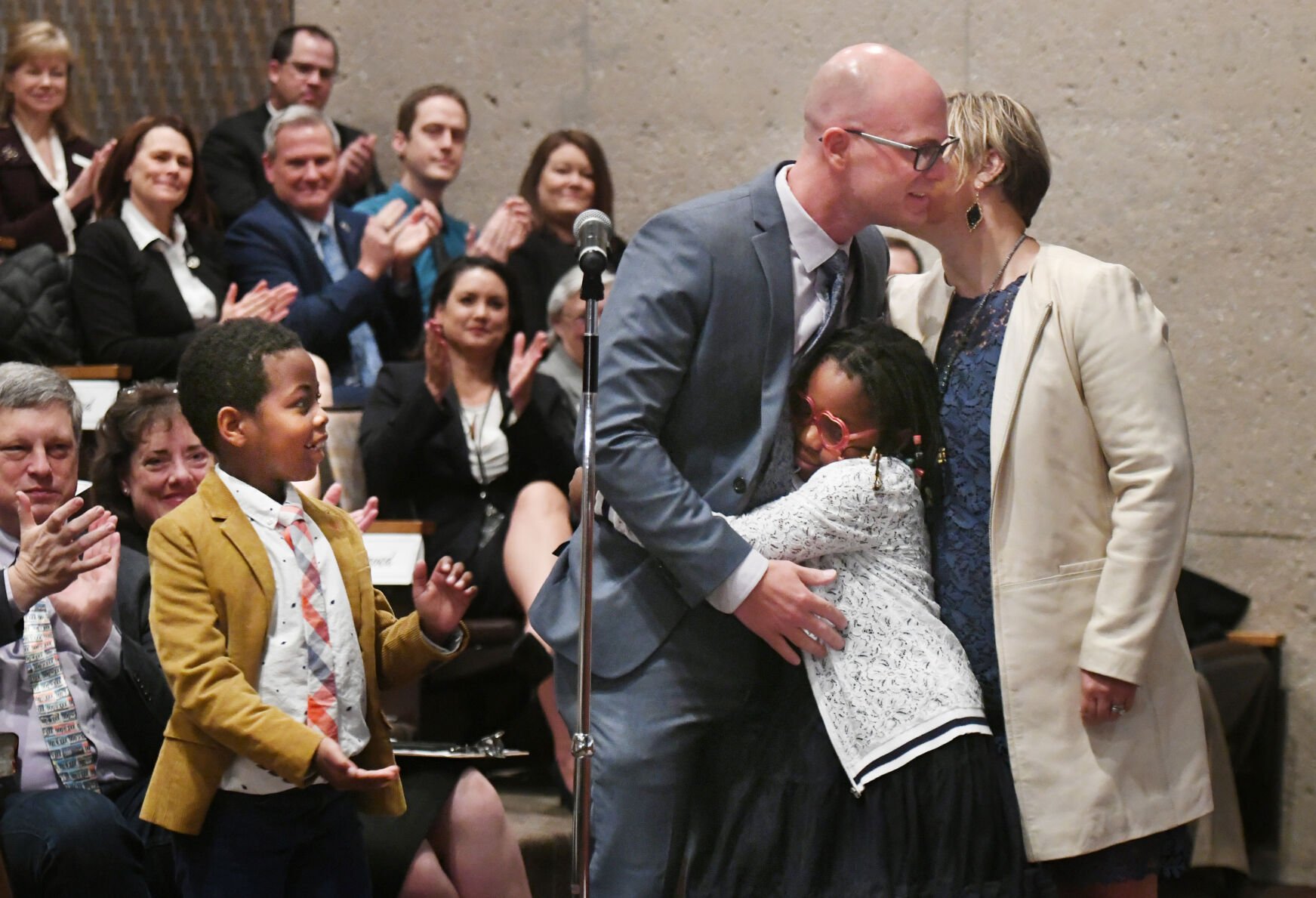
Some of Kelly’s best memories from childhood are going to the movies with friends. He was terrified the pandemic would extinguish movie theaters for good. So society’s return to the big screen has brought a huge sense of relief and joy. It’s the way he and his wife and two kids, ages 11 and 13, bond. Offering a film festival is a way for him to remind people of the power of watching film together.
“And to show horror movies, which aren’t like other movies,” Kelly said. “They’re interactive. People scream at the screens. They’re the best movies to watch in a group. It’s a much more communal, visceral kind of reaction to the screen, versus a comedy or cartoon.”
The roots of the festival grew in Kelly’s remote vacation cabin in Teller County about a dozen years ago, when he invited a group of friends, including Lingamfelter, to come eat, drink and watch scary movies. It was a hit, and Lingamfelter decided to offer a similar gathering at his house. It grew into a twice yearly event — an October shindig hosted by Kelly and a June party by Lingamfelter.
After a decade, the gatherings grew so popular the two men couldn’t fit more people into their homes. They began to consider finding a bigger venue and turning it into a true film festival open to the public. But then the pandemic hit, putting the kibosh on their dream.
Months later, as Kelly helped RoadHouse Cinemas decipher their COVID-19 protocols, he mentioned the film festival idea, found receptive ears, and watched as their horror baby grew into a successful event that typically sells out.
It’s a good partnership, he says. Lingamfelter loves the gorier stuff, such as “The Texas Chainsaw Massacre,” while Kelly likes the more cerebral scary flick, such as “The Exorcist”: “I’m classical music horror and he’s heavy death metal horror.”
“He and Dan have a really good sense of humor. They really care about the audience that attends these,” Morris said. “I’ve gotten to know them over the course of COVID-19 and they have a genuine concern for the community. This is something they bring to the community that allows people a little levity.”
For the love of horror
Movies were the soundtrack to Kelly’s childhood, when he grew up in an Indianapolis trailer park. His parents divorced when he was 1½, and he spent most of his time living with his mom, who had bipolar disorder and borderline personality disorder. He parented himself in many ways, and it didn’t help he was “pathologically introverted,” he says.
“Scary movies and sci-fi and ‘Star Wars’ and Indiana Jones were my babysitter as a kid,” Kelly said. “They’re the kind of movies that find you friends. You gravitate toward people who like those things and those sorts of movies.”
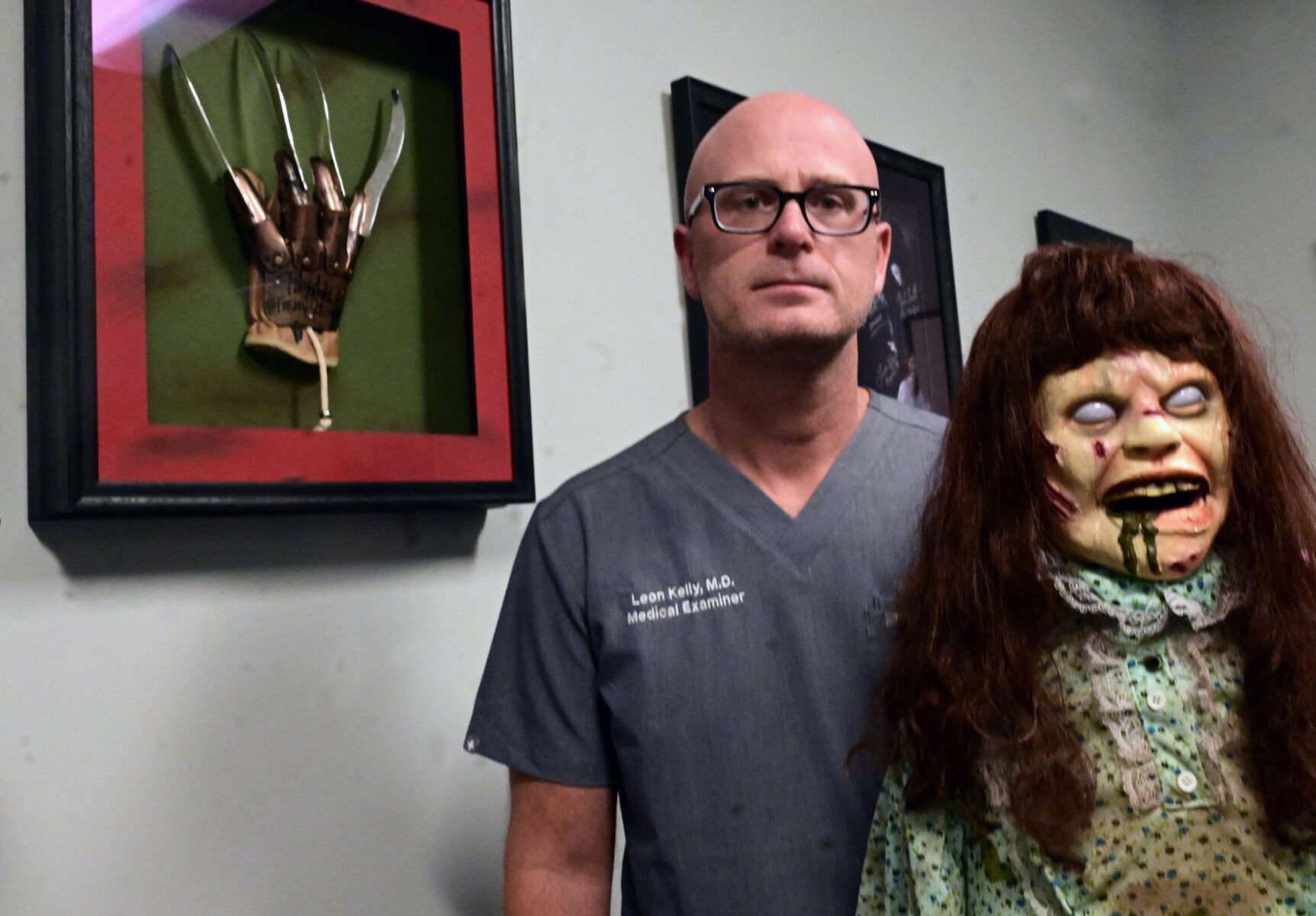
He’s not sure one particular horror film led to his lifelong love affair, but he does remember a “completely inappropriate” late-night viewing of “The Texas Chainsaw Massacre.” He sat atop his mother’s car at the drive-in when he was 5 or 6 and watched Leatherface ratchet up his chainsaw: “I remember being scared,” he said.
But it might have been “The Exorcist” that sparked a tiny 8- or 9-year-old Kelly to begin spreading the gospel of horror.
“It took me three nights to get through the whole thing,” he said, “but once I got through I couldn’t stop telling people about it. I couldn’t stop showing it to as many friends as I could.”
Growing up, Kelly had zero dreams of becoming a forensic pathologist, let alone attending medical school. The first in his nuclear family to attend college, he went to Indiana University, where he learned he was especially good at science. A friend later encouraged him to go to medical school, something he knew nothing about. He was accepted and spent the next four years at Indiana School of Medicine, where he had to choose a specialty. He was good with his hands, thanks to his construction worker father. Pathology it was.
After being matched with a residency at Penrose Hospital, he and his wife moved west, and in year three of his four-year surgical pathology residency, he did a monthlong rotation in forensics at the coroner’s office.
“I was here 20 minutes and thought this is it,” Kelly said. “There are cops here and everyone’s waiting to find out what happened. There’s bodies and trauma and mysteries to solve.”
Living among the dead
The juxtaposition of Kelly’s career and his hobby didn’t dawn on him until about five years ago. And it took a friend, who asked wasn’t it weird he was a coroner who loved horror movies, to help him make the connection.
“I was like that’s so obvious,” Kelly said. “I try to keep my life here compartmentalized from the rest of my life because it’s too hard not to. Once I stop and think about it, I have always liked the darker side of humanity and I wasn’t scared of it. Growing up those were the stories I read. I didn’t read books other than Stephen King unless I had to at school.”
A volatile childhood due to his undiagnosed and unmedicated mother also prepared him to tolerate the darkness he sees every day. Police often showed up at their house to deal with the domestic violence and substance abuse, and she first attempted suicide when he was 18. She died six years ago due to a combination of drug overdose and freezing to death on a park bench. Ruled an accident, Kelly believes it was suicide.
His extended family also was marked by trauma — an uncle killed in a fistfight, other relatives who completed suicide. But those devastating events have helped him foster the compassion and empathy he must extend to the families who show up in his office or whom he must call with bad news.
“A lot of times these families have dealt with substance abuse from this person and abusive behavior and the fears of what could go wrong, and the guilt of feeling like you could do more, and the weight and chronic trauma of dealing with people who have had these problems,” Kelly said. “Unless you’ve lived it, it’s hard to understand it.”
He couldn’t have known it at the time, but life was working to prepare him for his vocation.
“The things we see here every day are the worst, the most bloody special effect you’ve ever seen, and it’s real life and it’s real people and real families,” Kelly said. “You feel the emotional weight and impact of that, whereas in slasher films you don’t — it’s just a scary story you’re being told.”
Contact the writer: 636-0270