







Denver City Council approves Park Hill Golf Course redevelopment plan

A flock of geese land in the former Park Hill Golf Course, 4141 E. 35th Ave., Denver on Jan. 24, 2023. The Denver City Council voted early Tuesday to approve the redevelopment plan and send the issues to Denver voters April 4.
TOM HELLAUER/THE DENVER GAZETTE
A small group of residents and vendors in North Park Hill have been gathering on Thursdays at the former Park Hill golf course to sell clothing and food; often giving out meals and more to members of the community, which many residents say is lacking some basic infrastructure.
Video by Tom Hellauer
{
“@context”: “https://schema.org”,
“@type”: “VideoObject”,
“name”: “In North Park Hill, residents utilizing former golf course for community building”,
“description”: “A small group of residents and vendors in North Park Hill have been gathering on Thursdays at the former Park Hill golf course to sell clothing and food; often giving out meals and more to members of the community, which many residents say is lacking some basic infrastructure. Video by Tom Hellauer”,
“thumbnailUrl”: “https://bloximages.newyork1.vip.townnews.com/denvergazette.com/content/tncms/assets/v3/editorial/2/6b/26b851f3-16e9-5601-9fb6-b50da1b051f4/6362da611e9ca.image.jpg?resize=1396%2C785”,
“uploadDate”: “2022-11-02T14:56:00-06:00”,
“contentUrl”: “https://cdn.field59.com/GAZETTE/83dc009bf5861de0649428662ce72d0bf24421bc_fl9-360p.mp4”
}
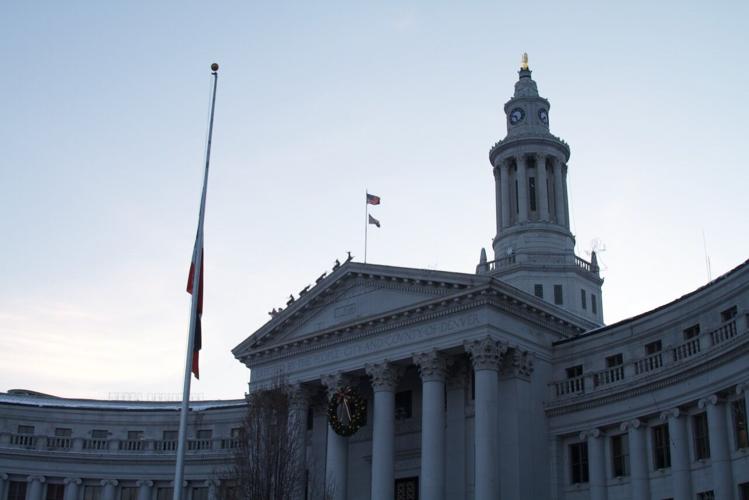
The fate of the Park Hill Golf Course is now in the hands of Denver voters after the Denver City Council early Tuesday approved four measures, accounting for hours of public comment. The final vote sent the question of the golf course’s future to the “qualified voters of the City and County of Denver,” as required by Ordinance 301.
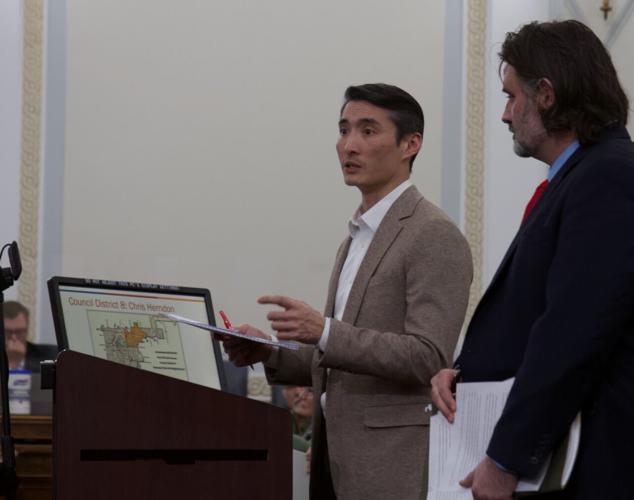
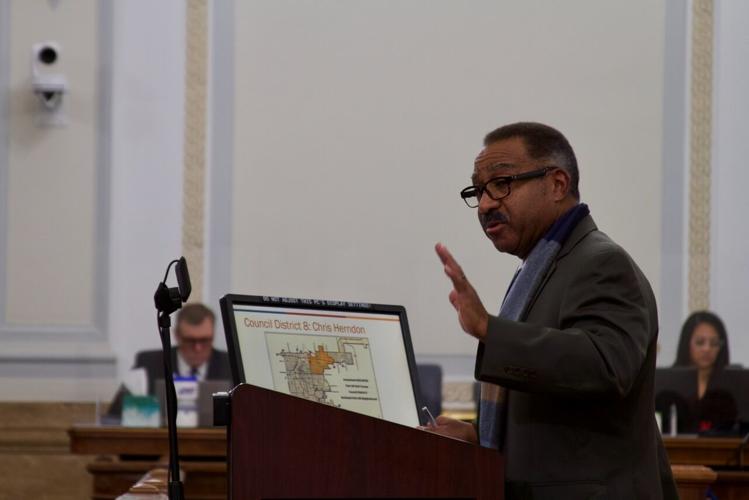
The first of three public hearings concerning the former Park Hill Golf Course redevelopment Monday kicked off with a bang. One resident was asked to leave the Denver City Council Chambers after he spoke out of turn and shouted at District 8 Councilman Chris Herndon.
It didn’t end with a whimper, either, as early Tuesday morning, The City Council voted 11-2 to put an ordinance on the April ballot about the redevelopment of the former golf course. It also approved the creation of five new metropolitan districts to raise money to pay for the projects and the development plan, though there was no public hearing for that bill.
The final vote came just after midnight after more than 150 speakers weighed in. Ninety-five were signed up to speak on the rezoning proposal, with 2/3 in support. The city also received 153 documents opposing one of the three bills, but many simply said “Park Hill” and did not specify which bill they opposed. There were 128 documents in support.
Rezoning is but one piece of the puzzle.
Before council’s vote, the 155-acre former Park Hill Golf Course land was zoned as open space. Combined with the conservation easement, this makes building mixed-use residential buildings there a little difficult. Westside Investment Partners, LLC — which bought the plot of land at 4141 E. 35th Ave. in 2019 for $24 million from The Clayton Foundation — wants to include affordable housing, market-rate apartments, retail possibly including a grocery store and park space on the land.
After Monday’s votes, they are one step closer to that.
The first public hearing of the night concerned the creation of five metropolitan districts that would help pay for a portion of the redevelopment. These districts will raise money needed to pay for certain improvements in the area like street and sidewalk improvements.
Council passed the first bill, 22-1628, 9-4.
However, the creation of the five metro districts did not pass without opposition. Many spoke out against their use to finance parts of the redevelopment.
“The proposal to form these Metro districts brings into sharp focus the complex financial arrangements involved in Westside’s scheme for the Park Hill Golf Course,” Brad Cameron, a Denver resident, said. “Council should vote down all of the matters before them tonight and send Westside back to the drawing board.”
Cameron highlighted the upcoming mayoral race, and expressed hope that a new administration may bring fresh perspective and a willingness to fight for open space and affordable housing.
Other Denverites like David Koppel were conflicted. Koppel recognized the historic inequity in his neighborhood, but also wondered if the city had thought through the environmental cost of developing the golf course land.
“Once that open space is gone, is paved over, it’s never coming back,” he said. “I think this is the wrong place to do this, but I walk my dog around the neighborhood every single day, and I see plenty of space especially just on the northern side of 38th [Avenue].”
The hearing was not dominated by voices of opposition or lukewarm acceptance, though. Several members of the community, who have been critical of council’s decisions in the past, supported the metro districts.
Jess Parris is a candidate for Denver mayor and reflected on the historic significance of the golf course to Denver’s Black community.
“This golf course was off limits to Black people for a very long time,” he said. “The first step in development would be to create a way to finance it, this is just the process. Metro districts have to happen.”
There is historic inequity in the North Park Hill neighborhood, Koppel said. Part of Westside’s commitment to the neighborhood is addressing some aspects of this inequity and have committed to building a grocery store in the area. The neighborhood is considered a food desert, as there is no grocery store within one mile of it.
“I want Black people to have something that’s been promised to us for so long,” Parris said.
The second public hearing — concerning the rezoning at park hill golf course — was also the longest with the most speakers.
One resident said nobody was excited to see 12-story buildings pop up in their back yard.
Tobin Stone, a supporter of rezoning, saw his chance.
“I can’t wait for 12-story buildings if I’m being honest,” he said. “Young people like me are already being hurt by the housing shortage. Too many students are graduating from college in Denver and starting to look for jobs, only to realize that there are no places for them to live.”
Stone said he believed the future is a policy choice, and one that can guarantee the future of Denver’s young people.
The third, and final, public hearing dealt with the language appearing on the April 5 ballot. Previously, District 9 Councilwoman Candi CdeBaca wanted to amend the bill, removing what she called “leading and unnecessary” language.
One resident, Maria Flora, described the ballot language as “deceptive, misleading and inaccurate.”
“Ballot language is supposed to be true and impartial, should not contain any argument and not likely to create bias for or against the measure,” she said. “Because the ballot language incorporates the city attorney’s one-sided argument, it is not true or impartial.”
Supporters of redevelopment did not see problems with the language as written, and nor did council, who approved the measure.
Denver residents will vote on the development plan in the April 4 city election, that also includes the mayoral race and several city council seats.
