







Denver woman’s fight to reunite family complicated by Turkey, Syria earthquake
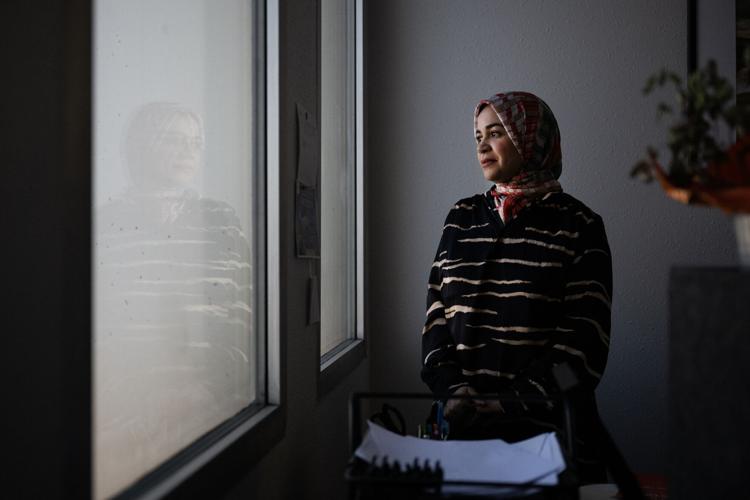
Hanane Ghiwane, a youth services coordinator with the African Community Center in Denver, Colo., stands for a portrait on Friday, Feb. 10, 2023, at the center.(Timothy Hurst/The Denver Gazette)
TIMOTHY HURST/DENVER GAZETTE
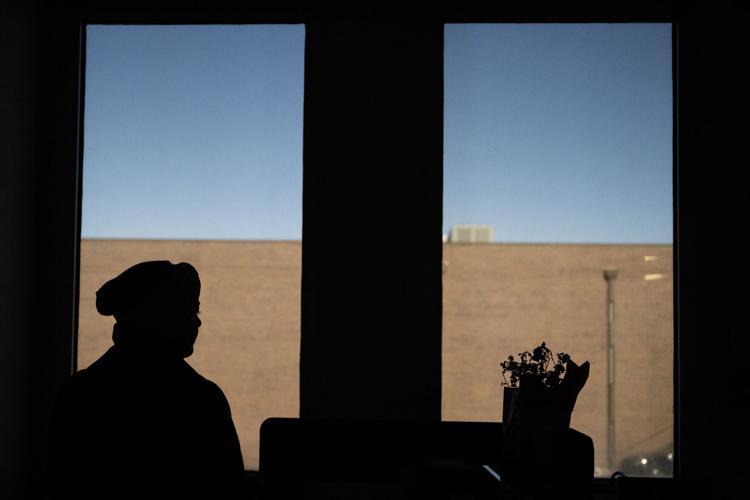
Her voice quivered, eyes glossing over, as Randa recalled the moment she learned a 7.8-magnitude earthquake had devastated large swaths of Turkey and Syria on Monday.
Randa caught the first bit of news on social media, then rushed to switch on her TV. The images flashing before her showed flattened buildings and catastrophe.
Terror enveloped her. Living in Kirikkale, in central Turkey, are Randa’s mother, father, and one of her younger sisters, who has significant physical disabilities. Her sister relies on their parents, both in their 50s, for all her care.
The city is some distance from the epicenter, but she was still extremely worried.
Turkey, Syria earthquake: Where in Colorado to donate funds, items to help those affected
Randa’s first thought was to call her parents. Then she paused, realizing reaching one of them might only bring news other family members were dead. Steeling herself, Randa and her family in Denver began dialing. Service was unreliable in Turkey before the earthquake. Getting through now seemed impossible.
Minutes ticked by, but minutes felt like 10 years, Randa said.
At last, her mother responded with news of the family’s situation.
Alive, yes. Safe? Far from it.
So began the most recent calamity to rock the Denver woman’s family, which has already endured a lifetime of trauma, the grim hopscotch of passing through multiple countries to flee war and the years of longing that come with half a family receiving refugee status in the U.S. while the other half remains in systemic limbo.
Hanane Ghiwane, the youth services coordinator for the African Community Center in Denver, helped Randa and some of her relatives resettle in Denver nearly a decade ago and has kept in touch. She translated for Randa, who asked to be identified by her first name only. The women spoke on Friday about Randa’s struggles being separated from loved ones swept up the in the natural disaster amid years of fighting to reunite her family in the U.S.
A never-ending road
Before the earthquake, the family’s road to reach Turkey was long.
Born in Iraq, the 37-year-old’s earliest memories are of living under a blockade that restricted trade and kept her from being exposed to parts of life that are now commonplace for her. She did not know bananas existed until adulthood, she said, but she felt safe in her earliest years. Most importantly, her family was together.
After the U.S. invaded Iraq in 2003, her memories became marred by war, she said.
When Baghdad fell, being beautiful was dangerous for women, she said. Girls went to school at the risk of being assaulted, or worse, never coming home. Randa made sure she and her sisters dressed poorly and covered their faces to avoid attracting attention.
In her late teens, Randa briefly lived in Syria seeking an escape from the strains of life at home but returned to Iraq and married. Her wedding day became the first catalyst that thrust her family into a lifetime of seeking safety.
In the midst of the celebration, a nearby explosion shattered windows, pummeling Randa with glass and debris. For days after, Randa could not sleep, and recouped from her injuries at home despite needing medical attention. Hospitals could not be trusted to provide adequate care, she said.
Randa and her husband decided to leave for Syria in 2007. When she became pregnant with the first of her two children, Randa knew she would not go back to Iraq, worried her baby would be unsafe there.
Her family grew and had a good life in Syria for close to four years, she said. But 2011 brought protests against the president’s regime, which were met with violent government crackdowns, and eventually, full civil war.
With the sound of each explosion, her children clasped their hands to their ears. Randa feared her babies were starting out life traumatized.
In Iraq, Randa witnessed the war more firsthand, she said. There, people would walk up to their rooftops – used as living spaces and apartments – and find body parts cascaded from recent explosions.
In Syria, the conflict hit citizens more covertly, she said. People would wake up to hear an entire family was killed overnight. Her husband’s close friend disappeared. He has never been found, Randa said.
The family learned about neighbors from Iraq found dead in their homes and began to worry they were being targeted. Then her husband, a driver, was confronted early one morning by armed and masked men.
“He just had to run, he had to hit the gas and just drive,” Ghiwane translated for Randa.
So in 2012, Randa’s family once again said, “we have to flee,” waiting 25 tenuous days for new passports so they could relocate.
Unable to find airline tickets to Turkey, they decided to drive, but as they neared the Syrian border her family received a warning: People who had attempted to cross were sometimes caught up in the civil war’s battles and killed. No one could guarantee her family’s safety if they pressed on.
Their choice was not a choice, Randa said. Her family could return to Syria and almost certainly die, or attempt crossing the border and risk becoming casualties in the fighting. Her children at the time were 1 and 3 years old.
She decided to keep going. They made it, and started again in Turkey. There, life was hard.
Her husband found work carrying heavy bags of flour for local bakeries. The grueling work resulted in a back injury that wracked him with so much pain he could not move, she said. The family sold their car for money. They spent all their savings. There were days her children asked her for an egg, but she did not have one, she said.
Randa’s parents and siblings – a brother and two sisters – who had also moved to Syria for several years eventually follow Randa’s family to Turkey. Randa’s second sister chose to return to Iraq with her husband and have children, searching for a purpose in life Turkey had not offered her, Randa said. After a couple of years in Turkey, Randa, her husband, their children, and her teenage brother received clearance to come to the U.S. as refugees. In 2014, half of Randa’s family arrived in Denver.
She was relieved that her children could grow up somewhere safe, she said, but also tormented being separated from the rest of her family. On Monday, her torment reached new levels, she said.
“Since the earthquake there is something inside of me that I can’t even explain,” Ghiwane said translating for Randa. “I am scared.”
Another fight to survive
Her parents’ apartment building had not collapsed. Randa’s mother sent her a video of the ceiling light swaying in their ground-level unit during the initial tremors.
Although the city is not on a fault line, Randa begged her family to leave the apartment building as the aftershocks continued, but outside winter posed the next lethal threat. Snow and freezing temperatures waited for them if they left home.
Her parents and sister did leave the day after the initial quake at the behest of government officials who told people to evacuate buildings. They spent a few hours in an open grassy area where people were told to convene, but no matter how much they bundled her sister, the cold spurred seizures, Randa said.
They began to fear freezing to death. So her family returned to their apartment.
Her mother will not sleep, afraid that if she closes her eyes, the earthquake will happen again and she will not be able to save Randa’s sister.
Randa crumpled at the thought of her sister, unable to care for herself, navigating the earthquake’s aftermath. Ghiwane leaned in, cooing like a mother with words of comfort and a hand on Randa’s shoulder. Not only does she fear for her sister, Ghiwane explained, but for her parents risking their lives to stay with her sister.
Her parents have long refused to leave their daughter, Randa said. She has spent nearly a decade trying to help the three of them come to Denver. A lawyer told Randa her parents’ files could likely be processes within two years, but her sister needed to start a new application which could take upwards of 10 years to finalize. Her parents would not leave her sister, she said.
“She tried to bring her family here. She did everything she could,” Ghiwane said, lamenting a broken immigration and refugee system. “You bring a wife, you leave a husband. You bring kids,” and parents are left behind, Ghiwane said. “This one, and her brother,” have been unrelenting in their pursuit to reunite the entire family in Denver, Ghiwane said. Her family does not want much, Randa said. A normal life, and to be together, is all they need.
Randa lives consumed by guilt. For not bringing her sister with her in 2014. For the moments when she enjoys life in Denver while her family struggles in Turkey. In the five days following the earthquake, she video called her parents and made them leave the call going so she could keep eyes on them, begging “don’t hang up.”
“The body is here, but the spirit and the mind is out there,” Ghiwane translated. “You are living, but you are not.”
Beyond her family, Randa has friends in Syria who she has not received word from since the earthquake. Whether they lived or died, she does not know. She heard stories, of people already fatigued by the plight of life in Syria who chose to stay in their beds during the earthquake, accepting death if that’s what came for them.
By Saturday the death toll topped 28,000. One question haunts her mind: If her family does not survive the humanitarian crisis spurred by the earthquake, who will bury them?
Still, it’s not death that scares Randa. She knows her family will go to God, she said. Time cut short, is what scares her.
“I didn’t get enough of them,” she said through Ghiwane.