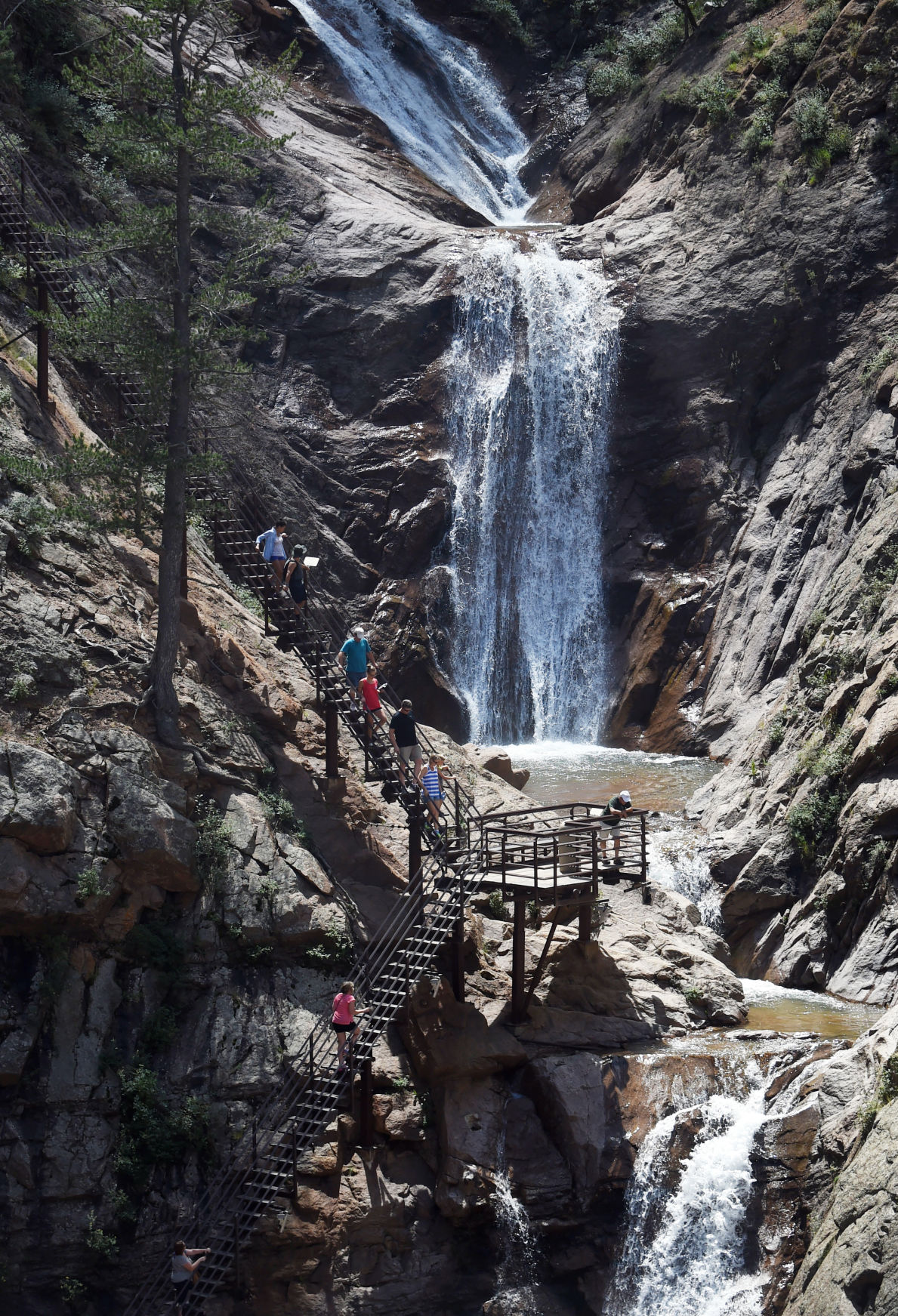
‘Colorado’s Grandest Mile of Scenery’: 140 colorful years of a colorful destination
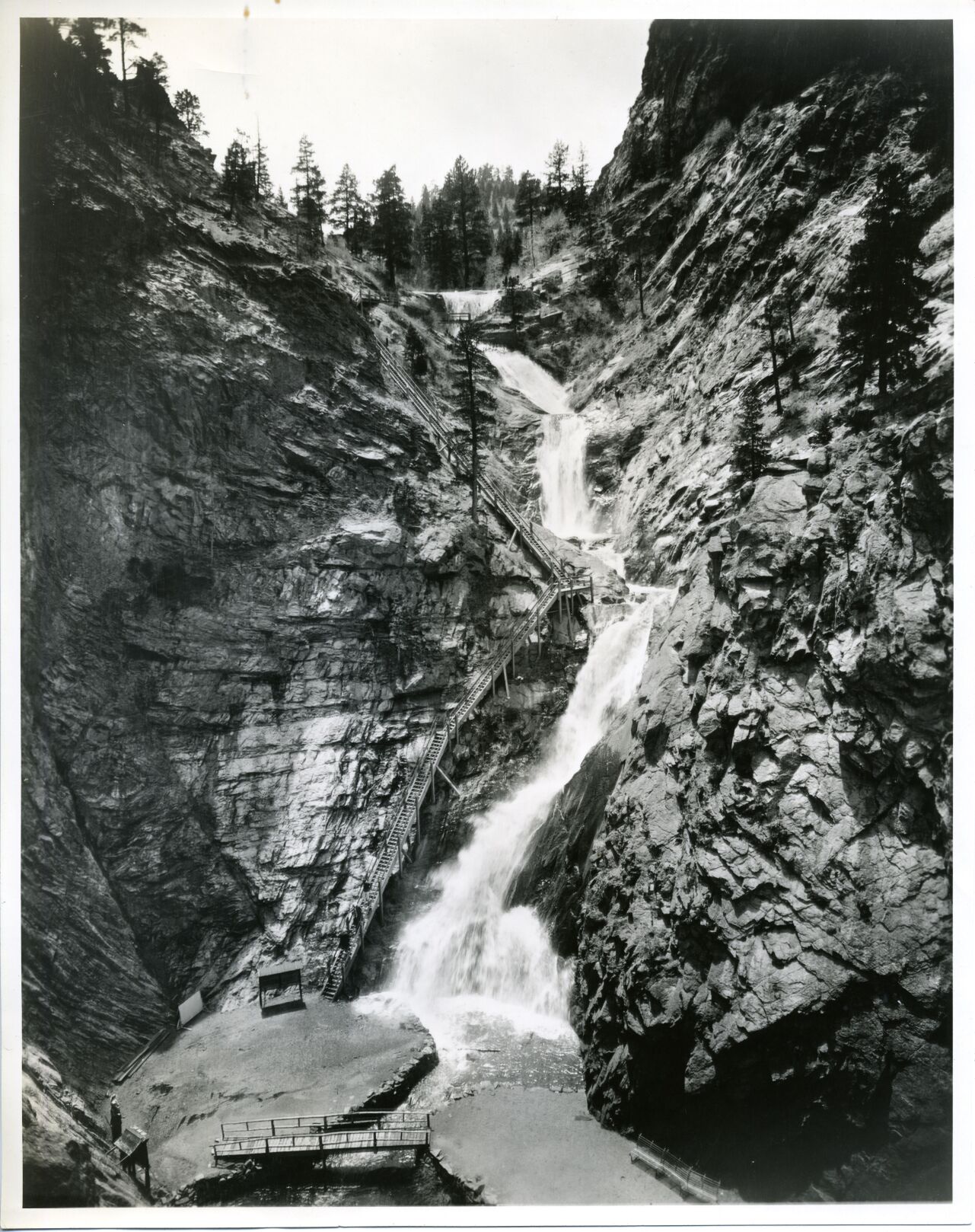
“We imagine Heaven is like this,” wrote the Rinkers of Indianapolis.
“Like a fairyland,” wrote the DeLoaches of Houston.
Better than Niagara Falls, suggested another couple from Oak Park, Ill. Better than Yellowstone, opined another couple from Chicago.
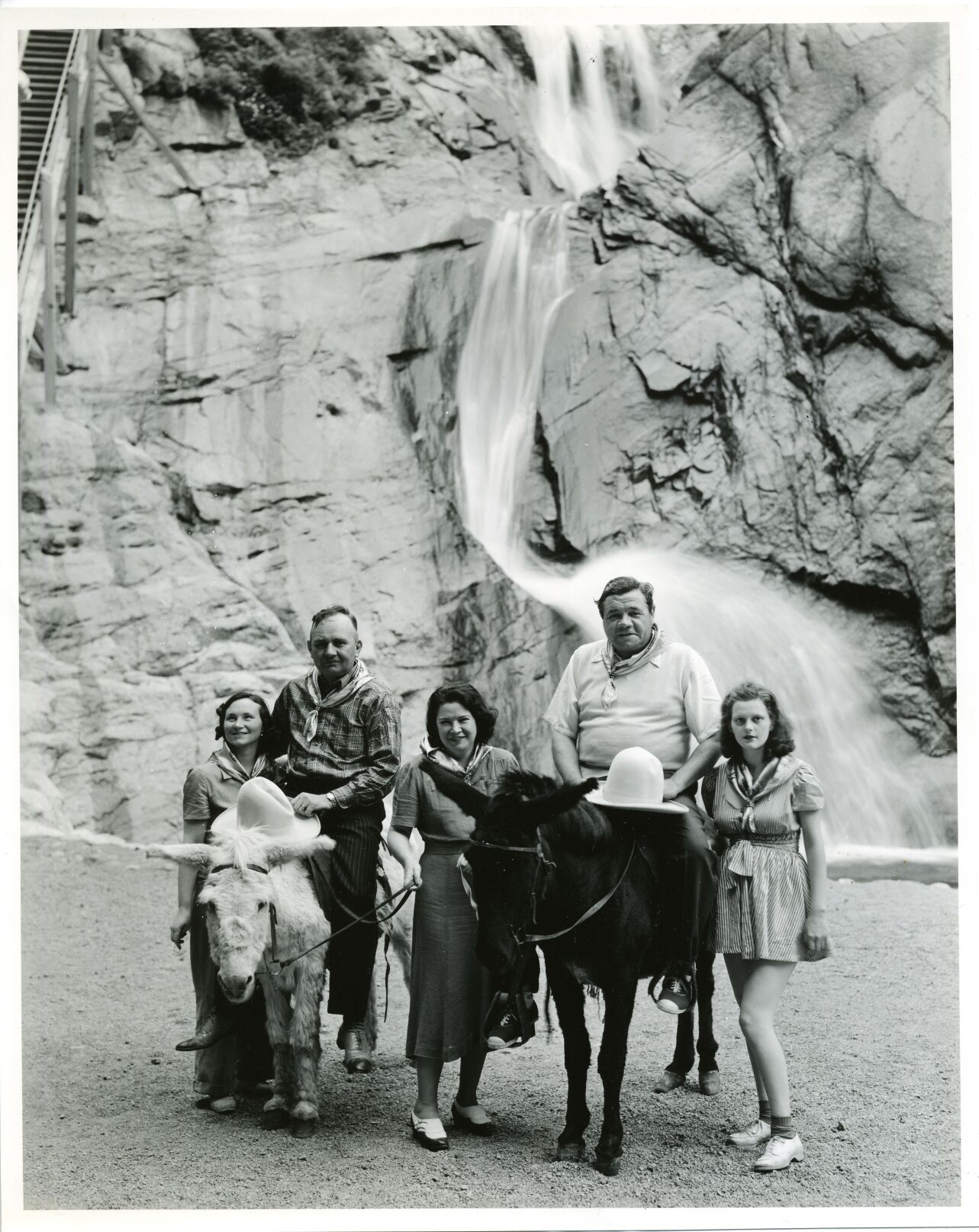
The Babe, bird and bitter rivalry: 7 interesting notes about Seven Falls
Concluded the Agnews of Hamlin, Texas: “Now we have seen everything.”
Those are but some comments left in the guest book of Seven Falls over the attraction’s 140 years.
Yes, approaching this milestone season, those who have paid the entry fee have left with priceless memories of the place proclaimed Colorado’s “Grandest Mile of Scenery.”
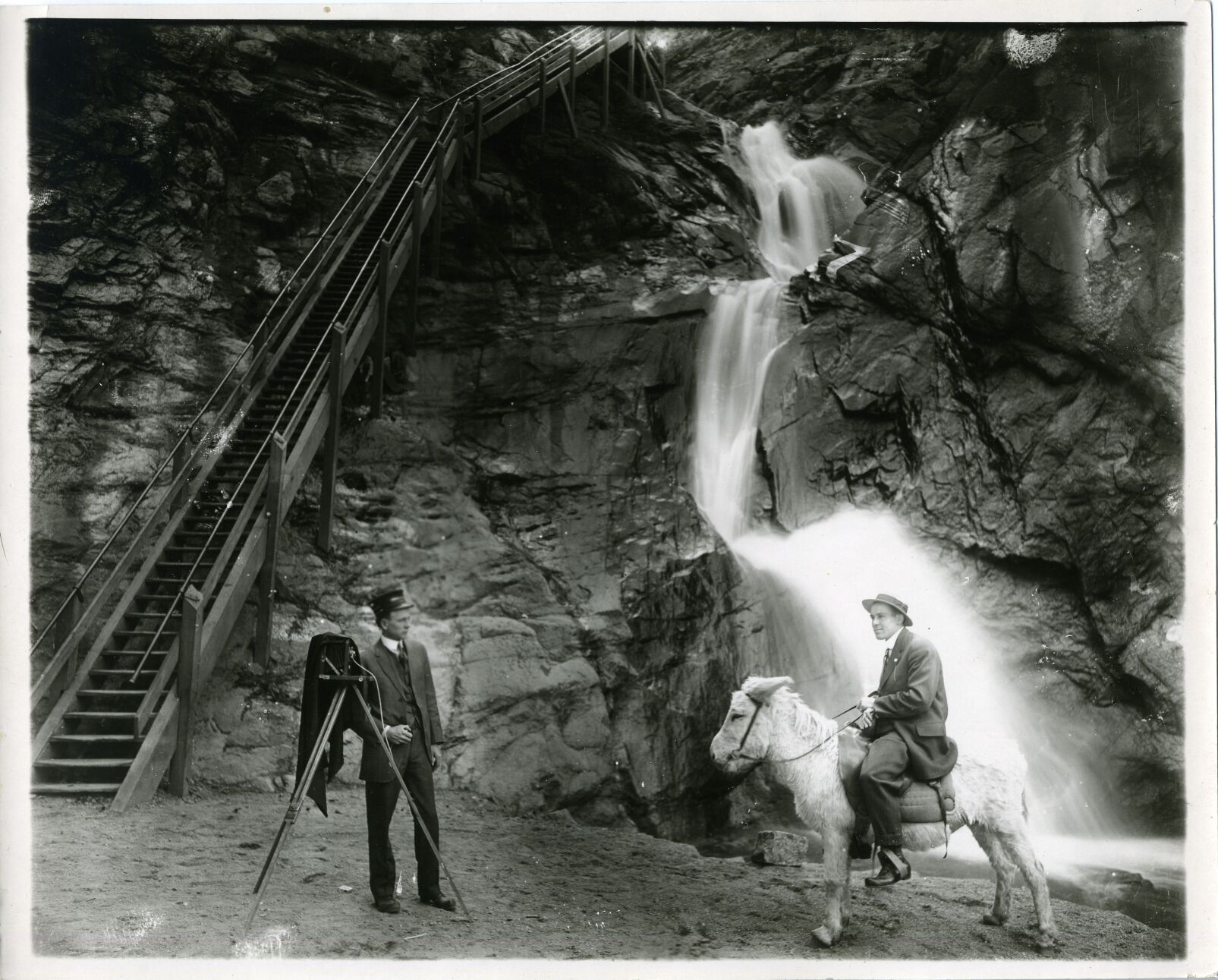
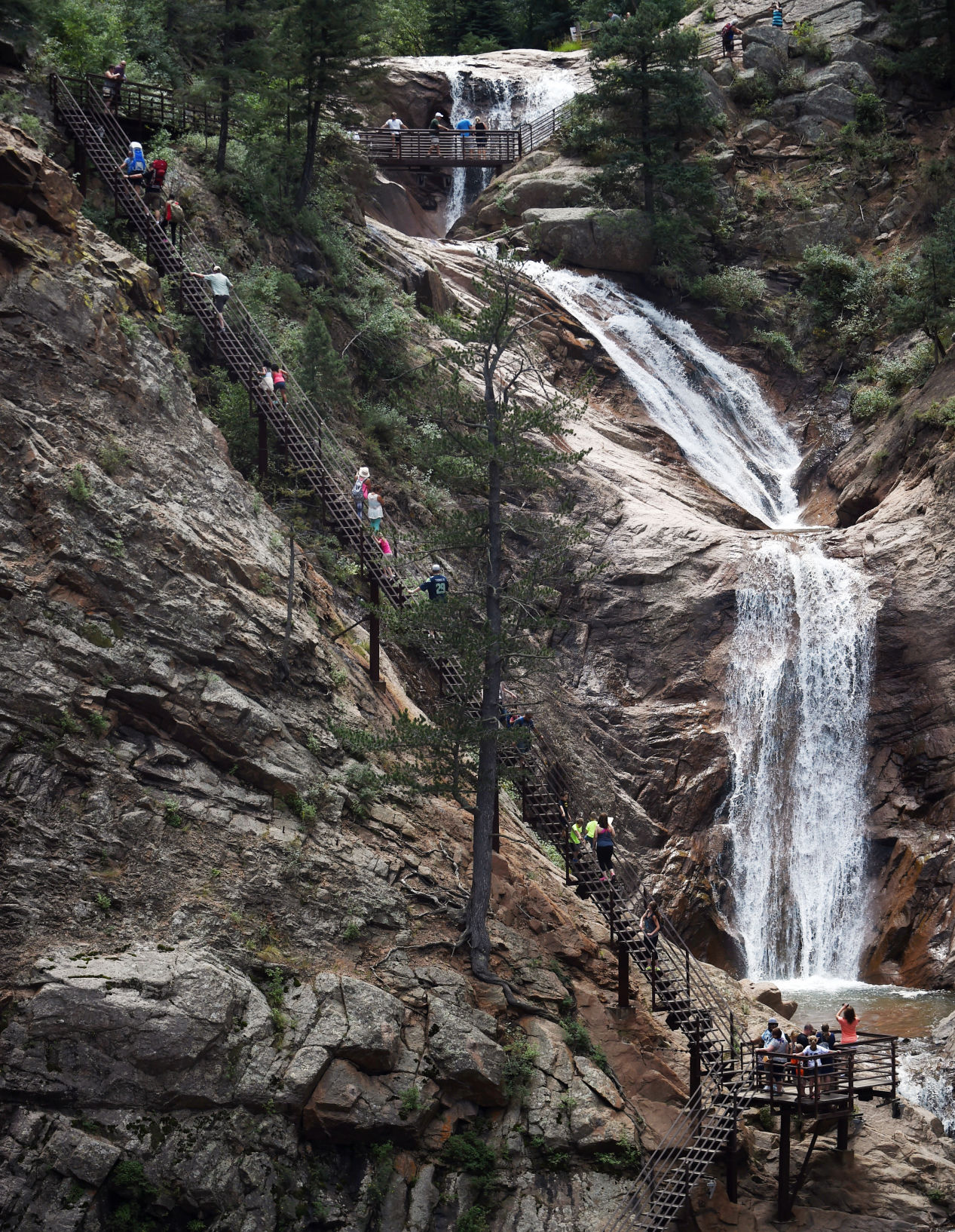
The stairs ascending the cool, spraying cascades. The mighty, curious faces of the enveloping canyon. The friendly, always-hungry chipmunks. The stately pines. The mountains rolling west, the plains sprawling east like an ocean.
A newcomer’s guide to Colorado Springs: Home at Garden of the Gods
It might be an experience best explained by professional writers — such as the famous one who wished to be buried atop the scenery. Such as one who felt so compelled to pen a poem in 1934.
“Oh, Nature! / No lovelier spot didst thou create,” wrote Frank B. King. “This gorge, like some gigantic urn / Shows beauty wheresoe’er we turn, / As if by some divining rod / ‘Twere carven by the hand of God.”
Another season promises more imagination. Seven Falls will welcome guests again in March.
6 frozen waterfalls to admire around Colorado
Ahead of then, we look back at 140 years of the colorful destination with an equally colorful history:
1872: Nathaniel Colby homesteads 160 acres including the scene of seven cascades in South Cheyenne Cañon.
1873: Colby sells the property to the Colorado Springs Land Co. While a rugged trip, the waterfalls are free to see for a time before a 10-cent charge.
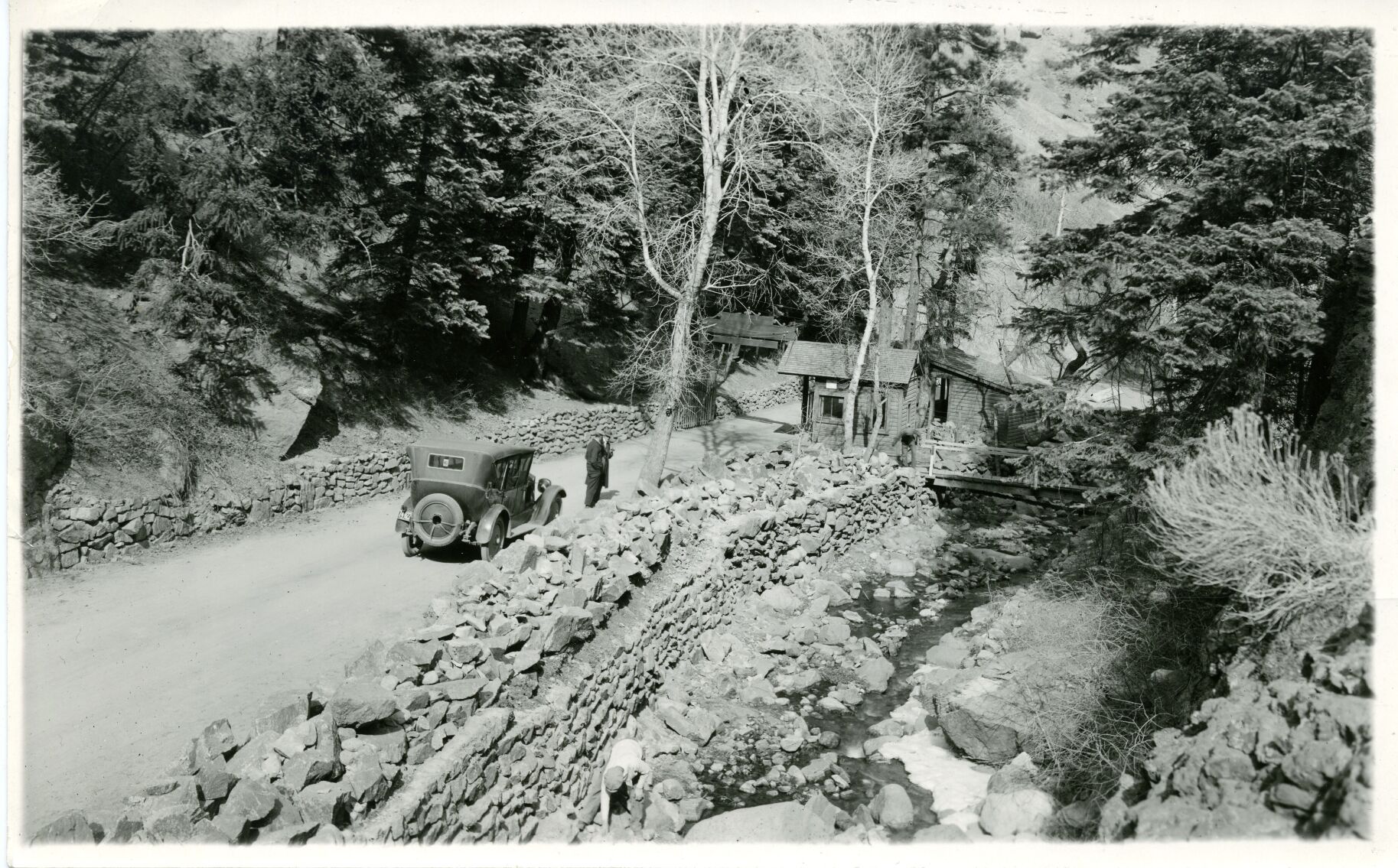
1882: James Hull buys what he believes to be a profitable tourist attraction (reports are conflicting of the purchase price, ranging from $1,000-$2,500). Hull would go on to charge 25 cents at the toll gate he installed at the mouth of the canyon and expand his carriage road to the falls — defining the destination as we know it today. Hull would also expand the park’s acreage to include the high, forested area called Inspiration Point.
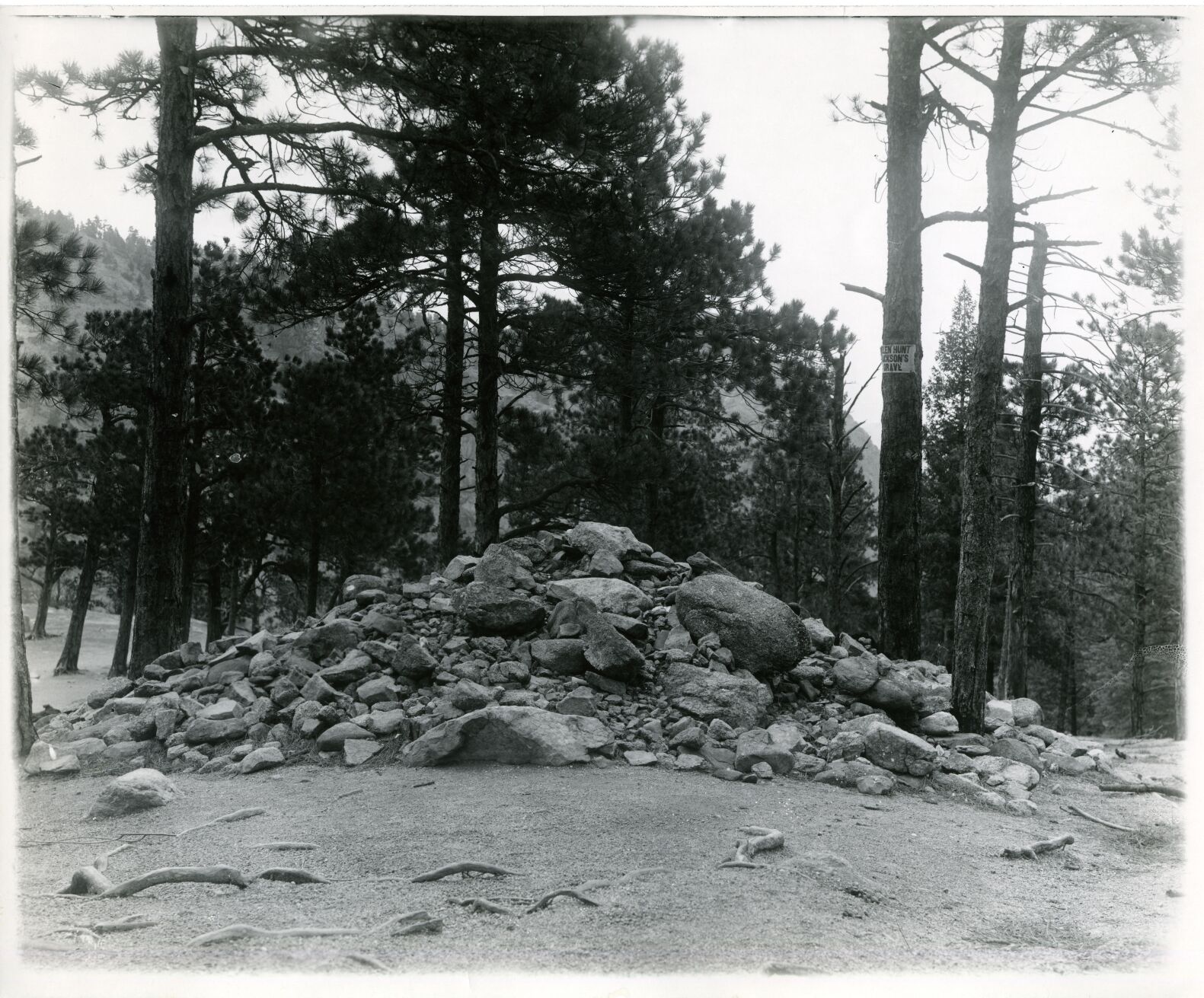
1885: Helen Hunt Jackson, the acclaimed writer of the novel “Ramona” and more, dies and has her wish granted to be buried at Inspiration Point. Her grave is popularly visited by trail before it is moved to Evergreen Cemetery in town.
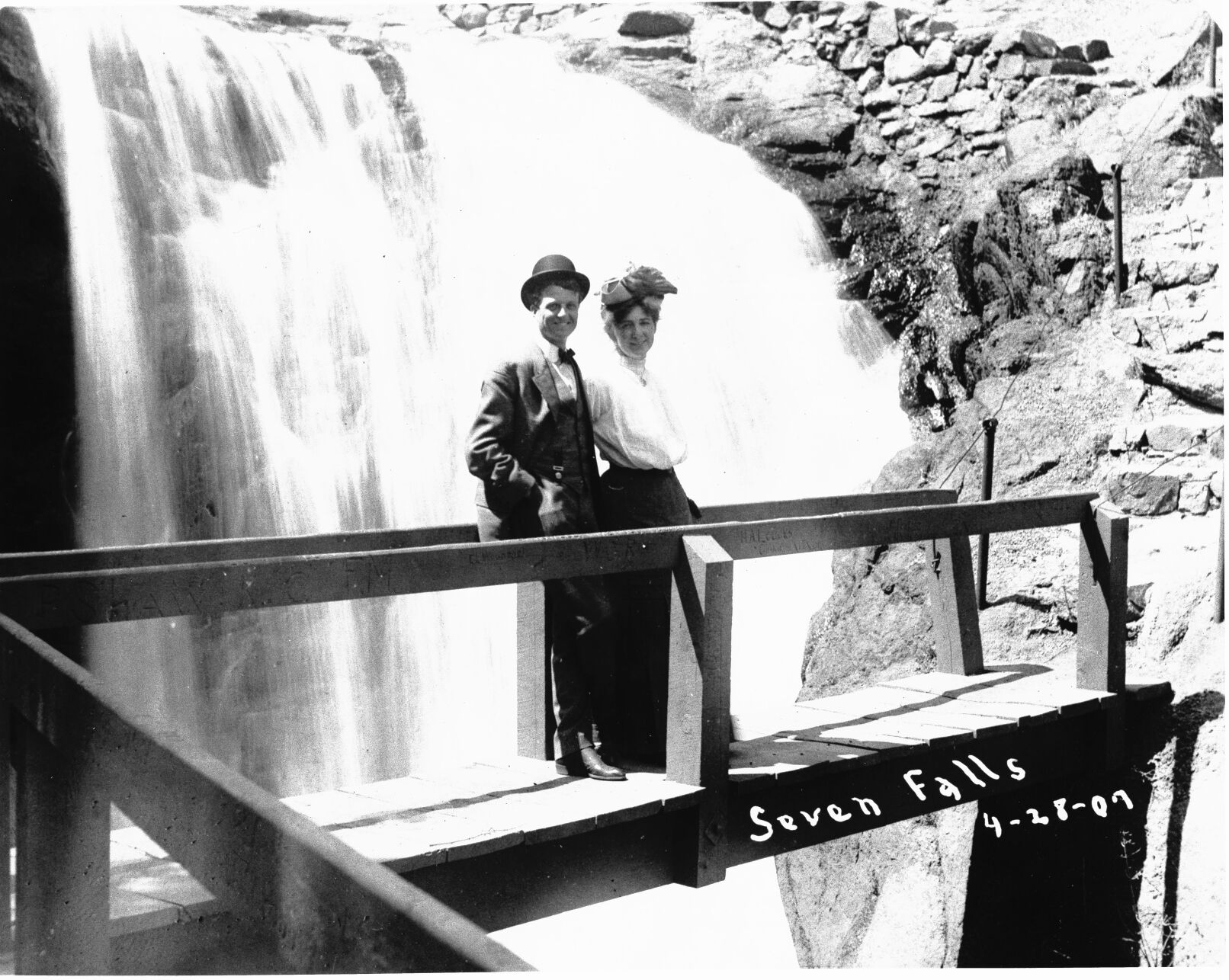
1895: Hull dies and Seven Falls enters the trust of his sons. They build the first staircase along the falls.
1905: For either $225,000 or $250,000, a company headed by Callidore Dwight Weimer acquires Seven Falls. One company stockholder is Melvin Weimer, who manages the property with his wife, Frances.
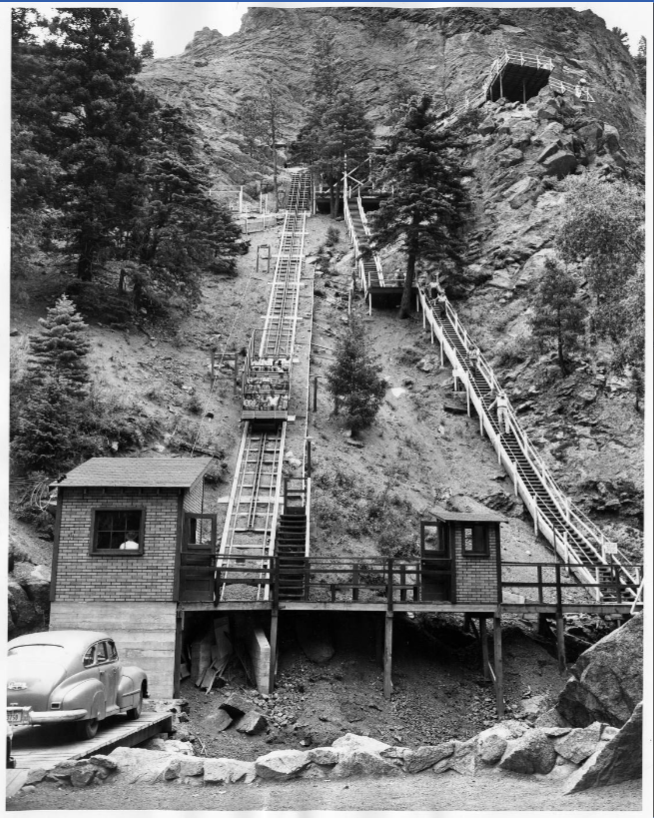
1946: Al Hill, a successful oil man out of Texas, negotiates a deal with Melvin Weimer, a former Colorado College classmate of his. Hill takes ownership of Seven Falls’ 1,400 acres and immediately invests $100,000 in upgrades and additions. These include a new set of stairs and a summit platform called Eagle’s Nest, granting visitors a view of all seven falls. A funicular cable car, similar to the Incline in Manitou, shuttles passengers to the observation deck.
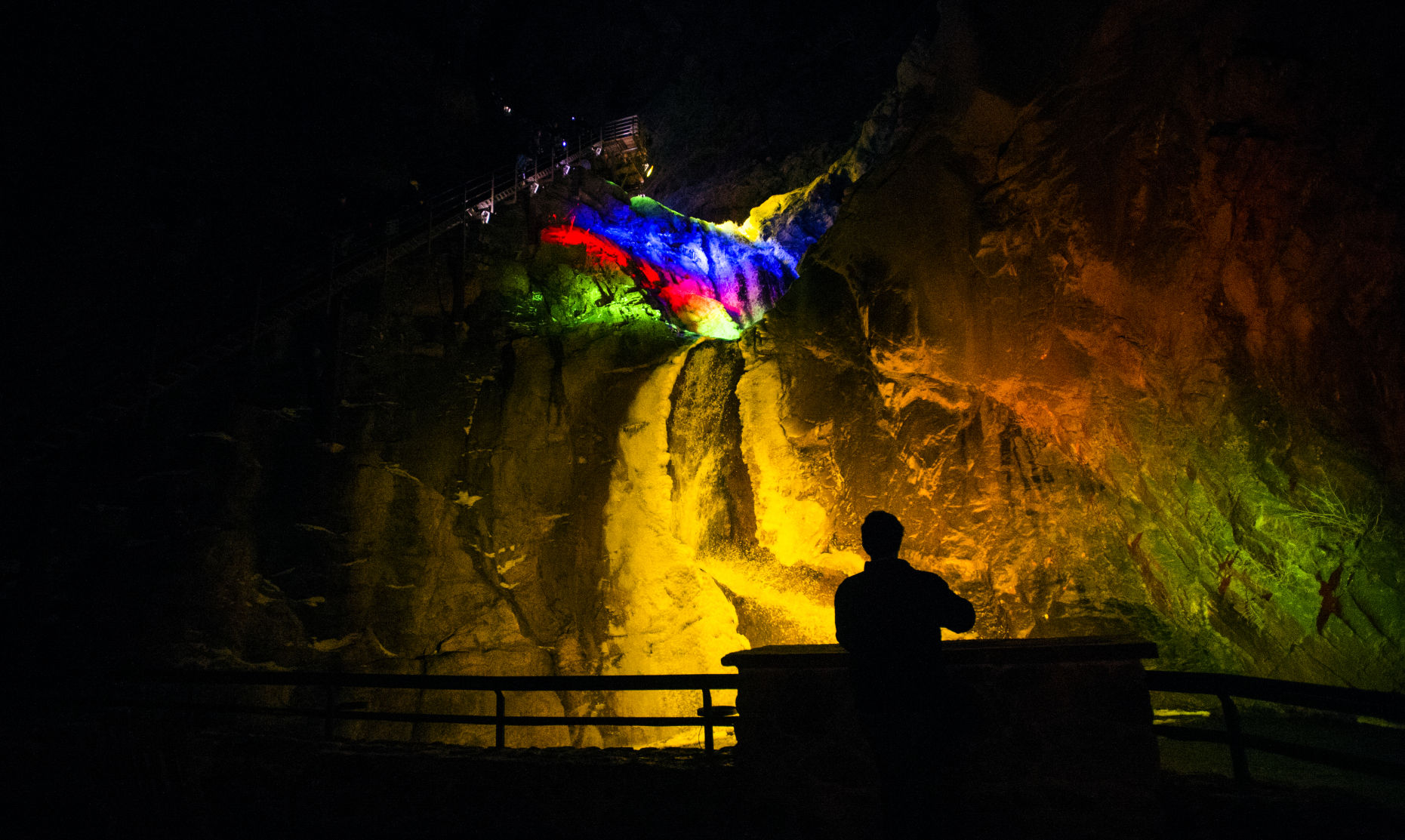
1947: Inspired by moonlight hikes with his Colorado College buddies, Hill completes a vision to make South Cheyenne Cañon the so-called “only fully-lit canyon in the world.” Thanks to a reported 120 “huge” flood lights, more than 1,200 smaller lights and 5-plus miles of copper line installed underground, Seven Falls becomes a night-time attraction. Rock formations are illuminated, along with the trees. Complete with a sound system amplifying jingles and carols, a Christmas tradition begins.
1955: New lighting is wired, with hidden glows replacing the flood lights.
1965: Heavy rains wash out the canyon road and more parts of the park. The attraction closes for about a month.
1986: The cable ride closes due to insurance costs.
1992: Without the ride to Eagle’s Nest, a new mode of accessibility emerges. An elevator opens, rising inside the canyon’s granite. It’s a kind of job only matched by the development of NORAD in Cheyenne Mountain. The local paper reports: “The tunnel and cervical shaft took 30 days to complete, with crews working two 8-hour shifts during the evenings and night. The tunnel was blasted horizontally 170 feet and vertically 130 through the rock by drilling 6-foot holes and filling them with 240 sticks of dynamite. The company used 4,500 pounds of dynamite to blast through the exceptionally hard Pikes Peak granite.”
2002: The lighting system gets an upgrade fit for the new century. The frozen cascades are splashed in color.
2013: Seven Falls is wrecked with its worst flooding in recorded history. It is such that two falls are clogged and go unseen. The road is damaged. Downed trees, standing water and mud further result in the park being closed indefinitely.
2014: After nearly 70 years under the Hill family, The Broadmoor acquires Seven Falls and announces plans to reopen the next year. That reopening would come with remote parking at the hotel and a shuttle to the canyon, relieving parking congestion. It comes as well with new attractions: a zip line and fine dining.
2020: Like attractions everywhere, Seven Falls closes due to the COVID-19 pandemic.
2021: Guests are welcomed back under official health guidelines and restrictions, before those are eventually lifted.
2023: In celebration of its 140th-year anniversary, and in honor of Seven Falls’ most beloved residents, third-grade classrooms in El Paso County are challenged to create 4-foot-tall chipmunk artworks to be displayed at the park.