Chasing stars in rare, dark skies beyond Colorado Springs

FLORISSANT • Out of the bright visitor center and into the night, David Warner asks you to stop.
Look around, he says here at Florissant Fossil Beds National Monument. You might feel disoriented, he says. That’s normal — it’s a staggering change from that kind of light to this kind of darkness.
“We were just inside, and our eyes were what we called bleached,” says Warner, with the Colorado Springs Astronomical Society. “We need to now let our eyes get adjusted to being able to see all there is to see.”
Aurora Borealis spotted by Coloradans in rare celestial event
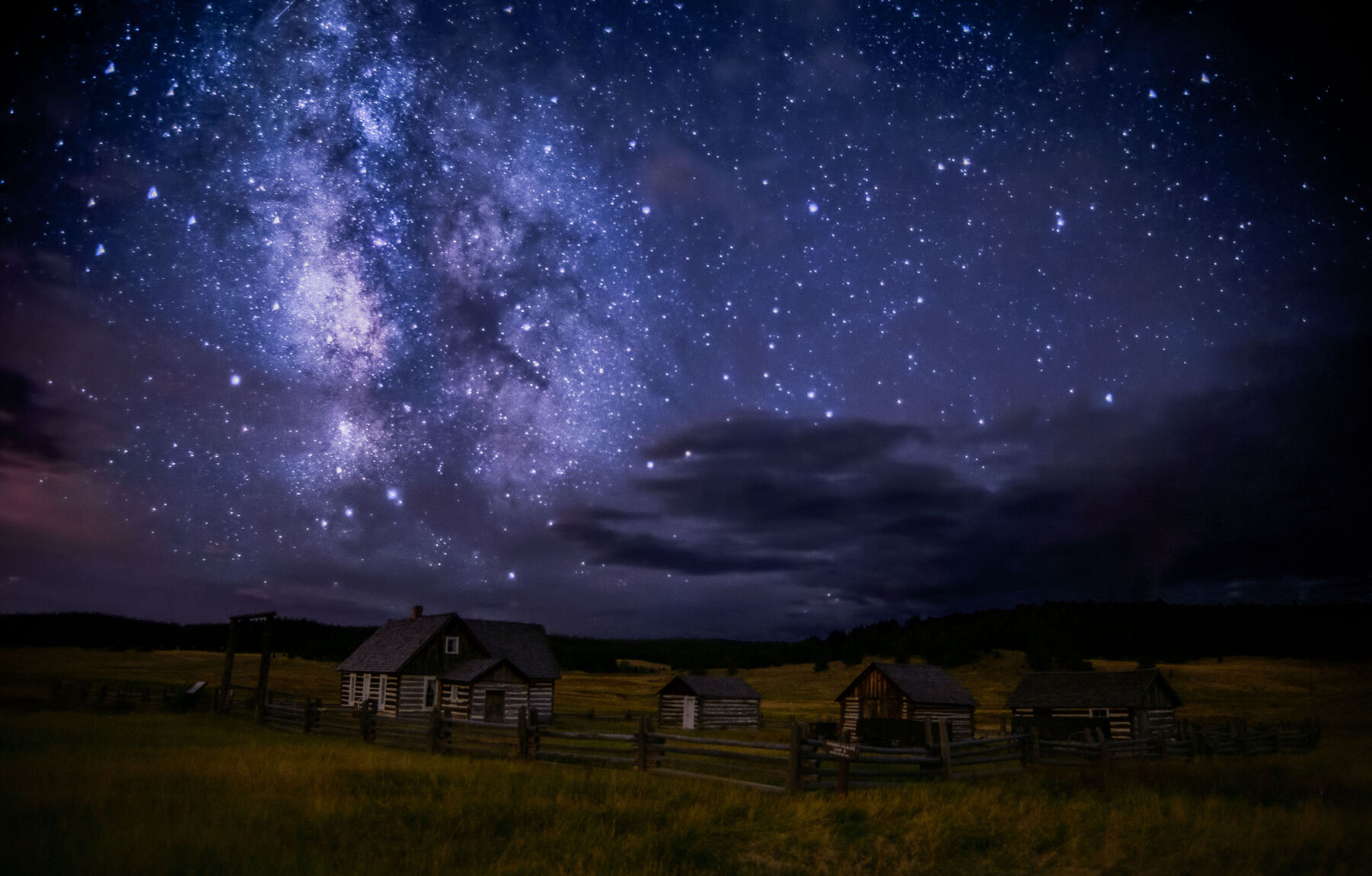
Soon enough, everything shines and sparkles above: the sky like a black canvas splashed in glitter. The stars, the planets, the nebulas, the galaxies deep in the cosmos — here beyond the hills west of Colorado Springs, the clarity is rare, a show that some in the crowd never have beheld.
It’s a crowd of maybe 50 (no earthly glow around makes counting hard). It’s a crowd gathered around Mark Harter, a ranger here at Florissant Fossil Beds National Monument.
He welcomes all to the park of prehistoric intrigue — of massive, redwood tree stumps and other subtropical life fossilized from a volcanic era some 34 million years ago.
“We have a saying here,” Harter says. “Half the park is after dark.”
After dark, ancient time above mingles with ancient time below in an experience unique to this often-overlooked preserve.
It’s an experience unique to 201 places around the world that have achieved International Dark Sky status. In Colorado, the number is 15.
Two years ago, the International Dark Sky Association added Florissant Fossil Beds National Monument to a list that today includes just 114 other parks on the planet deemed worthy of the designation. These are parks the organization measures to be mostly spared by light pollution, affording close to the kind of view our earliest ancestors had.
‘Visioning effort’ launches ahead of plan for Colorado 14ers
When conditions allow, the Colorado Springs Astronomical Society hosts these gatherings at the national monument once a month. Now, star chasers from all over flock to this isolated place, where Pikes Peak and the broader Rampart Range stand to protect against city glares to the east.
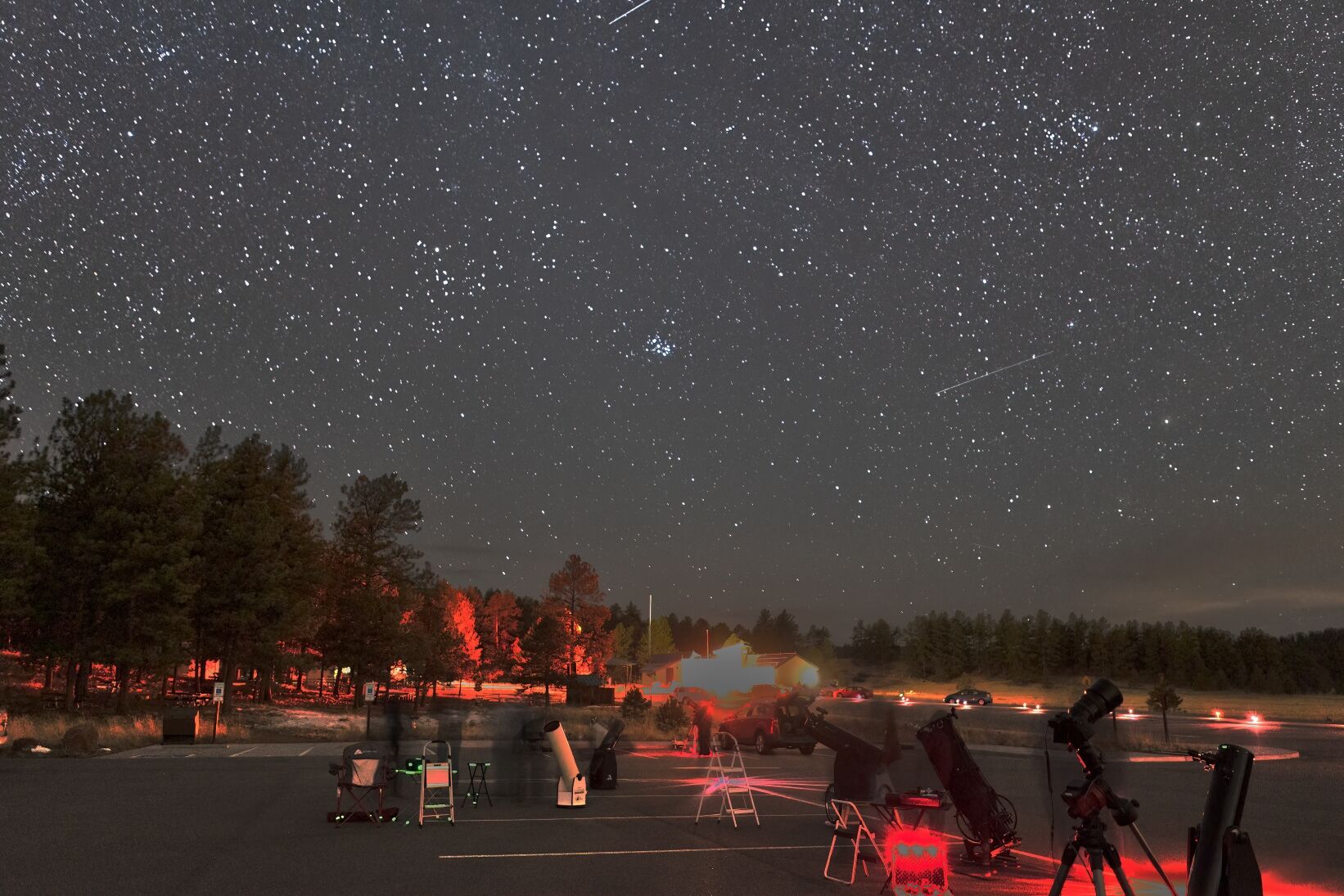
In the prime summer and fall months, people number in the hundreds at these star parties led by astronomers with big, powerful telescopes. “We have people from dozens of states, plus foreign countries,” Harter says.
Tonight, one is from New York City. “Yeah, I don’t see this,” she says under the celestial glory.
Not many do.
In 2016, after years of collecting satellite data and widespread ground observations, Italy-based Light Pollution Science and Technology Institute determined 83% of Earth’s population lived under polluted, blotted skies. That included 99% of Americans and Europeans. A third of mankind, the report added, was unable to see the Milky Way.
With population growth, the beauty is increasingly hard to appreciate in Colorado, a leader of the state’s International Dark Sky Association chapter previously told The Gazette.
“We’re losing the ability to really appreciate what makes Colorado Colorado,” Ryan Parker said. “We have so much development that’s happening, and we’re eroding that natural landscape, including that natural night scape, by adding more unshielded, extra bright lighting. We’re creating these glare bombs.”
Babe Ruth’s visit to Colorado Springs: 7 interesting notes about iconic tourist destination
They can be seen this night at Florissant Fossil Beds. Lenticular clouds, like flying saucers, are hovering over Colorado Springs about 40 miles away and over Denver about 90 miles away, and they are clogged with light. An unfortunate circumstance, says Bruce Bookout, an adjunct professor of astronomy at Pikes Peak State College.
Still, he has plenty to point out with his green laser. His listeners tilt their heads.

There’s Polaris, the North Star. There’s Ursa Major, the Big Dipper. Here’s Orion, the great hunter, and his beastly foe, Taurus. Here’s a queen and king and princess chained to a rock
“The hero is actually straight up above your head,” Bookout says. “There’s Perseus.” And there’s his noble steed, Pegasus.
Bookout points to another cluster, faint but unmistakable. “Say hello to the Andromeda galaxy!”
The galaxy would take 2.5 million years to reach at the speed of light. That’s more than 19 trillion miles away.
“And you’re seeing it with your naked eye,” Bookout says. “That’s pretty cool.”
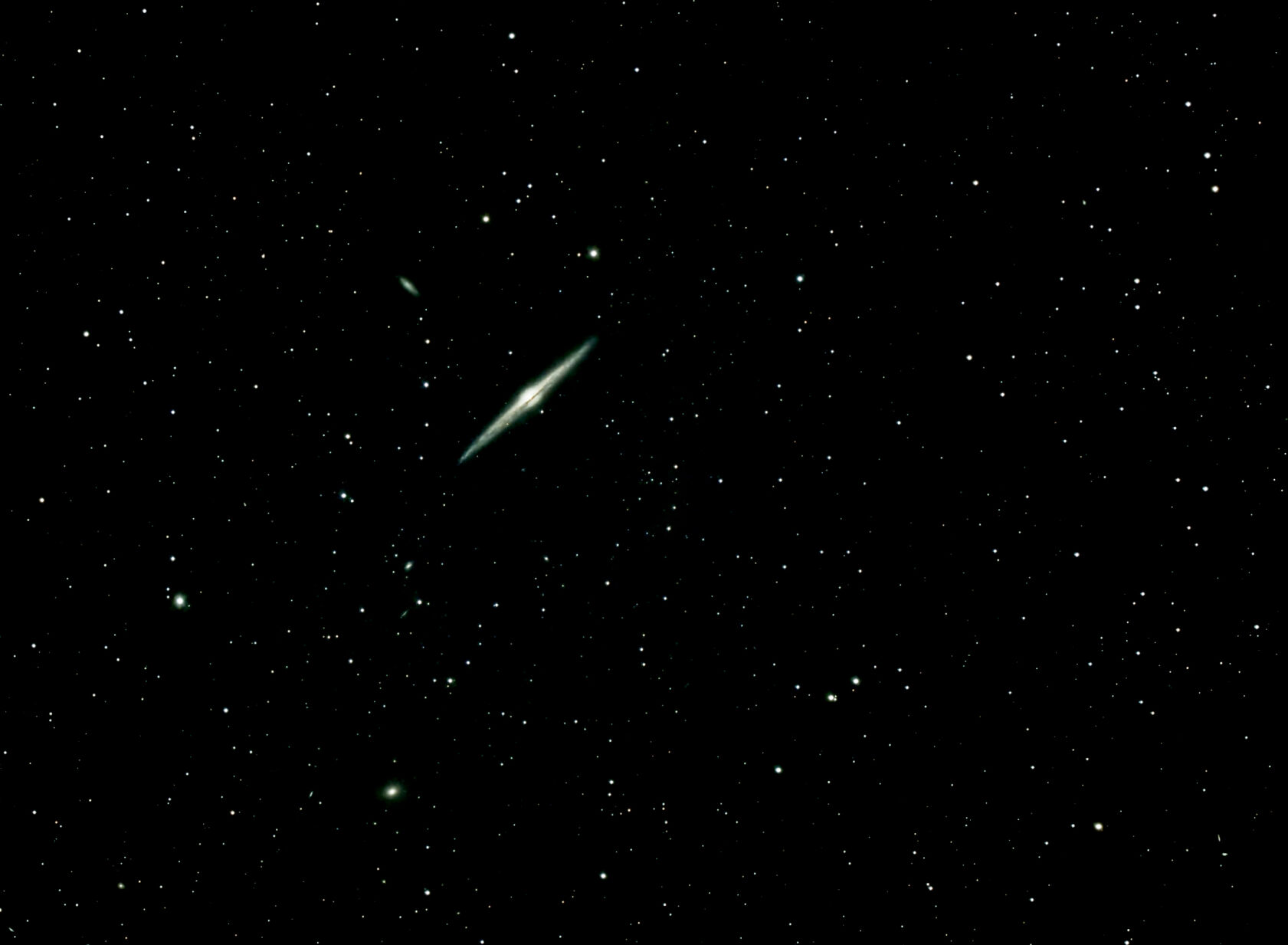
Now he tells his audience to go peer through the telescopes. There’s one trained on other galaxies, Messier 81 and 82, each more than 12 million light-years away. Another telescope is focused on Jupiter and its moons. Another on the constellation known as the Seven Sisters. Another on a comet believed to only come around every 50,000 years or so.
“There’s a sense of euphoria you get from looking at something like that,” says Warner, with the astronomical society. “It’s like, ‘Oh my gosh, I’m seeing something that hasn’t ever been seen before.’”
It’s more than euphoria, he says. It’s something science has tried to pinpoint, he says — that feeling of awe and its neurological and biological impact.
“Whether that’s going up and enjoying nature in the mountains, or seeing some cool wildlife here in Colorado, or seeing the beauty of the Milky Way with the naked eye … it triggers a response in your brain that lasts for a period of time. It’s a sense of well-being that you get,” Warner says. “And science doesn’t know exactly how long that benefit acts for. So my suggestion is just keep doing it.”