




Will summer 2023 be good for wildflowers in Colorado? Here’s one prediction
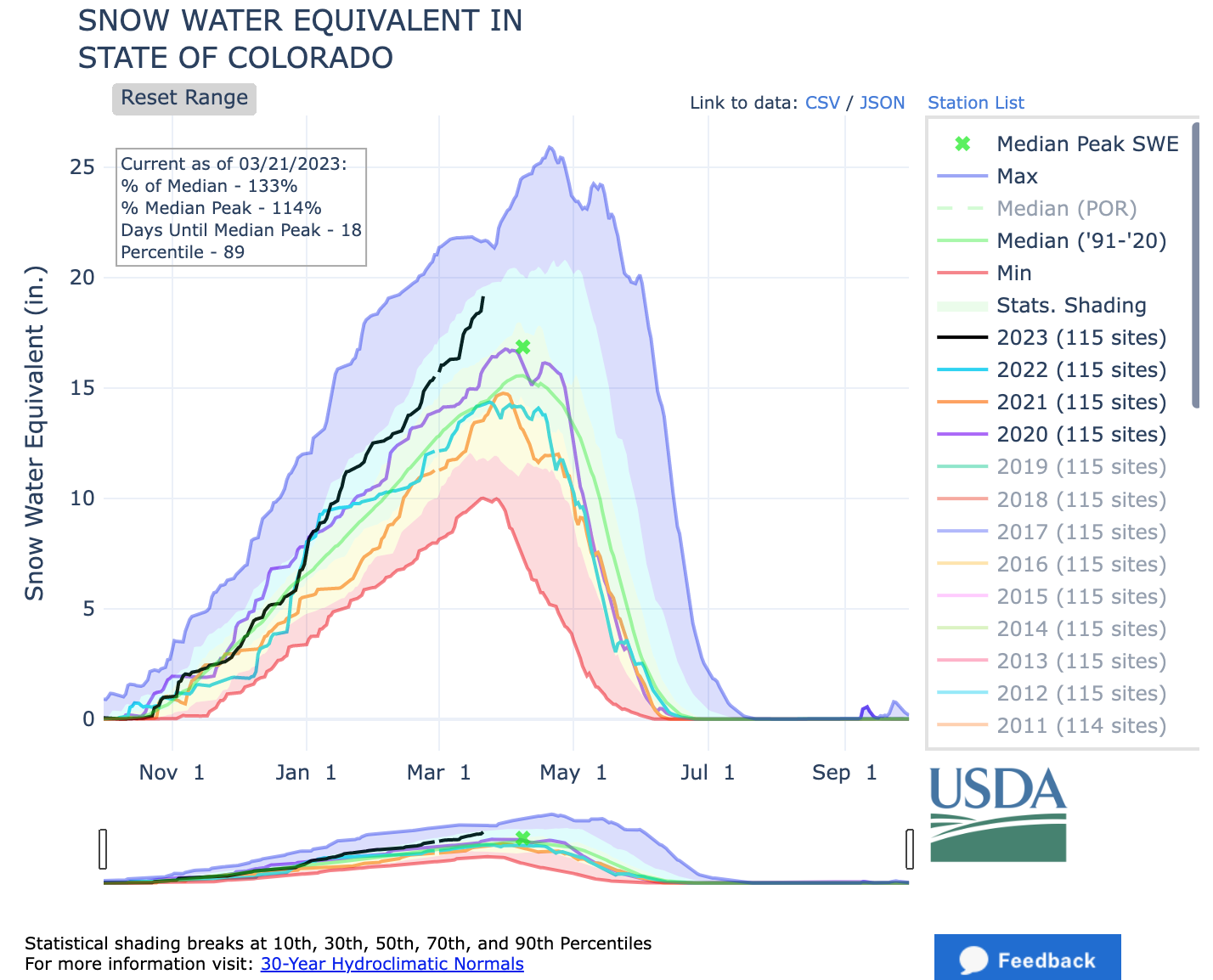
With Colorado’s statewide snowpack at 114 percent of the 30-year median peak and the typical peak snowpack date still 18 days away, there’s no doubting that it’s been a wet winter season in the Centennial State. All that moisture will likely be one of several factors that contributes to a wildflower boom in Colorado this year.
According to the state tourism office, wildflowers generally start popping up in the Eastern Plains region as early as April and May, appearing later in more mountainous, higher elevation terrain. Lingering snowpack on towering peaks doesn’t typically melt until June, with wildflowers appearing in these areas in July or even as late as August.
When it comes to how many wildflowers show up, there are a number of factors that tend to impact numbers, as well as timing.
For starters, snowpack and moisture tend to be key drivers of when and how many flowers appear. In years where the snowpack lingers, the wildflower season tends to start a bit later. That being said, this typically means there’s more snow, thus more moisture to fuel flower growth.
As noted, moisture is already above the norm at this point in the snow season, which could be a factor that means lots of flowers in Colorado’s alpine terrain come this summer.
That being said, it’s also worth noting that the wet spring may come to a quick close. The three-month National Weather Service outlook for April through June indicates that upcoming weeks of spring may skew warmer and drier than normal in some parts of Colorado. This probably means snowpack won’t stick around much longer than the norm.
These two factors point to the state’s wildflowers putting on a good show this year on a pretty normal timeline.
It’s not quite that simple though – prior years of drought could also impact the presence of wildflowers.
The last three winter seasons have been notably dry in Colorado and that can have a lasting impact.
Per a report from the Colorado Springs Gazette, drought can mean reduced seed germination, especially when drought occurs in subsequent years.
The report cited Ian Billick of the Rocky Mountain Biological Laboratory as stating that recent drought could mean fewer flowers for up to 10 to 20 years.
Thankfully, all that moisture gives wildflower peepers a good chance for a memorable experience. Wait for snowpack to melt and give it a few weeks. In general, the month of July is a great time to go hunting for colorful petals sprinkled across Colorado mountainsides.
Where’s your favorite place to go wildflower spotting? Let us know in the comments.
STAY INFORMED: Get free Colorado news with our daily newsletter (Click here)
Get OutThere
Signup today for free and be the first to get notified on new updates.
PREV
PREVIOUS

Skier killed in avalanche identified, more details released about fatal slide
The man that was killed by a large avalanche while skiing near boundary lines of Aspen Highlands resort on Sunday has been identified by the Pitkin County Coroner’s Office as Gábor Házas, a 54-year-old from Budapest, Hungary. According to a news release from the Pitkin County Sheriff’s Office, the fatal avalanche was triggered in the Maroon Bowl […]

CDC warns of deadly fungus in Colorado, "urgent" threat
According to the Centers for Disease Control and Prevention, a fungus called Candida auris, shortened to C. Auris, has been detected in more than half of the American states, including Colorado. This “emerging” fungus is cause for concern due to being “considered an urgent antimicrobial resistance threat.” As stated in a March 20, 2023 report, […]