







Bill to ban hospital facilities fees gets heated hearing, moves on
Marianne Goodland marianne.goodland@coloradopolitics.com
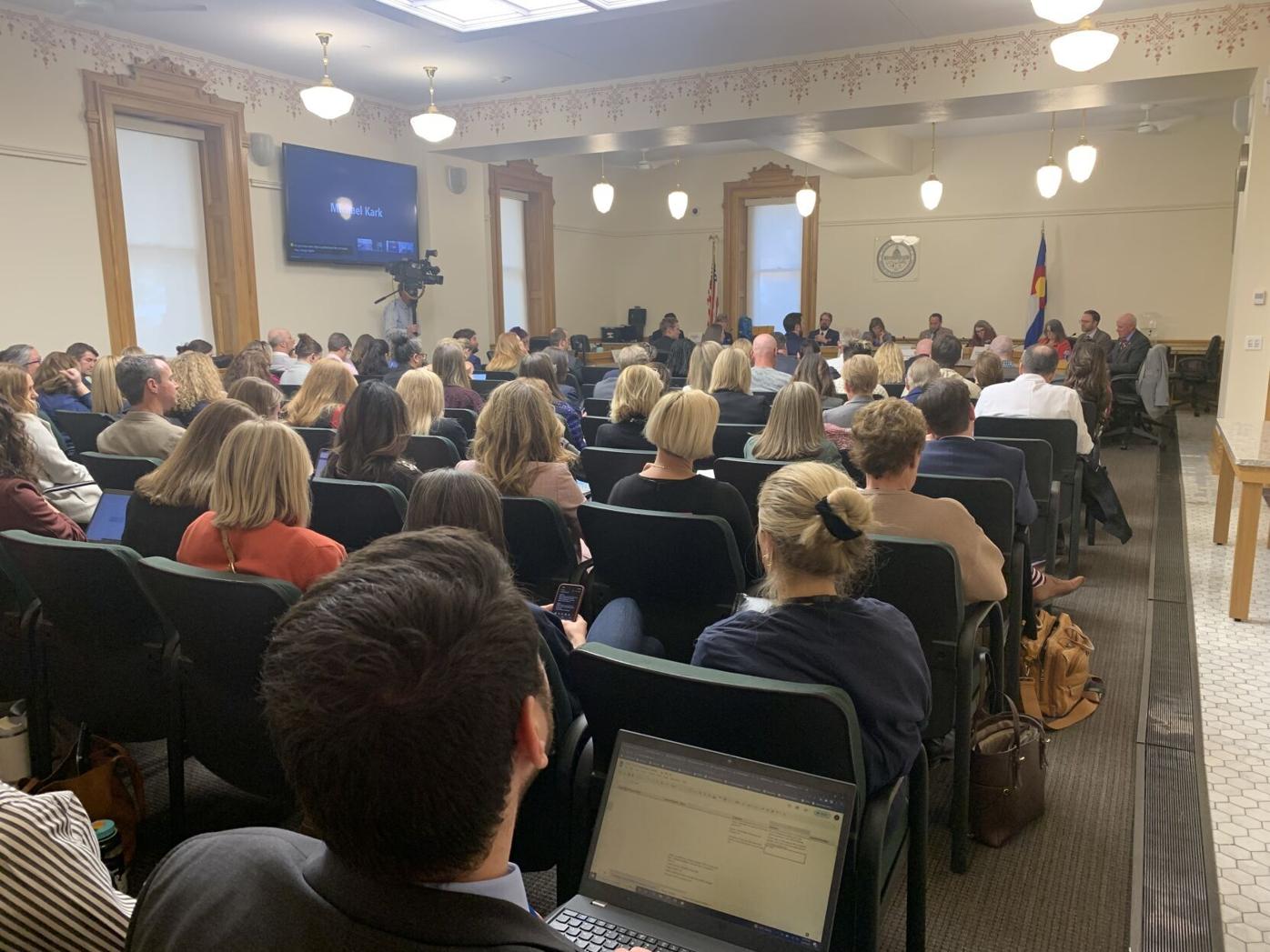
Hospital facility fees, according to those who oppose them, are hidden charges and unfair to consumers who get hit with those costs months after their outpatient medical treatments, and which can run into thousands of dollars. One witness likened the fees in a House committee hearing Friday to the baggage fees airlines charge.
Or those fees, according to those who support them, are “people fees,” an integral part of paying for everything other than the doctor, such as nurses, x-ray technicians, laboratory technicians, reception, security, maintenance personnel, behavioral health personnel, social workers and much more.
The hearing in the House Health & Insurance Committee Friday became a conflict between those who claim the fees are a form of surprise billing, versus opponents who indicated the bill is an attack on the personnel for whom those fees pay for in an outpatient setting.
A bill to ban those fees was substantially watered down by the committee, exempting dozens of rural hospitals and Denver Health from the bill’s impact, and turning the bill into a study rather than a blanket prohibition on all fees.
In a move that hasn’t been previously deployed in 2023, the committee limited the hearing to an hour each for opponents and proponents, a move designed to get lawmakers back to the House to debate gun violence prevention bills. Debate on those measures is expected to last the rest of the day and possibly into Saturday.
That testimony got heated during testimony by Josh Ewing of CHA, who said there is a fundamental misunderstanding of the fees, asking: “Why the hell are we doing this?”
Ewing explained that the federal government, through Medicare, which drives how private insurance also works, dictates how these fees are billed. Doctors, who are often not employed by the clinics, are billed under one form. Other services are billed under a separate form that becomes facility fees.
“The idea that these fees are fungible or made up, is insulting and frankly inaccurate,” Ewing said.
Rep. Chris deGruy Kennedy, D-Lakewood, responded in kind.
“You know why the hell we are doing this,” he said, claiming the bill is about abuses in billing. He also questioned Ewing on what happens when a hospital facility purchases a doctor’s practice, and slaps on a facility fee with no benefit to the consumer.
Ewing disputed there are abuses in the system, and said the bill would impose cuts without any data to back it up. He also apologized for his heated comments, stating the issue is very personal to him as his son recently suffered a brain injury and they’re still dealing with it.
The major changes to House Bill 1215 were prompted by a major outcry from Colorado hospitals and the Colorado Hospital Association (CHA), based on concerns that banning the fees would result in financial disaster for hospitals that are still struggling to recover from the impacts of the pandemic.
Consumers foot the bill for those fees when health insurers don’t cover them; that’s due to what’s negotiated in the insurance contract with the hospital. Some insurers cover all of it, some cover part of it and some don’t cover it at all.
HB 1215 is based on a model bill proposed by the National Academy for State Health Policy, which according to InfluenceWatch is a “left-of-center” organization funded by the liberal Arnold Ventures fund. So far, only Connecticut and New York have banned facility fees. In Connecticut, that ban applies only to telehealth.
Democratic Reps. Emily Sirota of Denver and Andrew Boesenecker of Fort Collins brought several amendments Friday, intending to tamp down the opposition from the CHA.
But that didn’t work. In a statement Thursday, the CHA said it is “steadfastly opposed to the bill as introduced,” calling it misguided and based on misinformation, and they continue to oppose the bill, even with the amendments.
Any cap on fees would harm access to care, the CHA said. Every major hospital system, and many that serve rural Colorado, is opposed to HB 1215.
In addition to turning the bill largely into a study, the amendments would ban facility fees for preventive care services, telehealth and primary care. The bill would retain its original language on transparency, requiring clinics to disclose those fees upfront.
The transparency piece appeared to be the only thing on which both sides agreed. The study is still up for debate as opponents said they hadn’t seen the amendments before Friday’s hearing.
The study would look at how some hospital systems use the fees, Sirota responded. There is a question to ask why a facility fee is being charged now when it hasn’t been in the past, Boesenecker added.
What the bill would do to Craig Hospital is a concern to Rep. David Ortiz, D-Centennial. Ortiz first came to Colorado to be treated at Craig after he was paralyzed in a helicopter crash in Afghanistan. Craig is not exempt, Sirota said, although pointing out that telehealth services offered by Craig would not be allowed to charge the fee.
Those who support the bill pointed to large bills, sometimes in the thousands of dollars, that they did not expect.
Michael Kark’s six-year-old son has serious allergies, and with a recommendation from their allergist, took his son to an outpatient psychologist at Children’s. He thought the $20 copay would cover the visit, but got a $503 bill some time later.
These fees will discourage people from seeking medical care, said Dr. Nicholas Nonas, a retired family physician from Greenwood Village. That’s particularly a problem for those with chronic and complex conditions which require a range of services, and the fees go way beyond what consumers pay for health insurance premiums and copays, he said.
Robert Smith, CEO of the Colorado Business Group on Health, said employers have reasons to be concerned about these fees. Colorado’s fees are among the highest in the country, and twice that of independent outpatient facilities. These fees have little relation to hospital cost, and no relationship to quality, Smith said. Mostly, those fees have a strong relationship to market share, he claimed.
The only alternative to the bill is to allow hospitals to charge what the market would bear, and that’s not good public policy, Smith added.
The CHA and its allies showed up in force Friday, filling the room with opponents, many wearing “facility fees pay for me” shirts.

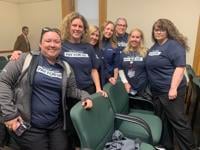
Staff from UCHealth display “facility fees pay for me” shirts at the March 24, 2023 House Health & Insurance Committee hearing on House Bill 1215.
Former Lt. Gov. Donna Lynne, now the CEO of Denver Health, told the committee that facility fees do not meet the definition of surprise billing, and that in fact are required to be charged by the federal government.
Rural healthcare hospitals affiliated with the Western Healthcare Alliance and a similar coalition on the Eastern Plains remain opposed to the bill, even as amended. This bill would prevent hospitals from being paid for nursing and other care, said Jennifer Riley, CEO of Memorial Regional in Craig.
Even though rural hospitals would be exempted, Riley said the carve out shows the bill’s poor design. Focus on the study, not banning the fees, even for telehealth, she said.
DeGruy Kennedy asked whether facility fees for telehealth, for example, actually go to pay for those services, or whether some of that money covers other unrelated costs. One Democratic committee member later hinted those fees become part of large bonuses paid to hospital executives.
“We lost $32 million last year, largely on the cost of labor,” Lynne replied. “We’re also being asked to do more in the regulatory environment,” and she questioned whether that exemption in the amendment for Denver Health would last. Denver Health’s losses, and that of other hospitals, will continue, Lynne said.
These fees are a real cost of doing business, said John Riley, president of the faculty practice at the University of Colorado School of Medicine. He also warned that loss of revenue from the facility fees would result in a downsize of training programs and fewer physicians who want to practice in Colorado. These fees have existed for decades, he pointed out, but the trend toward high-deductible health plans are largely why those fees are now showing up in consumer bills.
This bill won’t have more than a trivial impact on hospital finances, said Loren Adler, a Brookings Institute fellow who was not testifying on their behalf. Hospitals will just charge higher professional fees or higher facility fees in other areas, he said, calling it a consumer protection issue and a form of surprise billing. Adler also drew outrage from some in attendance for comparing the fees that pay for medical personnel to baggage fees charged by airlines.
Danielle Schloffman works at UC Health, was wearing one of those shirts.
“It’s tough to hear, especially when you hear what nurses have done to get us through the pandemic,” she said. “To be referred to as baggage is a little disheartening.”
Staff from UCHealth display “facility fees pay for me” shirts at the March 24, 2023 House Health & Insurance Committee hearing on House Bill 1215.
Damian McCabe, a social worker at UC Health, called Adler’s comments offensive. These are “critical components” of health care, he told the committee.
McCabe said that while he supports transparency around the fees, cutting them off for telehealth ignores the “massive infrastructure” that goes into telehealth care. It isn’t just the provider on the other side of the computer. “I’m not doing it from my kitchen,” he said.
This is not an anti-nurse, behavioral health or medical professional bill, Boesenecker said as the hearing wrapped up.
The bill was amended as sponsors intended. The final vote was 8-3 on a party line. It now moves to the House Appropriations Committee and a rewritten fiscal analysis that will report on the study’s cost.


Paul Pazen, a former police chief, launches bid for Denver City Council
Deborah Grigsby
deborah.smith@denvergazette.com
Updated 9 hours ago
Former Denver Police Chief Paul Pazen announced his bid for the District 2 City Council seat to be vacated by Kevin Flynn in 2027. Flynn is term-limited. Pazen, who began his law enforcement career in 1995 with the Denver Police...

Deborah Grigsby
Reporter

Denver advances face covering ban for law enforcement
Deborah Grigsby
deborah.smith@denvergazette.com
Updated 9 hours ago
A Denver City Council committee on Wednesday advanced a proposed ordinance banning law enforcement officers, including federal immigration agents, from covering their faces during an arrest or detainment or inside a city facility. The proposed ordinance also establishes a minimum...
Deborah Grigsby
Reporter

CU Boulder, state launch economic research in coal-transition areas
Scott Weiser
scott-weiser@denvergazette.com
Updated 11 hours ago
Communities in northwest Colorado built on coal mining and power plants are losing hundreds of high-paying jobs and a major share of their tax revenue as operations wind down. In a yearlong effort, the University of Colorado Boulder is teaming...

Scott Weiser
Reporter
Arvada councilmember under investigation for alleged ethics violation
Sage Kelley
sage.kelley@denvergazette.com
Updated 11 hours ago
A third-party investigator will look into potential ethics violations from Arvada City Councilmember Sharon Davis. Davis was excused from the dais during the council’s regular business meeting on Feb. 3. The rest of the council then approved the outside investigation...

Sage Kelley
Reporter
Aurora councilmembers discuss Regional Navigation Campus, ADA requirements
Kyla Pearce
kyla-pearce@denvergazette.com
Updated 16 hours ago
The Aurora City Council tackled several major city topics at a Saturday winter workshop, moving forward with ADA accessibility improvements for the council chambers, addressing concerns about the Regional Navigation Campus and debating a new impact fee for businesses. In...

Kyla Pearce
Reporter

Colorado lawmakers take aim at ‘imposter’ peaches, melons and chiles
Marissa Ventrelli
marissa-ventrelli@denvergazette.com
Updated 9 hours ago
Do you know where your Palisade peaches come from? What about your Rocky Ford melons? Your Pueblo chiles? You might think they were grown right here in the state, especially if they have the “Colorado Proud” logo — but that’s...

Marissa Ventrelli
Reporter

Denver moves to codify quarterly financial updates to the City Council
Deborah Grigsby
deborah.smith@denvergazette.com
Updated 16 hours ago
The Denver City Council unanimously advanced a proposed ordinance on Tuesday that aims to codify quarterly general fund reporting to the council from the city’s Department of Finance. The council currently does not receive regular budget updates, relying instead on...
Deborah Grigsby
Reporter

Colorado Title Board rejects challenges to graduated income tax ballot measure
Marianne Goodland
marianne-goodland@denvergazette.com
Updated 22 hours ago
The state body that determines whether a ballot measure contains a single subject has rejected challenges to eight versions of the push to change Colorado’s flat rate to a graduated income tax, thereby increasing the taxes on higher income earners....
Marianne Goodland
Reporter

Lakewood City Council urges residents to keep zoning changes
Sage Kelley
sage.kelley@denvergazette.com
Updated 16 hours ago
Lakewood’s long-running zoning fight is headed for a spring showdown at the ballot box, spearheaded by a new resolution from the City Council. The Lakewood City Council amended and confirmed a resolution on Monday expressing the councilmembers’ desire for residents...
Sage Kelley
Reporter

President Pro Tem Sen. Dafna Michaelson Jenet to resign from Colorado Senate
Marianne Goodland
marianne-goodland@denvergazette.com
Updated 1 day ago
A top Democrat in the Colorado General Assembly is resigning to take a new job. President Pro Tem Sen. Dafna Michaelson Jenet of Commerce City, who has served in the General Assembly since 2017, will become the director of the...
Marianne Goodland
Reporter
PREV
PREVIOUS

East High School student testifies on gun bills hours after school shooting
Facebook Twitter WhatsApp SMS Email Print Copy article link Save Alexander Cisneros spent Wednesday morning in lockdown after one of his classmates at East High School allegedly shot two faculty members. Seven hours later, he spent the evening advocating for gun safety in front of the Colorado legislature. Just before 10 a.m., a 17-year-old student shot and […]

Former Denver Police Chief Pazen joins Common Sense Institute as fellow
Facebook Twitter WhatsApp SMS Email Print Copy article link Save Former Denver Police Chief Paul Pazen has joined Common Sense Institute as a public safety fellow, the group announced Friday. In a statement, Pazen said he is excited to join the Common Sense Institute. “I believe in utilizing research, innovation, data, and evidence-based methods to […]