





Beacon Zone Board will appeal revocation to state

Nicole C. Brambila nico.brambila@denvergazette.com
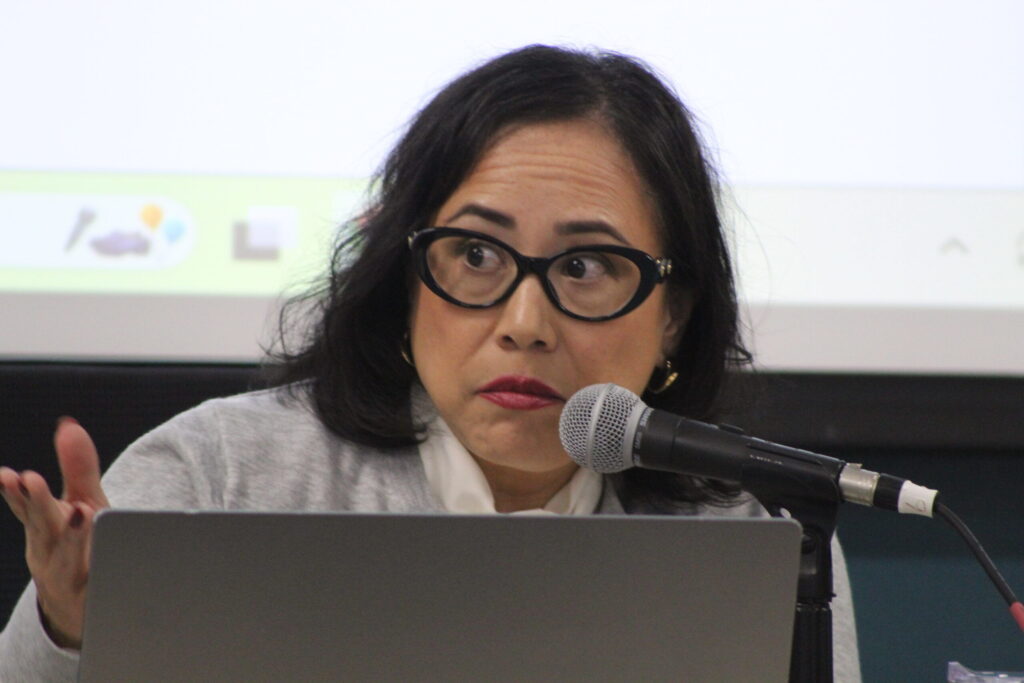
The Beacon Zone Board reached a consensus Monday to pursue appealing the Denver Public Schools Board of Education’s decision to revoke its innovation zone status.
No vote was taken.
Instead, Zone Board President Eliot Lewis said he would put members to a vote once they’ve established the grounds for the appeal and received guidance from their attorney.
“We have a general consensus that we all believe we should move forward on,” Lewis said. “We’re going to avail ourselves of the appeal process.”
In a split vote on March 10, the DPS board revoked the innovation zone status of Beacon Network Schools, citing low test scores coming out of the pandemic, concerns over the zone’s organizational health and finances.
But supporters have contended that the move was personal for supporting the very law that the zone board will use to appeal to the state.
Policymakers passed the Innovation Schools Act in 2008, in part, to respond to public school and district leaders who sought autonomy structures similar to charter schools, which enjoy advantages not available to traditional schools.
Under the law, any public school can request its local school board to become an innovation school to implement more flexible programs to meet student needs. Groups of public innovation schools may apply to operate as an “Innovation School Zone” that offer schools greater independence and managerial flexibility to pursue diverse learning approaches.
A new provision in the law approved by the legislature last year allows the Beacon Zone to appeal to the state Board of Education to review and comment on the DPS board’s decision.
Parents fear eliminating the innovation zone will be the first step to revoking the innovation status of the two Beacon middle schools — Grant and Kepner — that comprise the zone.
With the zone revoked, Grant Beacon and Kepner Beacon middle schools have until Friday to resubmit their innovation plans.
Kepner Middle School Principal Dan Walsh worried about the timeline implications of appealing to the state board.
Alex Magaña, who serves as executive principal and executive director of the Beacon Network Schools, said he would request an extension from DPS Superintendent Alex Marrero after the state weighs in on the zone’s appeal.
A decision by the state board will not override the DPS board. But the DPS board will have to ratify or reject the state’s decision.
Karolina Villagrana, zone board co-chair, said she favored having the state’s decision — which will follow a presentation of facts from DPS and the zone in a public hearing — be part of the “public record.”
Others agreed.
“I don’t know why we wouldn’t (appeal),” said Jeff Kurtz, a Grant Beacon teacher and non-voting member of the zone board. “It’s a no brainer to me.”
Given this would be the first appeal under the new law and would be precedent setting, many of the details are as yet unclear.
For example, the state board must hold a public hearing within 60 days of a written request to review and comment on the local board’s determination. But the law is silent on how long a requester has to submit a request for appeal to the state board or when the state board will issue its opinion.

Higher home values, abatements to push DPS tax bills up in 2025
Nico Brambila
nico-brambila@denvergazette.com
Updated 8 hours ago
Denver homeowners will pay more in school taxes next year even though Denver Public Schools (DPS) slightly lowered its overall tax rate. The increase is being driven by rising assessed home values, a full 52.142-mill levy and a dramatic increase...
Nico Brambila
Reporter

Clash of the titans: Democratic race for governor pits two candidates similar in focus, but very different in style | Vince Bzdek
Vince Bzdek
vince-bzdek@denvergazette.com
Updated 2 days ago
By Vince Bzdek The race for governor is shaping up to be a clash of Democratic titans, U.S. Sen. Michael Bennet and Attorney General Phil Weiser. They are two of Colorado’s highest profile politicians with deep track records who...

Vince Bzdek
Reporter
Plaintiffs win $10M settlement against CU Anschutz School of Medicine over COVID-19 vaccine exemption denials
Michael Braithwaite
michael.braithwaite@gazette.com
Updated 4 days ago
Eighteen plaintiffs will receive more than $10 million in damages after settling with the University of Colorado Anschutz School of Medicine on Monday over claims the school denied religious exemptions from the COVID-19 vaccination mandate. The $10.3 million settlement ended...

Michael Braithwaite
Reporter

New-look Douglas County school board names returning director as president
Noah Festenstein
noah-festenstein@denvergazette.com
Updated 5 days ago
After four new directors swore in earlier than expected, the new-look Douglas County school board met for the first time Tuesday night to elect a new board president and discuss issues addressed by the previous board. Douglas County voters in...

Noah Festenstein
Reporter
Denver school board elects Gaytán as president
Nico Brambila
nico-brambila@denvergazette.com
Updated 14 hours ago
After weeks of jockeying for votes, the Denver Public Schools Board of Education chose a new slate of officers during a specially called meeting Tuesday, selecting Director Xóchitl Gaytán as board president — a role that carries significant control over...
Nico Brambila
Reporter

Colorado Higher Education Director Angie Paccione to step down
Marianne Goodland
marianne-goodland@denvergazette.com
Updated 1 day ago
Angie Paccione, who has led the Colorado Department of Higher Education since 2019, is returning to the private sector, Gov. Jared Polis said. Paccione’s last day is Jan. 9. The governor’s office said Gov. Jared Polis would decide on the...

Marianne Goodland
Reporter

Survey reveals widespread dissatisfaction with Colorado’s public education system
Marissa Ventrelli
marissa-ventrelli@denvergazette.com
Updated 5 days ago
Most Colorado voters are dissatisfied with the state’s public education system and many lament that it’s headed in the wrong direction, citing – among other worries – “woke” ideology permeating schools, according to a recent poll. Meanwhile, the minority of...

Marissa Ventrelli
Reporter

Gaytán builds support for Denver school board presidency bid
Nico Brambila
nico-brambila@denvergazette.com
Updated 7 days ago
Denver Public Schools Director Xóchitl Gaytán has been seeking support behind the scenes for a bid to lead the school board, according to people familiar with the conversations — a move that follows her visible role at the swearing-in last...
Nico Brambila
Reporter

Outgoing Douglas County school board members accuse incoming directors of swearing in ‘secretly’
Noah Festenstein
noah-festenstein@denvergazette.com
Updated 6 days ago
Incoming members say previous members are trying to ‘delegitimize’ election The new members of the Douglas County school board have already assumed their seats — in “secret,” according to the outgoing president. The move by incoming directors effectively kicked out...
Noah Festenstein
Reporter

Dean alleges firing over opposition to book ban in Elizabeth School District
Deborah Grigsby
deborah.smith@denvergazette.com
Updated 6 days ago
A former Elizabeth Middle School dean of students has filed a lawsuit in federal court alleging she was terminated because of her opposition to the district’s book ban policy and her advocacy against “racism” in the school. On Nov. 30,...

Deborah Grigsby
Reporter
PREV
PREVIOUS
Michael Hancock slams Denver school board as "dysfunctional" and "immature"
Facebook Twitter WhatsApp SMS Email Print Copy article link Save Denver Mayor Michael Hancock isn’t mincing words when it comes to his beef with the Denver Public Schools board. The term-limited outgoing mayor Tuesday took the gloves off during an appearance on the Mandy Connell Show on 850 KOA. “This is a very dysfunctional board […]

Observatory on far side of Earth's moon could spy universe's 'Dark Ages'
Facebook Twitter WhatsApp SMS Email Print Copy article link Save Engineers and robots from Earth could begin construction on FarView, an astronomical observatory that would expand over 200 square kilometers (77 square miles) of the moon’s surface as early as 2030, according to a University of Colorado Boulder news release Tuesday. The observatory would be […]