







Colorado moves to make all auto theft a felony, regardless of vehicle value
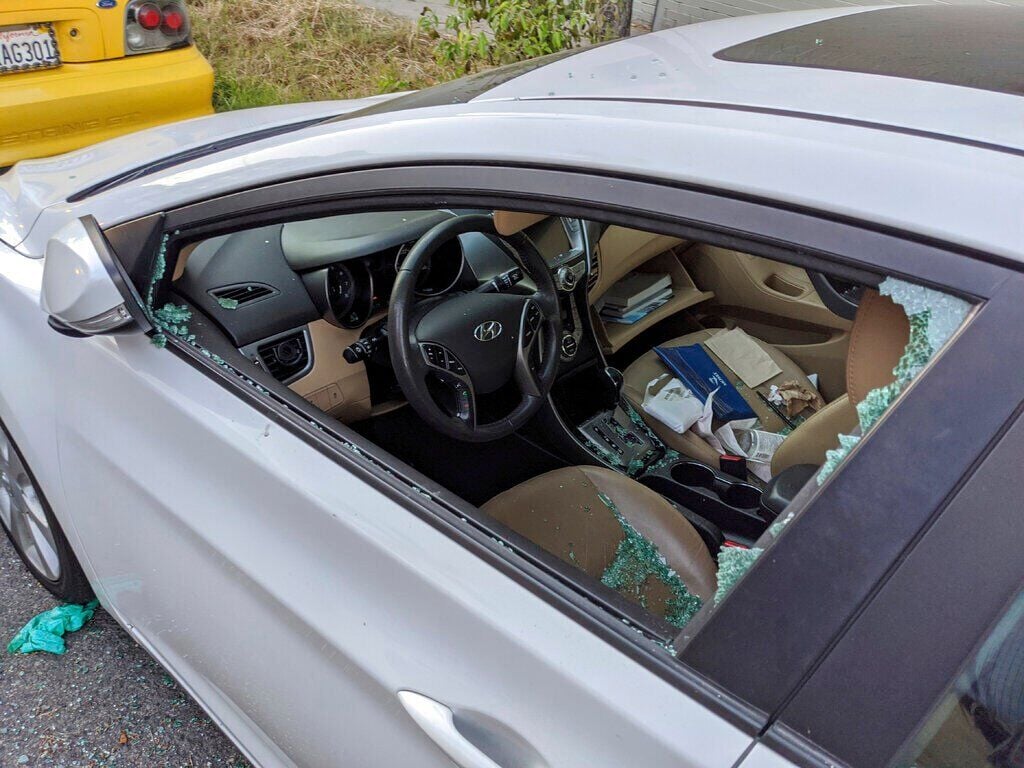
(AP Photo/Damian Dovarganes)
Colorado is the No. 1 state in the nation for auto thefts. On Saturday, state lawmakers passed a bill they hope would help change that.
Currently, the severity of criminal offenses for auto thefts in Colorado depends on the value of the stolen vehicle — ranging from a class 1 misdemeanor for a car worth $2,000 or less, to a class 3 felony for a car worth $100,000 or more. If enacted, Senate Bill 97 would remove the value-based system and make all auto thefts felonies.
The bill cleared its last major legislative vote on Saturday, now only needing minor amendments to be approved before it will be sent to the governor for final consideration.
“We’ll be treating poor and wealthy victims the same,” said bill sponsor Rep. Matt Soper, R-Delta. “Now, law enforcement will not look to the value of the car, instead they’re looking at going after the criminal. That’s what’s important here.”
Under the bill, auto theft would be a class 5 felony at the baseline. It would become a class 4 felony if the thief alters the vehicle’s license plates, leaves the state, causes $1,000 or more in damages to the vehicle, injures someone or uses the vehicle in another crime. It would become a class 3 felony if the thief has two prior convictions for auto theft.
The bill would also create a class 1 misdemeanor offense for “unauthorized use of a motor vehicle”: stealing a vehicle but returning or recovering it within 24 hours without damage, which proponents called the “joyride provision.”
The House passed the bill in a 48-16 vote on Saturday, following the Senate’s unanimous passage in March. The bill — sponsored by two Democrats and two Republicans — received bipartisan support, but only Democrats voted against it.
While the bill’s supporters said they hope increasing the penalty for auto theft would deter criminals from committing the crime, opponents argued that charging thieves with harsher offenses will not deter theft if the criminals are not getting arrested in the first place.
Approximately 40,000 vehicles were stolen in Colorado in 2022 but only around 3,900 arrests were made, representing less than 10% of stolen vehicles resulting in an arrest, according to data from the Colorado Auto Theft Prevention Authority presented by lawmakers. Of those arrests, approximately 80% were already charged as felonies.
Colorado Supreme Court ponders role of juries in evaluating prior convictions
“This is not the right move,” said Rep. Elisabeth Epps, D-Denver, while voting against the bill in committee. “This is not a good first step, it’s a step in the wrong direction and it’s a step that we’re going to be paying for collectively for years to come.”
The penalties for class 3, 4 and 5 felonies range from one to 12 years in prison and $1,000 to $750,000 in fines. Class 1 misdemeanors are punishable by up to 364 days in jail and up to $1,000 in fines.
Increasing prison sentences of auto thieves could cost the state more than $12 million over five years, based on state estimates.
Ultimately though, proponents of the bill said even if it does not lower auto theft rates, it is still needed to create equity for crime victims and send a message to criminals that Colorado will not stand for auto theft.
From 2011 to 2020, rates of auto theft increased by 144% in Colorado — the fastest rise in the country — reaching 524.3 thefts per every 100,000 people, according to the National Insurance Crime Bureau. That’s more than double the national rate of 256. Since 2020, the Colorado Bureau of Investigation estimates that auto thefts have continued to rise by 46% as of 2022.
“We need to correct our laws,” said bill sponsor Rep. Shannon Bird, D-Westminster. “We’ve seen it in the news, we’ve heard from our constituents. Their cars are being stolen and … we know that the value of a car isn’t just measured by its dollar value.”
Lawmakers, including Sen. Julie Gonzales of Denver and Rep. Mike Weissman of Aurora, said they voted in favor of the bill “reluctantly,” questioning whether it would have the intended effect but adding they’re supporting it because their constituents want them to or out of respect for the work put into the bill. Rep. Lorena Garcia of Adams County said the same thing while supporting the bill in committee, but voting against it in the final House action.
The bill is expected to be sent to Gov. Jared Polis in the coming days. If signed, it will take effect on July 1 and apply to offenses committed from that date forward.
Colorado moves to give child victims, witnesses of crimes anonymity in public records


Shooter dead, no other injuries, at Evergreen CommonSpirit center
9News
9news@denvergazette.com
Updated 9 minutes ago
An active shooter died from a self-inflicted wound before he hit anyone with gunfire near a CommonSpirit Primary Care center in Evergreen Thursday, according to the Jefferson County Sheriff’s Office. People first began reporting hearing multiple gunshots in the area...

9News
Reporter

Weekend things to do around Denver: Home and Garden Show and more
Emily Bejarano
emily-bejarano@gazette.com
Updated 2 hours ago
No plans for the upcoming weekend? There’s still plenty of action happening around Denver and beyond to get folks off the couch. Each Thursday, explore Denver’s essential weekend events curated by The Denver Gazette. Dive into cultural experiences and entertainment...

Emily Bejarano
Reporter

Denver weather: A chance for rain Friday night
Daniel Boniface
dan.boniface@denvergazette.com
Updated 2 hours ago
If you’re planning a romantic evening out in Denver with your Valentine on Friday, you might want to pack an umbrella, the weather service advises. The National Weather Service in Boulder said there’s a 60% chance of rain in Denver...

Daniel Boniface
Reporter

Lakewood upsets Cherry Creek in Class 4A title game | Nov. 30, 1985 | Colorado’s Top 150 Sports Moments
Chris schmaedeke
chris.schmaedeke@gazette.com
Updated 12 hours ago
Happy birthday, Colorado — and Colorado sports. Leading into the state’s 150th birthday Aug. 1, The Denver Gazette has partnered with the Colorado Sports Hall of Fame to publicize the definitive list of Colorado’s top 150 sports moments. Colorado Sports Hall...

Chris schmaedeke
Reporter

For Valentine’s Day, a love letter to Colorado’s great outdoors
Seth Boster
seth-boster@denvergazette.com
Updated 7 days ago
Dearest Colorado, It is Valentine’s Day, a day to profess my love for thee. But where to begin? Where our love story begins, of course, almost 10 years ago. I was wandering in a way that some of your earliest...

Seth Boster
Reporter

Friday Faceoff: Should Nuggets, Avalanche follow Broncos’ lead and build new arena?
Kyle Fredrickson
kyle-fredrickson@denvergazette.com
Updated 2 hours ago
Friday Faceoff: The Broncos expect to open a new stadium in 2031 at Burnham Yard under the Walton-Penner ownership group. Should Kroenke Sports & Entertainment also consider a new venue to replace Ball Arena? Evan Rawal, Avalanche beat writer Answer:...

Kyle Fredrickson
Reporter

EDITORIAL: Denver’s ‘Vision Zero’ jumps the curb
The Gazette Editorial Board
thegazette-editorial-board@gazette.com
Updated 12 hours ago
Whatever the intended “vision” of Denver’s vaunted “Vision Zero” agenda for reducing traffic-related deaths and injuries, the policy hasn’t worked. It may even be contributing to the problem. That’s the most telling takeaway from an eye-opening, in-depth news report last...

The Gazette Editorial Board
Reporter
Colorado policymakers scramble with prisons on track to exceed capacity
Marianne Goodland
marianne-goodland@denvergazette.com
Updated 9 minutes ago
Colorado’s prison system is on track to exceed capacity within the next year, driven by a sharp slowdown in parole releases, staffing shortages and an aging inmate population — all as lawmakers grapple with an $800 million general fund shortfall...

Marianne Goodland
Reporter

Jeffco Schools’ shell game shuts out charters | Jimmy Sengenberger
Jimmy Sengenberger
jimmy-sengenberger@denvergazette.com
Updated 20 hours ago
In early 2024, Jeffco Schools carved out a special “municipal interest” process enabling Lakewood and other municipalities to bypass traditional bidding to acquire shuttered schools. Eight months earlier, an appraisal had made it clear to the school district that competitive...

Jimmy Sengenberger
Reporter

Declining K-12 enrollment is a wake-up call
Norton Rainey
ramnorton@gmail.com
Updated 1 day ago
News reports confirm what many school districts already know: public school enrollment in Colorado is steadily declining. The state lost roughly 10,000 public school students in just the past year, part of a multi-year trend now playing out nationwide. Some...

Norton Rainey
Reporter