







Colorado zoos, wildlife refuge welcome baby animals just in time for Mother’s Day
The Denver Zoo, Cheyenne Mountain Zoo and Rocky Mountain Arsenal National Wildlife Refuge have lots of new baby animals, just in time to celebrate their animal mothers this weekend.
Celebrations of motherhood abound in Colorado this weekend among both people and animals who call the state home.
In both zoos and wildlife refuges across the state, spring is breeding season for many animal species, highlighting the joy, strength and care of mothers across the animal kingdom just in time for Mother’s Day Sunday.
The Denver Zoo, Cheyenne Mountain Zoo and Rocky Mountain Arsenal Wildlife Refuge have welcomed many new additions to their animal squads, none possible without the courage and care of their mothers.
The Denver Zoo is celebrating Mother’s Day for several new baby animals and their moms
Most recently, the Denver Zoo, at 2300 Steele St., has welcomed new eastern bongos, two-toed sloths, African penguins, Humboldt penguins, otters and currently has a pregnant Sumatran orangutan, according to Denver Zoo staff.
Along with celebrating motherhood and new life, the Zoo is also celebrating conservation wins for some of these species that are considered threatened or endangered.
Eastern bongos: “Fiddle” and “Clementine”
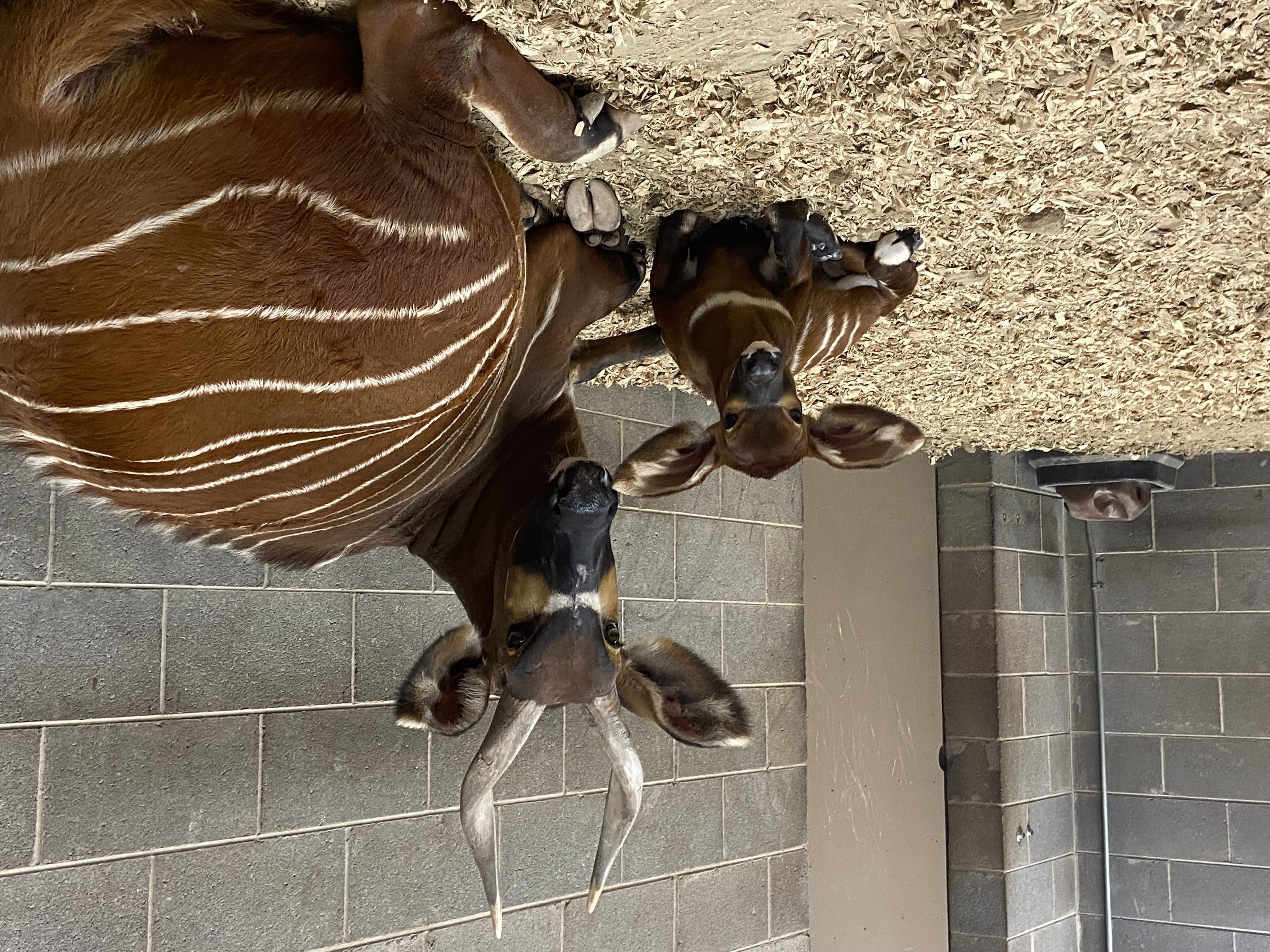
The zoo welcomed two new eastern bongos, Fiddle and Clementine, early this year. The species is considered critically endangered, making the two new births “huge conservation wins,” according to zoo staff.
Fiddle was born Jan. 25 to mom Fern. Fiddle is curious and playful, running around with her half-sister, Clementine.
Clementine, born Feb. 16 is a “momma’s girl” who likes to stick close to Columbine, according to zoo staff. She’s slowly coming out of her shell and gaining confidence with the guidance of Fiddle, who is introducing her to the “zoomies.”
The mother and daughter pair are often found snuggling and taking naps in the sun.
Linnaeus’ two-toed sloth: “Wicket”
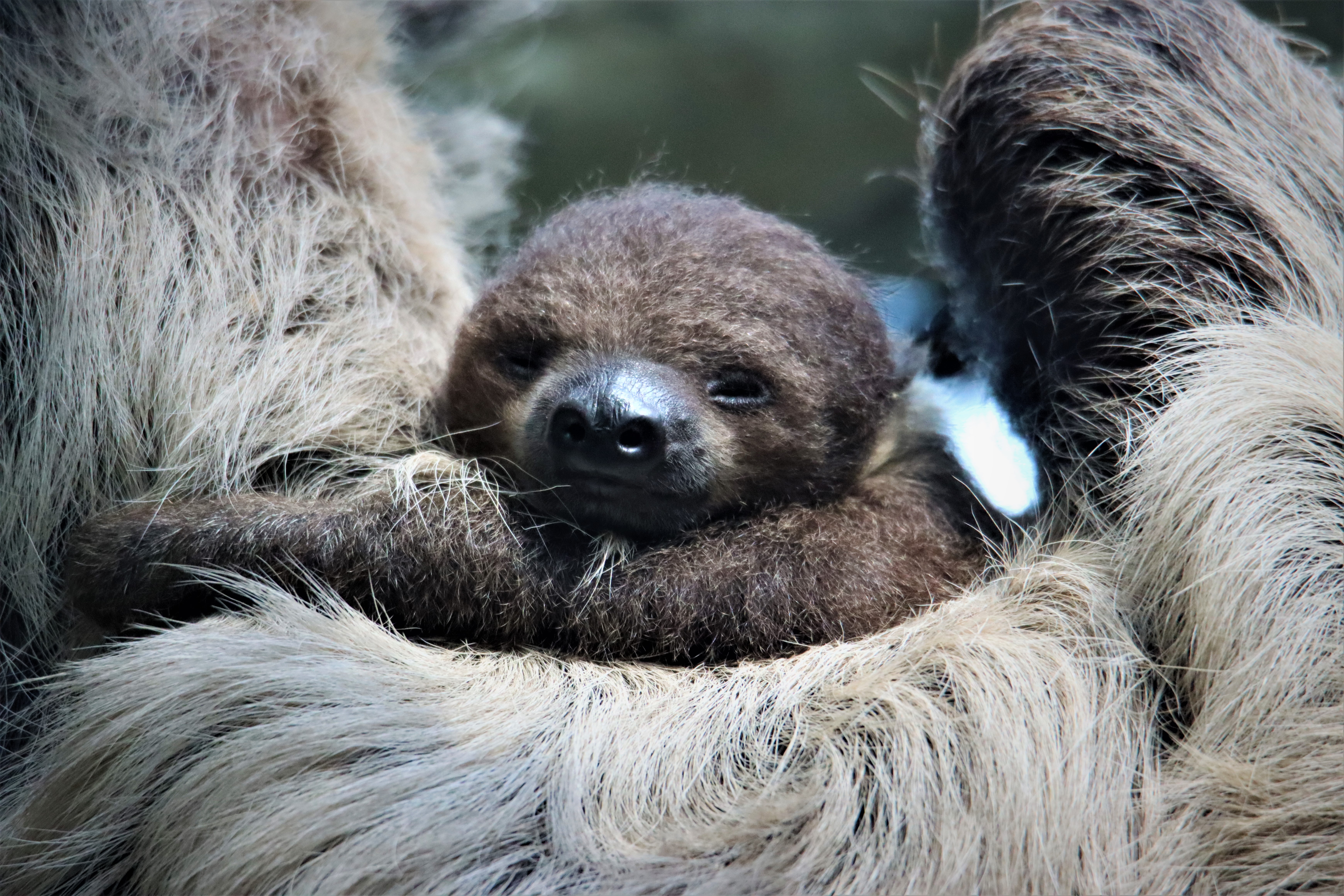
Wicket the two-toed sloth was born Jan. 26 to mom Charlotte.
Charlotte’s trusting relationship with the zoo’s animal care and health teams allowed for regular ultrasounds, checkups and weigh-ins during her pregnancy, according to Zoo staff.
Wicket is getting more and more independent by the day, starting to eat solid foods and explore his habitat without Charlotte. He still needs his mother, though, and doesn’t venture very far before returning to her for safety and comfort.
Wicket’s name came from a naming fundraiser. He was officially named Wicket after four weeks and more than 3,000 votes.
African Penguins: chick (name TBA) and “Gwen”
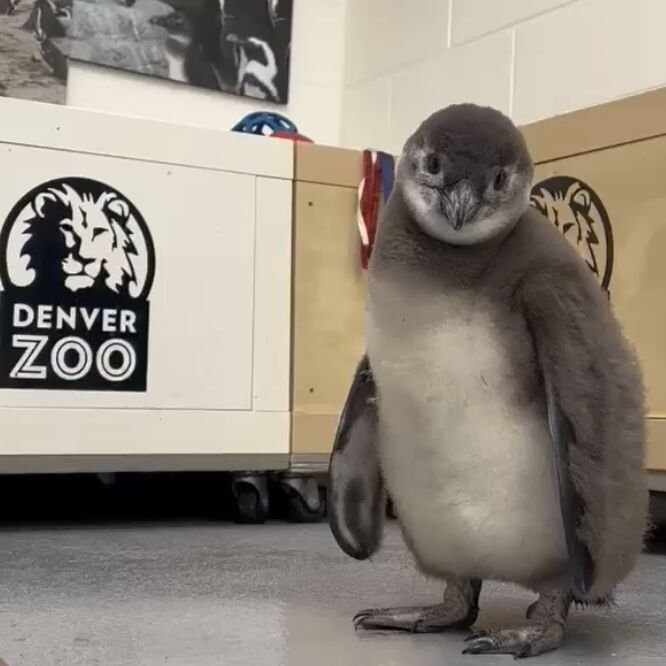
The newest African penguin, whose name and sex will be announced soon, was born March 10 to mom Empanada.
African penguins are considered endangered, making the new chicks a conservation win for the species.
Empanada and dad Roast Beef reared the chick for the first month and animal care specialists are finishing the process until the chick fully fledges in a few weeks.
Human interaction during the chick’s rearing process will allow it to be more comfortable with the zoo’s bird team for future care and handling, according to zoo staff. The chick, who is calm, curious and friendly, is also slowly being socialized with the rest of the penguin flock.
Mom Sinclair welcomed chick Gwen on Nov. 10, 2022.
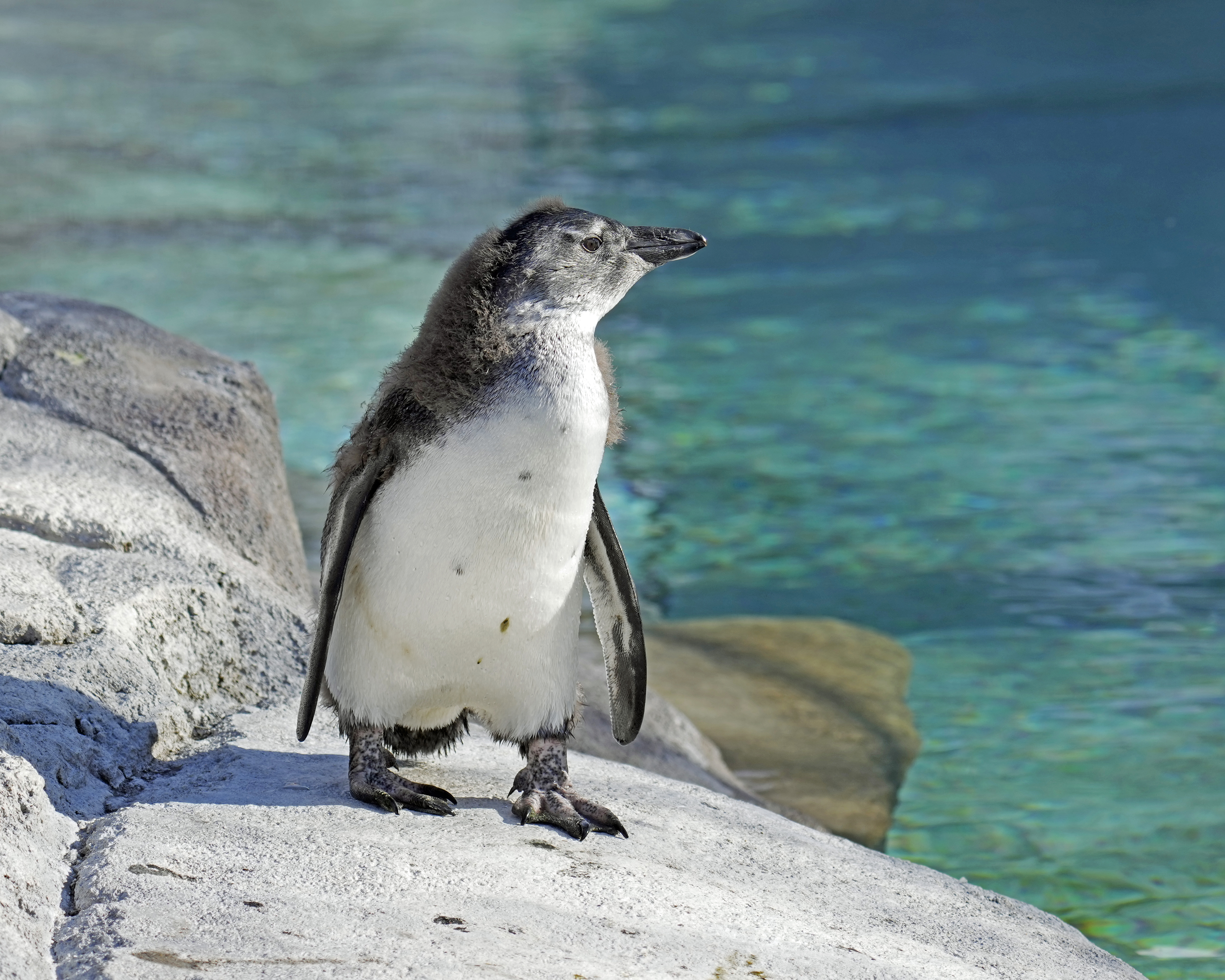
Gwen marked many fun firsts for the zoo’s bird team, as the first African penguin chick hatched at the zoo in three years, first penguin chick in the zoo’s new Pinnacol African Penguin Point habitat and first chick for Sinclair and breeding partner Wesson.
Gwen loves swimming, soaking in the sun with her mom and interacting with zoo guests through the glass, according to zoo staff. She is out and about with the flock, identified by her small size and grey and black feathers.
Humboldt penguins: chicks (names TBA)
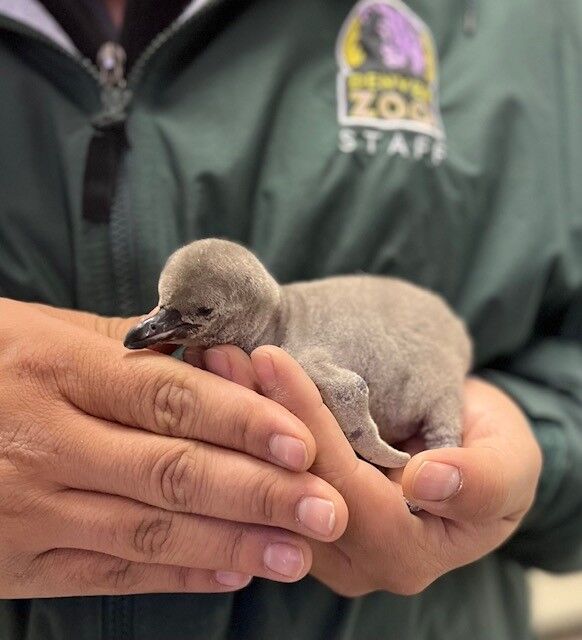
The zoo welcomed two new Humboldt penguins in late February, one female and a second whose sex is to be determined by a DNA test, according to zoo staff.
The female chick was born Feb. 22 to penguin parents Jermaine and Baby. The second chick was born Feb. 25 to parents Milo and Porkchop. The chicks are reportedly doing well, but will remain behind the scenes until they fledge.
Asian small-clawed otters: pups (names TBA)
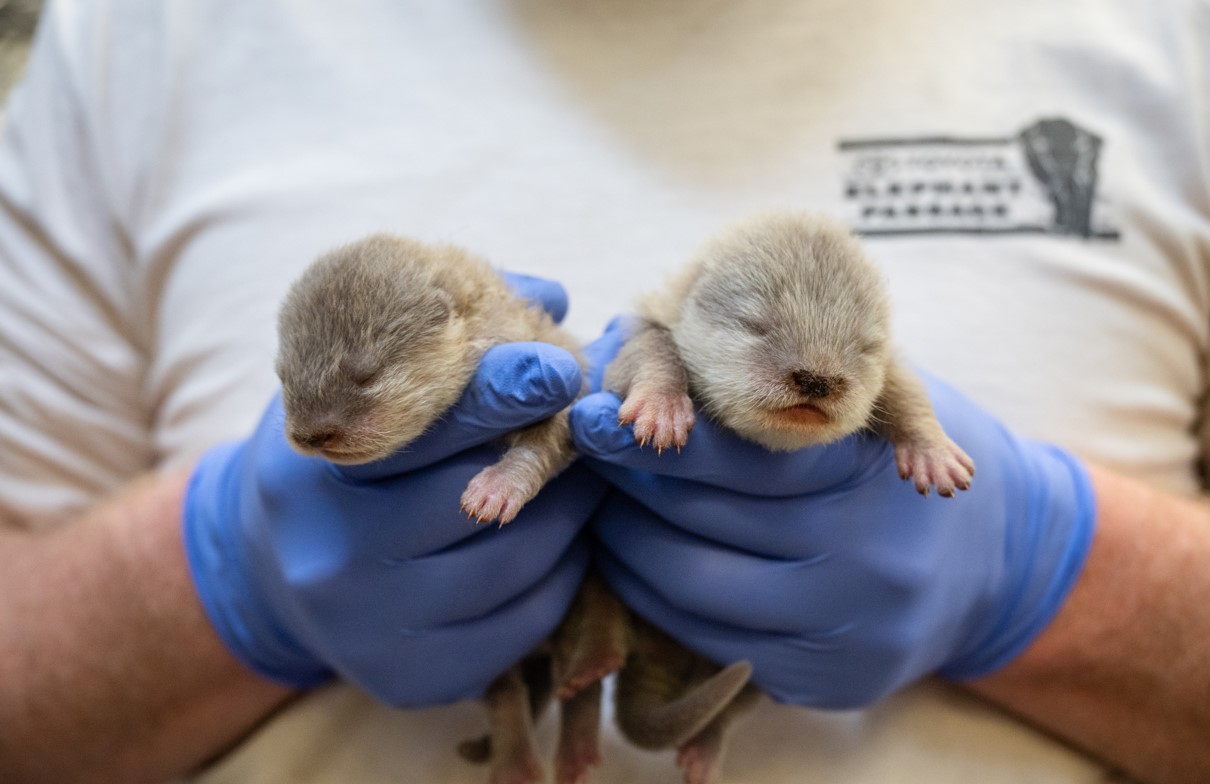
Otter mom Bu welcomed two male otter pups on April 14. It is Bu and dad Pintar’s second litter, adding to their family of three. The pups’ big brother, Jai, was born July 1, 2022, according to zoo staff.
The otter family will remain behind the scenes until the pups can open their eyes and navigate on their own.
Sumatran orangutan: “Eirina” is pregnant!
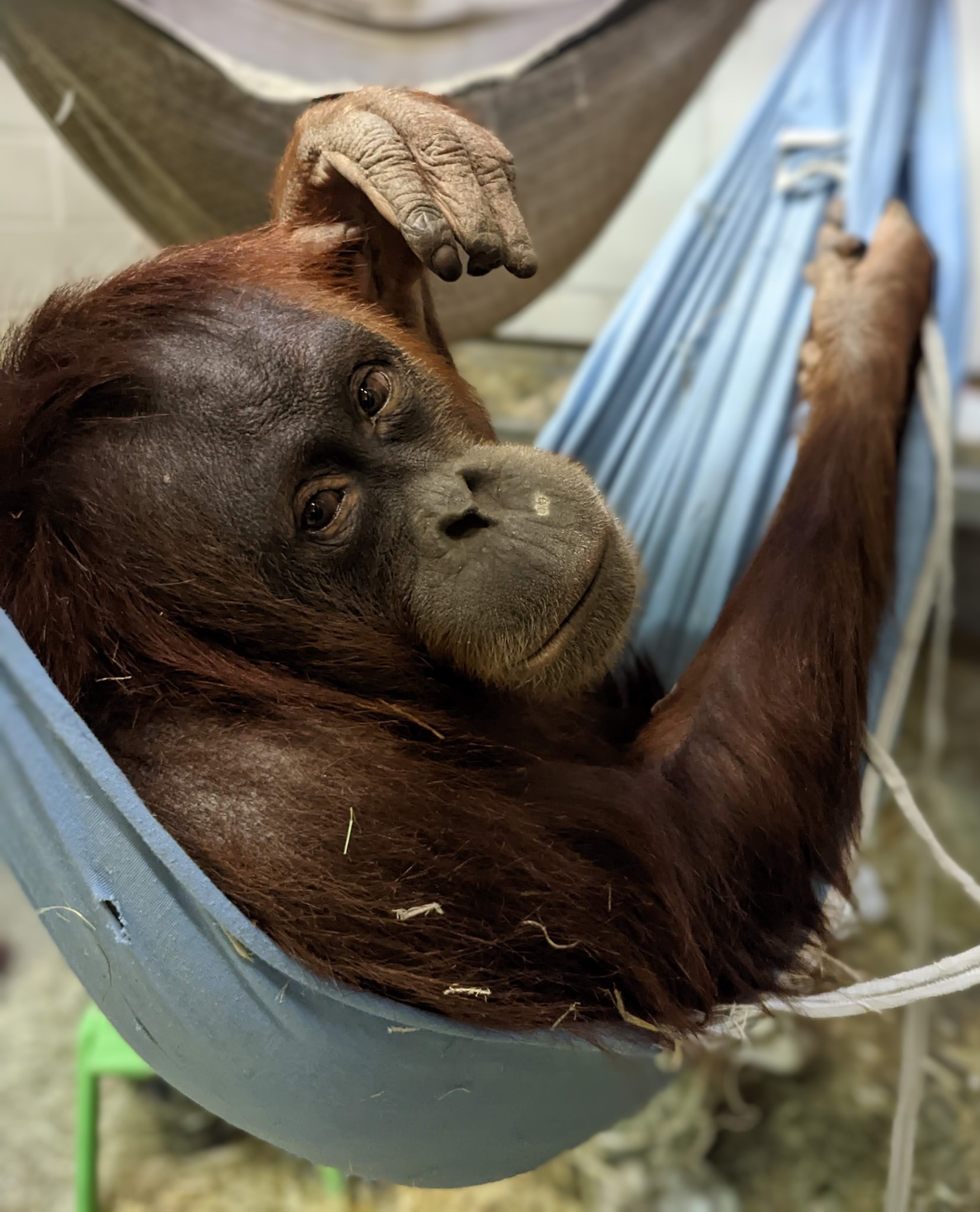
Sumatran orangutan mother Eirina is expecting her first baby in late July or early August. Her species is considered critically endangered and the zoo has not welcomed a baby orangutan since 2018.
The new baby will bring the orangutan group total to six, including Eirina, Hesty, Cerah, Berani and Jaya.
The Cheyenne Mountain Zoo recently welcomed three new baby animals
When babies are born at the Cheyenne Mountain Zoo, at 4250 Cheyenne Mountain Zoo Rd. in Colorado Springs, zookeepers rely on the animal mothers and the trust they’ve developed with keepers, according to zoo spokesperson Heidi Lopez.
Most of the zoo’s animal mothers instinctively know what to do as mothers and don’t require much assistance from the animal care team, according to Lopez. The mothers’ positive reinforcement training encourages the babies to move from space to space following their mothers.
The Cheyenne Mountain Zoo’s newest addition include a giraffe, a red river hog and a Rocky Mountain goat.
Reticulated giraffe: “Wednesday”
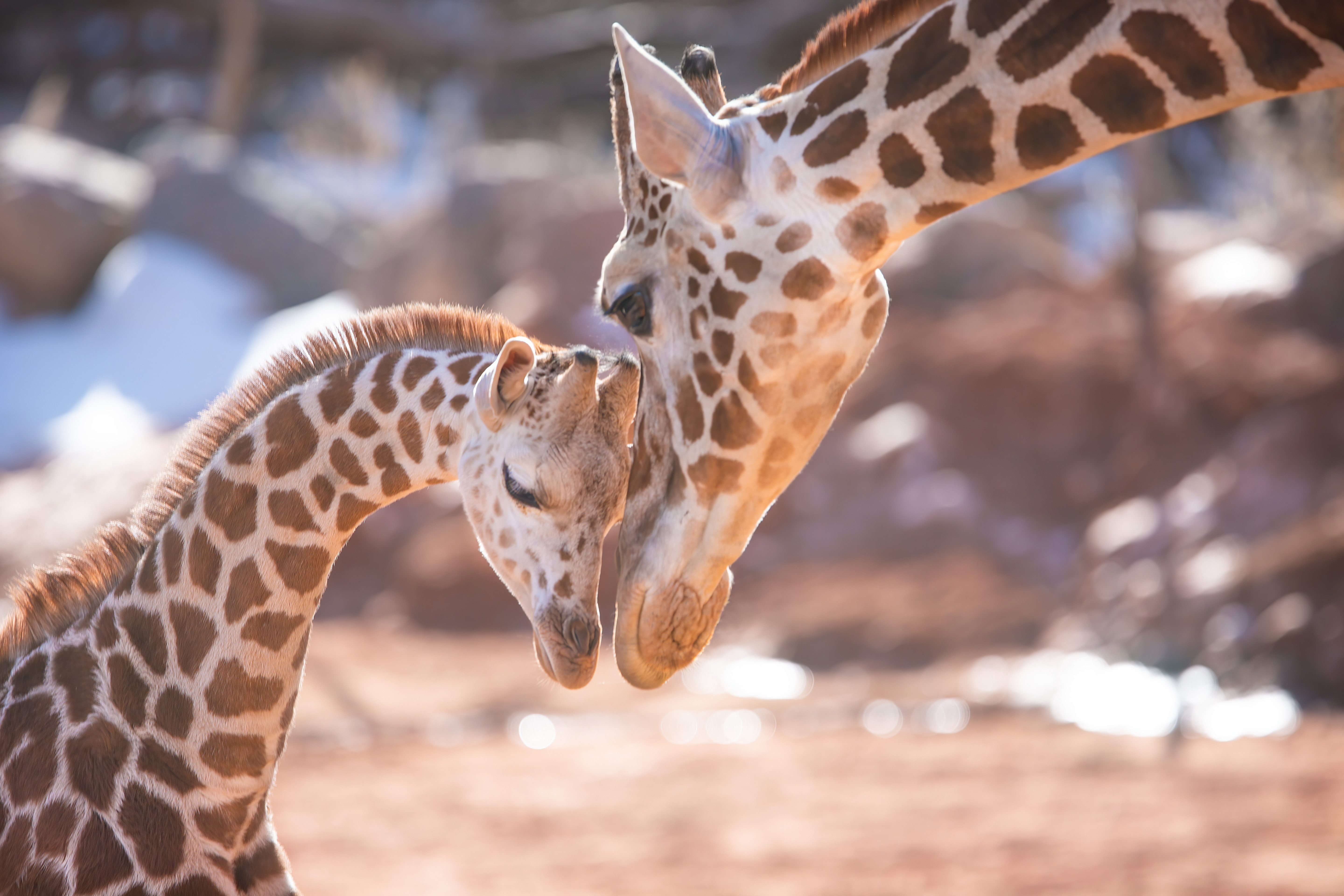
On Oct. 19, 2022, just before Halloween, giraffe mom Bailey welcomed her second daughter, Wednesday, named by popular vote and in honor of the Halloween-themed character.
Wednesday is the 203rd giraffe calf born to the Cheyenne Mountain Zoo family and is an outgoing and intelligent new member of the zoo’s 18-giraffe herd, according to zoo staff.
At seven months, Wednesday is weaning off nursing and gaining independence, but still spends her nights with Bailey.
Wednesday’s small size, intelligence and confidence lead her to wiggle her way between the legs of her full-grown herd-mates to get right up close to guests for a lettuce snack at the zoo’s giraffe feeding experience, according to zoo staff.
Red river hog: “Augustus” or “Gus”
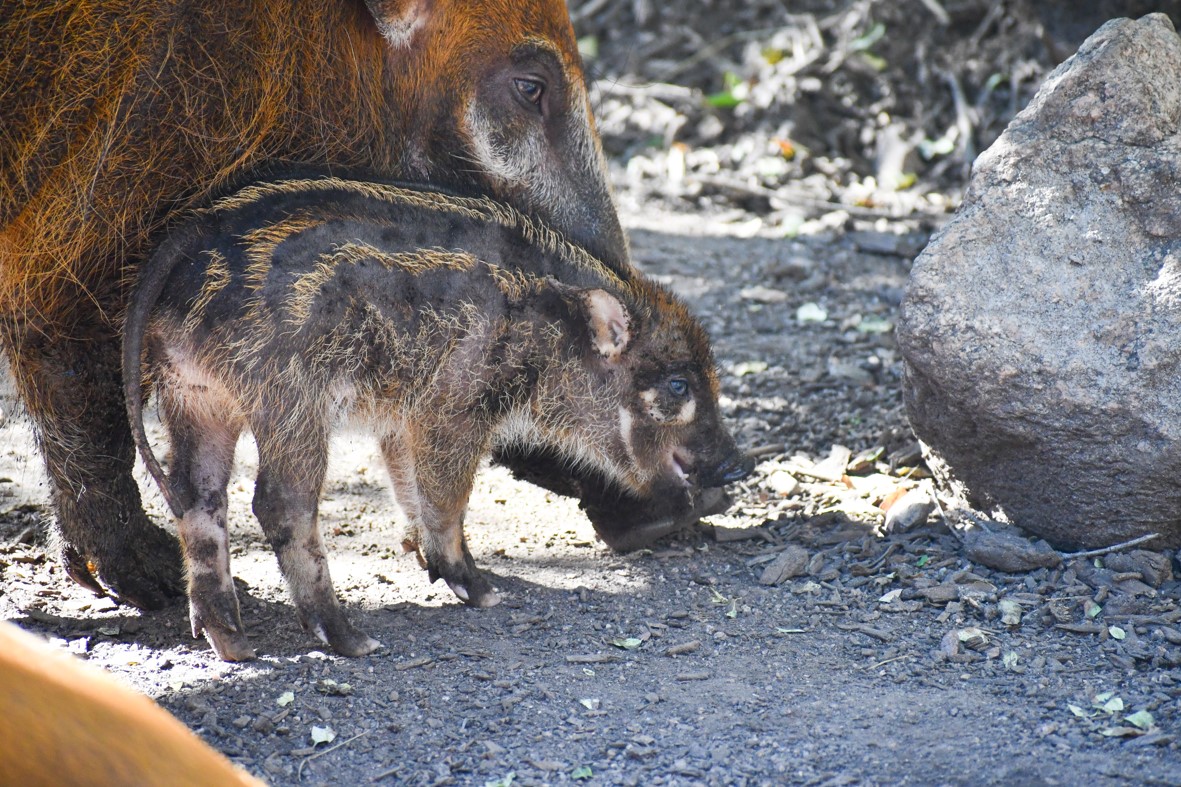
Red river hog mom Zena, 9, surprised zoo staff with new hoglet Augustus, “Gus,” on Aug. 12, 2022. Gus was born with tiny pink hooves, a “dazzling” orange coat with brown stripes and spots and a big personality, according to zoo staff.
Hoglets are born with stripes and spots that generally fade in about six months. The pattern, often described as looking like a watermelon pattern, acts as vital camouflage for young hogs.
Gus, now nine months, has grown into his orange-red coat just like Zena’s. He spends much of his time zooming around his exhibit and nudging his mom and rolling around near her to encourage her to play.
The mother-sun duo enjoy a nice mud wallow on warm days.
Rocky Mountain Goat: “Blanca”
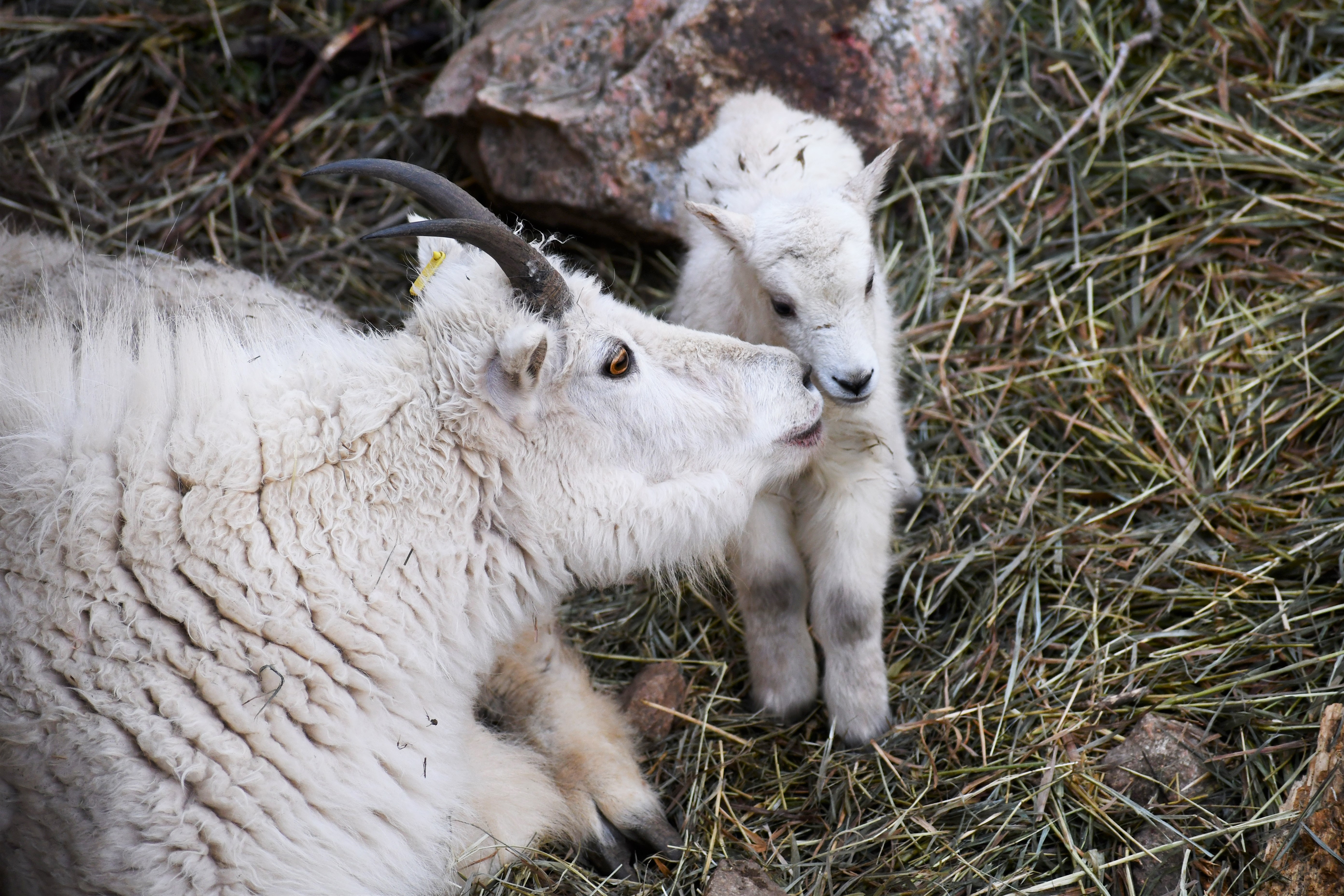
Rocky Mountain goat mom Lena, 4, welcomed kid Blanca on May 4, 2022. Blanca was on her feet working out her wobbly legs within minutes, according to zoo staff.
Lena, a first-time mother, took a little while to get the hang of nursing, but has since fully embraced motherhood. She is both attentive to Blanca and a perfect playmate.
Blanca is learning how to run, jump and play in the yards and on the zoo’s rocky cliff with Lena at her side, showing her how the ways of the Rocky Mountain goats.
Many animals at the Rocky Mountain Arsenal Wildlife Refuge are welcoming babies.
Unlike animals at zoos, viewed from outside the safety of their enclosures, animals at the Rocky Mountain Arsenal National Wildlife Refuge — a 15,988-acre refuge located eight miles northeast of downtown Denver — are best viewed from a distance.
Refuge spokesperson Megan Klosterman reminded people to resist the temptation to touch or handle babies. Mothers will often leave newborns alone while they feed, causing people to think the animals are orphaned when they are not, according to refuge staff.
The refuge has recently welcome baby black-footed ferrets, bison, prairie dogs, deer, Canada geese and bald eagles.
Black-footed ferrets
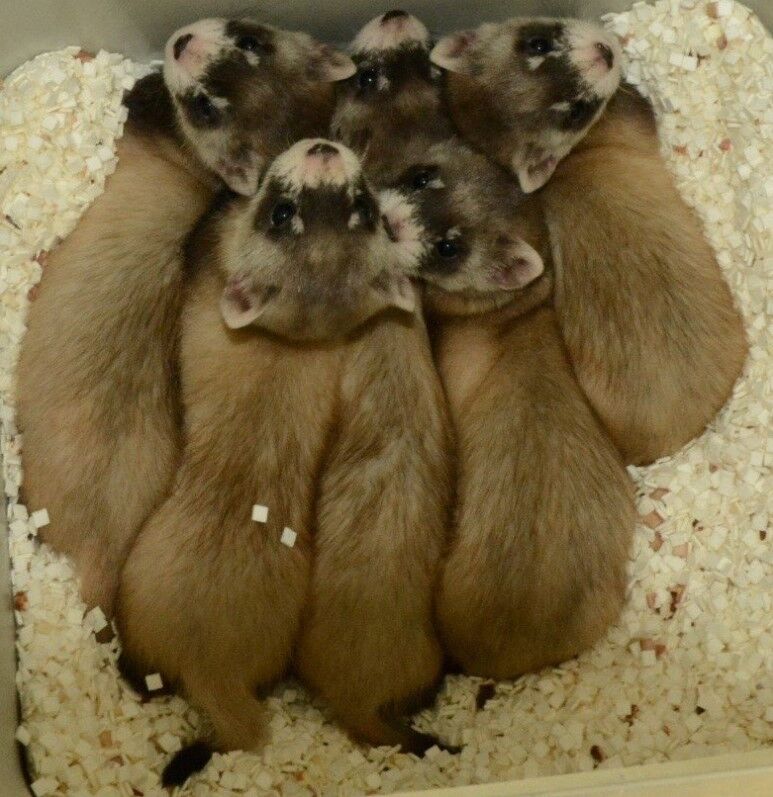
Ferret breeding season is from mid-March to early April and ferret mothers give birth underground to three to four baby ferrets, or kits, within 45 days, according to refuge staff.
Kits are entirely dependent on their mothers at birth and their eyes don’t open until they are 37 days old. Around July, kits mature enough to venture aboveground and, at about 100 days old, leave their mothers’ dens.
Black-footed ferrets are an elusive and solitary species with the exception of breeding season and when mothers are raising their young.
Plains bison
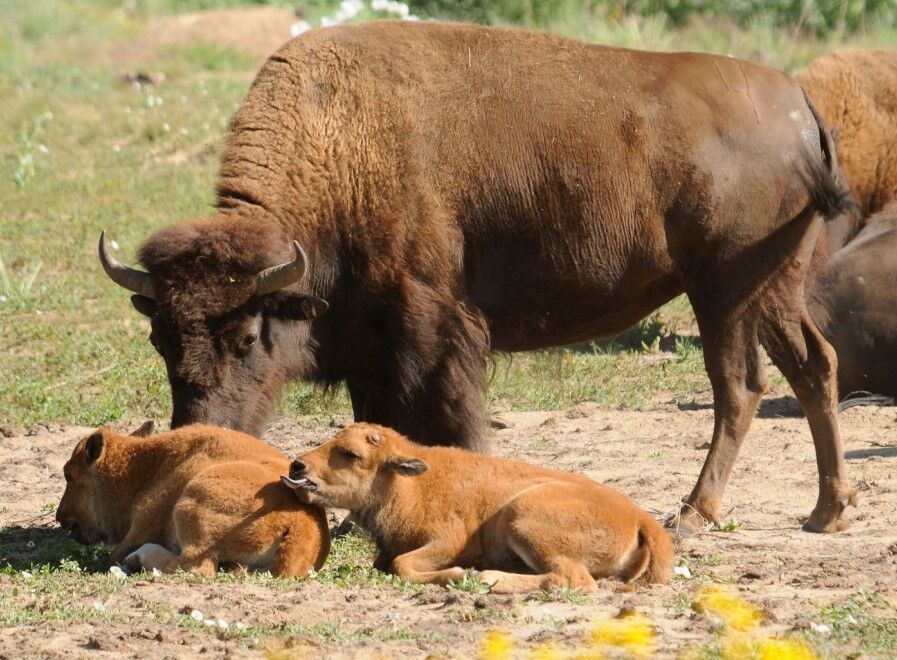
Bison calves, commonly called red dogs for the reddish fur they have in their first few months of life, are typically born from May to April.
At the Rocky Mountain Arsenal, however, they can be born year-round and the refuge herd typically produces between 40 and 50 bison calves each year, according to refuge staff.
Bison calves nurse with their mothers for about six months until they are weaned onto grass. Male calves generally become independent of their mothers at this point and female calves take a few more months.
Black-tailed prairie dogs
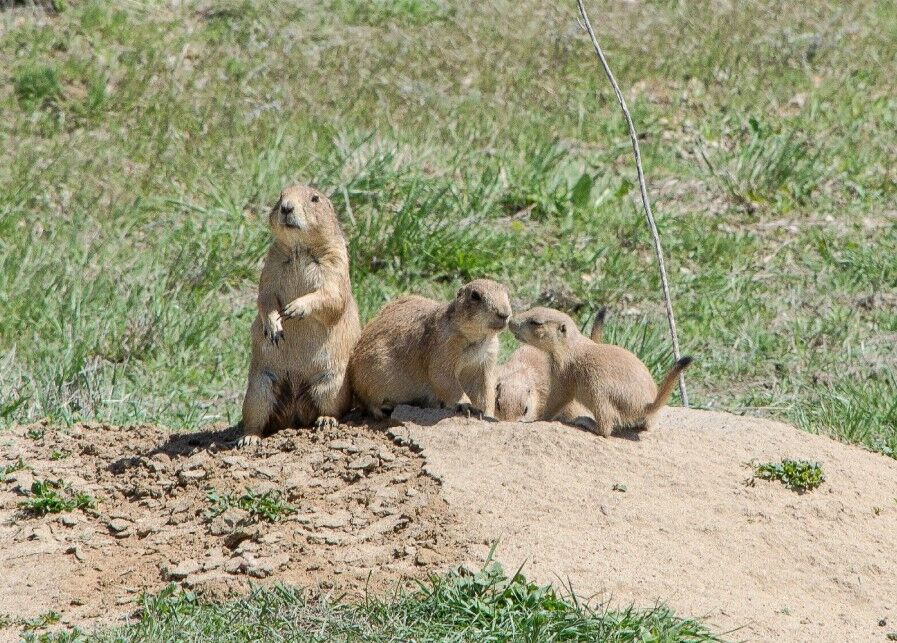
Black-tailed prairie dogs’ breeding season is from mid-March to mid-April, with moms typically having litters of two-to-eight pups.
Prairie dog mothers line their burrows with grass to create a nest chamber in preparation for their pups and, in May and June, the pups emerge from the burrows.
The babies separate from their families after about three months.
Mule and white-tailed deer
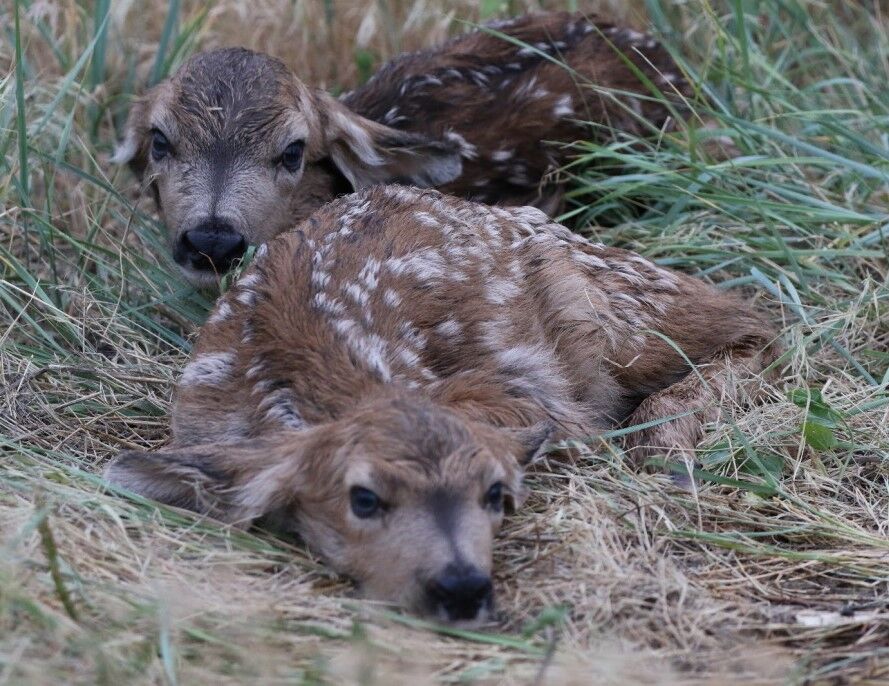
Mule and white-tailed deer, two separate species with similar breeding and maternal habits, usually welcome fawns in early June.
Deer fawns typically weigh six-to-eight pounds and have reddish-brown coats with white spots to help them camouflage from predators.
Fawns can stand on their own within a couple hours of birth, but rely on standing still as their main defense mechanism until they are strong enough to run, according to refuge staff.
Fawns rely on their mothers, does, to leave them in safe areas while the does feed then return to nurse. Does always know where their fawns are and never stray very far from them. Spending time away from their fawns allows the fawns to remain scent-less and protect them from predators.
The two species can be most easily told apart by their tails. While mule deer have rope-like white tails with black tips, white-tailed deer have larger, fluffier tails with a white underside that sticks up when they are alert.
Canada geese
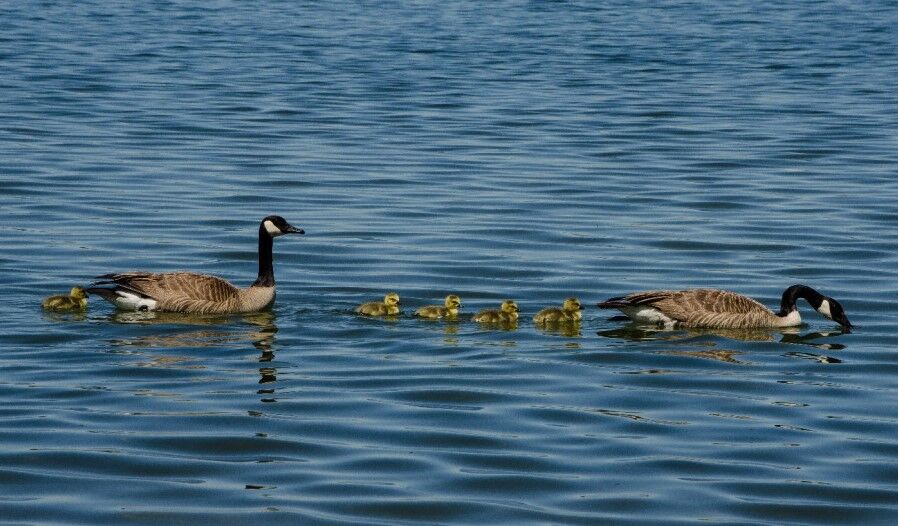
Canada geese breeding season begins in early April and their babies, goslings, hatch in May.
Mother geese build nests of grass and other plant material near water and add their own down feathers to keep their five to six eggs warm, according to refuge staff.
Canada goose parenting is a two-parent task, with the mother incubating alone and the male goose staying nearby to stand guard. Both parents care for the goslings and the family stays together during winter migration.
Bald eagles
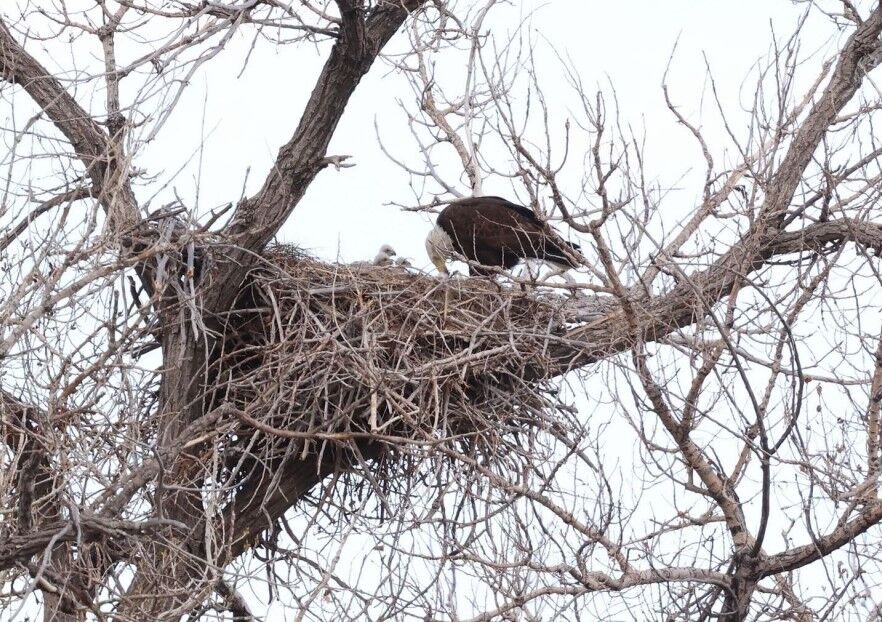
Bald eagle eaglets hatch in late March and early April and mothers lay one to three eggs.
The refuge has three nesting pairs, which produce eaglets every season, according to refuge staff.
Bald eagle parents build some of the largest of all bird nests, usually about five to six feet in diameter and two to four feet tall.
Bald eagle parenting is also a two-parent job, with both parents take turns keeping the eggs warm and defending the territory
At about 10 to 12 weeks, eaglets can fledge the nest but remain dependent on their parents for food. Eaglets become self-sufficient at about 17-to-23 weeks.