




The Inventing Room is home to Colorado’s Willy Wonka
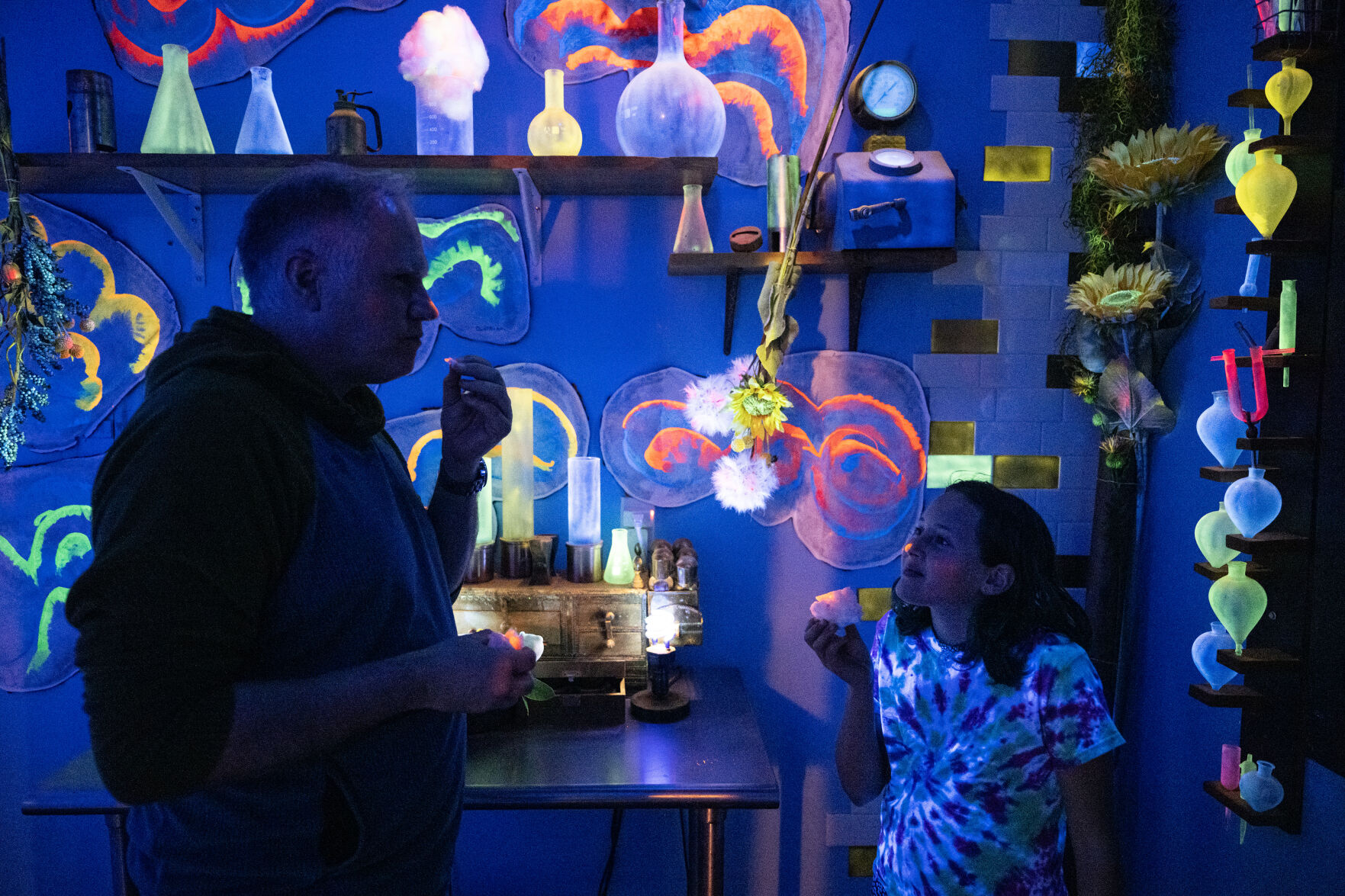
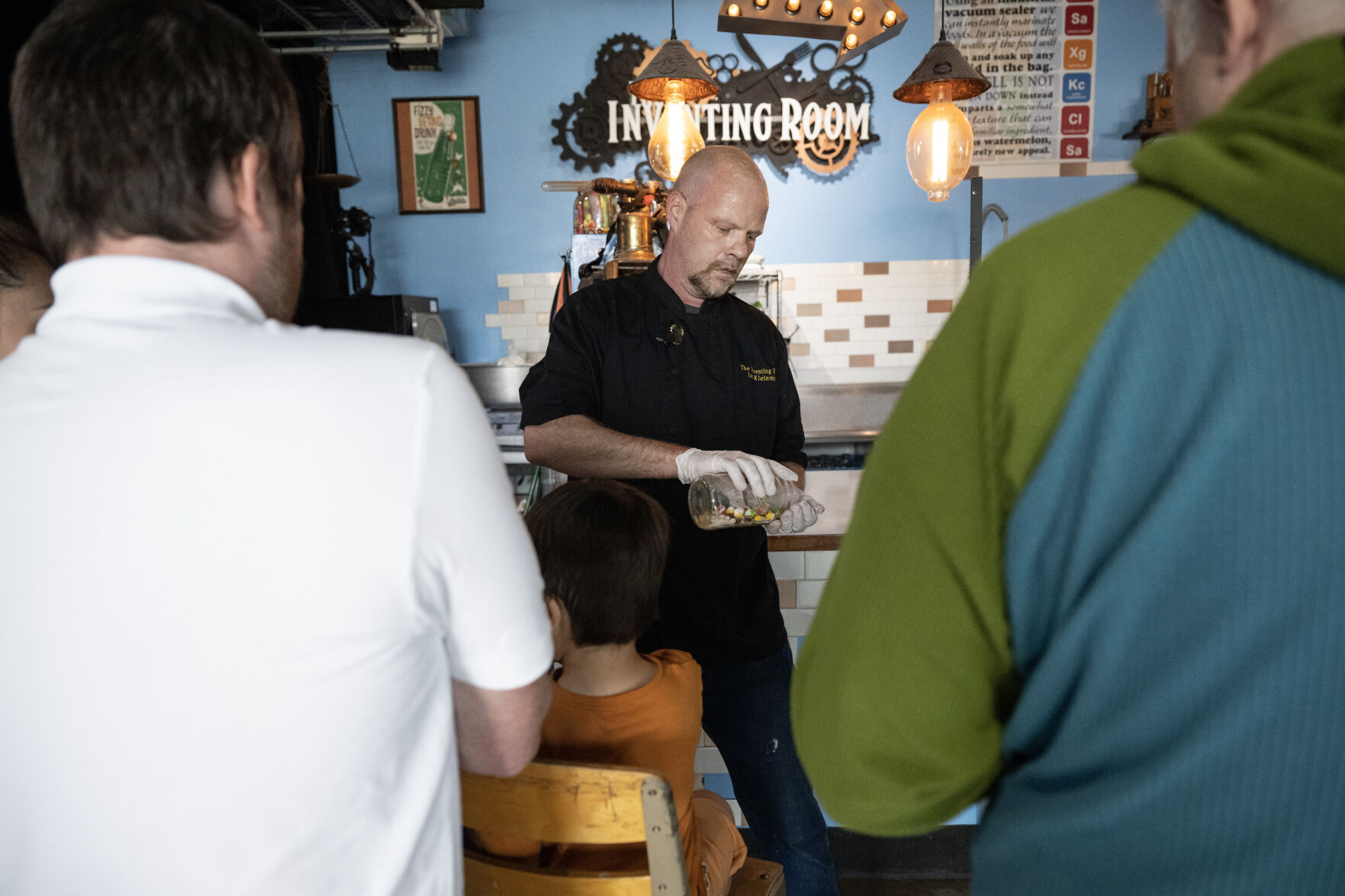
DENVER • The 15 kids and kids-at-heart gathered in the small room have an idea of what they are about to eat, candy, but that’s about it in terms of expectations.
“Anybody like science?” asks the chef in the kitchen, Ian Kleinman. “That’s why we have this store. We combine food and science together.”
This store is the Inventing Room, a colorful nook tucked in Denver’s SloHi neighborhood.
No, these people lucky enough to snag a reservation — as good as any golden ticket — won’t be chewing a three-course meal of gum. They won’t balloon into a giant blueberry and roll away like Violet Beauregarde.
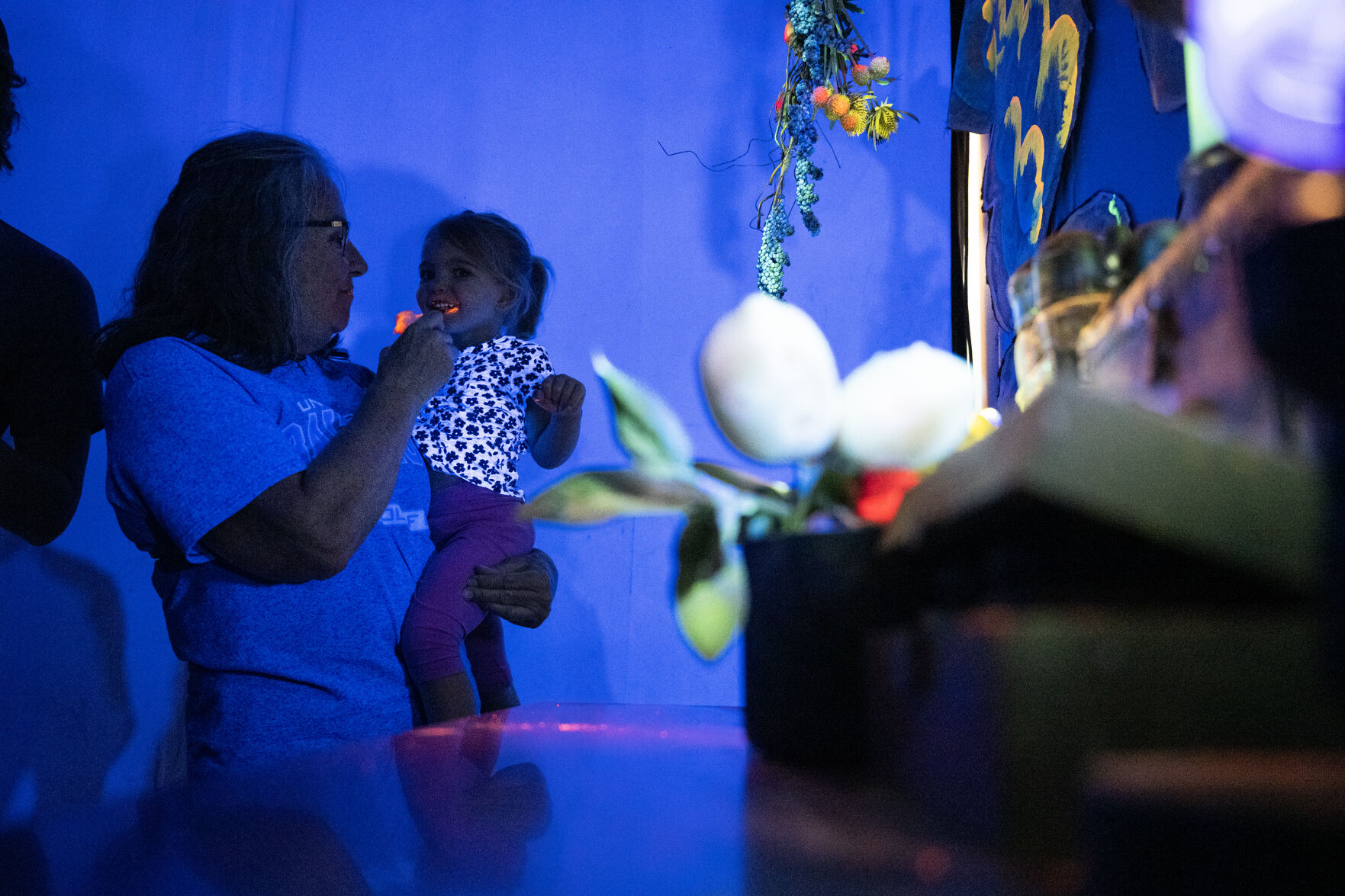
They won’t float away like Charlie and his poor grandpa. Though, in the blacklight room, guests can find bottles labeled “up” and “down” and “left” and “right.” Those are next to a bed of raspberry cotton candy, which glows in the dark thanks to bioluminescent powder that also sparkles across lips.
Also nearby are sheets of paper illustrated with fruit, looking very much like a certain wallpaper. Snozzberry, anyone?
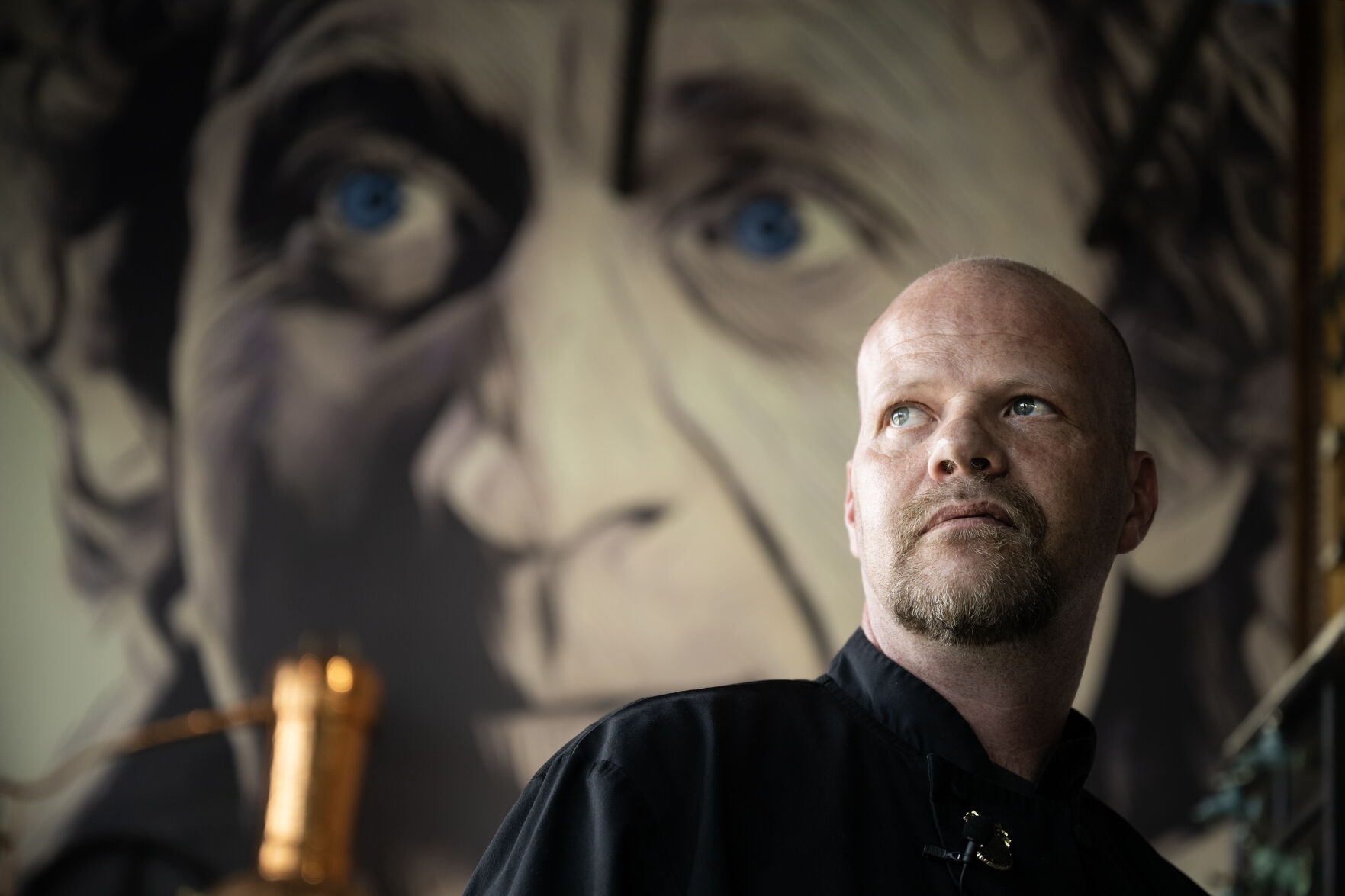
It is but one creation and re-creation of Kleinman. Not unlike his fictional idol, he has been called a mad scientist in Colorado’s culinary scene.
Kleinman, 47, has always been a Willy Wonka fan. “Super, super huge fan,” he says. “I watched that movie like twice a day when I was a kid. It scared the (expletive) out of me.”
His goal is to not scare anyone today in the Inventing Room. On the contrary, “it’s to make people comfortable with what they’re eating,” he says — to make them comfortable with the wild, whimsical world of molecular gastronomy. That has been Kleinman’s world for the better part of 20 years, going back to his days in an unexpecting, chain-name hotel.
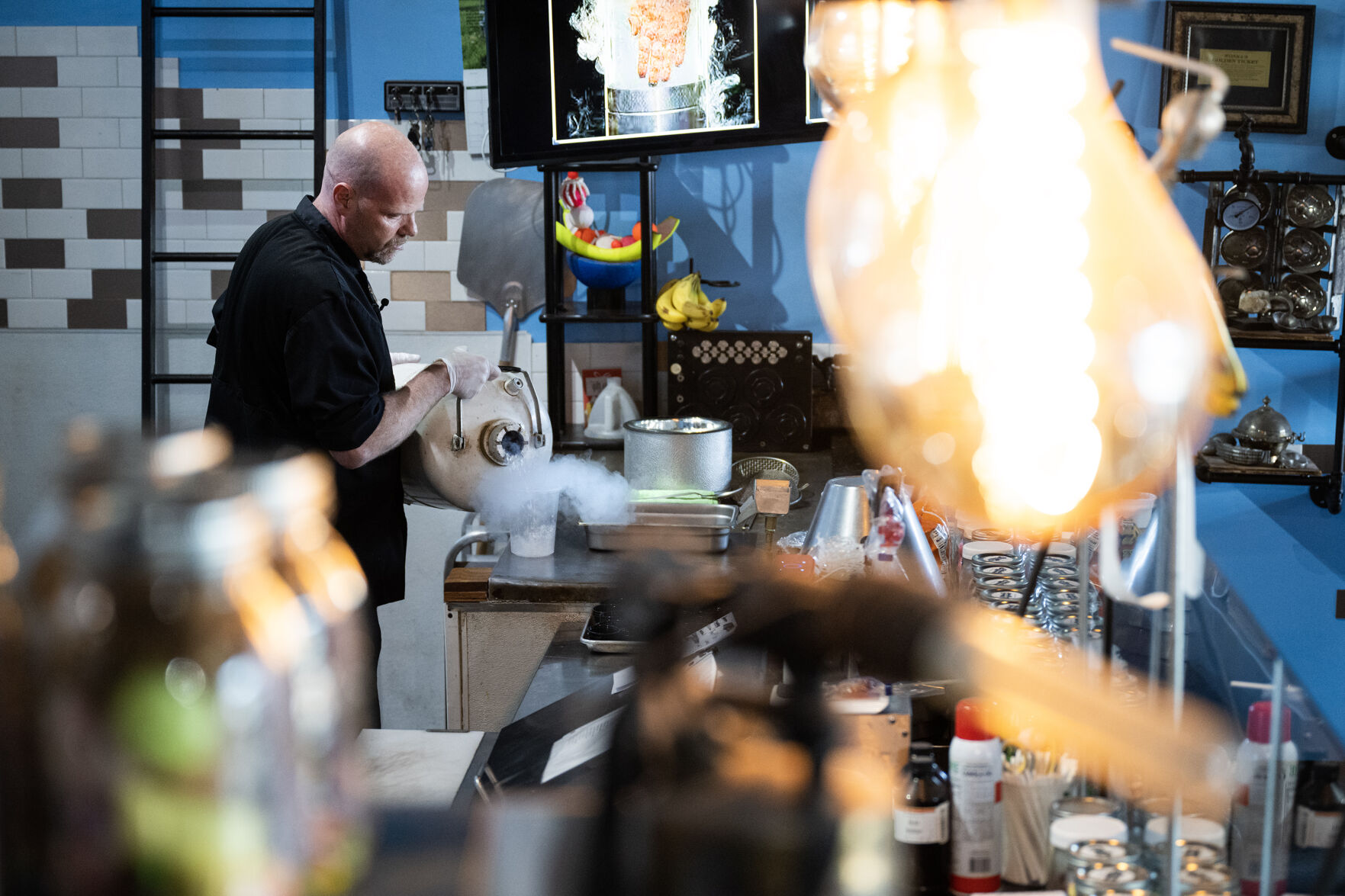
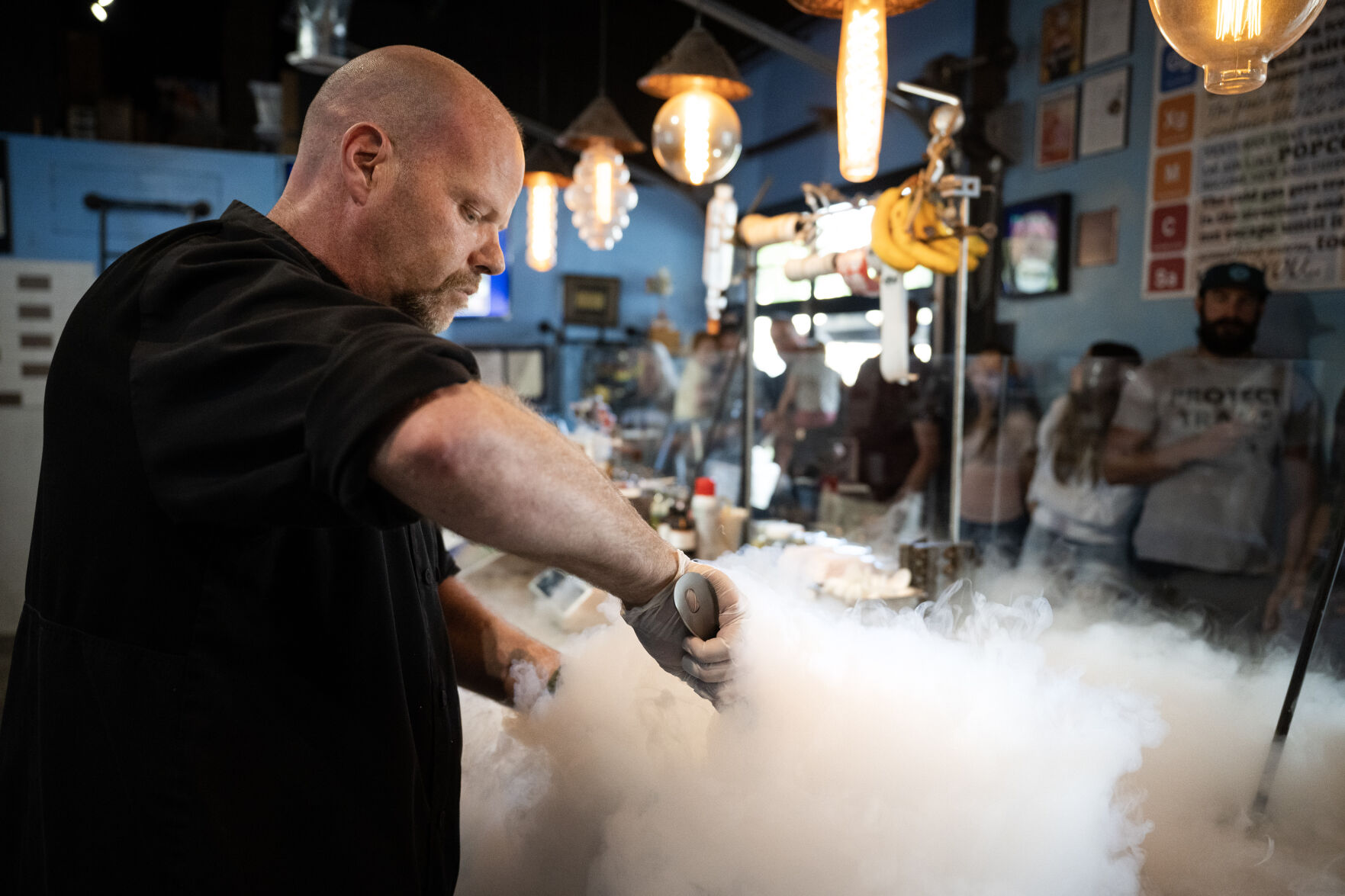
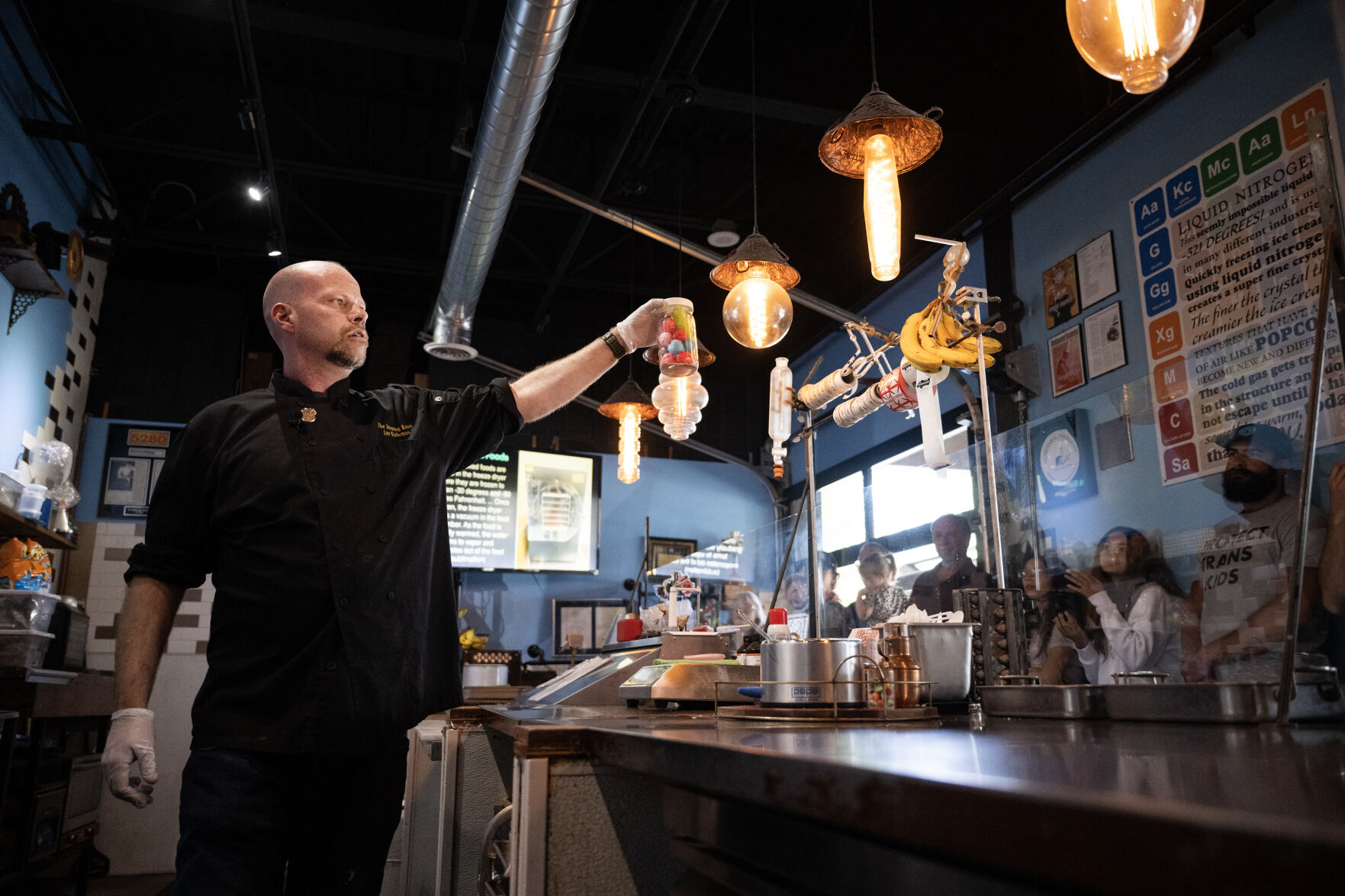
The Inventing Room is a much more likely lab. It is a room of multishaped lightbulbs and hands emerging from a wall and copper twisting and turning and kettles and vials and dials and tubes and tanks of liquid nitrogen. Liquid nitrogen, at temperatures below -320 degrees, is the star of Kleinman’s shows.
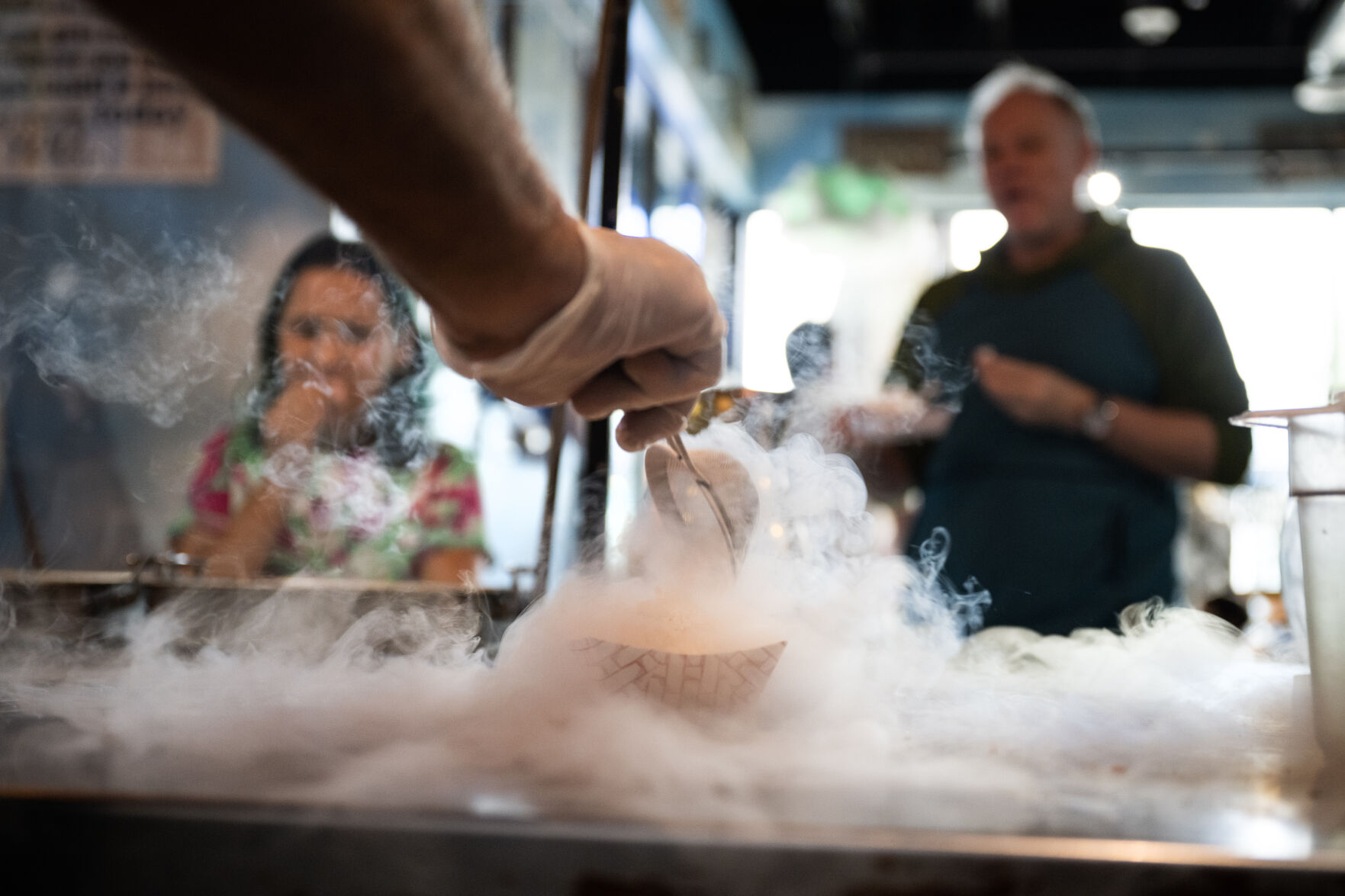
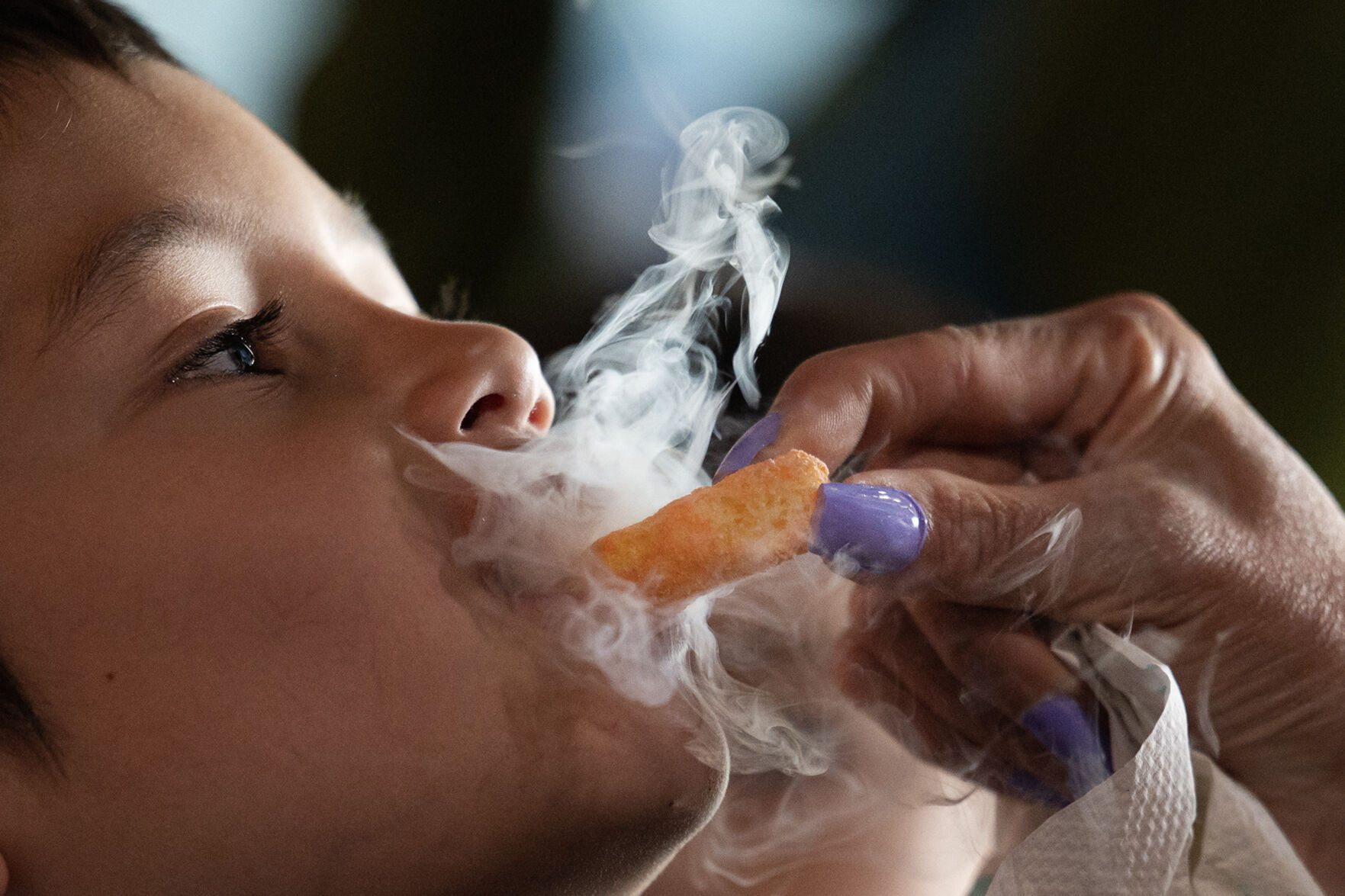
Before his audience today, he pours some of the steaming stuff into a pan, pipes in some flavored whipped cream and drops in bits of citric acid. He serves the resulting morsels to guests: Sour Patch Space Foam, which unlike Sour Patch Kids is crunchy yet somehow airy and elicits liquid nitrogen smoke from mouths and nostrils.
Next: Morsels totally unfamiliar. This is the Magical Mystery Taste Tour of the show. People take guesses: S’mores? Strawberries and cream? Bananas? All incorrect.
“A lot of people guess bananas, because you’re looking at bananas right here,” Kleinman says, pointing to a bundle. “It’s very intriguing how we taste.”
He has spent his career exploring the fringe boundaries of the sensation.
This sweet shop is one side of the business. Another has Kleinman catering special events all around the country, serving savory meals beyond imagination.
The meals are called Gobblefunk. Kleinman is tasked with a theme, and he does the rest.
For a Dr. Seuss party, the Who roast beast was accompanied by a blue fish wonton taco with pomegranate seeds and mint, all leading to a gluppity glup olive oil cake. Harry Potter fans got their hippogriff — chicken and beef fused by edible glue — with a gillyweed salad of compressed apples and Chinese chomping cabbage.
“Sleeping pansies” and “wakeful flowers” were on the menu for an Alice in Wonderland-fashioned event. The black, slimy creatures of “Stranger Things” were modeled by Kleinman’s squid ink seafood cake.
He starred chimichurri ash in a Halloween dish. For Christmas once: confit mushrooms and black tea cubes. Other ingredients over the years: charcoal aioli, pickled fennel, fried caper paste, dragonfruit jelly, smoked avocado, spicy pears and candied bugs.
Experiments continue in the Inventing Room. Kleinman likes to make his own versions of classics like Skittles and Milk Duds and freeze-dry them. He likes to devise flavors with scents both putrid (gasoline?) and pleasant (undeniably pine).
“I can make candy that tastes like the forest,” he says, offering a whiff of one vial.
Don’t get Kleinman wrong: He is a serious chef. Just look at that frame on the wall, that certificate from the James Beard Foundation. That hangs next to a golden ticket.
He’s serious, but it seems he’d rather be childlike. After all, what’s life if you’re not having fun?
Coming up in the industry, Kleinman found the world of molecular gastronomy to be fun. This was a world of flavorful foams and powders and bubbles, of microscopes and lasers and precision.
The discipline was envisioned overseas by scientists named Herve This and Nicholas Kurti. They brought together chemists, physicists and chefs for the International Workshop of Molecular and Physical Gastronomy in 1992 in Italy.
The practice would take on several definitions. “The art or science of good eating,” according to Merriam-Webster. “The science of deliciousness,” according to acclaimed food writer Peter Barham.
“It’s been the science part that has saved me from not getting out of the industry,” Kleinman says.
It was the science part he discovered at the Westin Westminster — “easily the least likely location I can imagine for a transformative culinary epiphany,” wrote Westword food reporter Jason Sheehan in 2007. The reporter wrote of “earthy and sour” cheeses, of a balsamic cloud collapsing upon consumption, of grapes exploding between peanut butter, of caviar made from grape slurry and vinegar altered into another cloud.
Like reporters and visitors before and after from around the world, Sheehan found Kleinman to be working with syringes and machinery ranging from standard to bizarre (parts of a coffee machine, an aquarium pump, a semiconductor as part of a contraption to make food float).
Between Kleinman’s cigarette breaks, Sheehan found the chef’s fingertips to be “mauled and swollen” and “the back of his hands and wrists crisscrossed with pink scars that disappear up into the sleeves of his white chef’s coat.”
Such was the sacrifice of molecular gastronomy. Kleinman was more than willing.
The approach was thrilling, so different from French training in culinary school. So very different from his father’s restaurant back in Breckenridge, where young Kleinman worked the plate assembly line and grated cheese by hand in the absence of a much more efficient device.
“I kind of learned the work ethic side from him,” Kleinman says of his father. “He wasn’t a great businessman. That’s what I remember. Some of the fights with my mom about, you know, you gotta raise prices and stuff like that.”
Business was a harsh reality, looming large over the fun of invention.
Molecular gastronomy indeed became too odd for that chain hotel. Kleinman was let go.
“I vowed I’d never work for anybody ever again,” he says. “I had this Inventing Room idea in my head for a couple years, and I just got the guts to do it.”
He was tested, a young man just starting a family. He started with an operation consisting of two coolers of liquid nitrogen out of his Honda Civic. This got him in trouble with the cops, once when a chemical reaction caused the car’s windows to burst, and once when he was pulled over and caught with another favorite, suspicious substance: white powder that was xanthan gum.
Kleinman worked kids parties, becoming known for his liquid nitrogen ice cream. He became known, too, for converting apples into gooey noodles to be slurped. He was invited on to TV shows, invited to high-profile events that included the Dubai Food Festival in 2016.
Fellow entrepreneurs in that region were struck by Kleinman’s performance. Seven Inventing Rooms were opened in Dubai and Saudi Arabia.
Kleinman has hopes for more shops in his country. He can sound all-business talking about expansion. But he hasn’t abandoned fun.
Lately, Kleinman has been seen marching around with a cut-out snare drum, “space foam” cooking inside and liquid nitrogen smoking. “Just another weird, crazy idea,” Kleinman says.
Others he’s working on: a tongue scanner that would analyze taste buds, and an app-controlled everlasting gobstopper that would change colors and flavors in your mouth.
And then there’s the everlasting quest for the most surprising, most perfect dish.
“When you stop and you’re not innovating anymore and you’re not thinking about improving, that’s when you start declining,” Kleinman says. “My goal is to never be that way, to never not ask if there’s something better or something different.”
Get OutThere
Signup today for free and be the first to get notified on new updates.
PREV
PREVIOUS

Social Security update: Direct payment worth $914 arrives in 19 days
There are 19 days until recipients of the Social Security Administration’s Supplemental Security Income program receive their second June payments, worth up to $914 for individual filers. The payment will go out on Friday, June 30, and it will be the second of two checks for the month of June. The first was sent on […]

Denver weather: Potential hail, heavy rain Sunday
Metro Denver residents have an increased chance to see hail and heavy rain Sunday. Expect showers and thunderstorms, then showers and possibly a thunderstorm after 5 p.m., according to the National Weather Service in Boulder. A high near 69 with east northeast winds between 5 to 11 mph will blow, with gusts as high as […]