‘Undeniable, heartbreaking crisis of gun violence’ in metro Denver
Mayor-elect Mike Johnston is focused on finding innovative and effective solutions for community safety

A police officer ambushed. A suspect dead.
A shootout between a cop and a suspect that same day, injuring both.
A 14-year-old shot and killed by police after allegedly fleeing an armed robbery.
Three people shot on a Sunday.
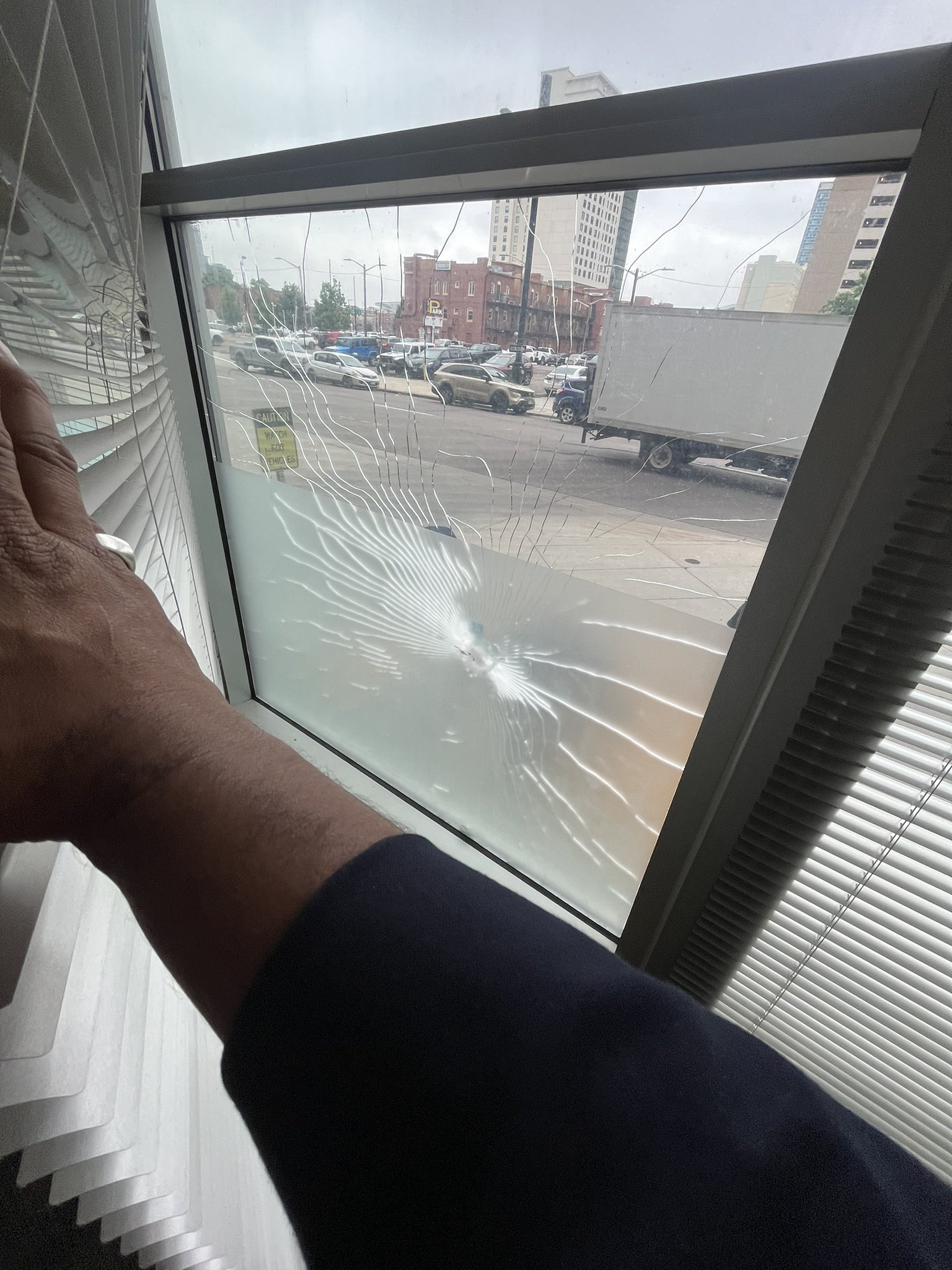
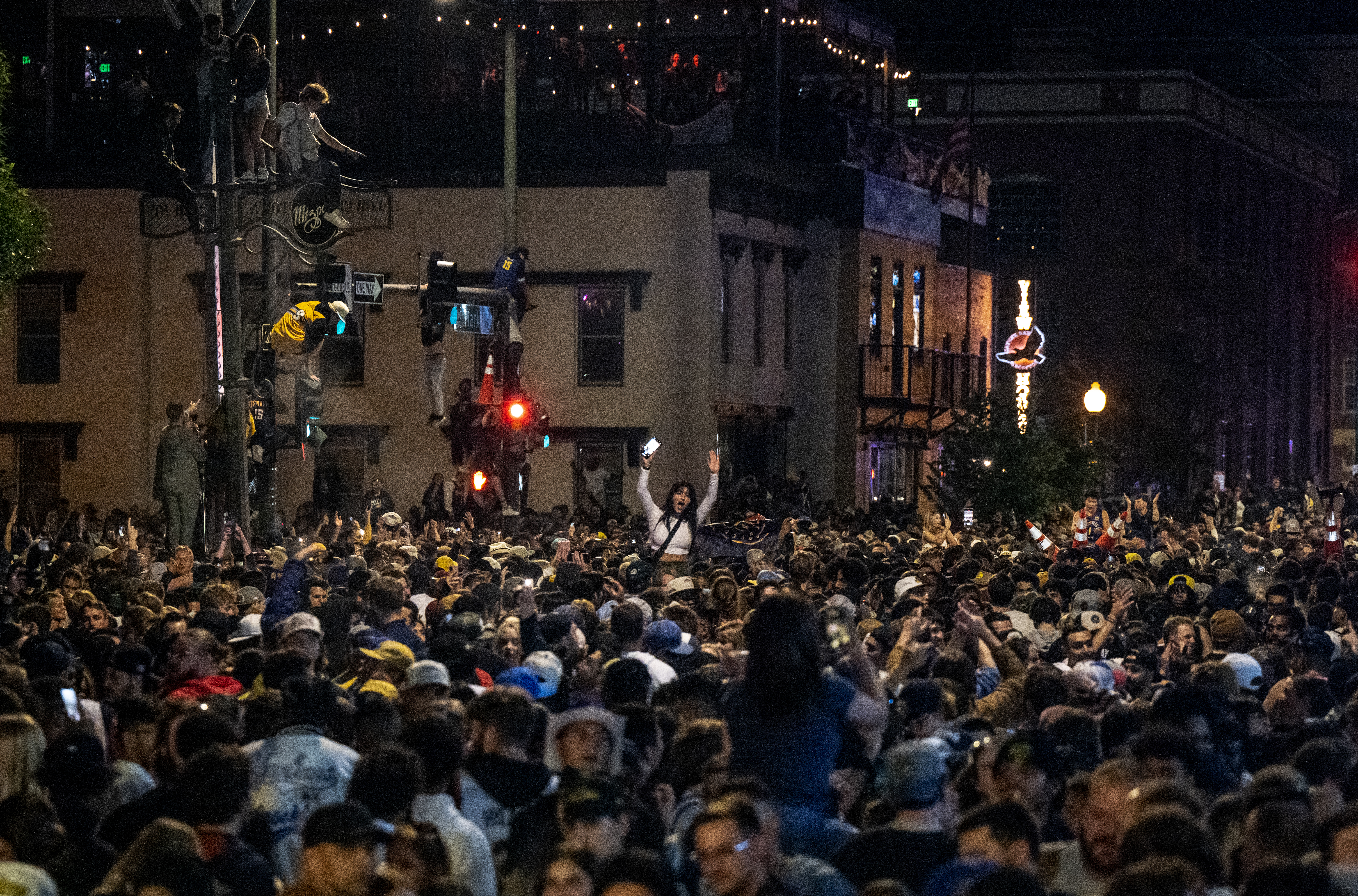
A gunfight that sent 10 people to the hospital hours after the Denver Nuggets won the NBA championship.
Another shooting about an hour earlier, injuring one.
A man shot in the leg after interrupting a group of teenagers trying to steal his car.
Two brothers gunned down on I-25 during rush hour in an apparent road rage incident.
Two people shot downtown after the Nuggets parade.
It’s been a bloody June in metro Denver, and it’s only midway through the month.
Such shootings have long prompted introspection among policymakers and community leaders about how to tackle the violence permeating metro Denver. To many, that some of the shootings occurred on the day Coloradans celebrated the Nuggets’ triumph merely contributed to the sense that things are awry in the Front Range’s biggest cities.
The spate of shootings also reinforced the nagging perception that downtown Denver, where some of the violence transpired, is not safe.
“I was not surprised,” said former Denver District Attorney Mitch Morrissey of the after-game shootings. “I have long said that LoDo (Lower Downtown) at closing time is the most dangerous place in Colorado.”
A true crisis
It’s a malaise Denver’s incoming new mayor acknowledged and vowed to confront.
“It’s undeniable and heartbreaking that Denver is facing a true crisis in gun violence right now,” Michael Johnston, the former legislator who will succeed outgoing Mayor Michael Hancock after winning the June 6 runoff election, told The Denver Gazette in a statement shortly after 10 people were wounded in a gunfight on Tuesday.
Police suspect that guns and drugs fueled that shooting at 20th and Market Streets downtown, which occurred mere hours after the Nuggets defeated the Miami Heat at Ball Arena Monday.
“Addressing these issues will be a top priority for my administration and will require a concerted, city-wide effort to ensure every Denver resident feels safe in their neighborhood,” Johnston said.
The mayor-elect said his transition team will form a dedicated committee “focused on finding innovative and effective solutions for community safety.” He also vowed to do the following:
Invest in community-based policing and prevention programs
Address the shortage in law enforcement officers by prioritizing hiring more first responders, including mental health workers, EMTs, and officers who “are walking the beat, visible in their neighborhoods, and representative of the communities they serve”
Enforce gun-safety legislation recently approved by lawmakers to ensure community members can feel safe in their schools, churches, and neighborhoods
Work with non-profits and other groups to invest in intervention programs and high-quality mental health support
Support prevention programs that offer summer and after-school activities, so young people can find their passion and “avoid negative peer groups”
‘A declining appreciation for life itself’
Crime has been sitting sat atop Denverites’ mind for the last several months.
A poll commissioned by The Denver Gazette, Colorado Politics, 9News and Metropolitan State University and conducted by SurveyUSA for the mayoral election showed crime ranking as the most important issue for Denver to address in the near future.
The poll results had come on the heels of reports showing that crime in Denver soared in recent years. There are hints that property crime in Denver is now heading in the right direction. Denver officials in May said property crimes, in fact, went down, particularly auto thefts year-to-date compared to 2022.
But the pervading sense that violent crime is here to stay persists. For example, while youth crime in general has declined in recent years in Colorado, violence involving juveniles — as perpetrators, as victims and sometimes both — has stubbornly persisted, particularly in parts of metro Denver, including most acutely in Adams County, according to statistics.
While Johnston offered policy prescriptions — which many hope would produce tangible and immediate results — some wonder if the violent crimes that unfolded in metro Denver point to a deeper, more fundamental shift in how people value life.
Under such reading, proposed policy prescriptions by themselves — while still welcome — would be insufficient when individuals regard life so cheaply they are willing to kill over a road altercation, or a drug deal, or a stolen car.
“What is happening in and around Denver is reflective of a change in us,” said George Brauchler, a former district attorney in charge of the 18th Judicial District and a columnist for the Denver Gazette.
“It is not the number of guns, but the number of people who are willing to use them against other people for reasons far less than self defense. It feels as if we have a declining appreciation for life itself,” he lamented.
He added: “Inconvenience and anger are increasingly the only justifications needed for someone to end a life. It feels casual. Road rage? Kill someone. Post Nuggets victory celebration/drug deal? Kill someone. Police trying to keep the peace? Shoot them.”
What happens in LoDo
Morrissey actually doesn’t think what happens in lower downtown Denver “tarnishes the whole metro area,” noting that, among other things, density immediately intensifies the danger arising out of a violent crime.
“When the shooting starts in LoDo, there are a lot of potential victims, and it’s extremely dangerous,” he said. “You add the number of people celebrating the Nuggets’ first championship and you have a recipe for disaster.”
Denver Police Department Chief Ron Thomas disputes the notion downtown is not safe, saying violent crime is happening all around the Denver metro area and the proliferation of guns is largely to blame.
“Downtown Denver is still a safe place to come,” Thomas said during a press conference Thursday after the downtown shooting near the parade route. “Unfortunately, we have far too many guns in our society and far too many individuals who act irresponsibly with guns … We continue to take measures to keep the downtown areas safe.
“We have a significant contingent of officers that that are deployed in our downtown core, particularly on the weekends during the entertainment hours. And so we believe that we can keep the area safe,” he said.
Hancock also insisted downtown is safe at the same press conference with Thomas on Thursday.
But, he too, senses a deeper, pernicious problem that’s particularly tragic for the city’s young people.
“This is not about downtown,” he said. “If you look at what’s occurred here in the last 72 hours in the metro region, where we’ve had shootings, road rage in Aurora, road rage on I-25, where you see what happened with the two large gatherings after the Nuggets won the championship on Monday and then again today … this really is about young people getting their hands on guns. These are young people who — they’re 19 and 22 and 25 — (and) whose lives, if they’re not ended by the gunshot, they’re ruined and ended because they’re going to spend the rest of their lives in jail.”
He added: “They don’t know how to solve crises or challenges by having a conversation. They’re shooting at one another. And it makes absolutely no sense. … Denver downtown is no more unsafe than is in any other neighborhood in the city or in Aurora or in Commerce City for that matter.”
Poverty brings crime of desperation
Terrance Roberts, a prominent anti-gang activist who ran for mayor and later backed Johnston, sees desperation around cost of living and poverty as the kindle fueling the crimes.
“Luckily for the city as a whole, these recent shootings surrounding the Nuggets events look to be personal incident related, not people targeting revelers or parade participants,” he said.
“Unfortunately for the local communities involved, these shootings happen often, and are a direct result of our increasing desperation in this city around living cost and poverty. Poverty has been proven to bring crimes of desperation, drug sells and drug abuse, anger, and domestic violence.”
He added: “Domestic violence breeds gang violence in youth. These levels of violence we have seen recently start at home, then it is played out in our schools, after school, and in our gathering locations, like night clubs, after hours, Colfax, Market St., etc.”
Like other activists, Roberts regards crime as the inevitable aftermath of an inequitable society.
“From the mass shooting after the NBA Final’s victory, to the road rage incident involving the two young brothers on I-25, to the shootings involving DPD, and the one after the Denver Nuggets Parade, they are all drug, gang, or anger related shootings,” he said, adding they “(prove) what myself and several others have been saying about the need to use our public safety dollars to address the cycle of poverty in this city.”
The two brothers who died on Tuesday in what the police described as a road rage incident on Interstate 25 — Damon, 22 and Blake Lucas, 21 — were on the way to a job interview.
The two cars had stopped in one lane of I-25, directly underneath West 6th Avenue. One of the brothers, the passenger, got out and approached the suspect, Stephen Long, 25. Long allegedly then shot him, the police said. His brother, who was driving, then approached Long, who began to drive away, but the victim grabbed onto his car and Long allegedly fired several shots as he drove off the highway at West 8th Avenue, hitting and causing him to fall off the car, the police said.
The solutions, Terrance said, lies in tackling what he views to be the root causes of the desperation: “The housing crisis needs addressing, more youth and elder services are needed, and more emphasis on drug prevention and intervention services.”
The polarization of crime
Brauchler, Morrissey and Roberts all offered policy responses to Denver’s crimes, and they all look to Johnston, the succeeding mayor, to address the problem head on.
Roberts is under no illusion the job is going to be easy.
“Policing to prevent crime through proper community engagement and support, and to bring justice to victims after someone has been harmed is a real conversation and it’s very polarized,” he said, adding, “Funding for both ideologies and schools of thought are needed.”
Morrissey said Johnston’s first order of business is to quickly figure how to get the police department back to full strength.
He suggested that Johnston — and Denver’s — efforts to hire more police officers would continue to be hampered if lawmakers refuse to undo what he has repeatedly described as the state’s proclivity to put all the blame on officers, adding mandate after mandate on cops that pile up and make the job undesirable.
“The legislature needs to revisit the (issue of) personal liability of officers and see how that is impacting recruiting and retention of officers across the state. Judges, district attorneys, legislators are not held personally liable for their mistakes, so why are law enforcement officers?” Morrissey said. “I guarantee to you the only people running toward those shots the other night were Denver police officers. They need to be treated better by our state.”
Brauchler said he would like to see Johnston “tell us how Denver is going to address the ‘property-crime is no big deal’ attitude of many of the city and state leaders.”
“How are you going to promote tolerance — not of whatever lifestyles Denverites choose — but of each other’s varied ideological views? How will he convince the next generation that violence is 100% every single time is wrong and he will champion locking up every single person who engages in it?”
Roberts, who shared an office with Johnston in Holly Square years ago, said he and the incoming mayor have worked together to address many of these same issues Denver faces — with “lots of success and some missteps in the end of that timeframe.”
Having that knowledge and experience, Roberts said he hopes to see Johnston put into his cabinet “professionals who have done the work to move the needle in the right direction.”
“I am at this moment confident he’ll do what he promised in the most critical areas of need in our city to address these issues,” Roberts said. “If he does, we will see much more positive change and a safer and cleaner city, especially in the 16th Street Mall and LODO’s areas.”
City Editor Dennis Huspeni contributed to this report.