







Here’s why some of Colorado’s most popular crops will be available later than usual this summer
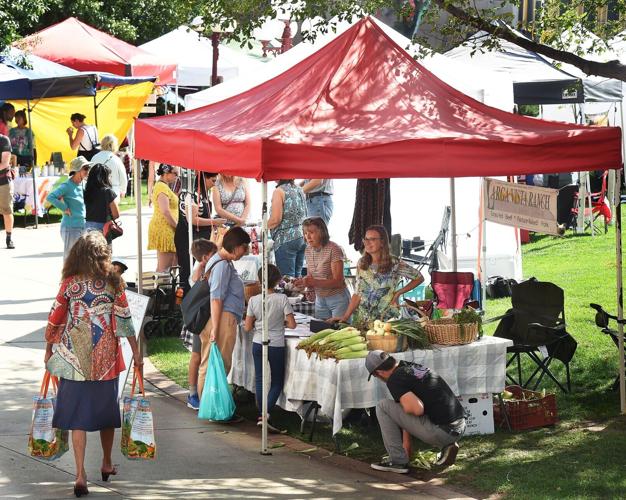
The Colorado Art & Farm Market is being held every Monday at the Pioneers Museum. Many farmer’s markets are in full swing around the Pikes Peak region. The Banning-Lewis Ranch subdivision has a farmer’s market on Thursdays from 3-7. There are farmer’s markets on Saturday mornings in Old Colorado City, Monument, Black Forest and the Margarita at Pine Creek.
photos by JERILEE BENNETT, THE GAZETTE
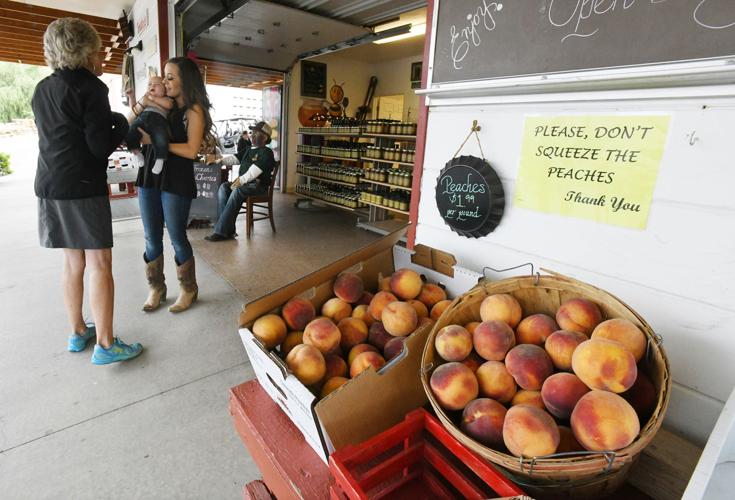
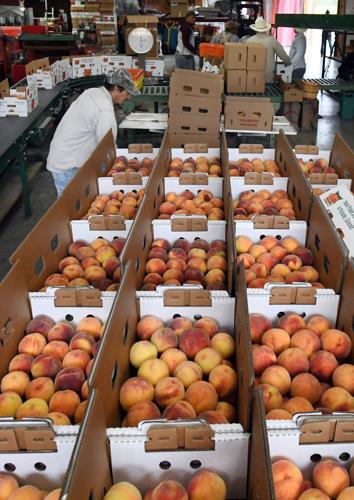
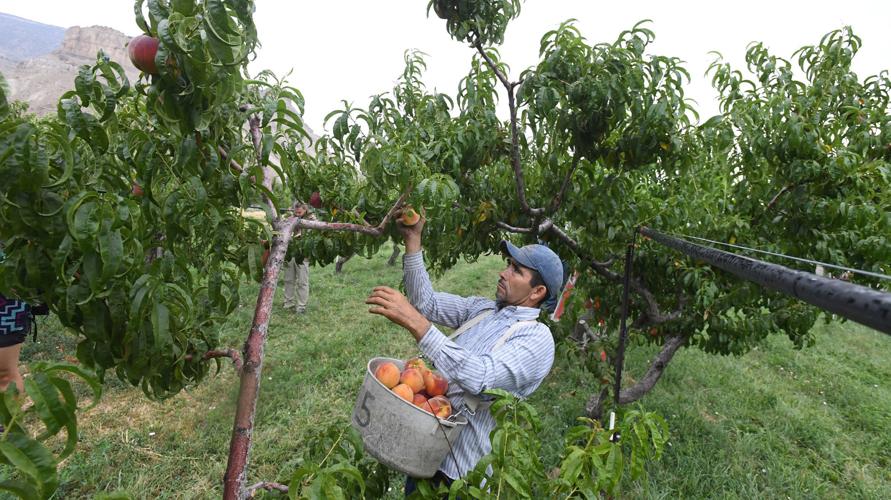
Rocky Ford cantaloupe, Palisade peaches and Pueblo chiles — among the most acclaimed Colorado-grown crops — will be available to consumers later than usual this summer, according to numerous farmers throughout the state.
Unseasonal weather in May and June brought unprecedented amounts of rainfall and chilly temperatures in parts of Colorado, prompting delays in planting of the state’s popular summer crops and slower growth patterns.
Agriculture is the second-largest industry in the state, contributing over $40 billion toward the economy annually through crops, feed, livestock and more, according to the Colorado Farm Bureau.
The industry has faced numerous challenges in recent years, having to navigate rising costs brought by the COVID-19 pandemic, the pressures of drought on the state’s already tight water supply — and now the record-setting rain seen in parts of the state.
Eric Hanagan, owner and operator of Hanagan Farms in Swink, said he’s confident his family’s ability to produce a quality crop, no matter the circumstances. Located just southeast of Pueblo, the farm has grown a variety of crops throughout its 100-plus years in operation — including but not limited to chili peppers, watermelon, tomatoes, zucchini, cantaloupe and cucumbers.
Hanagan said the cooler temperatures have slowed the growth of the farm’s produce production, delaying the harvest by at least three weeks, and hindering the quality slightly.
“For our vegetable crops it will be delayed a bit, Hanagan said. “I’m still very confident that as farmers in the Arkansas Valley, we always do our best and will produce a good quality crop.
“We’re going to have more than enough to go around.”
Hanagan said the above-average amount of rain along with bouts of hail have hindered crops, noting that plants do best with hot dry days during the farming season, given the mountains received enough snow to fuel irrigation efforts throughout the spring and summer.
“We always want no rain and an adequate water supply,” Hanagan said, as odd as they may sound. “I love a great winter with a huge snowpack in the mountains for the water to come down when I want it, where I want it.”
The Pueblo area had above-average rain in April and June with normal May conditions, according to the National Weather Service.
Five miles west of Hanagan Farms, Hirakata Farms, famous for its Rocky Ford cantaloupe, is facing similar challenges.
“We’re probably 10 days late because of the cooler weather conditions,” said Michael Hirakata, farm operator and owner.
Additionally, Hirakata said the unseasonal rainfall also brought an increase in weeds around the property and ground saturation levels, further contributing to the delay in harvest.
Hirakata said he’s expecting a first harvest around July 17.
“We’re hoping for hot, dry days down here, and rain upstream from us to keep water in our canal through late July and early August to prolong the harvest,” Hirakata said, “If it gets cold early in the fall and freezes, it’ll put a stop to it (the harvest). We’re hoping for a late fall and late frost to keep the harvest coming into the fall.”
Palisade peach farmers over on the Western Slope haven’t escaped the struggles posed by this year’s unseasonal weather, either.
“They (the peaches) are definitely behind, they look good,” said Zach Quintana, of Urban Orchard Family Farm in Palisade.
Quintana mainly devotes his efforts to selling produce at farmer’s markets throughout the state.
“With all the rain, they (the peaches) weren’t sizing, and the colors weren’t turning in the way they usually do,” Quintana said, “They’re catching up now because of the heat.”
The Urban Orchard grows over a dozen varieties of Palisade peaches, harvesting at different times throughout the summer. Although the farm has begun its harvest of some of its peach varieties, Quintana said the crop remains 10-15 days behind its normal schedule.
“Based on what we’re seeing, it’s looking like a good crop this year. You don’t really know until most of the varieties get to full size,” Quintana said. “The colder weather shouldn’t affect the amount produced, it just slows the harvest.”
Quintana said that although his family’s peaches are available at numerous Colorado farmer’s markets — including Saturday’s at Bancroft Park in Old Colorado City — peach fans probably won’t be able to get their fix at grocery stores until August.
Meanwhile, Colorado’s corn crop — much of it Olathe sweet corn — is 84% sprouted and out of the ground. At this time in 2022, 94% of the crop was out of the ground, according to the U.S. Department of Agriculture.
Per the USDA’s weekly crop report released on June 21, the department rated 78% of the corn crop to be in good to excellent condition.