







A glimpse of the future created by drug decriminalization: It is not pretty | Vince Bzdek

Juliano Hamana, 24, samples the aroma of one of the offerings at Shango Premium Cannabis, in Portland , Ore., Thrusday, Oct. 1, 2015.
associated press file

I caught a glimpse of Colorado’s future last week, and it scared the hell out of me.
An article in The Washington Post took a hard look at what has happened to Portugal 20 years after it decriminalized consumption of all drugs for personal use. For two decades, Portugal has not sent a single person to prison for possessing drugs. Those who misuse drugs are registered by police and referred to “dissuasion commissions” that funnel people into voluntary rehab programs.
Portugal’s “harm reduction” approach ended years of punishment-driven policies and became a model for progressive cities worldwide such as Denver and Portland who were looking for a new way to address drug consumption.
Portugal was touted as a model of success for reframing drug addiction as a public health challenge rather than a criminal activity. A video a few years ago produced by the Economist boasted: “How Portugal and Colorado solved their drug problems.”
The problem, reporters Anthony Faiola and Catarina Fernandes Martins found, is that 20 years on Portugal is having serious second thoughts about decriminalization because Portugal is a mess.
“Addiction haunts the recesses of this ancient port city, as people with gaunt, clumsy hands lift crack pipes to lips, syringes to veins,” Faiola and Frenandes write of the city of Porto.
“Authorities are sealing off warren-like alleyways with iron bars and fencing in parks to halt the spread of encampments. A siege mentality is taking root in nearby enclaves of pricey condos and multimillion-euro homes.”
Urban visibility of the drug problem is at its worst point in decades, police in Portugal say.
“Overdose rates have hit 12-year highs and almost doubled in Lisbon from 2019 to 2023,” the Post article says. “Sewage samples in Lisbon show cocaine and ketamine detection is now among the highest in Europe, with elevated weekend rates suggesting party-heavy usage. In Porto, the collection of drug-related debris from city streets surged 24% between 2021 and 2022, with this year on track to far outpace the last. Crime — including robbery in public spaces — spiked 14% from 2021 to 2022, a rise police blame partly on increased drug use.”
Sound familiar?
Decriminalization has normalized drug consumption so thoroughly that fatigue has set in among police and politicians dealing with its side effects such as crime and homelessness.
Of two dozen street people who use drugs and were questioned by Post reporters, not one said they’d appeared before one of Portugal’s Dissuasion Commissions. Post reporters observed police ignoring people using drugs in public, even though the law still requires them to register public users for appearances before those commissions.
“Police are less motivated to register people who misuse drugs and there are yearlong waits for state-funded rehabilitation treatment even as the number of people seeking help has fallen dramatically,” the Post wrote.
“The return in force of visible urban drug use, meanwhile, is leading the mayor and others here to ask an explosive question: Is it time to reconsider this country’s globally hailed drug model?”
Portugal isn’t the only place worried that a “harm reduction” approach is flailing. Some places that were early adopters of liberal drug policies are beginning to repeal permissive laws, while Colorado plows headlong ahead with more decriminalization, this time targeting hallucinogenic mushrooms, nine years after decriminalizing pot.
Amsterdam, known worldwide for its liberal drug laws and “pot cafes,” last month instituted a new ban on smoking marijuana in public places. In Norway, a plan to decriminalize drugs collapsed in 2021, and the country is trying a more piecemeal approach.
And Oregon’s decriminalization policy, modeled on Portugal’s, is off to a rough start. Their effort also tries to keep people with addiction out of jail and funneled to rehab instead. But “Police have shown little interest in handing out toothless citations for drug use, grants for treatment have lagged, and extremely few people are seeking voluntary rehabilitation,” Post reporters wrote. “Meanwhile, overdoses this year in Portland, the state’s largest city, have surged 46%.”
The feisty Willamette Week recently reported that The Multnomah County Health Department would begin distributing tinfoil and straws this month to fentanyl smokers at sites across Portland.
“The ‘smoking supplies,’ which also include glass pipes for smoking meth and crack as well as ‘snorting kits,’ are part of a national effort to minimize the health consequences of drug use,” Willamette Week wrote.
Harm reduction is a key pillar of the U.S. Department of Health and Human Services’ Overdose Prevention Strategy now.
That federal policy states that ‘harm reduction services save lives by being available and accessible in a manner that emphasizes the need for humility and compassion toward people who use drugs.”
But being a drug user is not a right, and drugs aren’t just a health problem. Criminal justice must still play a role in tackling addiction and overdoses because the harm from drugs extends beyond the people who use them, contributing to crime, the degradation of neighborhoods, and homelessness, among other things. The cartels and criminal organizations that dump huge amounts of black-market drugs into the United States cannot be treated with the same kind of compassion and humility.
Colorado law enforcement agencies have told the Gazette they are battling a boom in illegal marijuana cultivation by sometimes violent groups of criminals who rake in millions of dollars by exporting what they grow.
They are using Colorado’s legalized market and lighter penalties as a wind shadow to set up their operations.
“It’s out of control,” Ray Padilla, a drug agent in the state, told us a few years ago. “We probably spend more assets on marijuana now than we ever did.”
He and other law enforcement leaders say the lure of marijuana millions has drawn armed growers from places as distant as Florida, California and Mexico, as well as home-grown black marketeers who set up elaborate lighting and irrigation systems in suburban houses.
Overall, marijuana cases filed in state courts have plummeted by about 80% since voters legalized recreational marijuana in November 2012, with sales beginning in 2014, The Gazette has reported. Most officials attribute that number to the precipitous drop in simple possession arrests.
However, felony marijuana cases have risen steadily beginning in 2015 with 579 cases; 2016 saw 807 felony cases, and there were 901 in 2017. Possession of an ounce or less of marijuana is legal, whereas possessing 10 ounces or more is a felony.
And in the United States, overdose deaths, fueled by opioids and deadly synthetic fentanyl, topped 100,000 in both 2021 and 2022 — or double what they were in 2015.
Portugal holds a clear lesson for Colorado and the United States: Over time, decriminalization has fostered a stubborn and corroding culture of drug use in places that have tried it, and harm reduction is not enough in and of itself to contain and control that drug use.
“When you first back off enforcement, there are not many people walking over the line that you’ve removed. And the public think it’s working really well,” Keith Humphreys, former senior drug policy adviser in the Obama administration and a professor of psychiatry at Stanford University, told the Post.
“Then word gets out that there’s an open market, limits to penalties, and you start drawing in more drug users. Then you’ve got a more stable drug culture, and, frankly, it doesn’t look as good anymore.”


We tested vapes in Colorado for signs of hemp. This is what we found.
Chris Osher
chris.osher@gazette.com
Updated 20 hours ago
This article was produced for ProPublica’s Local Reporting Network in partnership with The Denver Gazette. Sign up for Dispatches to get our stories in your inbox every week. Leaders in the Colorado marijuana industry have complained in recent years that...

Chris Osher
Reporter
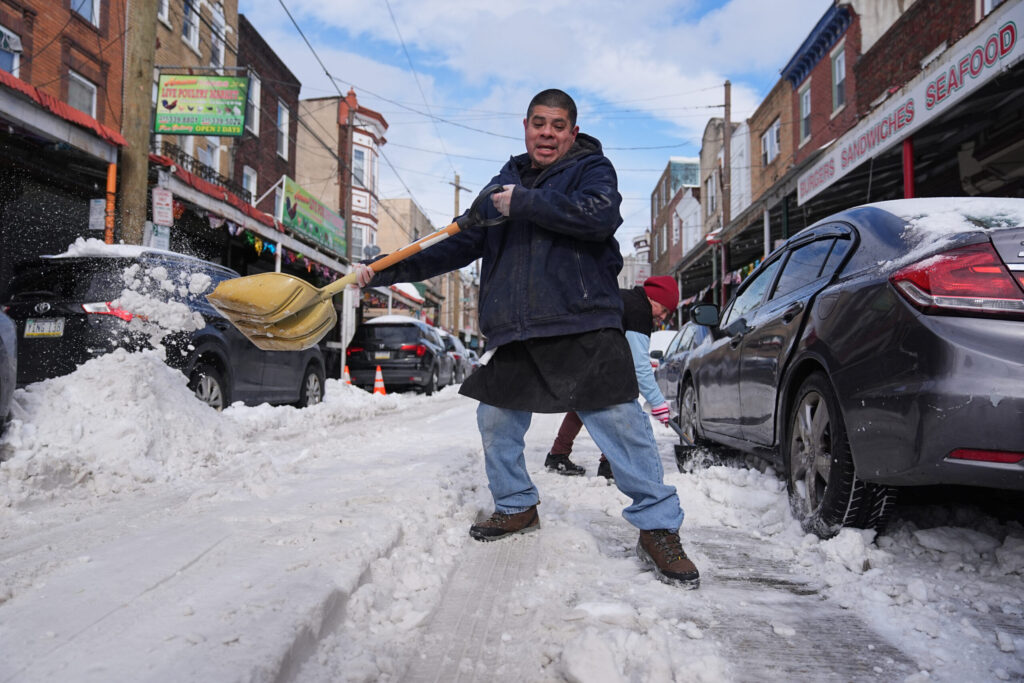
Shoveling snow? Over-exertion and cold temps can raise your heart risks
The Associated Press
the-associated-press@denvergazette.com
Updated 5 days ago
Digging out from the weekend’s massive snow and ice storm could be hazardous to your heart. Pennsylvania health officials announced three snow-removal related deaths Sunday. All were between the ages of 60 to 84. The Lehigh County coroner’s office cautioned...

The Associated Press
Reporter

Powdered whole milk could be a culprit in the ByHeart botulism outbreak, tests show
The Associated Press
the-associated-press@denvergazette.com
Updated 4 days ago
Powdered whole milk used to make ByHeart infant formula could be a source of contamination that led to an outbreak of botulism that has sickened dozens of babies, U.S. health officials indicated Friday. Testing by the U.S. Food and Drug...
The Associated Press
Reporter

ACA enrollment in Colorado sees slight dip amid rising costs
Nicole C. Brambila nico.brambila@denvergazette.com
nico.brambila@denvergazette.com
Updated 3 days ago
Despite handwringing over enhanced federal subsidies going away for many Coloradans enrolled in health insurance on the state’s marketplace, officials reported Friday just a 2% enrollment dip. More than 277,000 Coloradans enrolled in health insurance through the Affordable Care Act...


Former medical executives, Colorado residents charged with $873M fraud
Michael Braithwaite
michael.braithwaite@gazette.com
Updated 4 days ago
Two former medical device company executives were charged with a near-$900 million fraud scheme in a federal grand jury indictment unsealed Wednesday. Thomas Sandgaard, 67 of Castle Rock, and Anna Lucsok, 39 of Denver, face nine counts of health care...

Michael Braithwaite
Reporter

Families explore how a smartwatch can give early warnings of severe tantrums
Mayo Clinic News Network
mayo-clinic-news-network@gazette.com
Updated 1 week ago
Evenings in the Staal household often carried a delicate unpredictability. After a full school day — and as Ethan’s medication began to wear off — the shift from playful to overwhelmed could happen in seconds. Ethan has attention-deficit/hyperactivity disorder, a...

Mayo Clinic News Network
Reporter

Colorado Coalition for the Homeless workers rally, citing low pay, high turnover
Deborah Grigsby
deborah.smith@denvergazette.com
Updated 2 weeks ago
Dozens of Colorado Coalition for the Homeless frontline workers and members of the Service Employees International Union (SEIU) Local 105 rallied Thursday outside of a downtown CCH office building on north Broadway, calling on the nonprofit to address low wages...

Deborah Grigsby
Reporter
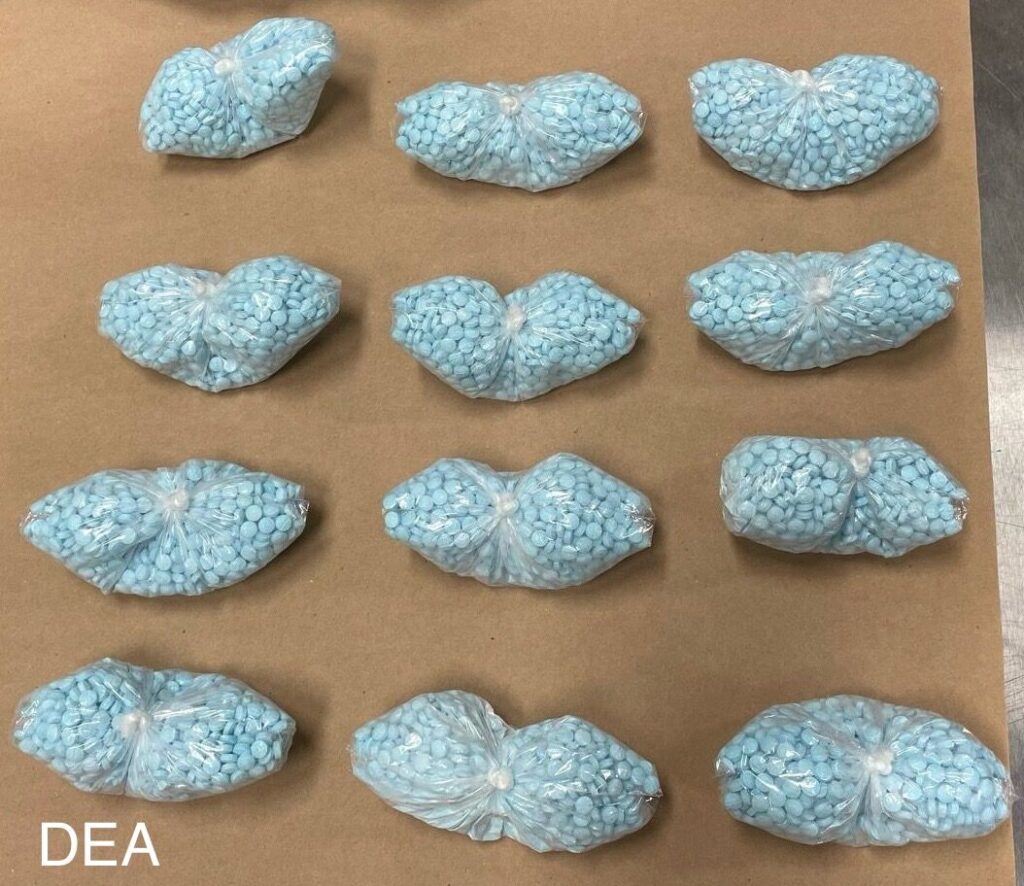
Fatal fentanyl overdoses in Denver up nearly 25% in 2025, health department says
Michael Braithwaite
michael.braithwaite@gazette.com
Updated 2 weeks ago
Fatal fentanyl overdoses in Denver rose by nearly 25% in 2025 to the second-highest total in the past half decade, according to preliminary data from the Denver Department of Public Health and Environment. Within the city, 346 people died last...
Michael Braithwaite
Reporter

U.S. overdose deaths fell through most of 2025, federal data reveals
The Associated Press
the-associated-press@denvergazette.com
Updated 2 weeks ago
NEW YORK — U.S. overdose deaths fell through most of last year, suggesting a lasting improvement in an epidemic that had been worsening for decades. Federal data released Wednesday showed that overdose deaths have been falling for more than two...
The Associated Press
Reporter

Doctors: Changes to U.S. vaccine recommendations are confusing parents
Bob Smith
bob.smith@gazette.com
Updated 3 weeks ago
Dr. Molly O’Shea has noticed growing skepticism about vaccines at both of her Michigan pediatric offices and says this week’s unprecedented and confusing changes to federal vaccine guidance will only make things worse. One of her offices is in a...

Bob Smith
Reporter
PREV
PREVIOUS
Kaiser Permanente employees picket in Aurora to demand higher wages, more staff
AURORA — Carmen Madrigal, a breast cancer survivor, gets choked up talking about the phone calls she’s made to cancer patients to cancel appointments because Kaiser Permanente was short staffed. “This is not OK,” said Madrigal, of Aurora. Madrigal, an optical business coordinator, has worked for Kaiser Permanente in Colorado for nearly nine years. She […]

UCHealth University of Colorado Hospital ranked No. 1 in the state by U.S. News and World Report
UCHealth University of Colorado Hospital in Aurora has been recognized by U.S. News and World Report as the top hospital in the state, according to a Tuesday announcement. Medical Center of the Rockies in Loveland was ranked second in Colorado, with SCL Health St. Joseph Hospital coming in third. UCHealth Memorial in Colorado Springs and […]