







Denver, Aurora leaders discuss collaboration as homelessness soars in region
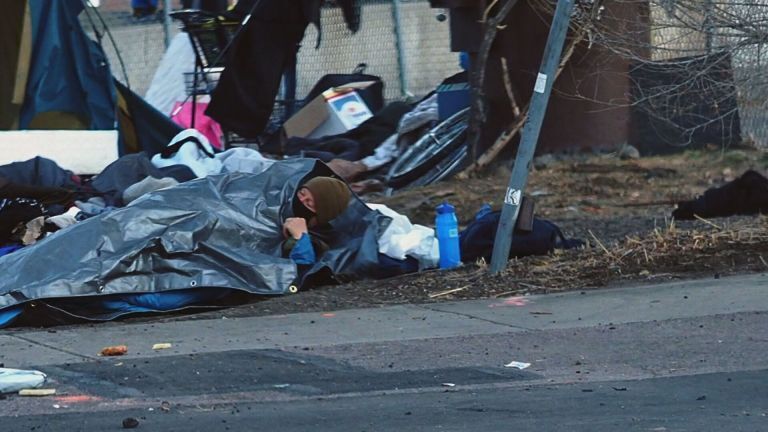
Aurora Mayor Mike Coffman sleeping on the streets while posing as homeless during a week-long experiment in late December 2020.
CBS

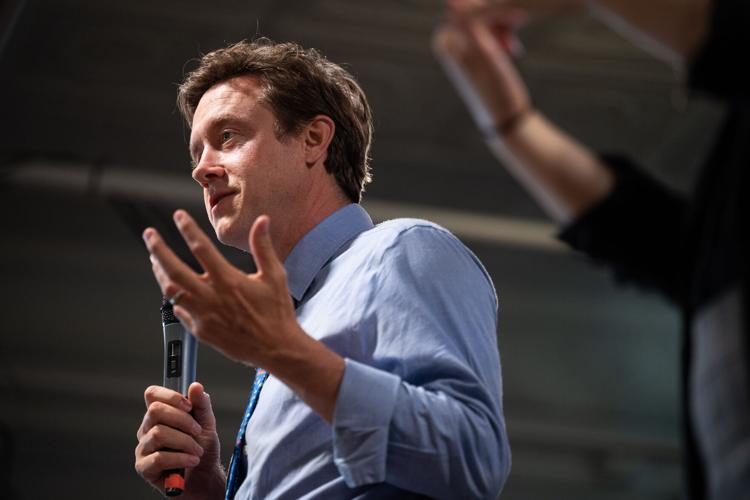

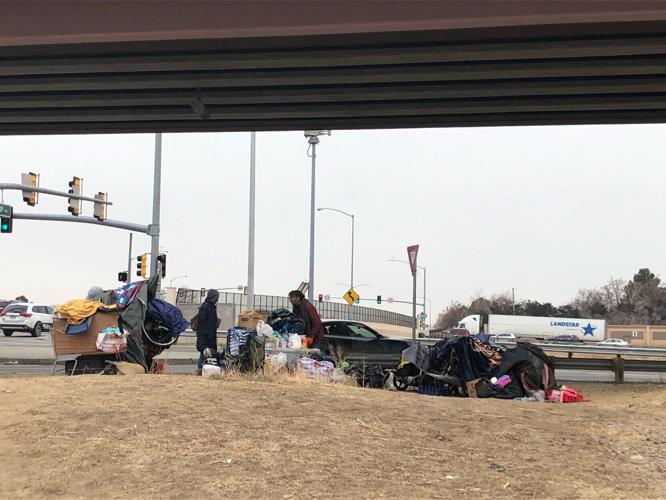


In Aurora and Denver — two neighboring cities pursuing divergent strategies to resolving homelessness — talk of if and how collaboration could take place is brewing among city leaders.
At the Denver Metro Chamber of Commerce’s annual State of the City event on Thursday, regional collaboration — if and how it might unfold — emerged as a theme, as Denver metro area cities look to solve the area’s most pressing challenges. Four Front Range mayors — Boulder Mayor Aaron Brockett, Aurora Mayor Mike Coffman, Denver Mayor Mike Johnston and Colorado Springs Mayor Yemi Mobolade — sat on the panel, in which homelessness became a focal point.
The idea of all metro municipalities, specifically Denver and Aurora, working together to solve homelessness arose more than once during the chamber event, as it did at Johnston’s first of 78 neighborhood town halls regarding homelessness earlier last week, and throughout long debates held in Aurora last year as the city council crafted its plan to tackle the crisis within Aurora’s borders.
The prospect shines a spotlight on differing approaches Denver and Aurora are pursuing to solve homelessness. Both cities, which share a border, have launched major initiatives on homelessness in the past year, most recently with the rollout of Johnston’s aggressive initiatives that include getting a significant number of people off the streets before 2024 begins.
At the outset, their approaches diverge.
While Johnston, expected by some to govern from a left-of-center approach, is pursuing an ambitious “housing first” model, taking notes from strategies used in Houston, a conservative council majority in Aurora is skeptical, if not adamantly opposed, to that model back home after they went on a research trip to Texas.
A divided Aurora City Council went on to approve pursuing a concept that borrowed from “work-first” and “treatment-first” models by providing anyone in need with emergency service but offering more robust services to people who are participating in the workforce and receiving any behavioral health treatment they may need. Progressive Aurora councilmembers had unsuccessfully advocated for a “housing first” approach.
The proposal also called for building a campus, on which support services, housing and shelter could be co-located. Early and rough estimates placed that price tag somewhere between $50 million and $70 million.
Johnston, on the other hand, immediately declared a state of local emergency on homelessness and unveiled a goal of getting 1,000 people living on Denver’s streets into supportive housing by the end of the year.
Rather than concentrate “supportive” housing and services in one neighborhood, Johnston is looking to spread housing across multiple sites, relying on rental units, converted hotels, micro-communities such as tiny home villages, and industrial buildings. The housing will be accompanied by wraparound services — individualized programs aimed at helping homeless people beyond providing them with housing.
At a news conference on Tuesday, Johnston declined to offer a specific cost estimate, saying the number could change significantly based on what types of housing units the city is able to secure.
Denver has poured significant resources into tackling the crisis, spending $152 million in 2022 and authorizing $254 million to address the problem in 2023, but the crisis shows no signs of abating. The city this year year saw an 8% increase in the number of homeless people who sleep in public places, based on the most recent point-in-time count. All told, the Metro Denver Homeless Initiative counted 9,065 homeless people throughout the seven-county metro area, a nearly 32% increase from 2022.
More in common underneath the surface
In Johnston’s view, the two cities’ approaches have more in common than what “people may see on the surface.”
At the chamber event, Coffman spoke about Aurora’s “treatment-first” approach, saying homelessness is a behavioral health crisis in addition to being a symptom of housing affordability woes. The city might need to pursue some “tough love,” as it takes a more aggressive strategy on trespassing, camping and getting people into treatment, Coffman said.
“That’s our shared vision — is getting people access to services and to treatment when they need it,” Johnston said of Aurora’s “treatment-first” model.
Regional collaborations could potentially take the form of joint housing and shelter projects, or joining services, Johnston said. Each city has its unique needs, the Denver mayor added, pointing to Lakewood’s lack of shelters.
Denver will begin work, though, within its city center, he said, “with a real focus on our central and highest density areas.”
“That’s probably not Mayor Coffman’s responsibility, or (Lakewood Mayor Adam Paul’s) responsibility, or anybody else,” he said.
The cities will have to collaborate in some capacity because they share a border, Coffman said. The mayor spoke about observing an abatement last week in which “we kind of pushed them out into Denver, and then they came back here.”
“So, we have to work together there,” he said.
Johnston’s plan will be costly, Coffman said, and with Aurora considering to develop a navigation center while Denver looks to stand up numerous forms of housing, the two might end up competing for the same state funding. That could foster more challenges, Coffman said.
For his part, Johnston said there are more opportunities for collaboration than competition and added he is not concerned about local communities vying for the same pots of money, saying it’s a normal occurrence.
“We do have two very different approaches. I mean, housing first, treatment first,” Coffman said. “But I wish them the best and I hope it works.”
Councilmembers push for regional approach
In Denver, Councilmember Darrell Watson said homelessness has to be addressed with a regional approach.
Despite the differences in approaches, opportunity exists for collaboration between cities — and there needs to be, Watson said. Homeless people do not know city boundaries and aren’t concerned about where Denver ends and Aurora begins, so collaboration is necessary, he said.
Between housing-first and treatment-first approaches, Watson said the cities need both.
“All of the above approaches we’ve seen have worked for certain folks who are unsheltered and I plan on trying all of those mixes and anything else other municipalities are doing that’s working,” Watson said.
Cities throughout the Denver metro area also need to follow suit on Denver’s declaration of a homelessness state of emergency, Watson said.
“This is not just a Denver issue, and I ask the other municipal leaders to consider joining us in these emergency orders,” Watson said. “It has to be a regional approach and Denver on its own with an emergency declaration will not be sustainable in the long-term.”
In Aurora, Councilmember Alison Coombs said a successful collaboration between the two cities would need to be a wide cooperative effort, bringing together a group of policymakers and other regional partners.
A successful collaboration would also include partners from other cities in the region, as well, not just from Denver and Aurora, Coombs said.
“We already have a policy committee that works on housing in the city, so I think it would make sense that it be the starting point for the Aurora side of things,” Coombs said. “Then, I’d want it to be collaborative and to be focused on solutions that are effective and I think bringing in other regional partners … means that we could really build something that’s scalable and can be inclusive of other cities in the region.”
She also emphasized the importance of Aurora’s councilmembers having a say in the conversation, saying the collaboration needs to be more than “just the two mayors sitting down and talking.”
The camping ban conundrum
In terms of the differences between approaches in the two cities, Coombs said they share the same flaw: camping bans. A collaboration between Denver and Aurora could work together on reconsidering the bans, which Coombs called the “least effective component to strategies in both cities.”
While they share that similarity, they have a lot of differences that would require each city to give a little to make any kind of collaboration successful, Coombs said.
“As far as efficacy of programs, both cities would have to give in different ways toward a more non-congregate and housing-based model,” Coombs said.
Aurora Councilman Dustin Zvonek said cities have tried housing-based models for years and haven’t been successful. The two cities’ different approaches would make collaboration difficult, but there are ways it could work, Zvonek said.
Rather than focusing on one set approach or another, Denver and Aurora should collaborate to advocate for a block grant scenario, where funding from the U.S Department of Housing and Urban Development would allow the cities to try a combination of approaches, Zvonek said.
“I don’t think that a one size-fits-all approach has worked,” Zvonek said. “This is where we could potentially work together … is that the federal government treat funding that comes through HUD for homelessness to be a block grant and allow us to be laboratories of democracy at the state and local level.”


Colorado women’s basketball boosts NCAA Tournament resume with 55-48 win over Kansas
Paul Klee
paul.klee@gazette.com
Updated 14 minutes ago
JR Payne’s first game with a shiny new contract extension was a success. And it could have clinched an at-large berth in the NCAA Tournament. Colorado beat Kansas 55-48 in the second round of the Big 12 tournament at T-Mobile...

Paul Klee
Reporter

Lakers star LeBron James breaks another record at Ball Arena
Vinny Benedetto
vinny.benedetto@gazette.com
Updated 40 minutes ago
There was a piece of history made Thursday at Ball Arena. Lakers forward LeBron James became the NBA’s all-time leader in made field goals late in the first quarter. The 41-year-old made a fadeaway jumper over Zeke Nnaji to break...

Vinny Benedetto
Reporter
U.S. House probes reports of fraud, waste in Colorado’s Medicaid program
Marianne Goodland
marianne.goodland@coloradopolitics.com
Updated 1 hour ago
A congressional committee is probing reports of waste, fraud and abuse in Colorado’s Medicaid program, citing recent stories outlining over-billing in transportation spending and alleged improper payments in autism services. The U.S. House Committee on Energy and Commerce has sent...

Marianne Goodland
Reporter

Colorado College ready for more close battles in playoffs, starting with No. 4 WMU
hugh-johnson
hugh.johnson@gazette.com
Updated 2 hours ago
The prospect of winning playoff games on the road might be daunting for any sports team, but don’t expect a timid Tigers hockey team to walk into Lawson Ice Arena in Kalamazoo, Mich. Colorado College hockey finished the regular season...

hugh-johnson
Reporter

Air Force springboards into AHA tourney after big weekend, looks to stay hot
hugh-johnson
hugh.johnson@gazette.com
Updated 2 hours ago
Air Force hockey coach Frank Serratore gave his players their flowers but left a note of caution beside them. The Falcons enter the postseason coming off perhaps their biggest weekend of the season, sweeping the defending Atlantic Hockey America champions...
hugh-johnson
Reporter
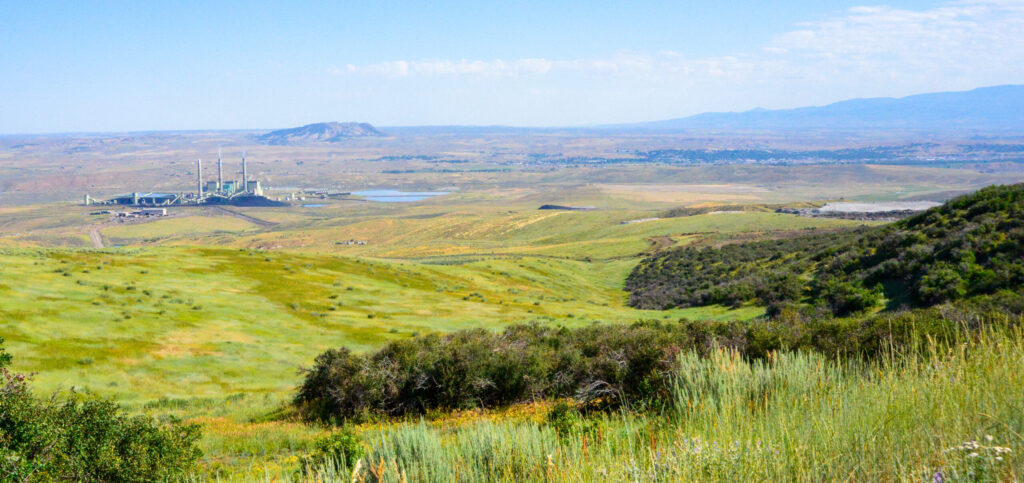
Colorado Attorney General, environmental groups challenge EPA rejection of the state’s regional haze plan
Scott Weiser
scott.weiser@gazette.com
Updated 6 hours ago
Colorado Attorney General Phil Weiser and several environmental organizations have filed separate petitions in the U.S. Court of Appeals for the Tenth Circuit challenging the U.S. Environmental Protection Agency’s decision to reject Colorado’s regional haze plan. The plan included proposals...

Scott Weiser
Reporter
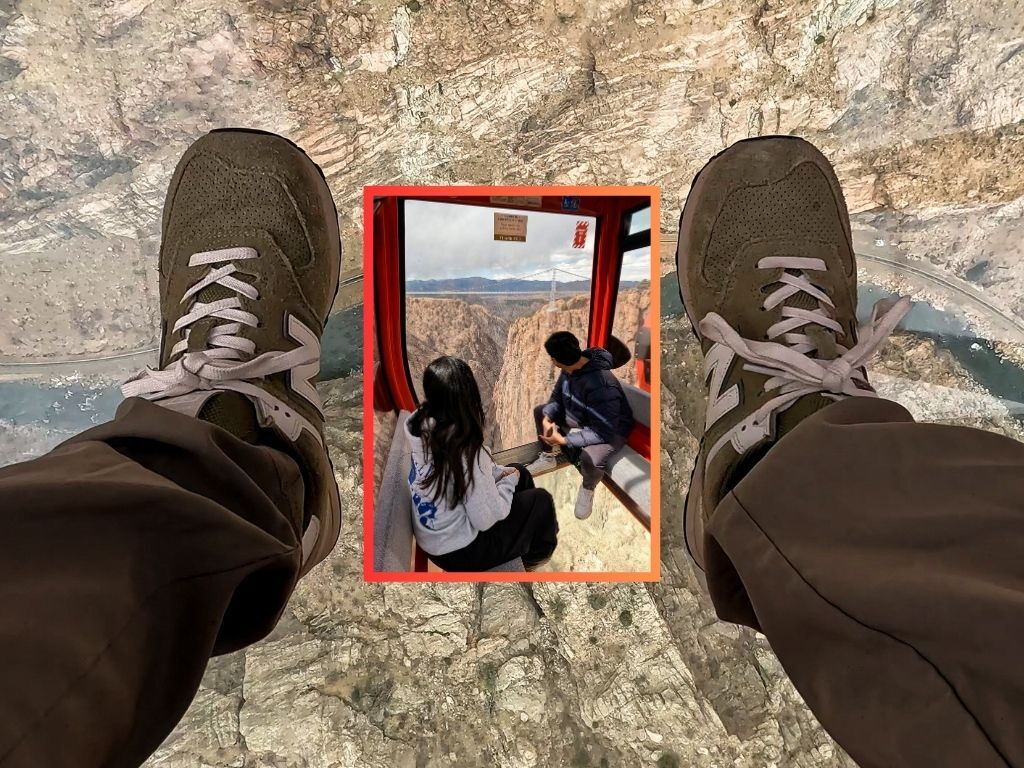
Colorado’s first ‘glass-floored’ gondola makes debut 1,200 feet above canyon floor
Spencer McKee
spencer@outtherecolorado.com
Updated 6 hours ago
Colorado’s first ‘clear-floor’ gondola is open for business – but you won’t find it at a ski resort. Suspended about 1,200 feet above the canyon floor, the clear floors of the Royal Gorge Bridge and Park gondola are designed to...

Spencer McKee
Reporter

Denver Restaurant Week is back with deals starting at $25
Bernadette Berdychowski
bernadette.berdychowski@denvergazette.com
Updated 5 hours ago
Denver Restaurant Week has returned. The 10-day celebration of the local restaurant industry begins this Friday. The annual event is in its 22nd year and usually occurs in March, a typically slower period for Denver’s restaurant industry. This year’s edition...

Bernadette Berdychowski
Reporter
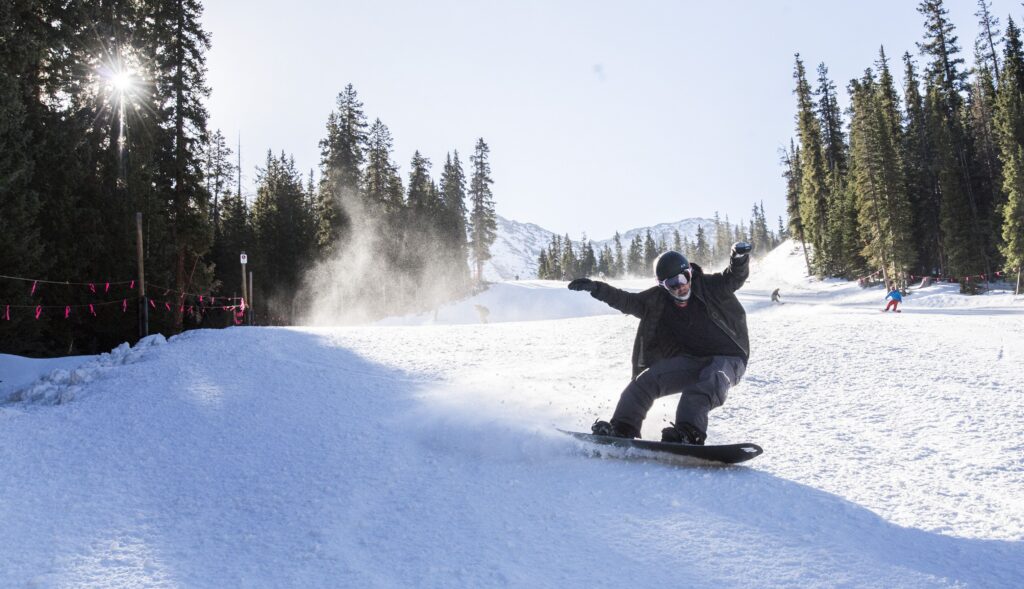
Colorado’s outdoor economy growth slowing
Bernadette Berdychowski
bernadette.berdychowski@denvergazette.com
Updated 5 hours ago
The post-pandemic boom in the outdoor recreation world appears to have slowed, according to new federal data. The industry is still growing nationwide, but it’s been slower than in past years. The trend is evident in Colorado, as well, though...
Bernadette Berdychowski
Reporter

Sundance Film Festival will ‘build something new’ in Boulder, organizers say
Bernadette Berdychowski
bernadette.berdychowski@denvergazette.com
Updated 6 hours ago
Don’t expect the Sundance Film Festival to look exactly the same in Boulder as it had in Park City, Utah. “We can’t pick up a film festival that’s been in a location for over 40 years… and move it into...
Bernadette Berdychowski
Reporter