GUEST COLUMN: Equipment ban pointless in tackling ozone levels
The Regional Air Quality Council (RAQC) has come up with yet another program — to divert attention from the fact that they are doing nothing to reduce high ozone levels. Although you might not be aware, it is likely that ozone affects you even if you don’t have respiratory problems.
Due to high ozone levels, the price of gasoline will be much higher starting next summer, and it will remain higher every summer until we reduce ozone. Also, as long as we have high ozone, the RAQC and Air Pollution Control Division of the state health department can do anything they want to pretend to “fix” it. If this latest program doesn’t affect you or your business, the agencies can still use the ozone levels as an excuse to develop yet another program that will. We need the agencies to be more focused.
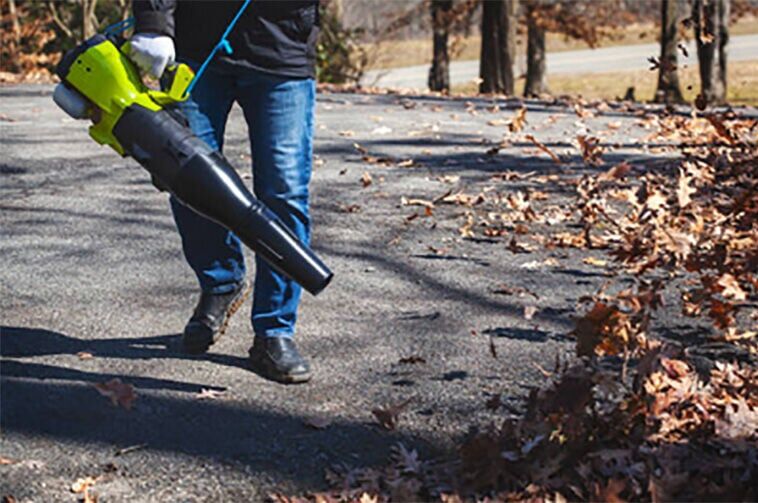
For their newest program, the agencies have written regulations to stop the sale of gasoline-powered lawn and garden equipment rated at less than 10 horsepower. The ban is for the high-ozone area, from Douglas County up to the Wyoming border, and starts in 2025. The ban includes gasoline leaf blowers, weed trimmers, and walk-behind mowers, but not riding mowers. Although they are banning the sale of gasoline equipment, they are not banning residential use of it. If you want a new gasoline mower, you might have to go up to Wyoming or down to Monument to get it, but at least you can buy one and use it.
However, the new regulations affect public entities, such as municipalities and schools, which will be banned from using gasoline equipment with the smaller engines starting in 2025, and they do affect commercial landscaping businesses, which will be banned starting in 2026. The ban does not include any stand-on or sit-on mowers.
The ban on use of gasoline equipment is a serious issue for municipalities and commercial businesses. Not only will they have to buy electric mowers and trimmers, they will also have to buy enough extra batteries to cover eight hours of use every day. If the battery for a weed trimmer runs for 30 minutes, they need 16 batteries for each trimmer. At $100 per battery, that’s a real expense.
Yet, there is no benefit to the program to justify the expense.
The EPA first declared Denver to be in nonattainment of the air-quality standards in 2008. The agencies claim that from 2011 to 2023, ozone-causing emissions were reduced by 407 tons per day across the area, but, even so, ozone levels have not dropped. The official ozone levels for the 2022 season were almost identical to the levels in 2008.
The agencies project that the new regulations might reduce ozone-causing emissions by “up to” 22 tons per day. If reducing emissions by 407 tons per day did nothing to reduce ozone, another 22 tons is not going to change anything.
By pursuing one meaningless program after another instead of addressing the problem, the agencies have let us down. Because the agencies have not reduced ozone levels, the EPA is forcing Denver to switch to using “reformulated” gasoline during the ozone season starting next summer. In the Midwest, the price of reformulated gasoline has been $0.50 per gallon more than conventional gasoline. Even though reformulated gasoline will do nothing to reduce ozone, we get to pay $0.50 extra because our air-quality agencies have not done their job.
High ozone is not a widespread problem. Denver has been in nonattainment because ozone has been high at only four monitors. We need our agencies to take an aggressive approach to determine what is causing the high ozone at those four monitors.
For example, monitors at Chatfield Reservoir and NREL in Golden have much higher ozone levels than nearby monitors. There has to be a reason, but it is not gasoline-powered lawn and garden equipment. Instead of sitting at desks creating meaningless programs, the agencies should be taking transportable monitors out into the field to determine what is different about Chatfield and NREL.
And it would helpful if the agencies could develop a sense of urgency. We will be paying $0.50 per gallon extra every summer until they reduce ozone. We will never achieve the ozone standard until we determine why Chatfield and NREL have higher ozone. Let’s find out now.
If the agencies make a decision now to address the high ozone at the four monitors, there is a chance that we could achieve attainment by the end of the 2024 ozone season, which would then eliminate the reformulated gasoline requirement. But they have to start now.
Barney Strobel is a retired chemical engineer living in Centennial. He worked in the field of air-quality control for 12 years.