As cops return to Denver schools, Denver police chief says they’re not ‘be all, end all to safety’
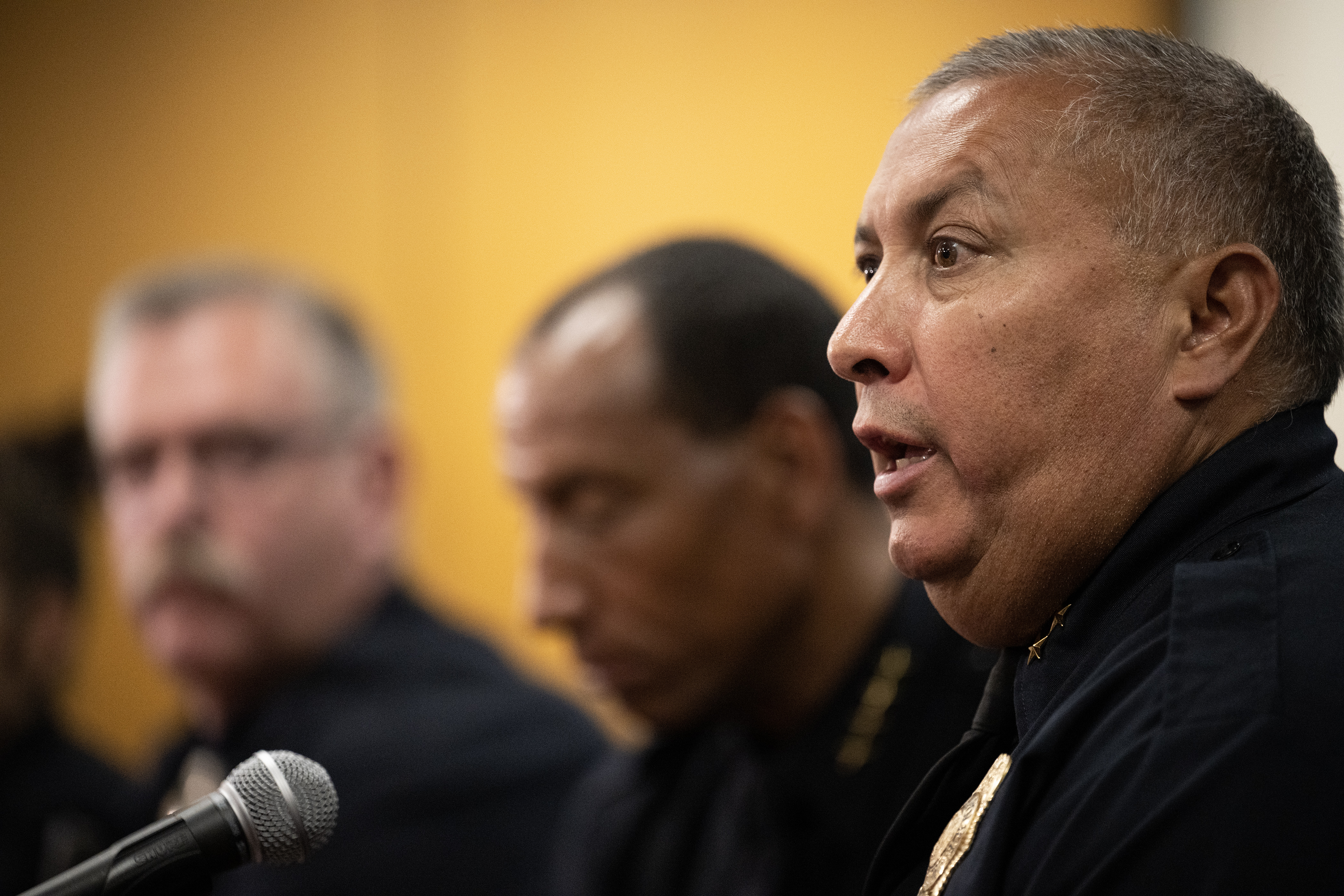
Denver Police Chief Ron Thomas: “They’re a complement of safety. I really don’t believe they are the be all, end all to safety.”
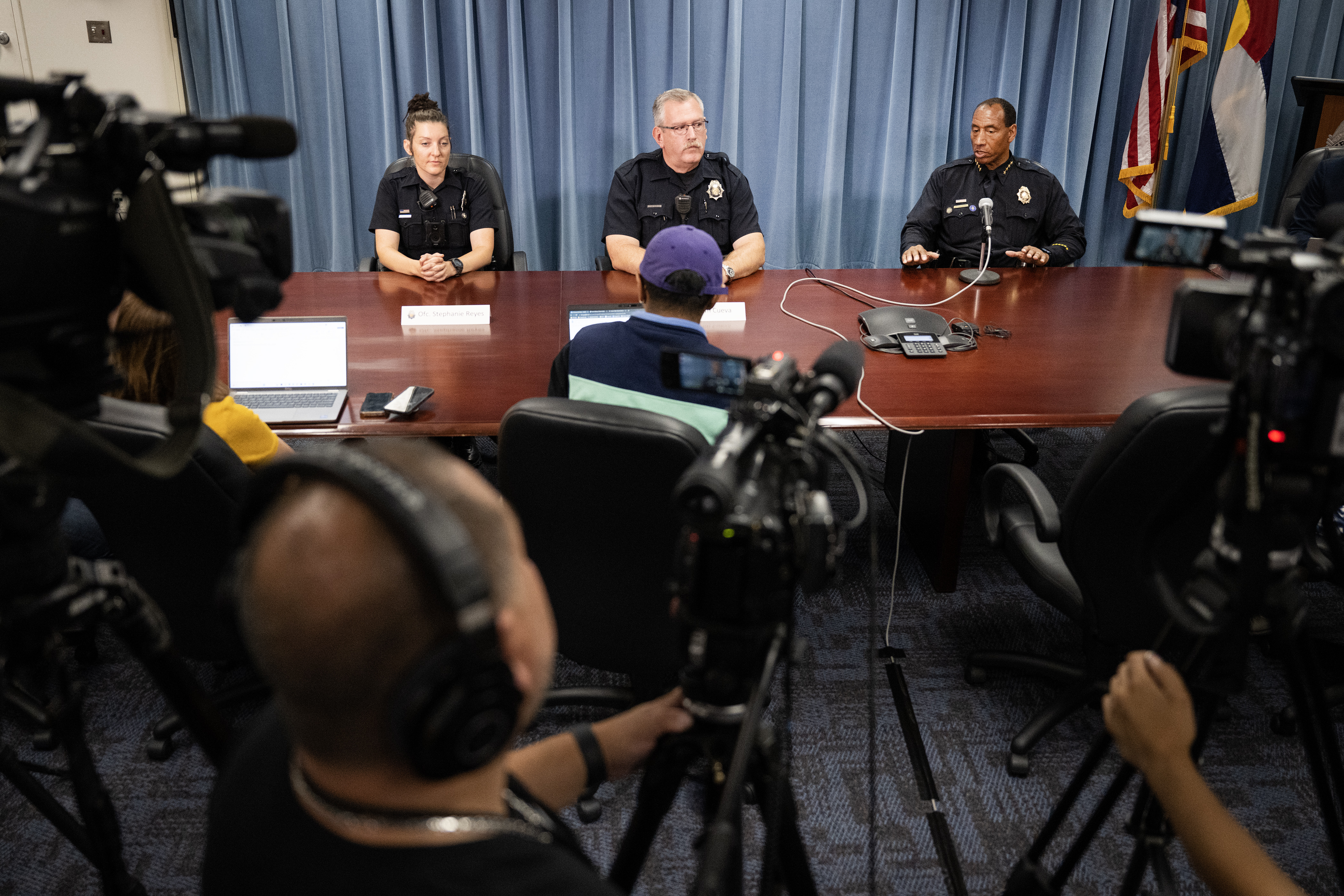
The Denver Police Department plans to deploy the same number of armed police — called school resource officers — installed at 13 high school campuses at the end of the last school year.
Each comprehensive high school will have one officer, except East High School, the largest Denver Public Schools high school, which will have two. And three DPS schools will have a “floater” police officer, officials said during a roundtable with the press on Friday.
The new school resource officer program begins on Monday.
Officers were temporarily reinstalled, despite a 2020 ban, after a student shot two administrators in March at East High School, the district’s flagship campus.
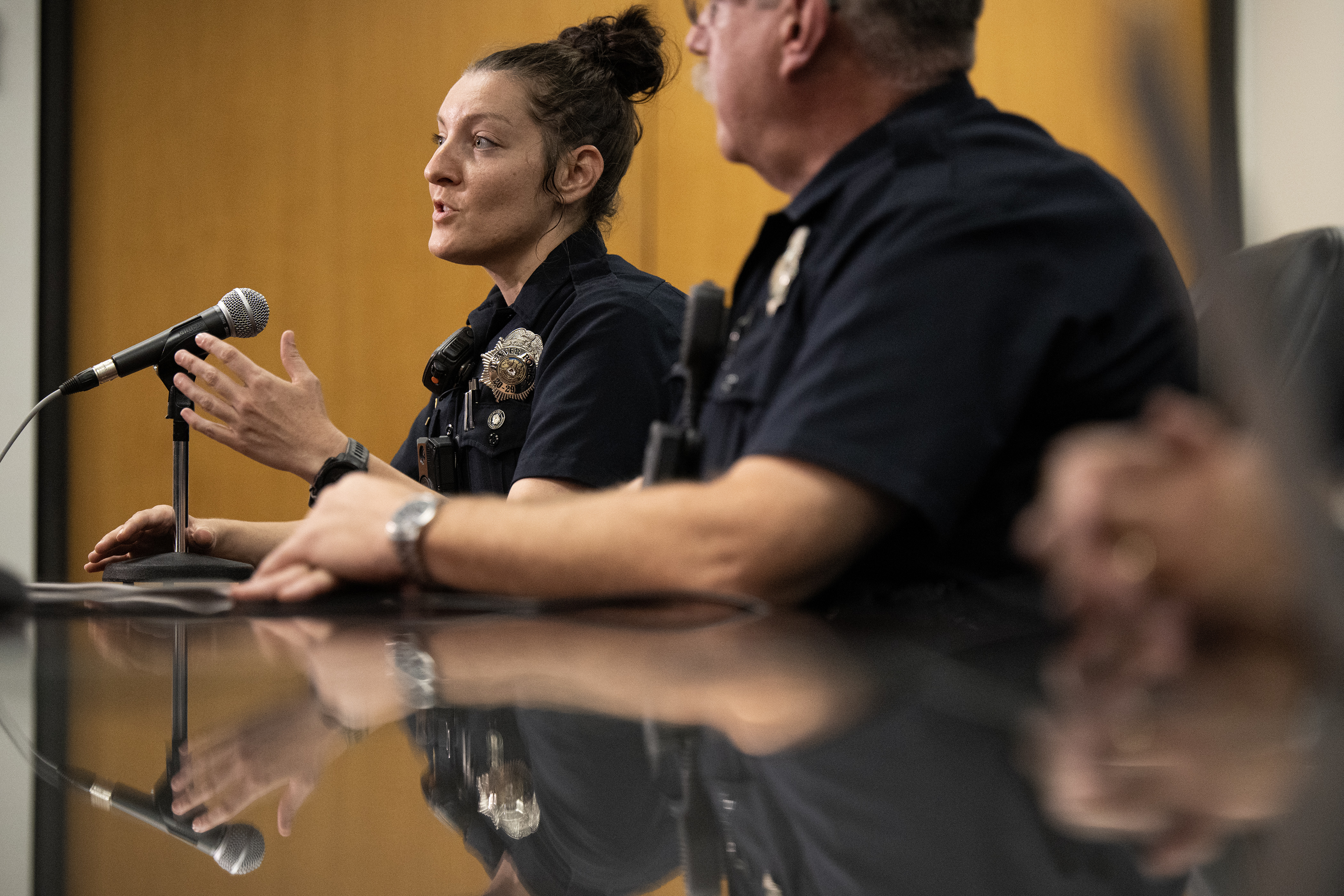
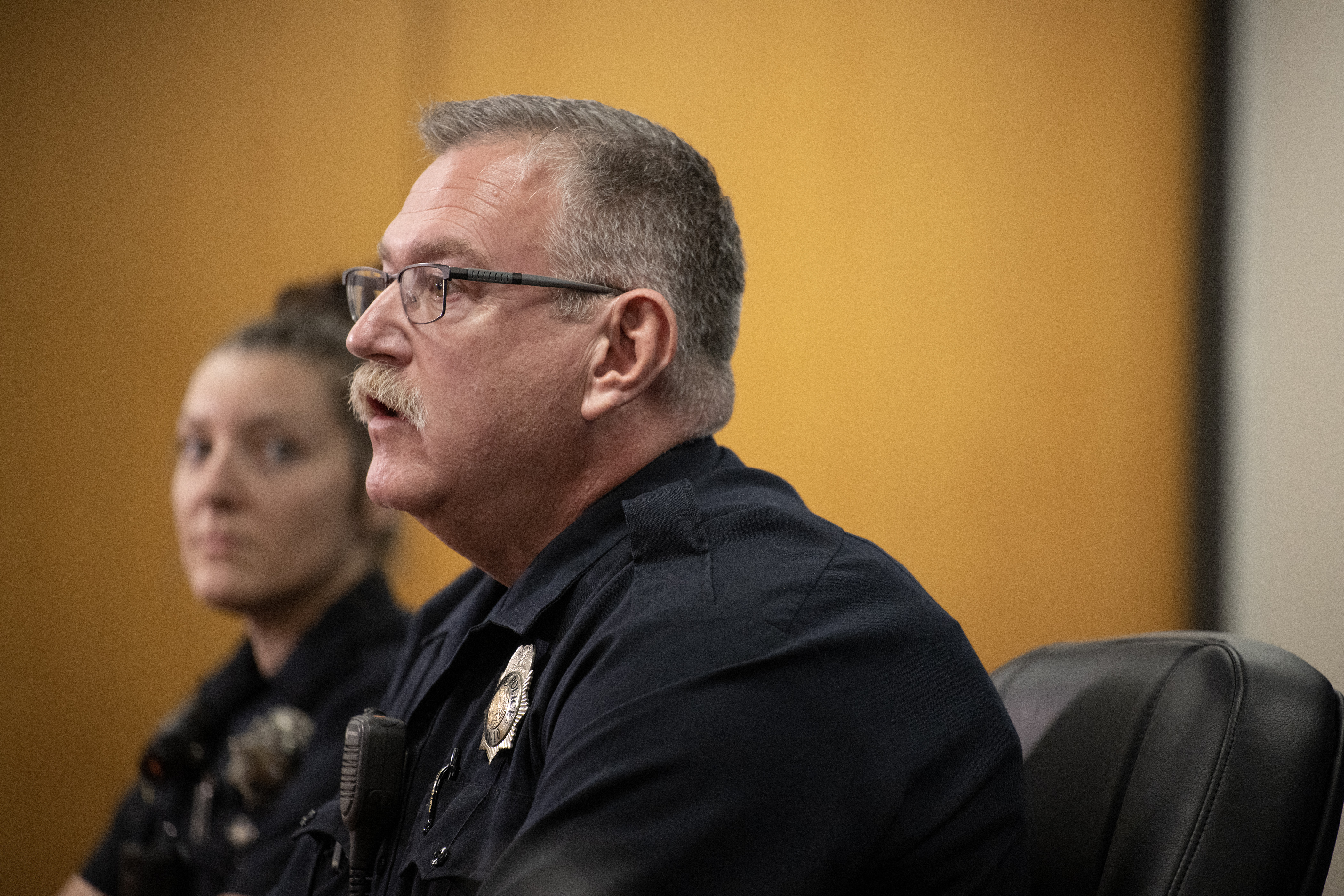
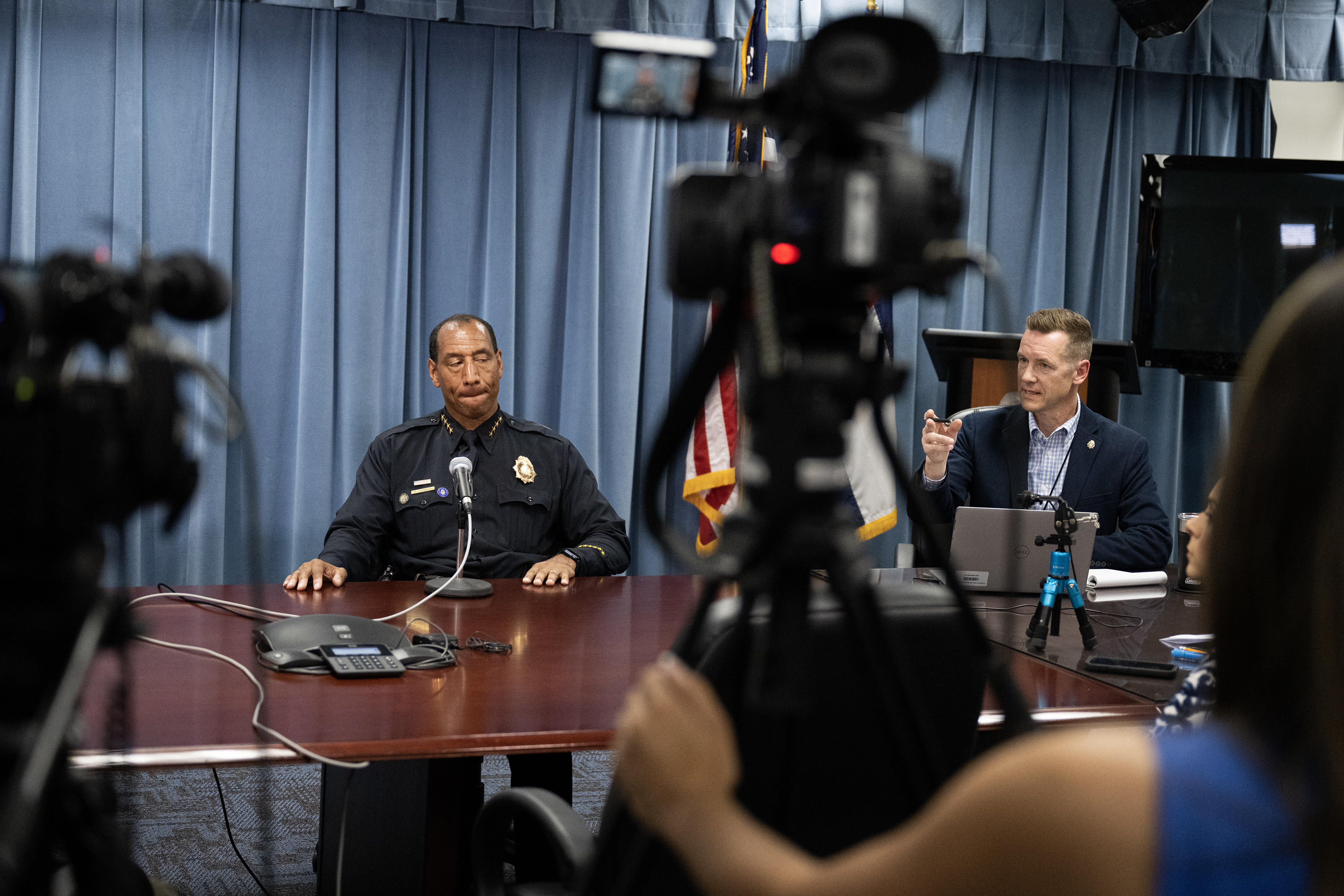
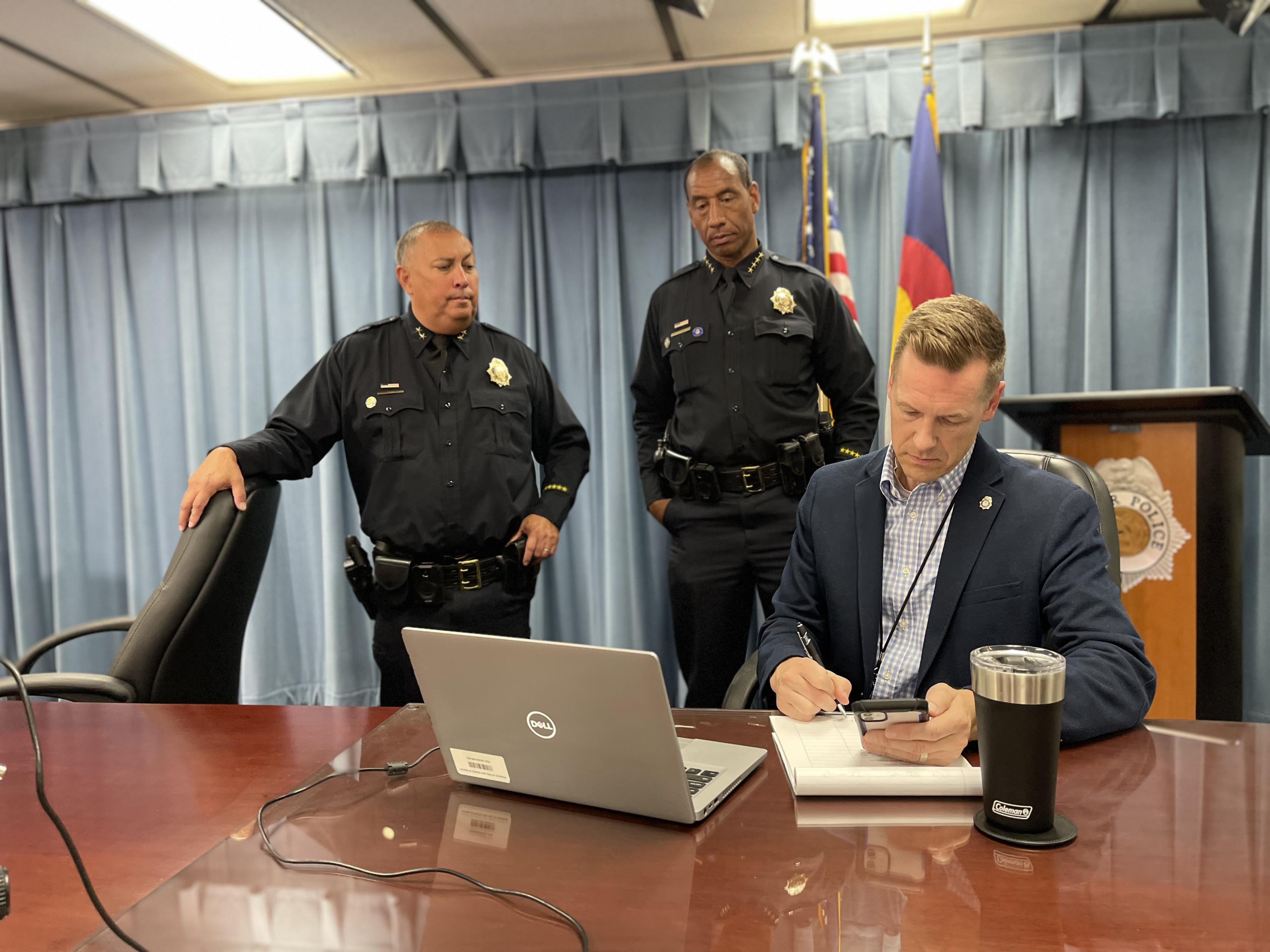
Denver’s police chief and two SROs discussed the deployment on Friday before DPS students head back to class next week.
Officers recently completed a 40-hour training hosted by the National Association of School Resource Officers (NASRO). Thomas said that officers will receive the training annually.
The association’s training includes courses on ethics and school law, instruction on adolescent brain development and trauma-informed practices, as well as touching on relevant pubescent topics, such as mental health, digital culture and safety, substance abuse, suicide and human trafficking.
SROs have similar responsibilities as regular police officers in that they have the ability to make arrests and respond to calls for service.
Thomas stressed on Friday that SROs will not be involved in school discipline.
An agreement outlining the responsibilities and role of officers on campus was reached Friday, officials confirmed. The memorandum of understanding was sent to the district earlier this week, Thomas said.
DPS has had SROs since the 1990s.
Nationally, SROs first began appearing in schools nearly four decades ago.
DPS Board of Education Vice President Auon’tai M. Anderson — who championed the removal of SROs in 2020 but advocated for their return following the spate of violence at East High — told The Denver Gazette that he would press for a sunset trigger to be included, which would void the agreement if the number of student citations hits or exceeds the level in 2020.
More than 50 students across DPS were arrested in the 2019-2020 school year and 334 court summons issued across DPS, according to the Colorado Division of Criminal Justice.
The DPS board members three years ago cut ties with DPD and removed SROs because of what they described as over policing and over claims that police presence perpetuates what’s called the “school-to-prison pipeline.”
Minority students often receive harsher penalties than their White counterparts, according to some research. It’s a finding that has long worried advocates who contend this also later leads to greater incarceration rates.
Police will begin implementing a three-day grace period to allow parents, who might be inclined to file charges against a student, to “cool off” after a school fight, said Division Chief of Patrol Aaron Sanchez.
In addition to regularly providing DPS with citation data, Thomas said SROs would not automatically issue citations for underage marijuana use and instead divert these students in much the same way the department already handles curfew infractions.
Social media has captured cringe-worthy moments, with officers in schools using tasers, applying chokeholds and beating students with a baton.
“We cringe when we see that also,” said Mac Hardy, a former SRO and director of operations for NASRO.
More often than not, those incidents — Hardy said — stem from officers stepping in to handle school discipline issues.
The way that Hardy sees it, it’s critical for school administrators to also receive the SRO training and learn best practices.
“We still do not see enough administrators sitting next to an SRO in our 40-hour courses,” Hardy said.
Thomas said he met with campus administrators earlier this week to spell out the role of officers and doesn’t expect SROs to be dragged into school discipline issues.
“I just don’t think that we have those kind of officers here in our police department,” Thomas said.
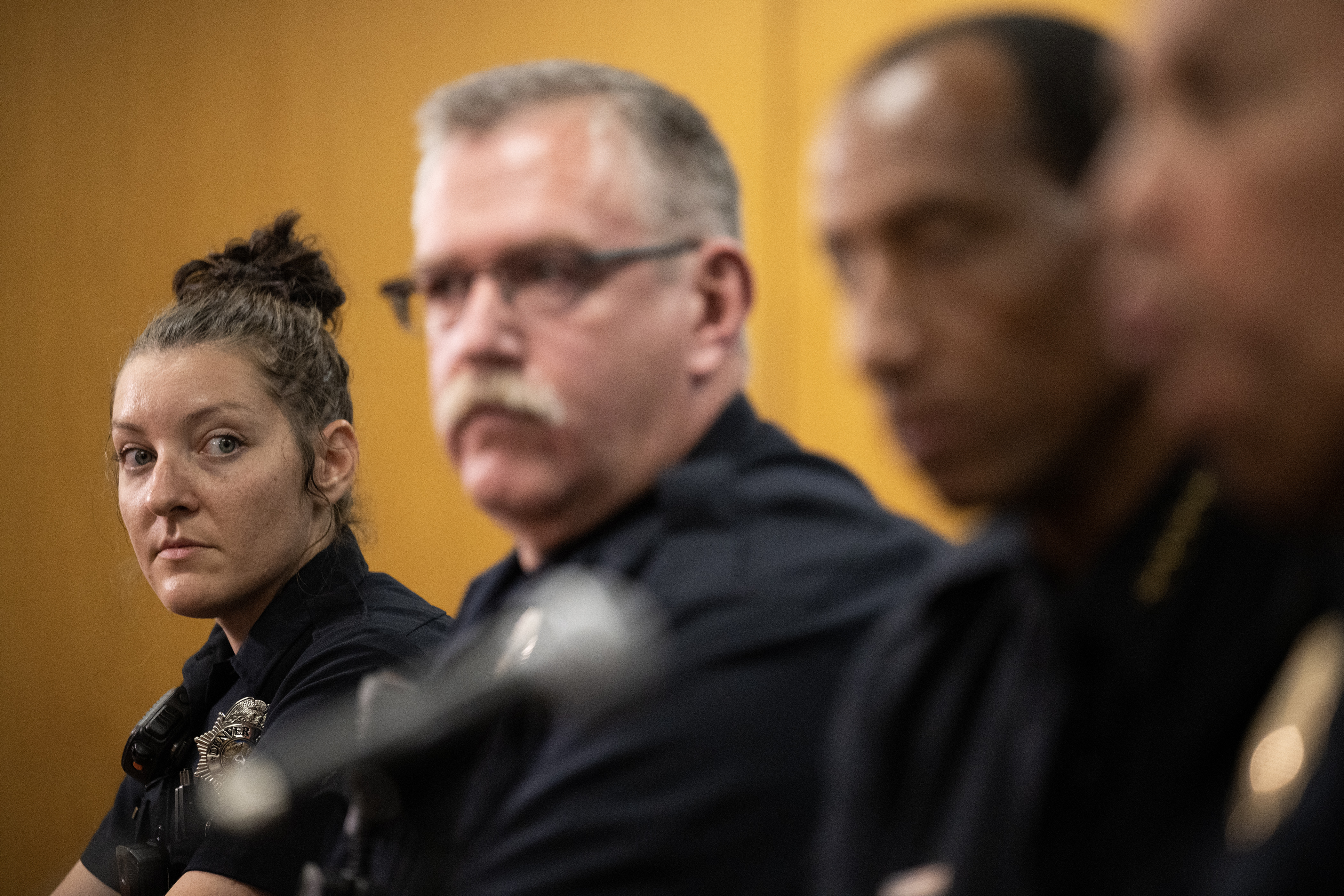
Officers Tim Cueva and Stephanie Reyes — a veteran and a new SRO, respectively — said Friday they are eager to get on campus and begin building relationships with students.
“I would not trade this job for all the money in the world,” Cueva said.
A majority of the officers, including Cueva, are returning SROs, said Doug Schepman, a DPD spokesperson.
In a move both praised and vilified, the board voted in June to permanently return armed police to campus. Their decision reflects a delicate balancing act the board sought to strike between school safety and over policing.
The cost, which will be assumed by the city, is not yet known. But the tally for 14 SROs could be similar to the $1.2 million the city paid in 2018, according to a Denver Gazette analysis of previous expenses.