COLUMN: Tay seeks a DPS paycheck — and a pass on the rules | Jimmy Sengenberger

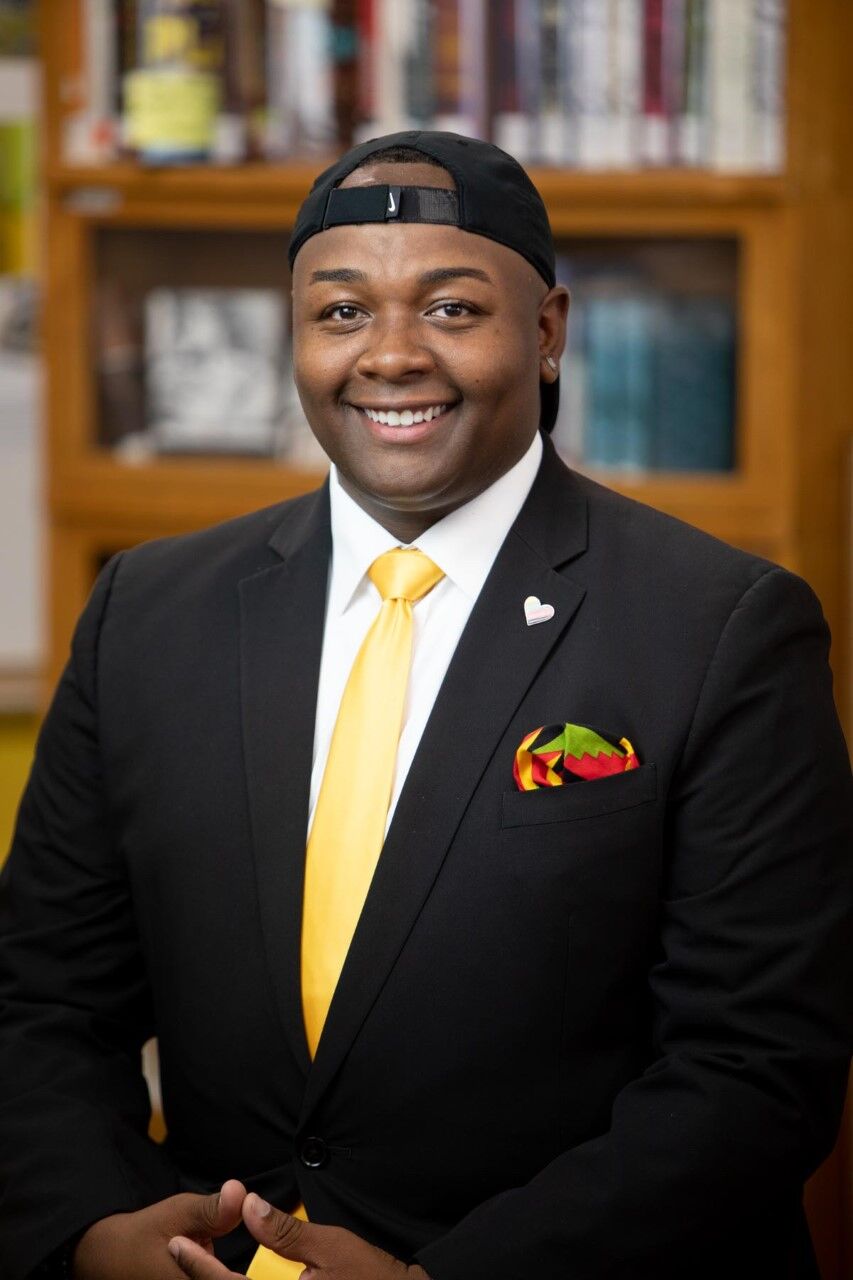
Outgoing Denver school board member Tay Anderson wants a hall pass — for a special dispensation from his colleagues so he can wield policymaking power while bringing in a paycheck on his way out the door.
A onetime DPS “restorative practices coordinator” who left his job after winning election in 2019, Anderson declined to run again after polling showed a meager 9% support. Now, as he embarks on a run for the state House instead, Anderson, who doesn’t have a college degree, wants DPS to employ him again — and for his colleagues to waive a district policy prohibiting board members from working for the district. This Thursday, the board is expected to consider suspending Governance Policy 11.2 — part of the board’s conflict of interest policy forbidding board members from simultaneously serving as district employees — until Jan. 1, 2024.
Although the current policy was enacted in Nov. 2021 as part of a move to “policy governance,” its roots trace back to 1987 — when the school board first mandated that employees elected to the board “relinquish employment with the district prior to taking office.” Anderson took office in 2019 under the earlier policy, which encouraged employees to “consider this (restriction) prior to running for the Board.”
This new effort appears to be spearheaded by board member Scott Esserman, who — along with Anderson and Michelle Quattlebaum — requested the item be included in the consent agenda for this Thursday’s meeting. That would have let it slip through without debate. Instead, it appears it now will be discussed on the main agenda, despite Esserman’s request.
“After conversations with (Superintendent) Dr. Marrero, Director Anderson is seeking to return as an employee in Denver Public Schools as his term is scheduled to sunset this November,” Esserman wrote in an email to board members and staff last week. “Numerous school leaders are interested in employing Director Anderson before the end of his term,” he claimed. According to his LinkedIn, Anderson has been unemployed since he lost his job at the Struggle Of Love Foundation in Feb. 2023.
The idea of any board member — responsible for shaping district policy and supervising the superintendent — simultaneously working as an employee is a glaring conflict of interest. That’s precisely why it falls under “Board Member Conflict of Interest.” The district has maintained this prohibition for four decades. Anderson’s decision to resign from DPS employment after getting elected in 2019 demonstrates that he knew — and agreed to — exactly what was expected.
Esserman tried to brush that away, though, asserting that in the recent past, “the Board had waived this policy to allow board members-elect to finish their semester as employees and begin their Board service.” This, he claimed, “would simply be the reverse of that.”
For a former debate coach, Esserman’s argument is astonishingly flimsy. Allowing exceptions for incoming board members who are current DPS employees is reasonable to facilitate a smooth transition without disrupting students and staff post-election, while safeguarding a newcomer from temporary financial hardship. But the self-serving scenario of an incumbent seeking new employment while on the board, as with Anderson, is utterly incomparable.
“We should want employees to run for the Board and also have comfort in knowing they have a guaranteed job when their service ends,” Esserman added. In 2021, both Esserman and Quattlebaum paid Anderson $7,000 and $4,000, respectively, for social media services during their campaigns. Back then, it was their own campaign cash. Now, they’re eying taxpayer money to keep Anderson afloat.
Let’s be real: The board’s sole responsibility is overseeing kids’ education — not guaranteeing jobs for their board buddies. Have some members forgotten this fundamental duty?
In a feeble attempt to further rationalize the policy suspension, Anderson purportedly plans to abstain from both the discussion and vote. Yet if their intentions were genuinely above-board, why try to hide this within the consent agenda? Consent agendas are reserved for efficiently addressing routine, non-controversial and operational matters through a single vote. Suspending a board policy to facilitate a colleague’s employment is far from routine. And it’s undeniably controversial — especially in Anderson’s case.
At 25, Anderson already is laden with political baggage and personal skeletons in his closet. A 2021 district investigation found he had aggressively pursued inappropriate relationships with multiple underage students via social media while serving as a board member and a candidate. The probe revealed he’d intimidated investigation witnesses and previously engaged in unwelcome sexual conduct with other members of a youth-led organization prior to running for office.
Despite being censured by his colleagues for his “unbecoming” behavior, Anderson still dismisses the investigation, even comparing student protests calling for his resignation to Jan. 6. His efforts to discredit the investigation through court cases were rejected, including one case “with prejudice.” Now, he seeks a role working with students again?
Anderson’s personal and professional antics — chronicled in my past columns — reveal a disturbing lack of character and judgment. He is abysmally unfit for any role in DPS that entrusts him with the safety, wellbeing and education of students.
Let’s be clear: Amid DPS’s deepest credibility crisis in memory, certain school board members are attempting to carve out an exception to the district’s decades-long conflict-of-interest protections — solely to benefit the primary cause and poster child of their own dysfunction.
Relaxing conflict-of-interest rules to advantage any colleague is flatly unethical. The fact that Anderson stands to benefit only amplifies the problem. His troubled history and real risks should make rehiring him unthinkable — let alone bestowing upon him a board-backed job guarantee.
Jimmy Sengenberger is an investigative journalist, public speaker, and host of “The Jimmy Sengenberger Show” Saturdays from 6 a.m. to 9 a.m. on News/Talk 710 KNUS. Reach Jimmy online at Jimmysengenberger.com or on Twitter (X) @SengCenter.