
‘Recognizing the music in daily life’: Denver Gazette turns 3 | Vince Bzdek
The Colorado Department of Education’s Early Learning and Development Guidelines tell us that when a child turns three, he or she is “moving out of babyhood into childhood.”
A three-year-old, the guidelines say, should:
• Demonstrate eagerness to participate in songs, rhymes, and stories.
• Ask why constantly.
• Seek multiple solutions to a question, task, or problem.
• Recognize the difference between pretend or fantasy situations and reality.
• Participate in simple investigations to form hypotheses, gather observations, draw conclusions, and form generalizations.
• Recognize music in daily life.
I’d say the Denver Gazette at age 3 checks all those boxes pretty well.
Our upstart digital newspaper celebrates its third anniversary on Sept. 14, and it’s hard for me not to believe that we’re old enough now to be contributing something of real substance to the journalism ecosystem in Denver, especially accountability journalism, which we have made our specialty.
A few of our milestones in the last year:
For the first time in Colorado history, a Supreme Court justice was censured for unethical behavior, behavior that was uncovered in a stream of stories on problems with Colorado’s justice system by investigative reporter David Migoya. Six investigations were launched because of David’s work, and new legislation overhauled how judicial discipline is meted out. As a result, Dave received this note, which sums up nicely why we do what we do:
“As a journalist, you write the first draft of history. The history being made is that citizen David took on an untouchable institutional Goliath and prevailed. Goliath threw everything at him including the kitchen sink as you have chronicled over the last two years. And still, you and the discipline commission made a broken system work.”
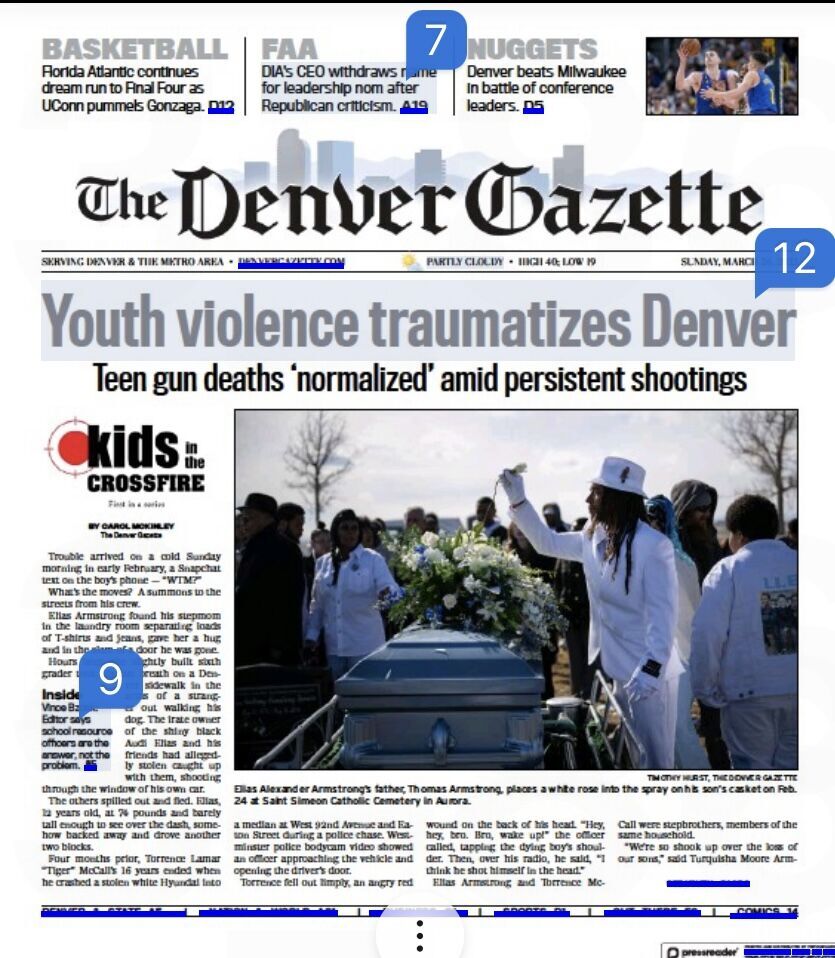
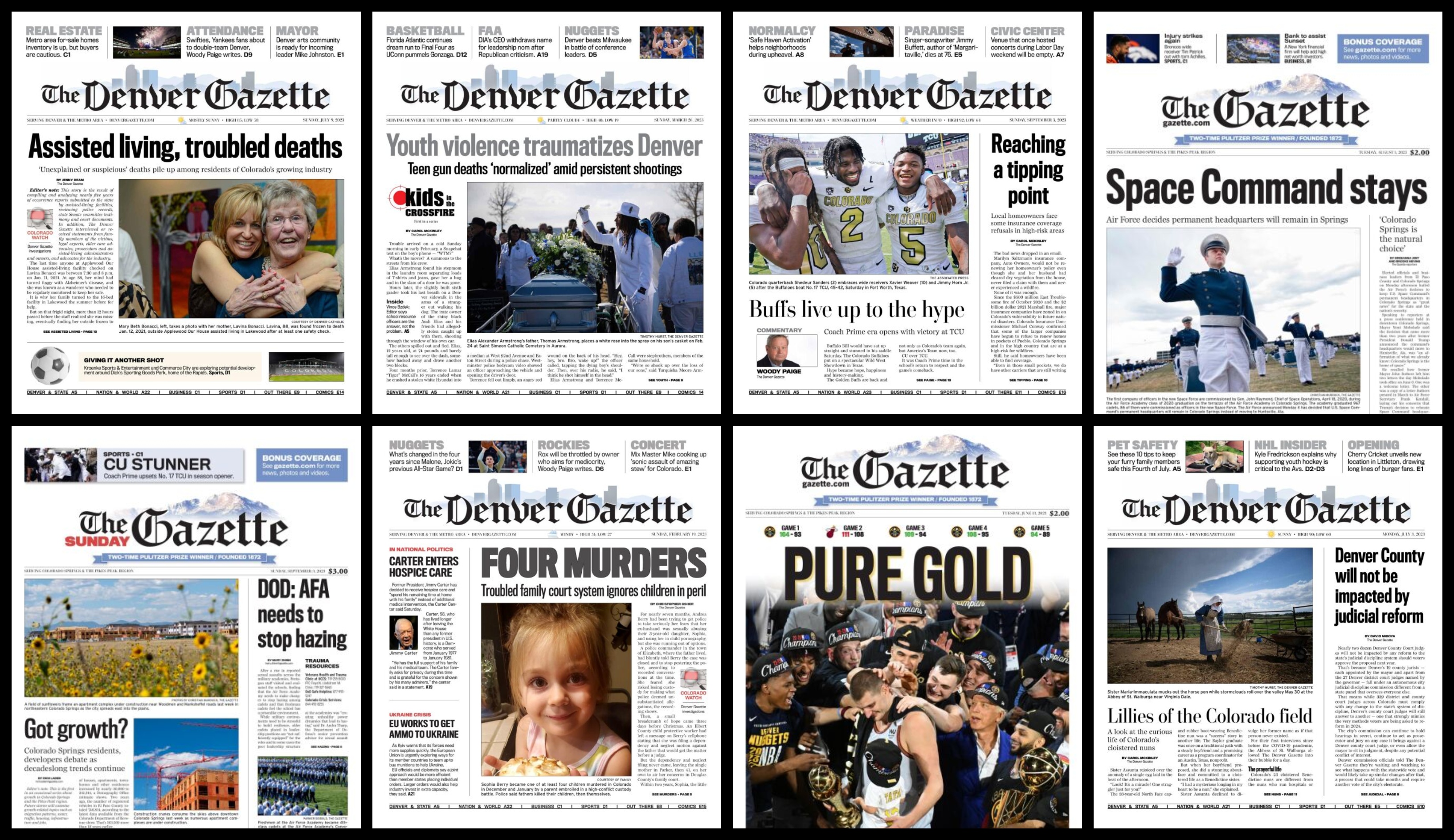
Our biggest commitment in the newsroom this year has been our Kids in the Crossfire series digging deep into the roots of youth violence. We’ve published seven major pieces and plan at least five more through the end of the year dissecting the reasons behind a spike in violence involving children as both perpetrators and victims. We also held a town hall with 9News on the subject focused on solutions that has already spurred more conversation and contributions from community members in addressing this spike.
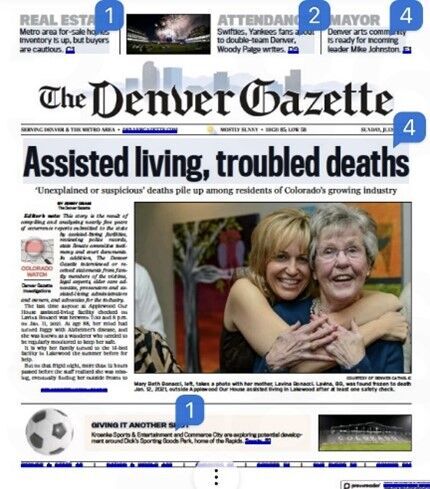
Our investigative team took on the troubled assisted living centers around the state, and a four-month investigation by Jenny Deam detailed more than 110 suspicious deaths, with minuscule fines for those deaths and hardly any state oversight. We expect some major repercussions to this coverage in the months to come.
Reporters Chris Osher and Julia Cardi’s award-winning coverage of a shocking string of unqualified parental evaluators in the government’s broken child custody system has prompted a state audit to stop the evaluators from continuing to put Colorado children in peril. A legislator vowed to push for new laws as well.
We continued our aggressive reporting on the fentanyl crisis in 2023 and were able to document that after a 150 percent rise in fentanyl deaths in 2020 and a 70 percent rise in 2021, deaths rose less than 1 percent in 2022. Public health scientists attribute Colorado’s leveling off of deaths directly to public awareness. And no one raised public awareness more than the Denver Gazette.
Reporter Nico Brambila has been unrelenting in her coverage of the Denver School Board in the past year, including the filing of 39 Colorado Open Records Act requests for information the public is entitled to, and the filing of a lawsuit in partnership with other media outlets to make public the decisions made in secret board meetings.
As a result of our coverage combined with that of several other news outlets in Denver, DPS had to release the minutes of the meetings, changed its mind and allowed police back into schools and has now decided to dramatically cut back its executive sessions where it decides things in secret.
During the last year, the Denver Gazette was the only news entity that paid granular attention to actions by the Public Utilities Commission, an appointed body that sets the utility rates for metro Denver. Prior to our coverage, this body routinely approved rate increase applications by Xcel to the tune of hundreds of millions of dollars. Putting the spotlight on the regulators has resulted in the PUC still approving Xcel’s rate increases — but now by a fraction of the company’s original request.
After hundreds of stories and op-eds, we were able to report that U.S. Space Command is staying put in Colorado Springs. The secretary of the Air Force personally called to thank one of our reporters for our relentless coverage, noting that we were the only news outlet in the country to report correctly that the Air Force first recommended Colorado Springs as the home for Space Command, but was ordered to change its criteria by President Trump so that Alabama would win.
In Sports, we had two columnists, three reporters, four photographers and a videographer charting every thrilling moment of the Nuggets’ historic run to the championship. Our Sports team also has added NBA Insider, MLB Insider, NFL Insider, Golf Insider and NHL Insider features to our report, bringing our readers unique, behind-the-scenes reporting and gossip they can’t get anywhere else. As the best-known Sports columnist in Colorado Woody Paige put it, The Denver Gazette is becoming known as “the official newspaper of sports fans everywhere in Colorado.”
Our Colorado Conversations, a series of in-person and online town halls, are poised to become a staple in policy discussions. Over the last year, Colorado Conversations delved into housing and affordability, water and scarcity, workforce challenges, youth violence, crime, as well as multiple election debates for the mayor’s race.
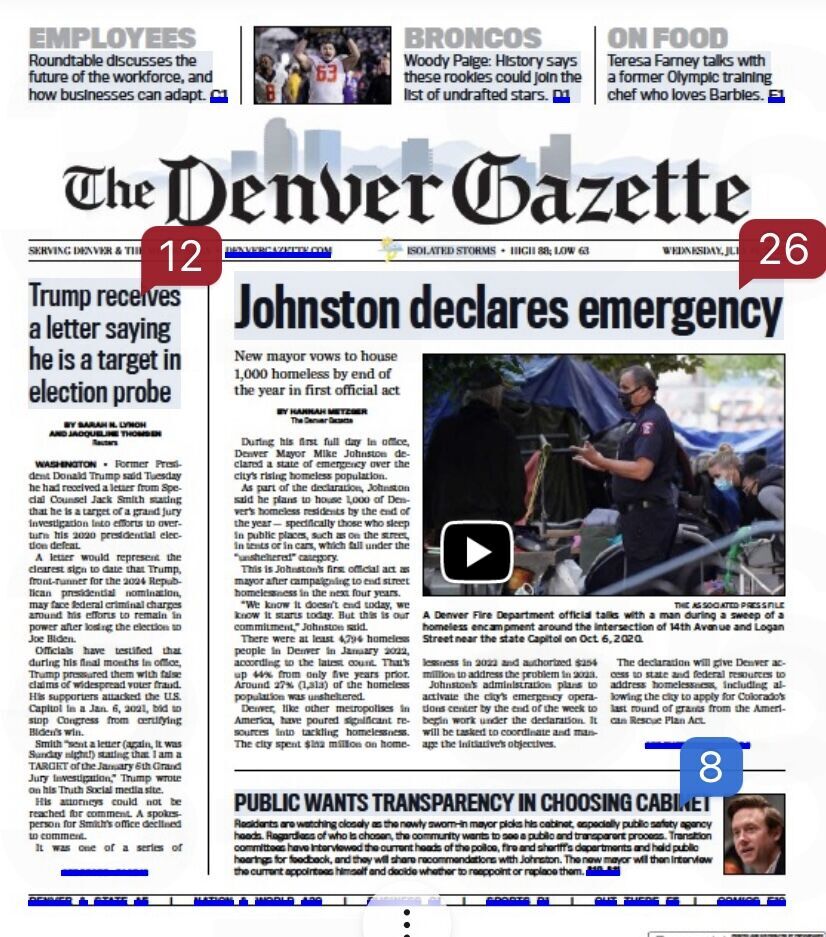
We also produced the most comprehensive coverage of that historic mayoral election in Denver with dozens of stories — from profiles of all 17 candidates to voters guides to running analysis from experts to video interviews to live blogs on election night.
And no one had more extensive gavel-to-gavel coverage of the Legislative session than the five reporters and editors on our Colorado Politics team.
The Society of Professional Journalists recognized our matriculation to age 3 with 44 awards in a contest among four states: Colorado, Utah, Wyoming and New Mexico.
Denver Gazette reporter Carol McKinley was honored as Colorado’s Journalist of the Year by the Colorado chapter of SPJ. Colorado Politics reporter Marianne Goodland was also honored with the Keeper of the Flame Award for lifetime achievement in journalism.
Osher and Cardi also won a national Best in the West award for their stories on our broken child custody system.
Our Colorado River project won a regional Emmy Award for Environment/Science/Technology News, and SPJ awards for public service and climate reporting.
Our publications placed in the Top 10 in the country for sports journalism in three different categories: print, special section and digital.
And our publications collected 46 awards from the Colorado Press Association as well, and those will be announced later in September.
Looking back at our ambitious run of journalism so far, I would argue that our collection of story tellers, although only at it for three years now, is quickly becoming the best in the state at “asking why constantly” and “recognizing the music in everyday life.”