







DU curating dance legacy of Martha Graham
Audiences have changed since legend's death, and company is changing with them
Janet Eilber is a realist – because she has to be.
As artistic director of the Martha Graham Dance Company since 2005, she is entrusted with maintaining not only the high level of performance in the internationally-revered ensemble three years away from its centenary, but she must also face each day with the fact that society has moved past the company’s glory days of the ’30s and ’40s, when Graham’s revolutionary choreography stunned the dance world.
“Look, modern dance is 100 years old,” Eilber says flatly. “Martha died in 1991. Our audiences have changed. But it’s OK. Martha embraced change.”
That fact will become clear when her company visits Gates Concert Hall at the University of Denver’s Newman Center on Friday and Saturday for a three-part program that opens with a Graham classic from 1948 and then culminates with a work created just last year.
Significantly, each of the three pieces will be preceded by a spoken introduction by Eilber. That’s a fresh wrinkle.
“We have to do a 180 with our audiences,” she explained. “We’ve learned that they want new experiences, richer experiences in a shorter time. They like thematic programs they can relate to. So the theme for Denver is ‘Human/Nature.’ When I talk about each piece, I’ll give (the audience) a few things to look for. It’s simple – they want to understand what’s being danced.” She added that there will also be pre-show conversations each evening.
Those familiar with the contributions of Martha Graham might be startled at the thought that this iconic dance pioneer might require explanations of her importance. Not that she and her huge volume of works, numbering some 181, are in danger of being forgotten.
Certainly “Appalachian Spring,” created in 1944 with a memorable score by Aaron Copland, will remain a timeless classic. Yet, as Eilber unhesitatingly remarked, “not all of her works are masterpieces. But with some of her lesser pieces, we can mine sections of them and rework them.”
As an example, she pointed to the intriguing second selection on the Newman Center program, “Canticle for Innocent Comedians.” It’s described in the printed program as “inspired by the work from 1952 by Martha Graham.”
Originally created as a collection of short pieces built on the elements of nature: sun, earth, wind, water, fire, moon and stars, the passage of time has not been kind to its filmed and notated choreographic record, according to Eilber.
“It was poorly documented back then, so we’ve had to fill it with new vignettes. That’s how we’ve come to curate her legacy.”
Thus, the seven sections of “Canticle,” with music by jazz pianist Jason Moran, features mostly new choreography by Sonya Tayeh, with contributions by Graham and five current company dancers. All are inspired by Graham, whose printed quote says, “This is a dance of joy, in praise of the world it turns.”
Opening each program is an unquestioned Graham masterpiece – “not a museum piece,” Eilber remarked with a chuckle.
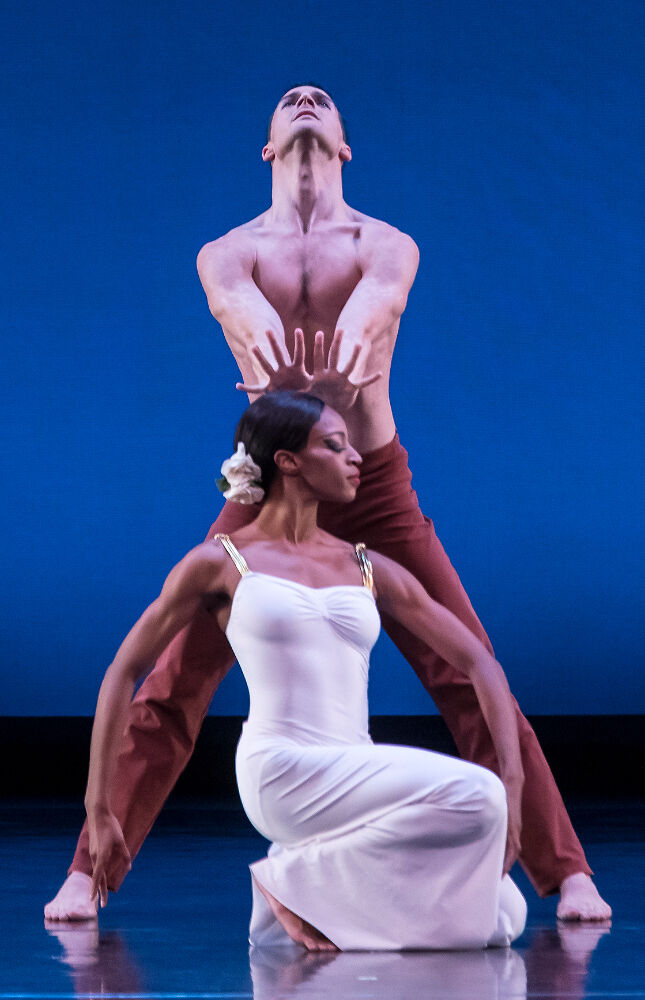
“Diversion of Angels,” premiered in 1948, was described in the choreographer’s words as “three aspects of love: mature love in perfect balance, erotic love and adolescent love.” Couples in white, red and yellow dance each segment, with music by Norman Dello Joio. Graham had pointed to the paintings of Wassily Kandinsky as a visual inspiration for the work.
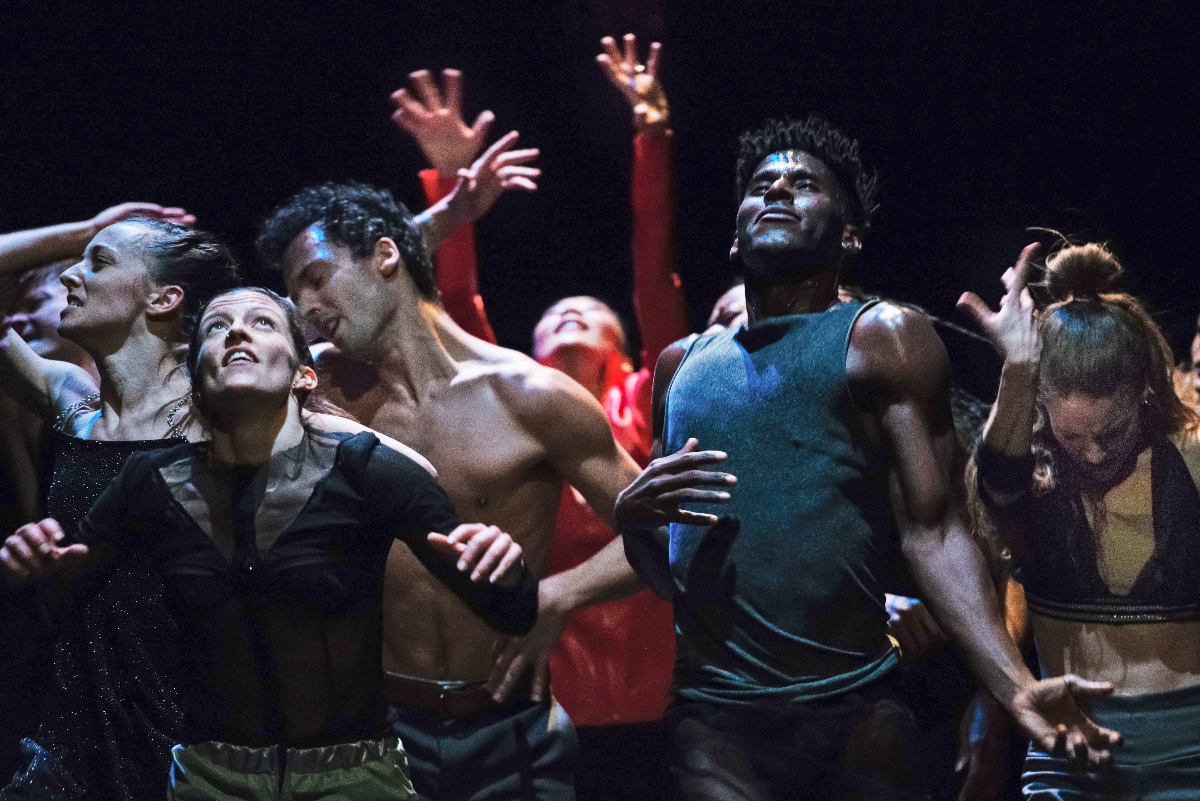
Ending each evening is “Cave,” created with company dancers by an Israeli choreographer last year during the pandemic. Its inclusion was requested by Aisha Ahmad-Post, executive director of Newman Center Presents.
“It’s a natural choice,” Eilber said. “The piece deals with basic human gestures, with how we move unconsciously. A dance with strangers. It fits with what Martha was doing back then, putting the effort of what it is being human onstage. What she was doing in those years was rejecting the European dance model and adopting the (American) Frontier mentality.”
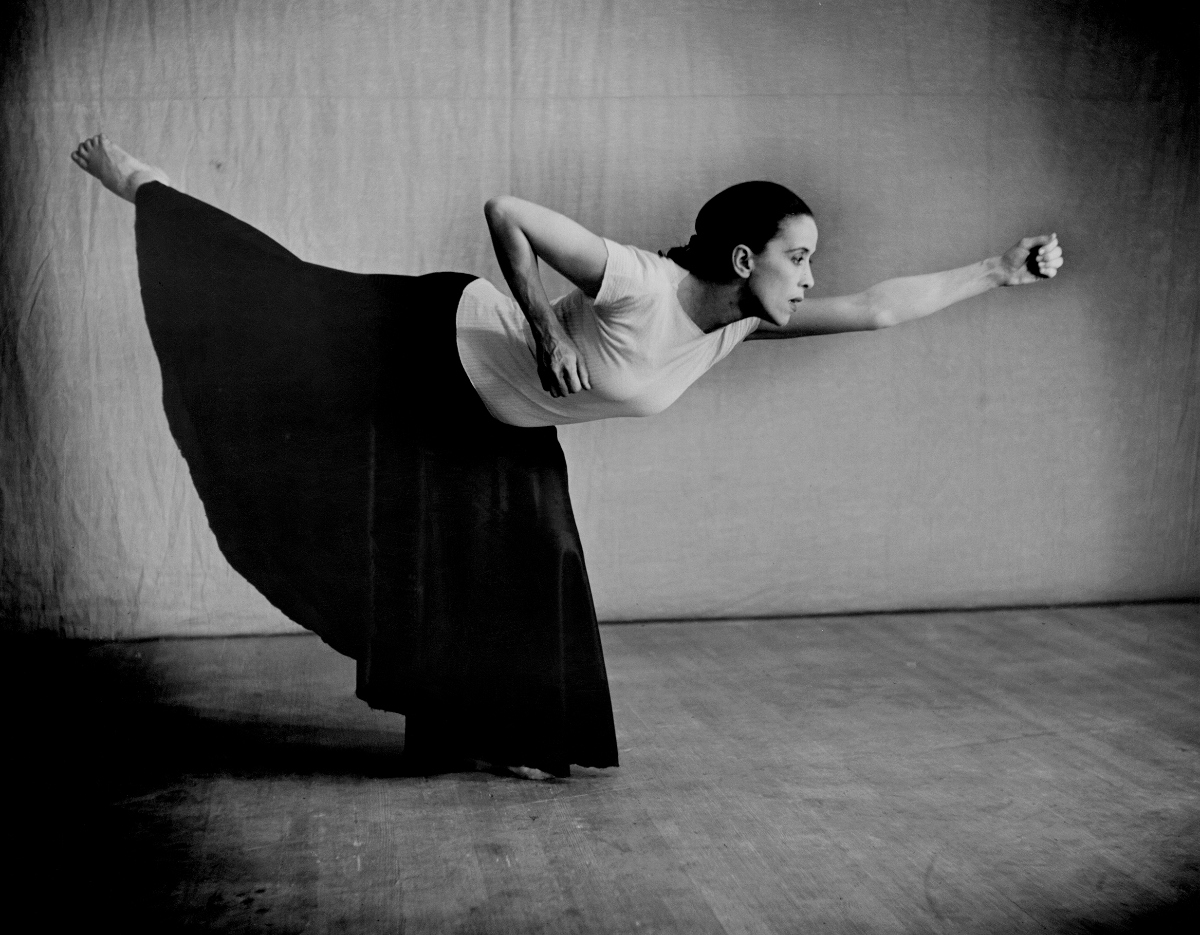
Students of dance history, as well as students of dance itself, know that the legacy of Martha Graham extends far beyond her ground-breaking work as a choreographer.
The so-called Graham Technique has been taught in dance studios around the world for decades – and will likely continue to be part of the education of nearly every modern dance student for years to come.
Her concept of abdominal contraction and release, leading to natural movement, was revolutionary in its time, following as it did the earlier silky gestures of Isadora Duncan and Ruth St. Denis (the latter was Graham’s first teacher).
For Graham, all movement begins in the torso and pelvis. Most important to this young choreographer-to-be was finding inner life when creating her dances. There had to be motivation beyond lovely gestures, she believed.
“A lack of motivation will lead to meaningless movement,” Graham insisted, “and meaningless movement leads to decadence.”
Founding her company in New York in 1926 and her school the same year (it remains the longest continually running dance school in the country), Graham began to change the way America, and the world, would look at dance.
Today, Eilber not only runs the dance company but also directs the Martha Graham School of Contemporary Dance. As a former student of Graham and then one of her leading dancers, she has seen the greatness of the woman once named “The Dancer of the Century” by Time Magazine.
Eilber wouldn’t go that far, choosing to express her praise of Graham in more modest terms: “She was a genius. She had charisma.” And finally, “She was a performer.”


Denver Center favorite Jeanine Serralles takes a stand in ‘Lemonade Blessing’
John Moore
john.moore@denvergazette.com
Updated 8 months ago
JOHN MOORE

John Moore
Reporter

Wayne Kennedy, everyone’s Tateh
John Moore
john.moore@denvergazette.com
Updated 7 months ago
A COLORADO LIFE
John Moore
Reporter

PHOTOS: Denver Chalk Art Festival
Stephen Swofford
stephen.swofford@gazette.com
Updated 9 months ago

Stephen Swofford
Reporter

Denver Arts and mayor’s office launch DENVER CREATES arts commitment
Michael Braithwaite
michael.braithwaite@gazette.com
Updated 10 months ago
Denver Arts & Venues, in partnership with Mayor Mike Johnston, announced on Wednesday a new commitment to supporting arts and culture called DENVER CREATES Wednesday. The commitment, which was put together through a process of community surveys that gathered feedback...

Michael Braithwaite
Reporter

Denver’s top burger spots: Where to find the best hamburger in the Mile High City
Marco Cummings
marco.cummings@denvergazette.com
Updated 8 months ago
Warmer weather is here, which means it’s prime season for an American pastime: the hamburger. The hamburger is an American cuisine favorite due to its convenience, ease of preparation and accessibility nationwide with the prevalence of fast-food chains. Whether you’re...

Marco Cummings
Reporter
Denver actor Amie MacKenzie’s remarkable journey to TV and film success
John Moore
john.moore@denvergazette.com
Updated 6 months ago
THE MacKENZIE MOMENT
John Moore
Reporter
There are lights, cameras and action in Colorado again
John Moore
john.moore@denvergazette.com
Updated 6 months ago
SERIESFEST: IT'S A WRAP!
John Moore
Reporter
Tears and laughter for Jill Sobule at impromptu Colorado gathering
John Moore
john.moore@denvergazette.com
Updated 10 months ago
Death of Colorado singer draws coverage from New York Times, Rolling Stone, the BBC and more
John Moore
Reporter

Move to gut NEA is ‘a punch to the gut’ of Colorado arts organizations
John Moore
john.moore@denvergazette.com
Updated 6 months ago
JOHN MOORE
John Moore
Reporter
Denver and Los Angeles collaborate on art show
Colleen Smith Special to The Denver Gazette
colleen-smith-special-to-the-denver-gazette@denvergazette.com
Updated 9 months ago
The Denver Botanic Gardens exhibition titled “Blue Grass, Green Skies: American Impressionism and Realism" opens June 7.

PREV
PREVIOUS

Kansas reverses policy on birth certificates so transgender residents can't alter gender identities
Kansas will no longer allow its transgender residents to alter their birth certificates. The state health department confirmed Friday that it will begin adhering to a recent law that requires entities such as itself to identify residents by their sex listed at birth. In 2019, a consent ruling from a state court allowed residents to […]
