




Sudden aspen decline: The phenomenon sweeping Colorado’s favorite tree of fall
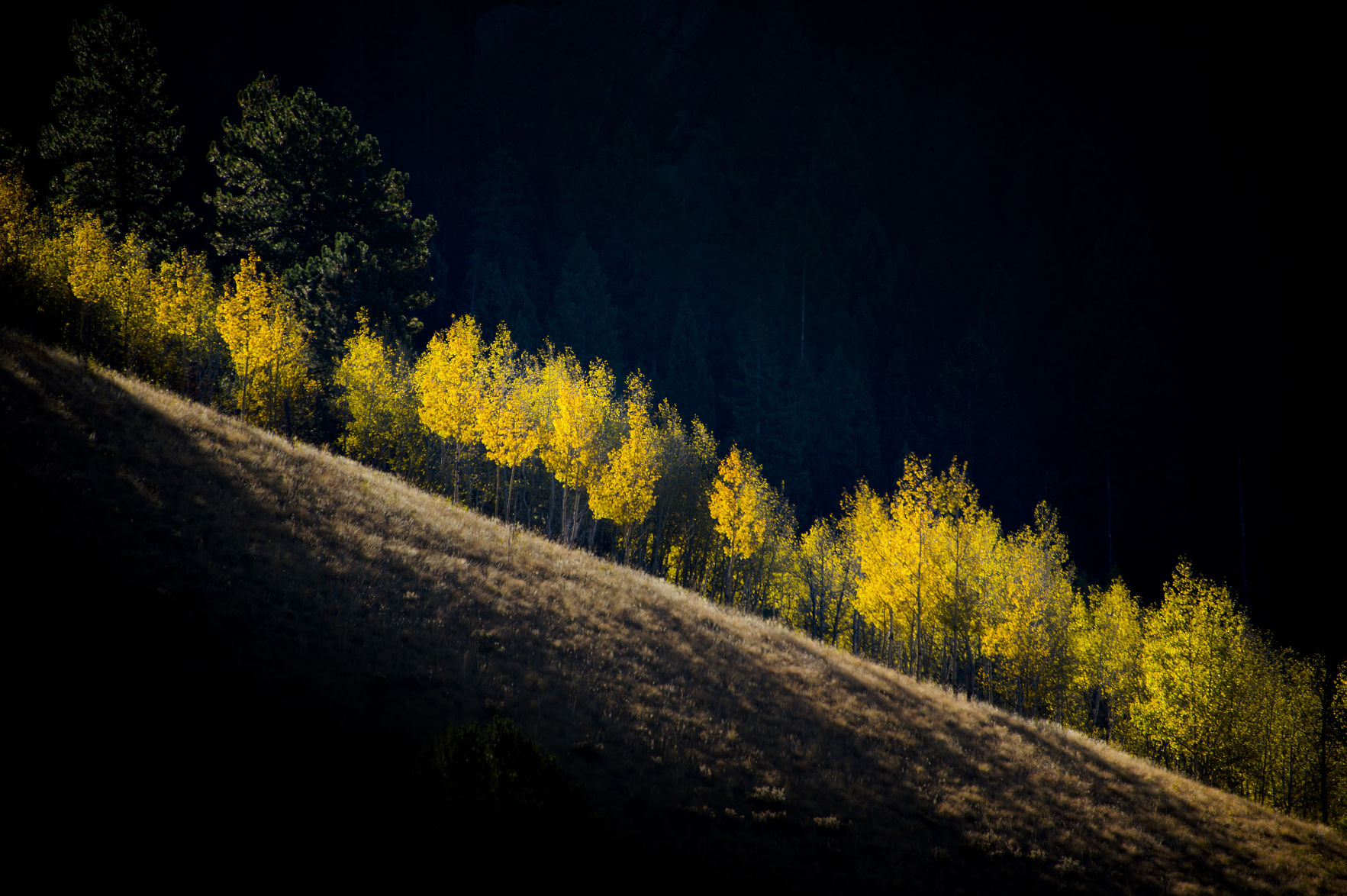
Last week, Julie Korb was hiking around the mountains of Telluride when she came by an unfortunate sight.
It was an aspen tree, not one yet showing off the shiny leaves we seek this time of year. Maybe they would never show.
“I saw the orange hue on the bark,” said Korb, who has researched the beloved species as a professor of environmental biology at Durango’s Fort Lewis College. “Then I looked up at the canopy, and it already had probably 50% crown loss.”
From looking around at neighboring conifers, Korb could tell a beetle had infiltrated the forest. The orange hue she saw on the aspen was reminiscent of a Cytospora canker, a hint at disease in the beetle’s wake.
The crown loss contributed further to Korb’s conclusion: “That tree is probably not going to be able to withstand the attack and make it.”
It was a reminder of the phenomenon found to be sweeping Colorado’s favorite tree of fall.
Around the turn of this century, scientists starting tracking what became called sudden aspen decline. The abbreviation was fitting: SAD.
Southwest Colorado was an early epicenter for the research, which spread across the West and other regions home to North America’s most widely distributed deciduous tree. Findings elsewhere matched findings from a report in 2007 authored by U.S. Forest Service plant pathologists out of Gunnison.
“Rapid dieback and mortality” had been observed for years, according to the paper, adding: “By 2006 it became clear that the damage was substantial and that it was not the type of mortality typically seen in older aspen stands.”
The authors cited “acute, warm drought,” which seemed to be weakening aspens in their fights against insects and pathogens, making them more vulnerable. Losses were most striking in lower elevations and on south- and southwest-facing slopes, across those drier, sun-hit aspects.
“To me, it was pretty obvious,” said Jeff Mitton, professor emeritus at University of Colorado-Boulder, who followed that early literature and studied aspens over his career. “It seems to me this is just one of those canaries in the mine for climate change.”
As the world warms and drought grips the West, it seems to Mitton the underground root system responsible for feeding nutrients up to the canopy is being compromised.
“Resources are being drained faster in a warming climate,” Mitton said. “If (trees) are drought stressed, they can’t do photosynthesis the way they want to, and that prohibits them from putting away the natural or regular amounts of energy, and so therefore over the years they’re depleting their energy source. Pretty soon, push comes to shove.”
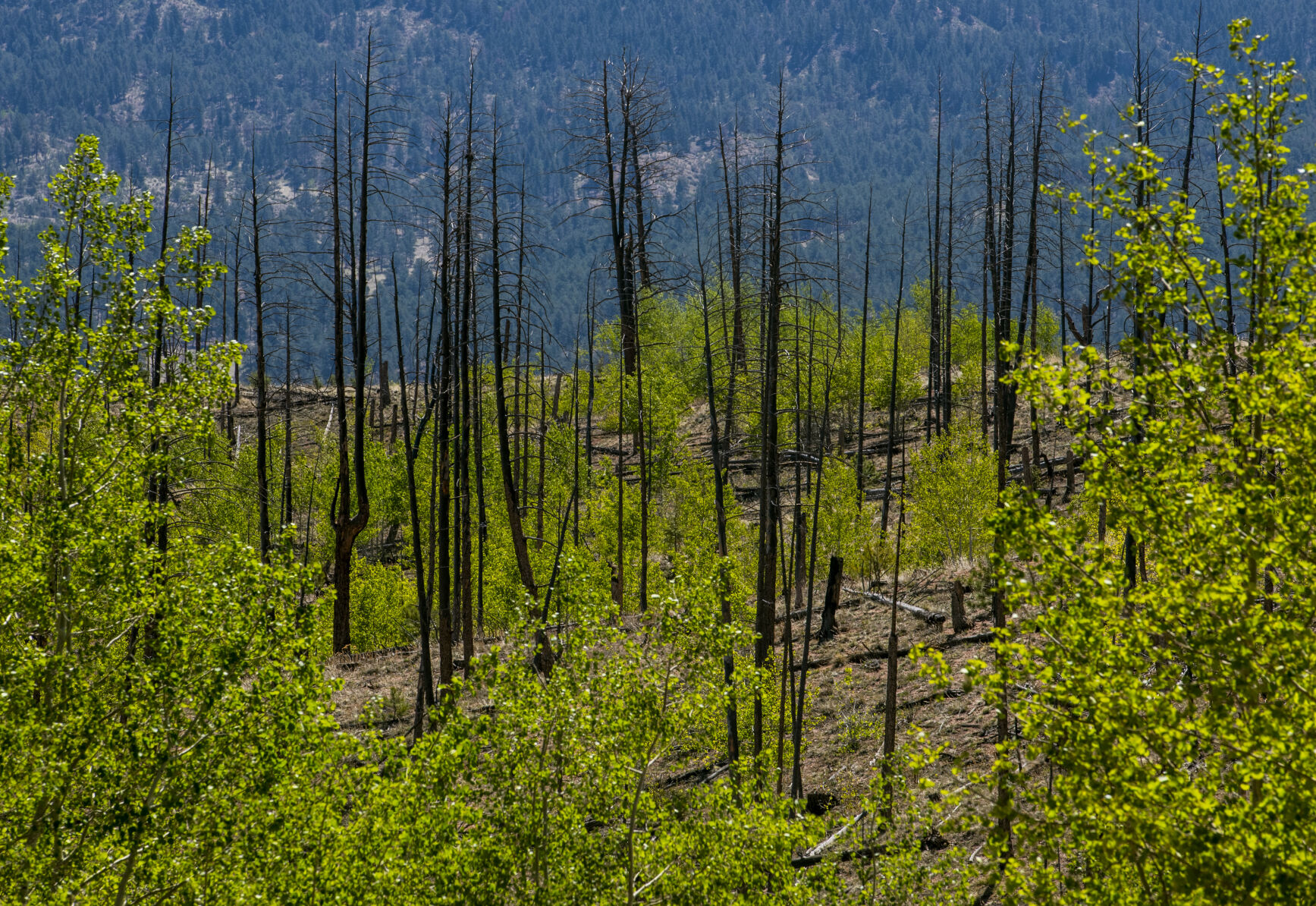
That underground root system is also behind aspen’s curious “cloning” process. Mature trees die, and new stems sprout. They do so fast and dramatically after fire and, it’s suspected, more slowly following other deaths. This gives them their reputation as a “pioneer species,” for the way they colonize otherwise ravaged ecosystems.
Yes, while aspen is known to be susceptible, it is also know to be resilient.
Said Paul Rogers, a leading expert directing the Utah State University-based Western Aspen Alliance: “If it was an animal, you might say this species produces a lot, but it dies a lot.”
This is where observers have been conflicted over SAD.
This summer at the Colorado Aspen Summit — an annual gathering of researchers and enthusiasts — Bradley Lalande presented an update on the much-watched stands in the state’s southwest. Lalande is the Forest Service’s latest plant pathologist to monitor the stands across the San Juan Mountains where SAD concerns first rose.
Lalande wrote in an email: “Overstory aspen stands continue to deteriorate with a reduction in healthy trees, and an increase in declining (>25% crown loss) and dead trees (recently dead and old snags).”
He added: “With this being said, I am optimistic with the state of regeneration, as there is a substantial amount of regeneration present within our sampled sites.”
Asked what the data say about how we’ve come to understand sudden aspen decline, Lalande said: “The term ‘sudden’ is what is hard for me.”
He referred back to mortality tracked in the early 2000s. “Now that we are almost 20 years post the initial onset of decline, the term ‘sudden’ may no longer fit,” he said.
The term never fit in the mind of Rogers.
The term “really got projected out and became this catch-all for death of aspen across the whole West,” he said. “Sometimes we get ahead of ourselves with these proclamations.”
Aspen is not immune to a warming climate, he emphasized, and he has long noted another natural imbalance: an unusually high number of deer, elk and cattle munching on young aspen sprouts, cutting new growth. Another concern: Fire has historically been repressed, preventing the life cycle to continue.
The SAD narrative over the years has not given enough attention to that regeneration, Rogers said.
“It’s not about the living, mature ones as much as it’s about what happens next,” he said. “What happens to the young ones that sprout after a fire or drought die-off?”
They might not have a chance, Korb said, citing research at Fort Lewis College.
“What we saw is if a stand got too infected and dead, (the root system) would not signal that resprouting response that it would always normally do,” she said.
On the other hand, Laland pointed to what he called “promising” research ongoing by Rocky Mountain Research Station around Paonia.
“What they observed is that aspen stands, in those areas, continue to resprout regardless of percent of SAD/overstory mortality,” Lalande said.
More analysis is needed, he said. Korb agreed, saying also new land management could be considered.
Dying trees could be removed for new ones to possibly grow, she said. She has seen success from that.
She continues to see blighted reminders of SAD, as she did on that recent hike. It’s true about their historic resilience, she said: “Aspen is not going to disappear.”
But however disputed the term, the focus on whatever the plight seems likely to remain. After all, Korb said: “Everybody loves aspen.”


Get OutThere
Signup today for free and be the first to get notified on new updates.
PREV
PREVIOUS

Three ways Hunter Biden has gone on offense since felony gun charges
Since the Justice Department announced three new felony gun charges for Hunter Biden, he’s turned to the offensive in his legal affairs. President Joe Biden‘s son started the week after he was indicted on three felony gun charges by filing a lawsuit Monday against two IRS employees, accusing them of unlawfully revealing his tax returns […]

Matt Dolan hits Sherrod Brown over spending record in new ad for toss-up Senate race
EXCLUSIVE — Republican Senate candidate Matt Dolan released his latest attack ad against Sen. Sherrod Brown (D-OH), hitting out against the Democratic incumbent for his voting record on spending bills the GOP challenger says has led to record inflation rates in the Buckeye State. The 60-second radio ad, released on Tuesday and first shared with […]