







Site selectors visit Denver, praise talent pool but ding high cost of housing

Jessica Gibbs/Denver Gazette
People that help companies find the right location for their next big move descended on Denver this week — and took plenty of notes.
The 2023 Metro Denver Site Selection Conference on Friday, hosted by the Metro Denver Economic Development Corporation, brought a panel of site selectors in to tour the local region — Denver, its suburbs and further along the Front Range — and then offer “their candid and unbiased observations” about the area’s strengths, how it can improve, and how it can stay competitive.
J.J. Ament, president and CEO of the Denver Metro Chamber of Commerce, said a common theme in the panel discussion was “talent, talent, talent, talent” — or, more precisely, how to recruit and retain a robust labor pool that will keep giving Denver a competitive edge.
When it comes to building the workforce and economy, Denver is not only up against other major metropolitan areas, but other states and countries, as well, Ament said.
The task is top of mind for local and state leaders amid workforce challenges. Metropolitan State University of Denver President Janine Davidson told attendees the school sees its mission as helping to solve “a very big problem.” Colorado has two job openings for every worker, she said, adding that 75% of those jobs require some level of higher education.
Related to building the talent pool, panelists also stressed the need to provide a “quality of place and space,” Ament observed. How can, he asked, the metro Denver region provide the local workforce with an affordable place to live that is close to their work and in a thriving area?
The region is “extremely attractive” to a younger demographic, said Courtney Dunbar, Burns & McDonnell’s director of site selection. Understanding that people want to be near Denver, the region should keep pushing on its initiatives to make sure that “homeownership can be a possibility,” Dunbar said.
Corey Kingsland, a site selector and civil engineering section manager at Burns & McDonnell, called a new law, House Bill 23-1189, “a huge attractor” that the region can market to young families as a recruiting tool.
The 2023 law created a state income tax credit for employers that provide employees with financial support to buy a house, such as for a down payment or closing costs.
Beyond housing, other supports and resources for families play a key role in making an area attractive, Kingsland said.
“A big thing especially for us millennials in the room that have young families — it’s that access to childcare,” he said, encouraging incentivizing companies to help employees attain childcare.
“So that both parents can work. Especially when you have these labor shortages that we are experiencing, you are only getting 50% of your pool of available people. Because you have two kids and you don’t want to pay $4,000 a month for childcare,” Kingsland said.
As the conversation broached the future of office space and commercial real estate in troubled downtowns, Bob Westover, a senior vice president at the commercial real estate and investment management company Colliers International, suggested one alternative use for converted space could be daycare options, the appeal being childcare “next to where mom and dad work.”
Newmark’s Global Strategy Director Carlos Sánchez highlighted other tactics to reach untapped labor pools, discussing companies that took steps to reduce language barriers and provide Spanish translations to reach a wider range of talent.
Dunbar praised the resources Denver offers to high school graduates, such as “fantastic” community colleges, four-year universities and technical training programs. That’s helping the region keep its “homegrown” talent, while recruiting out-of-state students too, she said.
The best long-term strategy for Denver to keep recruiting and retaining that talent, she said, is to embrace newcomers.
“Communities that have a really strong and growing and thriving economy, again those younger millennial families coming in, are ones where the community is super open to new people coming in,” Dunbar said. “The neighbors want to hang out. They want to get their kids together and play. They all want to come out and meet new friends. My question rhetorically to you guys is, ‘Is that your neighborhood?’”

Broncos, Payton made the right call hiring Davis Webb
Woody Paige
woody-paige@denvergazette.com
Updated 3 minutes ago
Sean Payton would rather give up the Golden Jubilee 775-carat diamond than that Cheesecake Factory massive menu-sized offensive gameplan sheet he totes on the sideline. Diamonds are forever, though. Calling plays is not, though. Payton has been a National Football...

Woody Paige
Reporter

Colorado College ends regular season in tie at No. 9 Minnesota Duluth, will face Western Michigan
Hugh Johnson
hugh-johnson@denvergazette.com
Updated 24 minutes ago
A pair of Minnesota Duluth power plays derailed Colorado College’s chances at a weekend sweep. The No. 9 Bulldogs struck twice in the third period to tie visiting Colorado College 2-2 on Saturday. After a scoreless overtime, the Tigers fell...

Hugh Johnson
Reporter

Mark Kiszla | Forget Kadri: Why Ryan O’Reilly is the practical trade deadline target for the Avs
Mark Kiszla mark.kiszla@denvergazette.com
mark.kiszla@denvergazette.com
Updated 19 minutes ago
At the NHL trade deadline, the Avalanche should welcome back an old friend who knows what it takes to hoist the Stanley Cup. You’re thinking of Nazem Kadri? Sorry. I’m not. He certainly has friends in the Colorado locker room....


Gavin Brindley’s slump-busting goal helps Avalanche take down Blackhawks, 3-1
Evan Rawal
evan-rawal@denvergazette.com
Updated 2 minutes ago
It’s not easy to stay in a game when you can count your shifts on one hand, but Gavin Brindley made the most of his final shift on Saturday evening. And boy did he need it. After not having scored...

Evan Rawal
Reporter
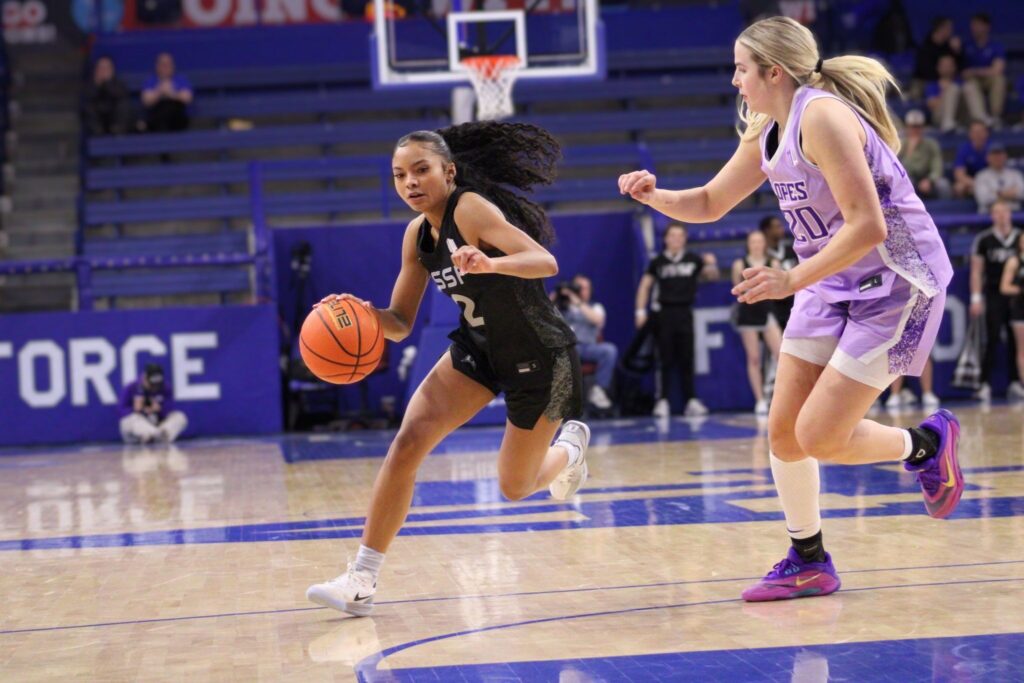
Air Force women fall as Colorado State finishes final season sweep in series; Milahnie Perry climbs to No. 2 on scoring list
Brent Briggeman
brent-briggeman@denvergazette.com
Updated 4 hours ago
The Air Force women exploded early at Colorado State, but just as quickly burned out in their final trip to Fort Collins as conference foes. The Falcons hit five 3s over the first 15 minutes and led by eight. They...

Brent Briggeman
Reporter

A Colorado Life: Janelle Orsborn’s final message: ‘Definitely live big’
John Moore
john.moore@denvergazette.com
Updated 16 minutes ago
Actor, author and former Miss Colorado’s Teen fit a lot into her ambitiously adventurous and tragically abbreviated 33 years Janelle Orsborn was big sister to Anna, Abigail, Jake, Daniel and Natalie. But really, says Abigail: “Janelle was a big sister...

John Moore
Reporter

Arvada holds annual Winterfest amid summer-like weather
Michael Braithwaite
michael.braithwaite@gazette.com
Updated 4 hours ago
The crowd in Arvada’s Olde Town Square was largely wearing t-shirts, tank tops and shorts Saturday morning as temperatures neared 70 degrees. Perfect weather for an event called Winterfest. The annual multicultural winter celebration returned to downtown Arvada Saturday, bringing...

Michael Braithwaite
Reporter

Kickin’ It with Kiz: Nuggets have only one chance to beat Thunder in the NBA playoffs
Mark Kiszla mark.kiszla@denvergazette.com
mark.kiszla@denvergazette.com
Updated 6 hours ago
For the Nuggets to beat Oklahoma City in the NBA playoffs, someone has to step up and be an enforcer besides Nikola Jokic. – Roberto, Denver Kiz: Let’s get down to the real nitty-gritty. Without Aaron Gordon, I’m not so...

Air Force football’s Isaac Hubert enters Wing Open, becomes academy’s heavyweight boxing champ
Brent Briggeman
brent-briggeman@denvergazette.com
Updated 6 hours ago
Isaac Hubert found himself bloodied and exhausted after the first round of his heavyweight bout during Friday night’s Wing Open. A glimpse of his football teammates turned the tide. “I knew I was losing,” said the outside linebacker who, for...
Brent Briggeman
Reporter

Ex-Colorado DB Solomon Wilcots takes exception to Christian Fauria’s remarks about Deion Sanders
Chris Tomasson
chris.tomasson@gazette.com
Updated 6 hours ago
INDIANAPOLIS – Former University of Colorado defensive back Solomon Wilcots has taken exception to recent remarks made by former Buffaloes tight end Christian Fauria about head coach Deion Sanders. Fauria, who played for Colorado from 1991-94 and later won two...

Chris Tomasson
Reporter