By
O'Dell IsaacOctober 8, 2023 | updated 3 years ago
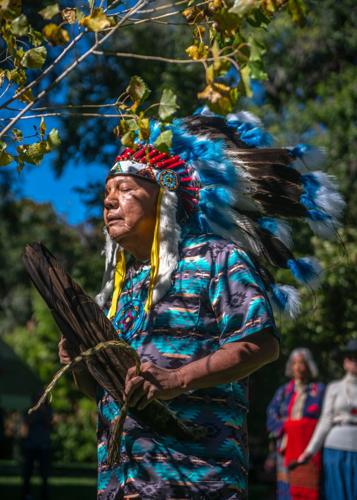
Larry Cesspooch gives a prayer to the cottonwood, ‘Peace Tree,’ at the beginning of the planting of the peace tree ceremony in Mansion Park of Manitou Springs, Colo. for Indigenous People’s Weekend on Sunday’s Oct. 8, 2023. 12 native nations gathered for the ceremony that was lead by Arrow Priest Joe David Osage and featured the Howell family of the White River Northern Ute tribe singing an honor song of their ancestors who lived on this land. (Gabi Broekema, The Gazette) Gabi Broekema
Storytelling, art, music, dancing and somber reflection were just a few of the activities featured during Indigenous Peoples Weekend, Manitou Springs’ three-day celebration of Native American history and culture.
It was the city’s third annual weekend observance of what Manitou Springs Mayor John Graham called one of the bedrock cultures of the Pikes Peak region.
“The Native American culture is deeply embedded in this area,” Graham said. “It goes back thousands of years, and we haven’t always been good at recognizing that. So it’s good for the whole community to get together and celebrate Indigenous heritage.”
The festivities began in earnest on Friday with an art gallery opening, titled “Manitou: The Art of the Great Spirit,” that featured work from several of Manitou’s local artists as well as a performance by the Buffalo Lodge Drum Group and dancers.
Ute spiritual leader Larry Cespooch gave a presentation of the Ute Creation Story at the SunWater Spa on Saturday. A spa fountain was dedicated to Ute leader and language teacher Loya Arrum, who died in 2014.
On Sunday, members of the Manitou community joined representatives from 13 Indigenous groups behind Manitou’s Memorial Hall to plant a young cottonwood sapling. Community members presented Ute elders with traditional gifts of tobacco, sweetgrass and cedar before Arrow Priest Joe David Osage presided over the ceremony.
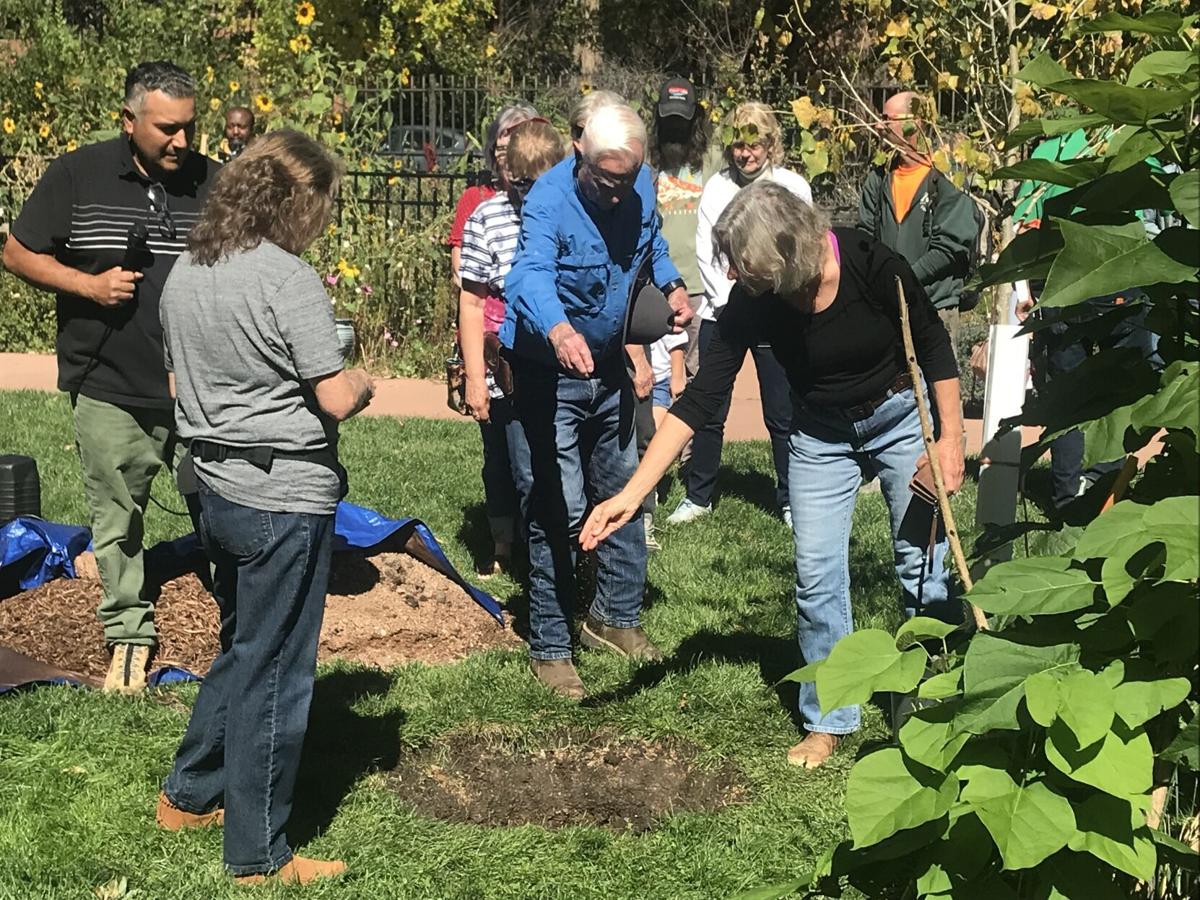
Manitou Springs community members help perform a blessing by sprinkling tobacco before planting a Peace Tree during one of the city's Indigenous Peoples Weekend celebrations.
O'Dell Isaac, The Gazette
Manitou Springs community members help perform a blessing by sprinkling tobacco before planting a Peace Tree during one of the city’s Indigenous Peoples Weekend celebrations.
O’Dell Isaac, The Gazette
“The symbolism of the cottonwood tree is important,” said Apache tribe member Manuel Pulido. “Cottonwood is a very specific tree that is used for prayer and ceremonies.”
The Peace Tree represented a conciliation effort between the many Native groups in the region, Pulido said.
“It’s just like any family — there’s certain parts of a family that don’t always get along,” he said. “The tree is a reminder of the family ties that we share, even when we don’t always agree.”
Dozens of Native and non-Native community members participated in the planting ceremony, sprinkling tobacco into the hole reserved for the tree and praying for a long, healthy life for the cottonwood. After placing the tree in the hole, attendees took turns repacking the soil around the tree, either with shovels or by hand.
After the planting, Ute elders hosted a potluck repast at Memorial Hall, featuring “Seven Minute Stew,” traditional Native American fare and a variety of other foods made by Manitou residents.
One of the most important themes of Indigenous Peoples Weekend is inclusion, according to Pulido.
“Non-Natives are an important part of these ceremonies, because they are part of our community as well,” he said.
Columbus Day — which takes place on the second Monday in October — remains a federal holiday, but about 200 U.S. cities now observe Indigenous Peoples Day in its place.
Gabi Broekema
Indigenous people of many tribes and local Manitou Springs residents gather for the ‘Planting of the Peace Tree,’ ceremony at Mansions Park in Manitou Springs, Colo. on Sunday, Oct. 8, 2023. (Gabi Broekema, The Gazette)
The Peace Tree to be planted is a young cottonwood. Ute Ute spiritual leader Larry Cesspooch explained why they were planting specifically a cottonwood: “It is the one we use in our sacred sun dances; it is the tree of life.” (Gabi Broekema, The Gazette)
Mama Bear of the Nakawe smiles in conversation with a local before the ‘Planting of the Peace Tree Ceremony,’ at Mansions Park in Manitou Springs, Colo. on Sunday, October 8, 2023. Mama Bear went around to the attendees before the ceremony smudging them and the cottonwood to be planted with burning sage. (Gabi Broekema, The Gazette)
An attendee wears an intricately beaded flower necklace to the ‘Planting of the Peace Tree Ceremony,’ at Mansions Park in Manitou Springs, Colo. on Sunday, October 8, 2023. (Gabi Broekema, The Gazette)
Attendees of the ‘Planting of the Peace Tree,’ ceremony embrace at Mansions Park in Manitou Springs, Colo. on Sunday, Oct. 8, 2023. (Gabi Broekema, The Gazette)
Southern Ute and Cherokee descendant Marguerite Cantu of Colorado Springs looks to the sun during the ‘Planting of the Peace Tree,’ ceremony at Mansions Park in Manitou Springs, Colo. on Sunday, Oct. 8, 2023. Cantu is the granddaughter of the well-know Chief Buckskin Charlie, one of the last traditional indigenous chiefs of the Ute tribe in the Manitou Springs area and a leader in dedicating the Ute Indian Trail in 1912. (Gabi Broekema, The Gazette)
Larry Cesspooch gives a prayer to the cottonwood, ‘Peace Tree,’ at the beginning of the planting of the peace tree ceremony in Mansion Park of Manitou Springs, Colo. for Indigenous People’s Weekend on Sunday’s Oct. 8, 2023. 12 native nations gathered for the ceremony that was lead by Arrow Priest Joe David Osage and featured the Howell family of the White River Northern Ute tribe singing an honor song of their ancestors who lived on this land. (Gabi Broekema, The Gazette)
12 native nations gather on Ute land to plant a cottonwood ‘Peace Tree,’ in Mansions Park in Manitou Springs, Colo. on Sunday, Oct. 8, 2023. The ceremony was lead by Arrow Priest Joe David Osage and featured the Howell family of the White River Northern Ute tribe singing an honor song of their ancestors who lived on this land. (Gabi Broekema, The Gazette)
Descendent of the Chippewa, Apache, Yaqui and Ute is spiritual medicine man James Cantu of Colorado Springs; Cantu gives a blessing to the Peace Tree and the hole the tree will be buried in before the formal ceremony begins. (Gabi Broekema, The Gazette)
Attendees sprinkle blessings of tobacco leaf into the hole where a cottonwood ‘Peace Tree,’ is to be planted in Mansions Park in Manitou Springs, Colo. on Sunday, Oct. 8, 2023. (Gabi Broekema, The Gazette)
Dowie Howell of the White River Northern Ute holds the family dog at Mansions Park in Manitou Springs, Colo. on Sunday, Oct. 8, 2023. Howell’s family sang an honor song of their ancestors who lived on this land as the blessings of tobacco leaf were cast into the hole the cottonwood ‘Peace Tree’ was placed in moments later. (Gabi Broekema, The Gazette)
Indigenous people of many tribes and local Manitou Springs residents gather for the ‘Planting of the Peace Tree,’ ceremony at Mansions Park in Manitou Springs, Colo. on Sunday, Oct. 8, 2023. (Gabi Broekema, The Gazette)
The Peace Tree to be planted is a young cottonwood. Ute Ute spiritual leader Larry Cesspooch explained why they were planting specifically a cottonwood: “It is the one we use in our sacred sun dances; it is the tree of life.” (Gabi Broekema, The Gazette)
Mama Bear of the Nakawe smiles in conversation with a local before the ‘Planting of the Peace Tree Ceremony,’ at Mansions Park in Manitou Springs, Colo. on Sunday, October 8, 2023. Mama Bear went around to the attendees before the ceremony smudging them and the cottonwood to be planted with burning sage. (Gabi Broekema, The Gazette)
An attendee wears an intricately beaded flower necklace to the ‘Planting of the Peace Tree Ceremony,’ at Mansions Park in Manitou Springs, Colo. on Sunday, October 8, 2023. (Gabi Broekema, The Gazette)
Attendees of the ‘Planting of the Peace Tree,’ ceremony embrace at Mansions Park in Manitou Springs, Colo. on Sunday, Oct. 8, 2023. (Gabi Broekema, The Gazette)
Southern Ute and Cherokee descendant Marguerite Cantu of Colorado Springs looks to the sun during the ‘Planting of the Peace Tree,’ ceremony at Mansions Park in Manitou Springs, Colo. on Sunday, Oct. 8, 2023. Cantu is the granddaughter of the well-know Chief Buckskin Charlie, one of the last traditional indigenous chiefs of the Ute tribe in the Manitou Springs area and a leader in dedicating the Ute Indian Trail in 1912. (Gabi Broekema, The Gazette)
Larry Cesspooch gives a prayer to the cottonwood, ‘Peace Tree,’ at the beginning of the planting of the peace tree ceremony in Mansion Park of Manitou Springs, Colo. for Indigenous People’s Weekend on Sunday’s Oct. 8, 2023. 12 native nations gathered for the ceremony that was lead by Arrow Priest Joe David Osage and featured the Howell family of the White River Northern Ute tribe singing an honor song of their ancestors who lived on this land. (Gabi Broekema, The Gazette)
12 native nations gather on Ute land to plant a cottonwood ‘Peace Tree,’ in Mansions Park in Manitou Springs, Colo. on Sunday, Oct. 8, 2023. The ceremony was lead by Arrow Priest Joe David Osage and featured the Howell family of the White River Northern Ute tribe singing an honor song of their ancestors who lived on this land. (Gabi Broekema, The Gazette)
Descendent of the Chippewa, Apache, Yaqui and Ute is spiritual medicine man James Cantu of Colorado Springs; Cantu gives a blessing to the Peace Tree and the hole the tree will be buried in before the formal ceremony begins. (Gabi Broekema, The Gazette)
Attendees sprinkle blessings of tobacco leaf into the hole where a cottonwood ‘Peace Tree,’ is to be planted in Mansions Park in Manitou Springs, Colo. on Sunday, Oct. 8, 2023. (Gabi Broekema, The Gazette)
Dowie Howell of the White River Northern Ute holds the family dog at Mansions Park in Manitou Springs, Colo. on Sunday, Oct. 8, 2023. Howell’s family sang an honor song of their ancestors who lived on this land as the blessings of tobacco leaf were cast into the hole the cottonwood ‘Peace Tree’ was placed in moments later. (Gabi Broekema, The Gazette)
PHOTOS: Planting of a Promise Tree in Manitou Springs
Gabi Broekema
Indigenous people of many tribes and local Manitou Springs residents gather for the ‘Planting of the Peace Tree,’ ceremony at Mansions Park in Manitou Springs, Colo. on Sunday, Oct. 8, 2023. (Gabi Broekema, The Gazette)
Gabi Broekema
The Peace Tree to be planted is a young cottonwood. Ute Ute spiritual leader Larry Cesspooch explained why they were planting specifically a cottonwood: “It is the one we use in our sacred sun dances; it is the tree of life.” (Gabi Broekema, The Gazette)
Gabi Broekema
Mama Bear of the Nakawe smiles in conversation with a local before the ‘Planting of the Peace Tree Ceremony,’ at Mansions Park in Manitou Springs, Colo. on Sunday, October 8, 2023. Mama Bear went around to the attendees before the ceremony smudging them and the cottonwood to be planted with burning sage. (Gabi Broekema, The Gazette)
Gabi Broekema
An attendee wears an intricately beaded flower necklace to the ‘Planting of the Peace Tree Ceremony,’ at Mansions Park in Manitou Springs, Colo. on Sunday, October 8, 2023. (Gabi Broekema, The Gazette)
Gabi Broekema
Attendees of the ‘Planting of the Peace Tree,’ ceremony embrace at Mansions Park in Manitou Springs, Colo. on Sunday, Oct. 8, 2023. (Gabi Broekema, The Gazette)
Gabi Broekema
Southern Ute and Cherokee descendant Marguerite Cantu of Colorado Springs looks to the sun during the ‘Planting of the Peace Tree,’ ceremony at Mansions Park in Manitou Springs, Colo. on Sunday, Oct. 8, 2023. Cantu is the granddaughter of the well-know Chief Buckskin Charlie, one of the last traditional indigenous chiefs of the Ute tribe in the Manitou Springs area and a leader in dedicating the Ute Indian Trail in 1912. (Gabi Broekema, The Gazette)
Gabi Broekema
Larry Cesspooch gives a prayer to the cottonwood, ‘Peace Tree,’ at the beginning of the planting of the peace tree ceremony in Mansion Park of Manitou Springs, Colo. for Indigenous People’s Weekend on Sunday’s Oct. 8, 2023. 12 native nations gathered for the ceremony that was lead by Arrow Priest Joe David Osage and featured the Howell family of the White River Northern Ute tribe singing an honor song of their ancestors who lived on this land. (Gabi Broekema, The Gazette)
Gabi Broekema
12 native nations gather on Ute land to plant a cottonwood ‘Peace Tree,’ in Mansions Park in Manitou Springs, Colo. on Sunday, Oct. 8, 2023. The ceremony was lead by Arrow Priest Joe David Osage and featured the Howell family of the White River Northern Ute tribe singing an honor song of their ancestors who lived on this land. (Gabi Broekema, The Gazette)
Gabi Broekema
Descendent of the Chippewa, Apache, Yaqui and Ute is spiritual medicine man James Cantu of Colorado Springs; Cantu gives a blessing to the Peace Tree and the hole the tree will be buried in before the formal ceremony begins. (Gabi Broekema, The Gazette)
Gabi Broekema
Attendees sprinkle blessings of tobacco leaf into the hole where a cottonwood ‘Peace Tree,’ is to be planted in Mansions Park in Manitou Springs, Colo. on Sunday, Oct. 8, 2023. (Gabi Broekema, The Gazette)
Gabi Broekema
The cottonwood ‘Peace Tree,’ is placed in the ground at Mansions Park in Manitou Springs, Colo. on Sunday, Oct. 8, 2023. (Gabi Broekema, The Gazette)
Gabi Broekema
Dowie Howell of the White River Northern Ute holds the family dog at Mansions Park in Manitou Springs, Colo. on Sunday, Oct. 8, 2023. Howell’s family sang an honor song of their ancestors who lived on this land as the blessings of tobacco leaf were cast into the hole the cottonwood ‘Peace Tree’ was placed in moments later. (Gabi Broekema, The Gazette)
Gabi Broekema
Indigenous people of many tribes and local Manitou Springs residents gather for the ‘Planting of the Peace Tree,’ ceremony at Mansions Park in Manitou Springs, Colo. on Sunday, Oct. 8, 2023. (Gabi Broekema, The Gazette)
Gabi Broekema
The Peace Tree to be planted is a young cottonwood. Ute Ute spiritual leader Larry Cesspooch explained why they were planting specifically a cottonwood: “It is the one we use in our sacred sun dances; it is the tree of life.” (Gabi Broekema, The Gazette)
Gabi Broekema
Mama Bear of the Nakawe smiles in conversation with a local before the ‘Planting of the Peace Tree Ceremony,’ at Mansions Park in Manitou Springs, Colo. on Sunday, October 8, 2023. Mama Bear went around to the attendees before the ceremony smudging them and the cottonwood to be planted with burning sage. (Gabi Broekema, The Gazette)
Gabi Broekema
An attendee wears an intricately beaded flower necklace to the ‘Planting of the Peace Tree Ceremony,’ at Mansions Park in Manitou Springs, Colo. on Sunday, October 8, 2023. (Gabi Broekema, The Gazette)
Gabi Broekema
Attendees of the ‘Planting of the Peace Tree,’ ceremony embrace at Mansions Park in Manitou Springs, Colo. on Sunday, Oct. 8, 2023. (Gabi Broekema, The Gazette)
Gabi Broekema
Southern Ute and Cherokee descendant Marguerite Cantu of Colorado Springs looks to the sun during the ‘Planting of the Peace Tree,’ ceremony at Mansions Park in Manitou Springs, Colo. on Sunday, Oct. 8, 2023. Cantu is the granddaughter of the well-know Chief Buckskin Charlie, one of the last traditional indigenous chiefs of the Ute tribe in the Manitou Springs area and a leader in dedicating the Ute Indian Trail in 1912. (Gabi Broekema, The Gazette)
Gabi Broekema
Larry Cesspooch gives a prayer to the cottonwood, ‘Peace Tree,’ at the beginning of the planting of the peace tree ceremony in Mansion Park of Manitou Springs, Colo. for Indigenous People’s Weekend on Sunday’s Oct. 8, 2023. 12 native nations gathered for the ceremony that was lead by Arrow Priest Joe David Osage and featured the Howell family of the White River Northern Ute tribe singing an honor song of their ancestors who lived on this land. (Gabi Broekema, The Gazette)
Gabi Broekema
12 native nations gather on Ute land to plant a cottonwood ‘Peace Tree,’ in Mansions Park in Manitou Springs, Colo. on Sunday, Oct. 8, 2023. The ceremony was lead by Arrow Priest Joe David Osage and featured the Howell family of the White River Northern Ute tribe singing an honor song of their ancestors who lived on this land. (Gabi Broekema, The Gazette)
Gabi Broekema
Descendent of the Chippewa, Apache, Yaqui and Ute is spiritual medicine man James Cantu of Colorado Springs; Cantu gives a blessing to the Peace Tree and the hole the tree will be buried in before the formal ceremony begins. (Gabi Broekema, The Gazette)
Gabi Broekema
Attendees sprinkle blessings of tobacco leaf into the hole where a cottonwood ‘Peace Tree,’ is to be planted in Mansions Park in Manitou Springs, Colo. on Sunday, Oct. 8, 2023. (Gabi Broekema, The Gazette)
Gabi Broekema
The cottonwood ‘Peace Tree,’ is placed in the ground at Mansions Park in Manitou Springs, Colo. on Sunday, Oct. 8, 2023. (Gabi Broekema, The Gazette)
Gabi Broekema
Dowie Howell of the White River Northern Ute holds the family dog at Mansions Park in Manitou Springs, Colo. on Sunday, Oct. 8, 2023. Howell’s family sang an honor song of their ancestors who lived on this land as the blessings of tobacco leaf were cast into the hole the cottonwood ‘Peace Tree’ was placed in moments later. (Gabi Broekema, The Gazette)