







Mysteries of Colorado: cryptid creatures in the Rockies
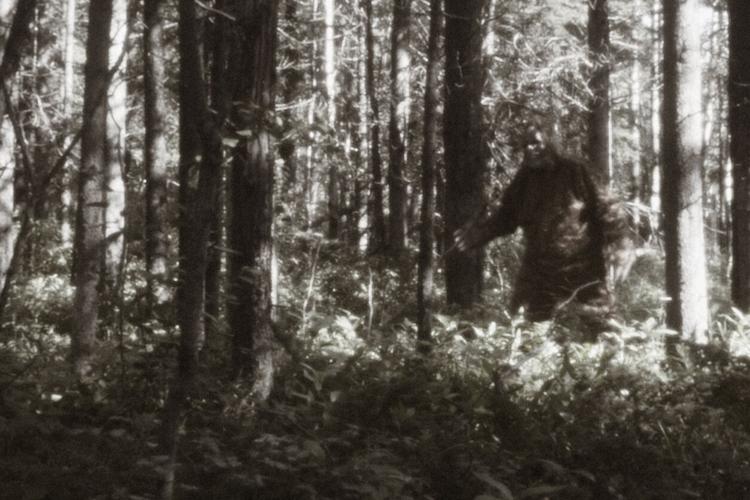
Photo Credit: RichVintage (iStock).
RichVintage/iStock
They’re the things that go bump in the night; beasts that may be grotesque and harmful to humans. These monsters may be real or they might be a trick of the mind. The fear is in the unknown.
It’s how many would describe cryptids, creatures which are known to humans mostly in stories passed down through generations, or conjured up by the imagination, but haven’t been widely proven to exist by modern science or factually based evidence.
What is a cryptid?
According to Merriam-Webster, a cryptid is: “an animal (such as Sasquatch or the Loch Ness Monster) that has been claimed to exist but never proven to exist.”
Cryptids are present in everyday folklore no matter what time of the year it is. But with monsters and the supernatural at the forefront of our consciousness as Halloween approaches, here’s a look at some of Colorado’s most famous cryptids:
Navajo Skin-walkers – Four Corners Region, Southwest Colorado
In Navajo culture, a skin-walker is a type of harmful witch who can turn into, possess, or disguise themselves as an animal or another humanoid form.
While traditional healers or shaman are seen in Navajo culture as good, skin-walkers are known as evil and must commit an evil act, such as the murder of a loved one, to transform or gain the skin-walker knowledge and abilities.
Skin-walkers are pointed to by some as the cause of a string of livestock mutilation events in the 1970s which prompted Colorado’s then-senator Floyd Haskell to ask the Federal Bureau of Investigation to get involved.
Tommy Knockers – Idaho Springs, Colo.
Tommy knockers are a Cornish legend brought to the United States when miners first worked in Pennsylvania and then made their way west during the gold rushes of the 1800s.
Tommy Knockers are dwarf-like creatures which knock on the walls of mines to warn of a cave-in, point to riches, or cause a cave-in, depending on the legend. In some variations of the story, the Tommy Knockers aren’t living creatures, but instead the souls of deceased miners, such as those buried within the Phoenix Gold Mine in Idaho Springs.
In present day, Tommy Knockers are the de facto mascot of Tommy Knocker Brewery and Pub in Idaho Springs, one of the prime craft beer destinations in Colorado.
Big Foot – Various locations throughout Colorado
Also known as Sasquatch, Big Foot is an ape or human-like creature known to be covered in hair or fur and has been purportedly spotted in remote wooded areas throughout North America. But the large creature has also been part of Colorado legends.
The Big Foot legend can be attributed to as early as pre-historic times before European settlers arrived in North America. On the Tule River Indian Reservation in California, petroglyphs created by a tribe of Yokuts at a site called Painted Rock are alleged by some to depict a group of Bigfoot called “the Family.”
One of the most notable examples of a Big Foot creature being spotted in Colorado is the Big Foot of Bailey. Believers of that legend claim this particular Big Foot is not an earthly creature but a supernatural one, who travels via an alien portal that is sourced by a sacred Native American tree in the area.
For more insight on where Big Foot has been spotted around Colorado, click here.
The Vampire of Lafayette – Lafayette, Colo.
In the old municipal cemetery of Lafayette lies the grave of Theodore “Todor” Glava, known to be a miner from Eastern Europe who died during the influenza pandemic of 1918.
Little is known when the myth began, or where it originated, but Glava’s grave earned the reputation of being that of a vampire over the years due to the gravestone’s mention of Transylvania. The region in Romania has become synonymous with Vlad the Impaler and Count Dracula. The gravestone also features the word “trandofir,” the Romanian word for rose.
In the center of the grave, a Jupiter tree has sprouted. The legend attributes this to the stake which was driven through Glava’s heart when local townspeople exhumed the body and found blood near the mouth and that the nails were still growing (now known as part of the natural decay process).
Believers say that a shadowy figure thought to be Glava can be spotted at the cemetery at night.
Skeptics would say he’s an unfortunate victim of xenophobia and vampire hysterias which surrounded pandemics during the 1800s and early 1900s, like the influenza which caused his death.
Slide Rock Bolter – Southwest Colorado
The slide rock bolter is supposedly a fish-like creature that lives in mountainous regions of Colorado with slopes over 45 degrees. According to legends, the animal had a hooked tail and preyed on tourists.
One of the first accounts of the slide rock bolter comes from a 1910 novel, “The Fearsome Creatures of the Lumberwoods” by William T. Cox. According to the legend, the creature is said to have been destroyed by an explosion after a local forest ranger tricked it into colliding into a barrel of gun powder and fulminated caps which “destroyed half the buildings in Rico, Colorado.”
The real town of Rico still exists today in the southwest corner of the state but has a population of less than 300 according to the most recent census.