




DIA plans sweeping new ‘one-stop-shop’ car rental hub
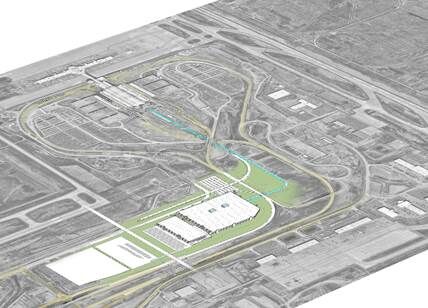
Denver International Airport is closer in preparations to massively overhauling its car rental program by building a multi-story garage that will house all of the car rental companies working at DIA, as well as a constructing a transit system to get rental customers to and from the terminal.
And it’s possible, DIA officials said, there won’t be a gas-powered vehicle in sight.
DIA announced this week it has selected an employee lot along 78th Avenue that it will convert into the new car rental hub. Construction will not start for more than a year and is slated to take several more once it begins. The employee parking will be replaced before work on the rental center begins. The airport will issue a request for proposals (RFP) or a similar process late next year.
Cost estimates are murky at this phase of the project as well, said Jim Starling, the airport’s chief construction and infrastructure officer, but the facility and transit built to support it will likely cost at least $1 billion. The project will be supported through a $6 fee charged to customers who rent cars and fees paid by travelers at the airport, according to DIA.
When the project comes to fruition, it will look like a three to four-level parking garage from which every car rental company at DIA will operate.
The hub, and the site it will sit on, will grow the car rental program’s square footage from roughly 6 million to more than 8 million, although it will use less land because of the multi-level structure, said Amy Edinger, DIA’s senior vice president of commercial business.
Instead of taking one of the several shuttles now operated by each individual rental company, travelers will reach the center by a to-be-determined mode of transit, sometimes called an “automated people mover.”
The new facility, less than one mile from the terminal, will also be closer than the outdoor lots that serve rental car companies today, and it will offer shelter from poor weather, Starling said.
DIA is also monitoring shifts in car manufacturing and the move to electric vehicles, planning for the possibility the facility will not need traditional gas fueling once it is complete.
“One of the things we are talking with rental companies about is being able to go 100% electric,” Starling said.
DIA looked at three sites but was drawn to the employee lot because it allows for future growth, according to a news release. The transit options could also one day support future commercial development, public parking and employee parking.
DIA is “the last of the big airports in the U.S. to build” a consolidated facility, Starling said, which means the airport can look at features other airports have done as it gets further into the design phase for Denver’s. LAX is wrapping up a $1 billion consolidated rental facility of its own, Starling said.
“We are really looking at being able to accommodate the passenger traffic that we are seeing out through 2045,” Starling said. “When the airport turns 50 years old, we are looking at what we will need to do for the airport to support the 120 million passengers to come through here.”
Aside from incorporating sustainability goals — such as electric vehicle capabilities and getting the band of shuttles off the roads — the project is meant to address growing pains at DIA.
Rental car companies are outgrowing the space they currently lease from DIA as they prepare to serve the ballooning number of travelers passing through Denver.
The companies lease approximately 12,760 spaces as of now but will need 16,130, a 26% increase, as the airport works toward serving 120 million passengers annually by 2045, according to DIA. More than 69 million passengers travelled through DIA last year, according to the airport, which anticipates it will well-surpass those figures in 2023.
Building a “one-stop-shop” for the car rental program is part of the airport’s “Vision 100” plan — its strategy for supporting the 100 million annual passengers DIA anticipates serving in less than a decade, including growing its infrastructure.
“Having a ConRAC will provide much-needed room for growth, a better customer experience and a more sustainable program, especially if coupled with a people-moving solution to eliminate rental car shuttles,” DIA CEO Phil Washington said in a news release. “Introducing the ConRAC concept to DEN is a better operational system for managing industry changes.”
Get OutThere
Signup today for free and be the first to get notified on new updates.
PREV
PREVIOUS

Prosecutors look to re-charge Alec Baldwin in Rust shooting
Special prosecutors are looking to re-charge Alec Baldwin in the 2021 fatal Rust shooting as “additional facts” have recently come to light. On Tuesday, prosecutors Kari Morrissey and Jason Lewis, who are based in New Mexico, where the movie was being filmed, said they will bring new evidence to a grand jury within the next […]

'Scary as a heart attack': Shock rocker Alice Cooper brings his show to Colorado Springs
Alice Cooper is happy to talk about who he is, and not just during interviews. “I’m Alice. I’m the master of madness, the sultan of surprise,” he sings on “I’m Alice,” the lead track of his new album “Road.” On track two, “Welcome to the Show,” he adds, “I play the creature ‘cause I know […]