




South Platte dam demolition to help restore Eleven Mile trout fishery
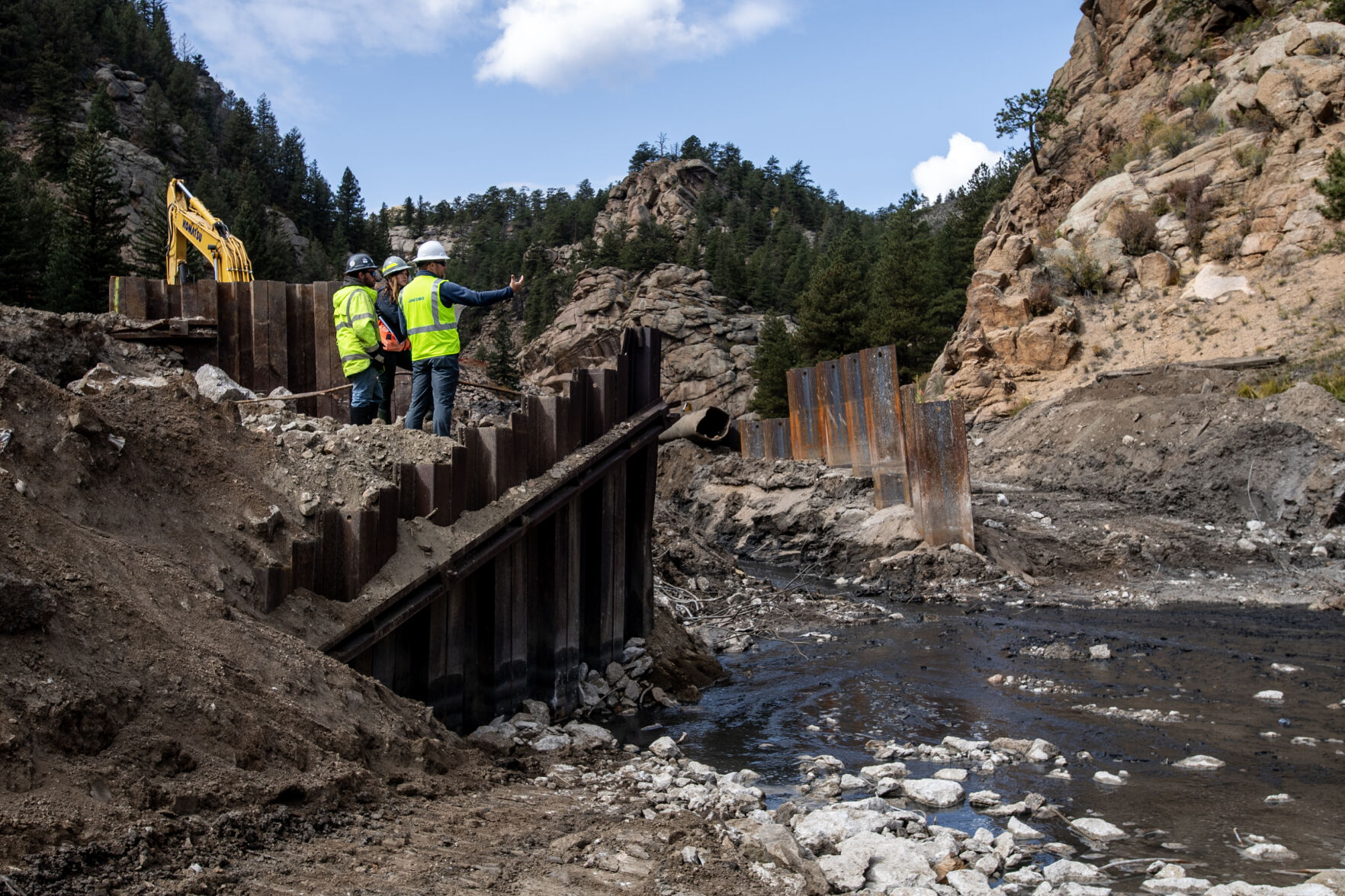
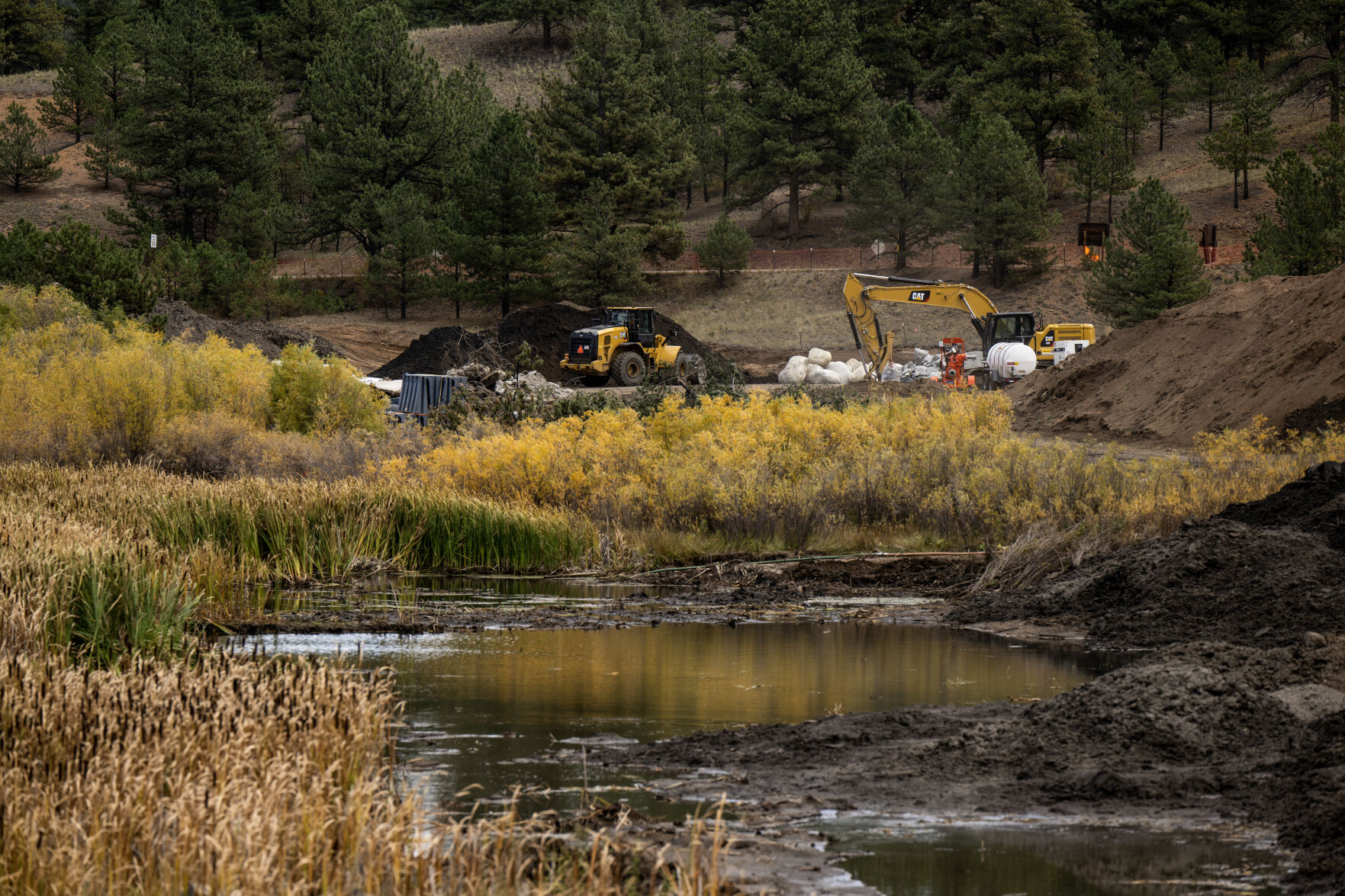
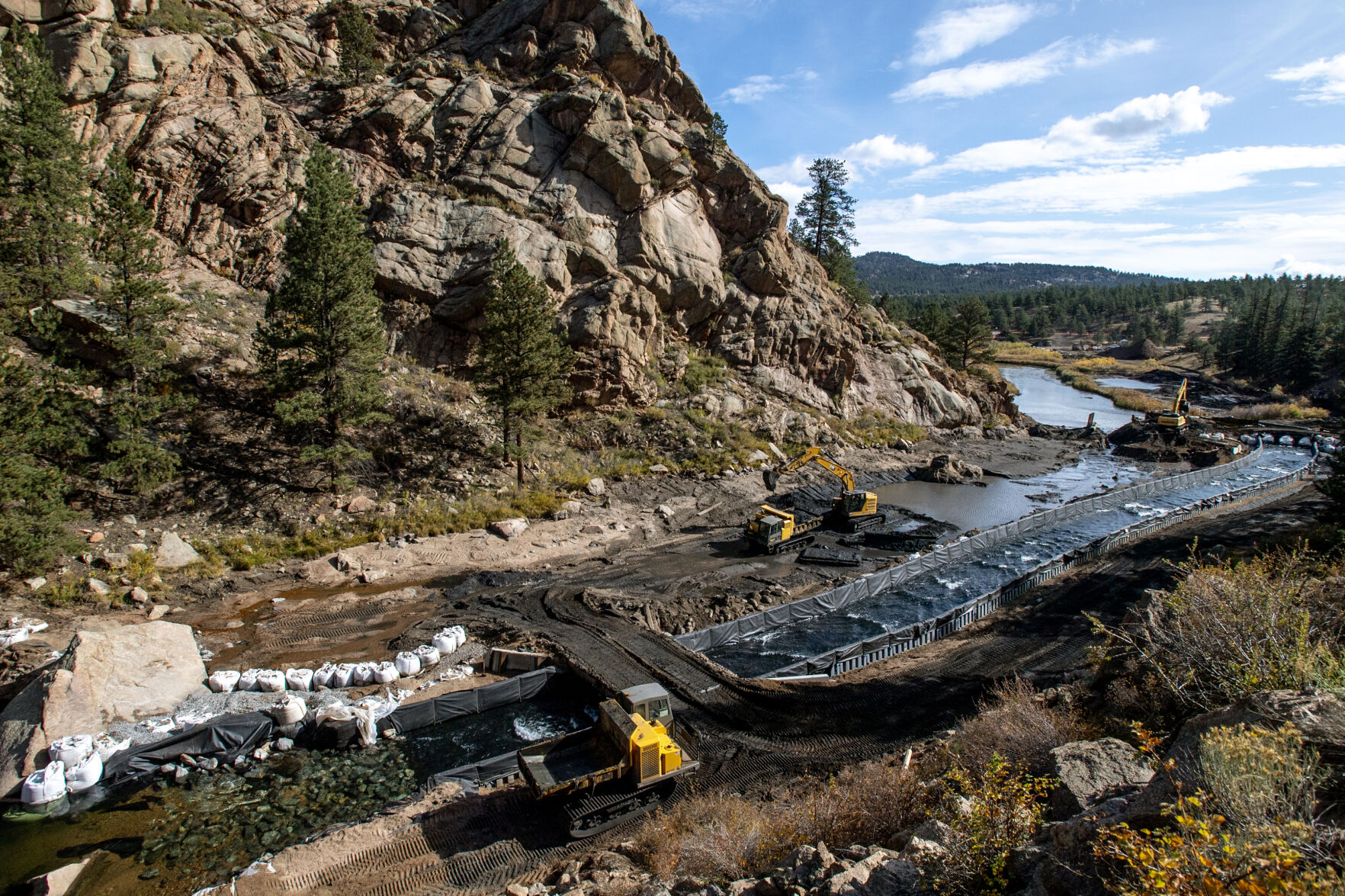
This fall, backhoes, dump trucks on tracks and other heavy equipment have been digging out an abandoned dam on the South Platte River near Lake George to transform a slow, wide, cattail-choked stretch of water back into a fish-friendly steam.
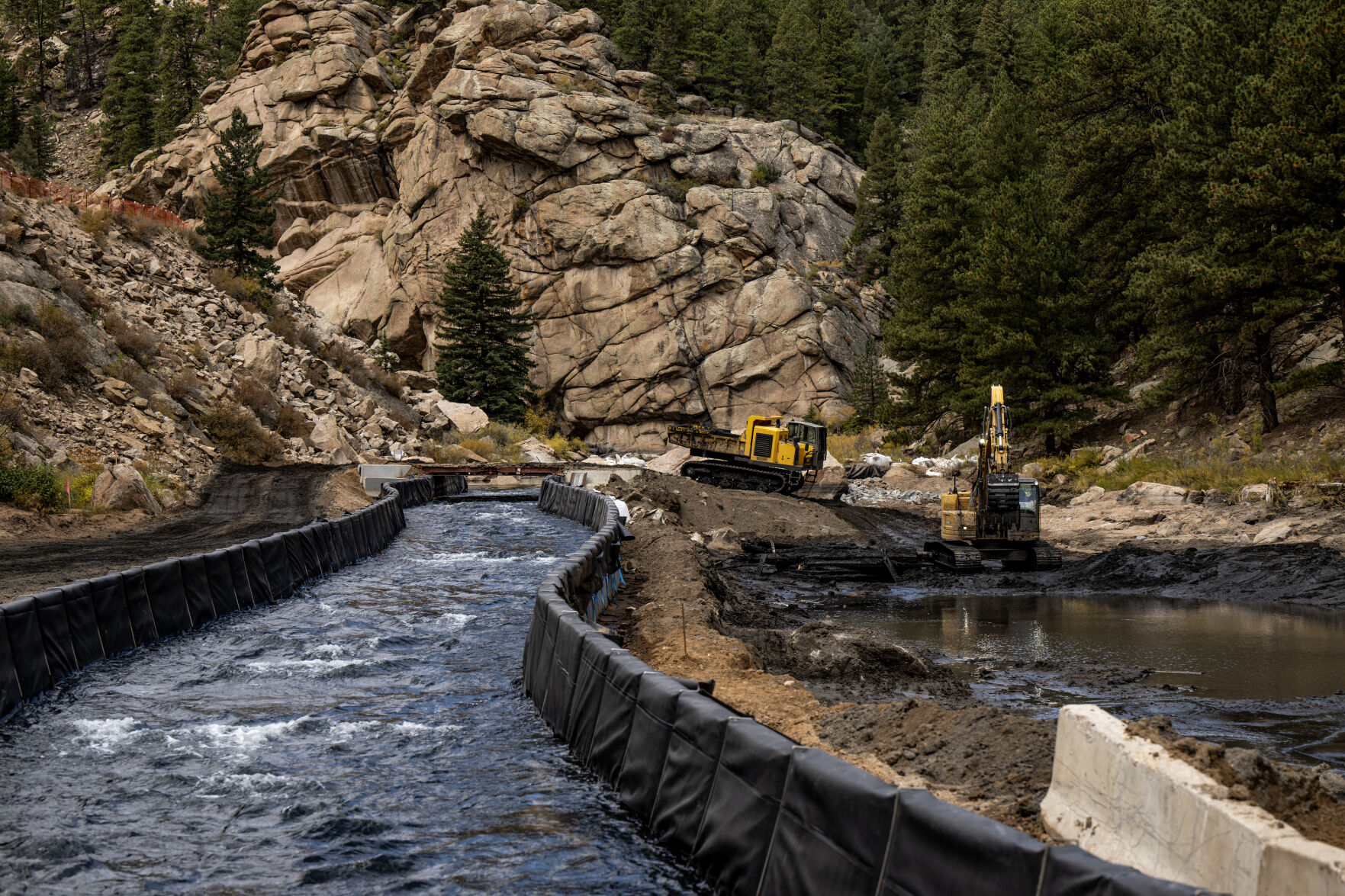
At one point in early October, crews had diverted the river into a 607-foot-long plastic structure that rushed past crews as they dug up 17,000 cubic yards of sediment that has built up above the dam since the 1950s, said Nick Saylor, construction manager for FlyWater. His company is taking down the dam and restoring the habitat. Crews also had to take out metal sheets used in the dam that were driven vertically into the bed of the river.
Even during the work, fish endeavored to get upstream.
Lake George dam removal project underway
“We’re watching fish every day try to jump over that dam and just bounce right off,” he said.
Bald eagles, red-tailed hawks, deer and numerous anglers have also been wandering by the site in the Eleven Mile Canyon Recreation Area about an hour west of Colorado Springs. Work to take down the low concrete dam started in July.
Colorado Springs Utilities used the dam as a temporary diversion through the 1960s during the construction of the Blue River pipeline, the agency said in written responses to questions. Over the decades the dam slowed the river flow and widened its path. Taking out the dam is expected to improve river conditions for 45 miles of the river from Eleven Mile Reservoir to Cheesman Reservoir.
Over the next five to ten years, the ecosystem will return to its more native state likely with more willows and grasses, than cattails, Forest Service experts said.
It also may carve more of a path through hulking boulders as it does directly upstream from the dam, said John Geerdes, CEO and executive director for the Coalition of the Upper South Platte. The nonprofit raised about $4 million for the project and it is the grant manager for the project that will improve watershed health, one of its key priorities.
“Once it’s out, it improves stream habitat enormously,” Geerdes said of the dam.
It will also prevent the dam from potentially failing in the future and allow for rainbow and brown trout to migrate more freely, improving genetic diversity, Forest Service experts said.
After decades of damming rivers in the West, more are starting to come down because they are no longer serving a purpose and they are in danger of failing. Of the 90,000 dams the U.S. Army Corps of Engineers has surveyed, about 85% are more than 50 years old and many likely need to come down, according to a 2022 report from American Rivers, a national nonprofit working on dam removals.
The report found in Colorado, 27 dams have been removed, more than other Rocky Mountain states, but far less than West Coast states, such as Oregon, where 80 dams have come down.
“We’ve been a little bit behind the curve in the Intermountain West, as to removing these structures,” said Kristen Meyer, the fish and wildlife biologist for the South Park Ranger District. In this case, she expects taking down the dam will allow more fish to spawn and survive, which in turn will support the bald eagles and osprey in the area.
Once work in the river wraps up this winter, crews will return in spring and expect to put in new plantings such as willows and grasses along the banks. Much of the sediment hauled out from the river will also be reused along the banks.
As the new willows go in, Meyer said she expects more migratory birds, such as sparrows and warblers, will be drawn to the area.
Researchers are planning to quantify the improvement, and some of the work will involve taking samples of macroinvertebrates, such as insects, she said.
The conclusion of the project at the end of May is scheduled to coincide with the return of a nesting pair of bald eagles that live on the river banks, Geerdes said.
South Park District Ranger Josh Voorhis said while the price tag is high, so far reaching $4.8 million, and the process is lengthy, starting 12 years ago, it could have cost more. All dams will fail without maintenance and, in this case, the thousands of cubic yards of sediment could have washed downstream, damaging other infrastructure, he said. The dam has been considered abandoned since about the 1990s, meaning it has not been inspected.
Restoration eliminates that liability for Colorado Springs Utilities and the Forest Service, he said. Colorado Springs Utilities chipped in $750,000 to take down the dam.
Once the area is restored, the Forest Service expects to open a new parking area and wheelchair accessible trail leading to a fishing hole in the area for visitors to enjoy the canyon, Meyer said.
Get OutThere
Signup today for free and be the first to get notified on new updates.
PREV
PREVIOUS

Social Security update: Direct payment worth $914 arrives in eight days
Supplemental Security Income beneficiaries will receive November’s monthly installment from the Social Security Administration in just over one week, and it will be worth up to $914 for individual filers. The November payment will be sent out on Wednesday, Nov. 1, and will be the first Supplemental Security Income payment since the end of September. October’s […]

Ilhan Omar slammed by Ritchie Torres for taking policy positions that 'would have led to more dead Israelis'
A progressive Democratic congressman, who is often aligned with Rep. Ilhan Omar (D-MN), criticized her on Monday for taking policy positions that “would have led to even more dead Israelis and more dead Palestinians.” Rep. Ritchie Torres (D-NY) responded to a comment Omar made on Friday, when she asked him, “How many more killings is […]