







Sales slowing, and buyers have options, but prices climbing in Denver housing market
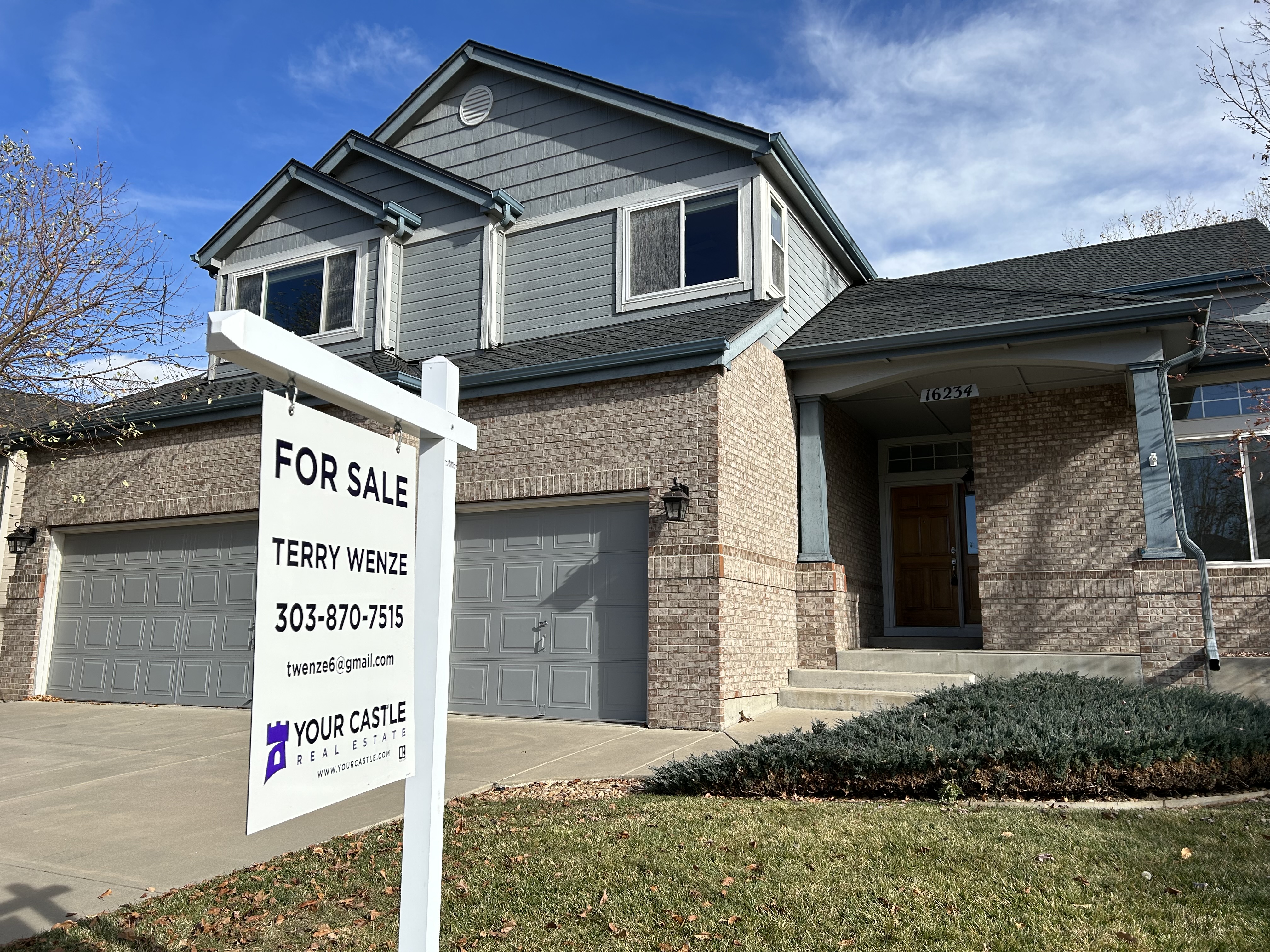
Inventory is growing, sales are slowing, and sellers are getting less than asking — but buying a home is still getting more expensive in the Denver metro area.
The monthly Denver Metro Association of Realtors Market Trends report for November was released on Friday, covering October activity. The report looks at monthly and yearly trends in market activity in the Denver metro area and covers the 11-county metro Denver area, including Adams, Arapahoe, Boulder, Broomfield, Clear Creek, Denver, Douglas, Elbert, Gilpin, Jefferson and Park.
The number of new listings fell nearly 17% last month to 3,816. A drop is normal at this time of year, according to the association, and on par with November 2022. The number of new listings showed a 0.65% year-over-year decrease.
The number of active listings at the month’s end stood at 7,482, which represented a 2.6% year-over increase but a 1.9% decrease from September.
Sales are slowing, too. The number of homes that sold last month fell by 11.6% from the previous month to 2,986. October marked a 15.7% year-over decrease in closings. Sales volume fell by 11.7% last month to $2.05 billion and experienced a 12% year-over decrease.
As for residential prices, the median close price in October sat at $585,000, which was unchanged from September but a 2.6% increase from this time last year. The median sale price for single-family homes was $649,000 – a 1.4% month-over increase and 3.8% year-over increase. The condo market saw the median sale price rise 1.2% from September to October and by nearly 5% from last year. The median condo sale price in October was $425,000.
The average residential sale price in October was $687,917, a marginal decrease from September but a 4% increase from 2022. For single-family homes, the average sale price rang in at $772,601 last month, another slight month-over-month decrease, but a 4.5% year-over-year increase. The average sale price for condos was $485,580, a 1% increase from September and a nearly 2% increase from October 2022.
“A helpful guiding principle is to look at historical data, because if you look at the year-to-date numbers, this year performed most closely to pre-pandemic levels of 2019 and sales volume is over $24 million, and median days in the (market) is at 11 for 2023, which is just one day shy of the median in 2019,” Libby Levinson-Katz said in a news release.
Levinson-Katz, who is chair of the DMAR Market Trends Committee, added that it’s time for sellers to let go of pandemic-era sale prices. Buyers are no longer willing to overpay, she said, noting that close-to-list-price rations are closer to 99%, compared to 103% during the pandemic. Sellers are receiving less than asking, according to the November report.
Inventory is growing, as it usually does toward the end of the year, and buyers are finally in a market where they have some choice, according to the association. The key to selling now is the right price and turn-key properties, Levinson-Katz said.
The median days on the market for single-family homes and condos rose more than 14% in October to 16 days, which was a nearly 6% year-over-year decrease.
“Concessions, no matter what market one is in, seem to be the name of the game,” said Andrew Abrams, DMAR Market Trends Committee member in comments accompanying the report. “Buyers can use concessions to decrease their interest rate or put toward closing costs or pre-paids.”