Xcel Energy leverages artificial intelligence to detect wildfires
The Pano Rapid Detect system uses ultra-high-definition cameras that continuously scan

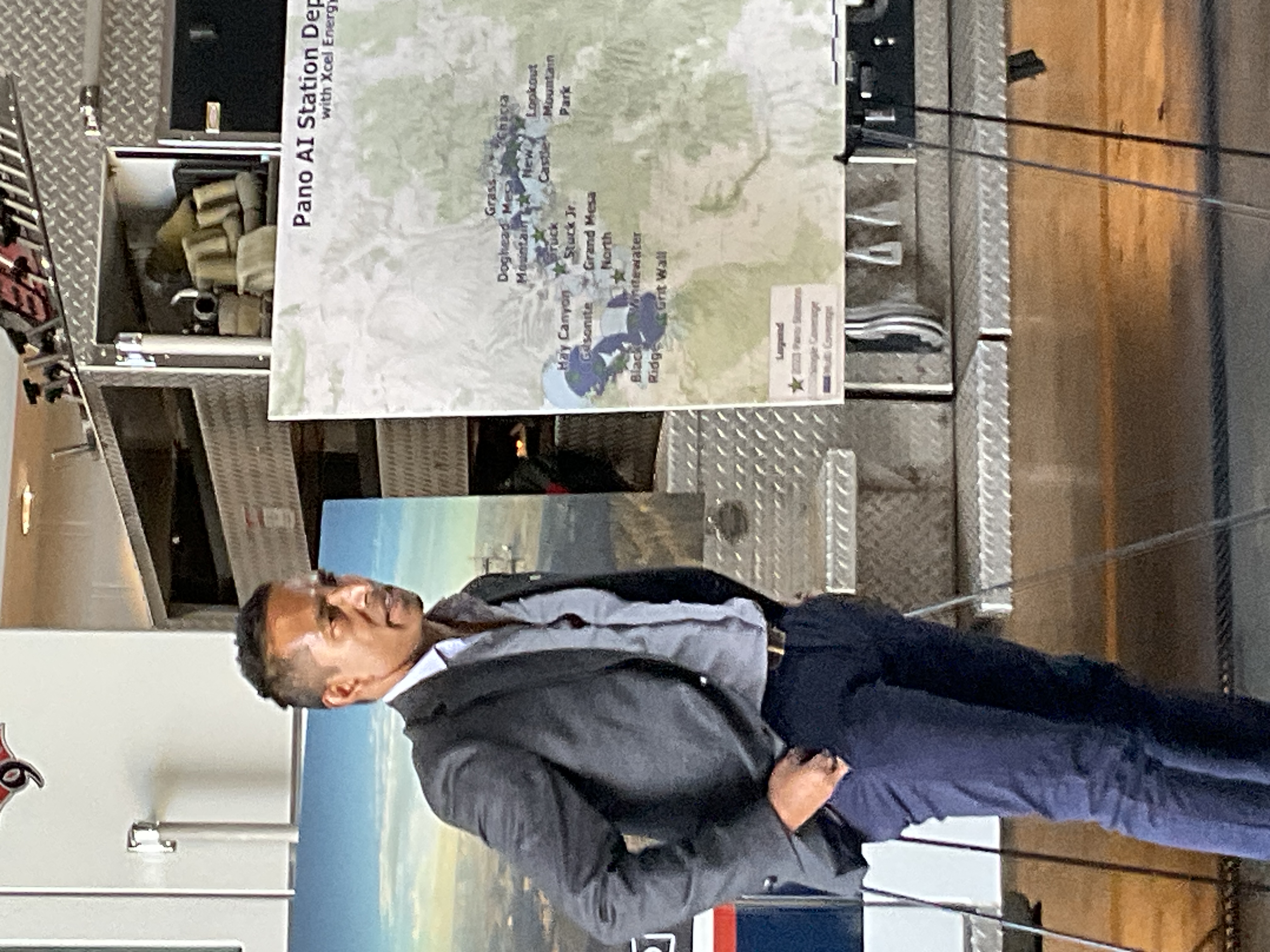
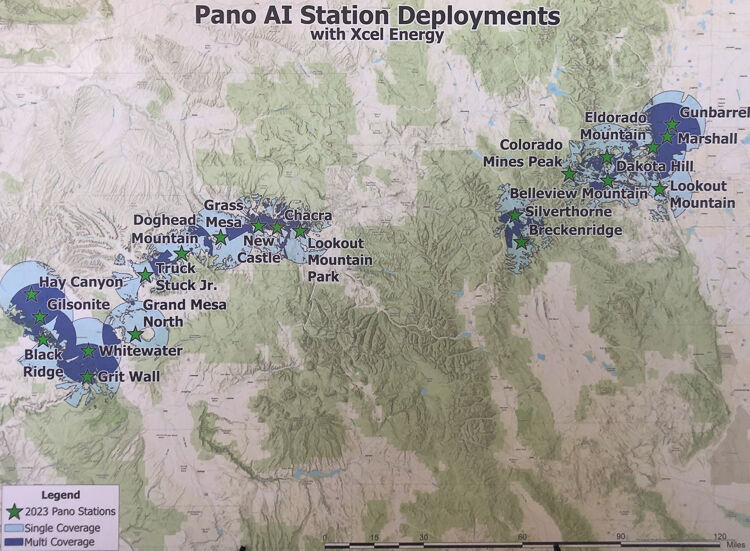
Xcel Energy and Pano AI announced the integration of artificial intelligence with 21 tower-mounted video camera systems to advance rapid remote wildfire detection and reporting for more than 1.5 million acres in Colorado.
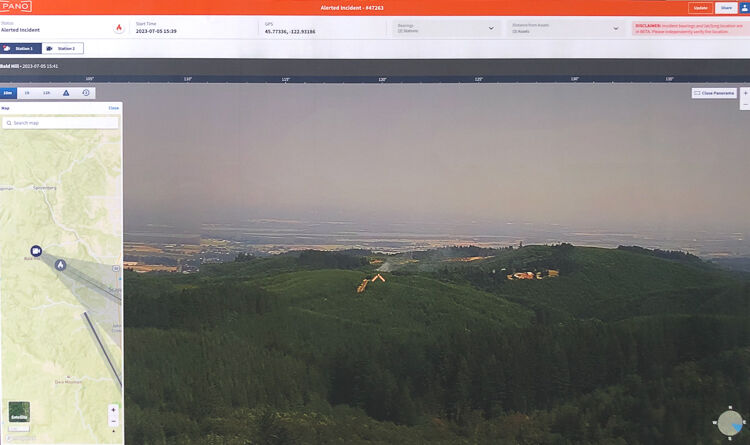
The Pano Rapid Detect system uses ultra-high-definition cameras that continuously scan 360 degrees to create a full video panorama. An artificial intelligence algorithm constantly monitors the scans to detect and triangulate smoke.
Pano’s fire detection technology has been in the state for almost three years. Currently there are 16 systems up and the company expects to have a total of 21 systems installed by the end of 2023.
The technology will be deployed in high fire risk areas, with the aim of reducing the risk of wildfires and improving safety.
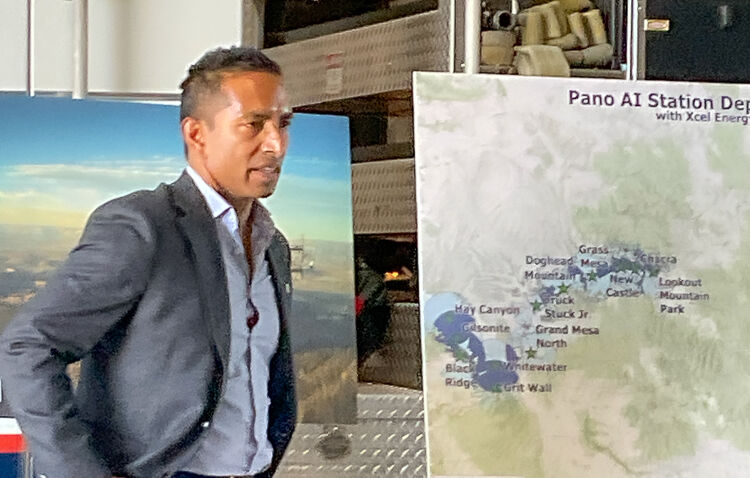
“We’re excited to announce the expansion of more wildfire technology in the state of Colorado,” said Arvind Satyam, Pano’s chief commercial officer, at a press briefing at the Arvada Fire Department Station 9 Tuesday.
“States like Colorado have been investing in more helicopters and aircraft to really enable that rapid initial attack. But in order to know where to go, you need to understand where the incident is and how is it evolving,” Satyam added.
Xcel Energy is funding the 21-camera system to the tune of about $50,000 per year for each tower camera installation.
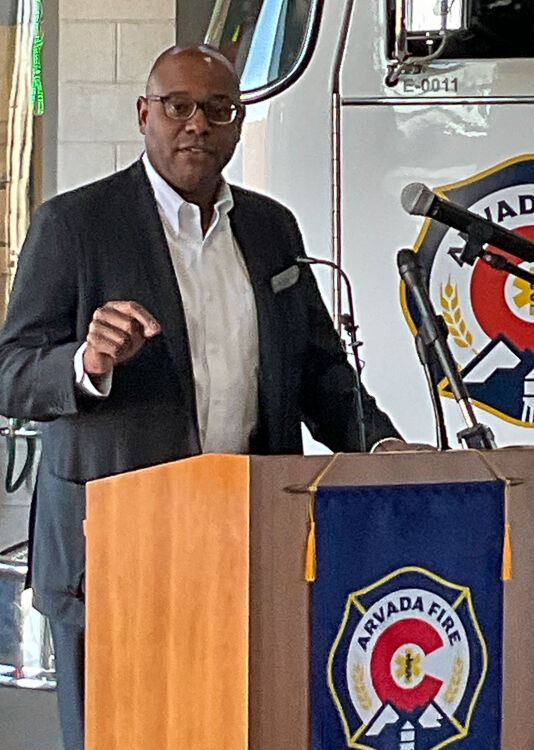
“We launched our wildfire mitigation program in 2019 to reduce the risk of ignitions associated with operating our system to protect our customers and our communities,” said Robert Kenney, president of Xcel Colorado, at the briefing. “By proactively implementing these wildfire mitigation strategies, we are helping to create a more sustainable future for all of our customers in Colorado.”
Early detection not only significantly enhances fire suppression response times, but also plays a pivotal role in dramatically reducing suppression costs while promoting the safety of firefighters, according to Steven Parker, Arvada fire marshal.
The system, according to Satyam, usually reports a fire to local authorities long before reported by a witness, especially in remote forest lands.
In 2021, the General Assembly’s interim Wildfire Matters Review Committee rejected a bill from then-Sen. Don Coram asking for $2 million for a pilot program that would have installed 20-25 high-tech cameras for the same purpose. The six Democrats on the committee were united in voting against it, sinking the bill.
Another $2 million pilot program for installing cameras was killed by the General Assembly again in 2023.
“As the state allocates funds to expand this network, Pano is ready to expand its footprint,” Satyam said in an interview.
Of the new Xcel/Pano program, Coram said, “It’s about damn time.”
“They want to talk about satellites and their aircraft, but that does not work with ground cover, where the system with the infrared and artificial intelligence and stuff does work with the camera system,” Coram added in an interview with The Denver Gazette.
In 2022, Advanced Environmental Monitoring, a Canadian company that specializes in wildland surveillance, installed a state-of-the-art, “near-infrared” heat-sensing video camera that can pan to capture an almost 360-degree view of the Evergreen area.
Evergreen is one of the places most at risk for catastrophic wildfires in Colorado due to its lack of escape routes for the very large population living in the urban wildland interface.
The cost of that system is covered by Core Electric, Colorado’s biggest nonprofit cooperative utility company, which serves electricity to the Evergreen area.
One of the reasons Pano uses artificial intelligence is that discriminating between smoke from a fire, fog, clouds, and snow is very difficult.
“Turns out that detecting smoke 10 miles away is a really hard challenge,” said Satyam. “On a clear day, you’re able to look at this contrast and pick it up pretty quickly, but we’re also deployed in areas, mountainous regions where there’s snow on the ground, there could be fog, there could be moisture, other elements that throw it off.”
Satyam said they have trained the AI model using more than 300 million images. What’s more, the AI continues to train itself on a location-specific basis using ongoing analysis of the view.
Pano also has a fully staffed intelligence center, whose job is to quickly look at every alert and figure out if it’s smoke or not.
“The next challenge we set ourselves is being able to train the AI in an environment that’s representative of Colorado,” said Satyam. “So, we’ve trained the AI to be able to pick up smoke where there’s snow on the ground, and this is how AI gets continuously better as we train it with different environmental conditions.”
Pano’s primary command center in San Francisco monitors their systems in seven U.S. states, four Australian states and is expanding into British Columbia, Canada.