Sterling K. Brown travels 9,000 miles for one lively day in Denver
DISPATCH FROM THE 2023 DENVER FILM FESTIVAL: IT'S A WRAP!


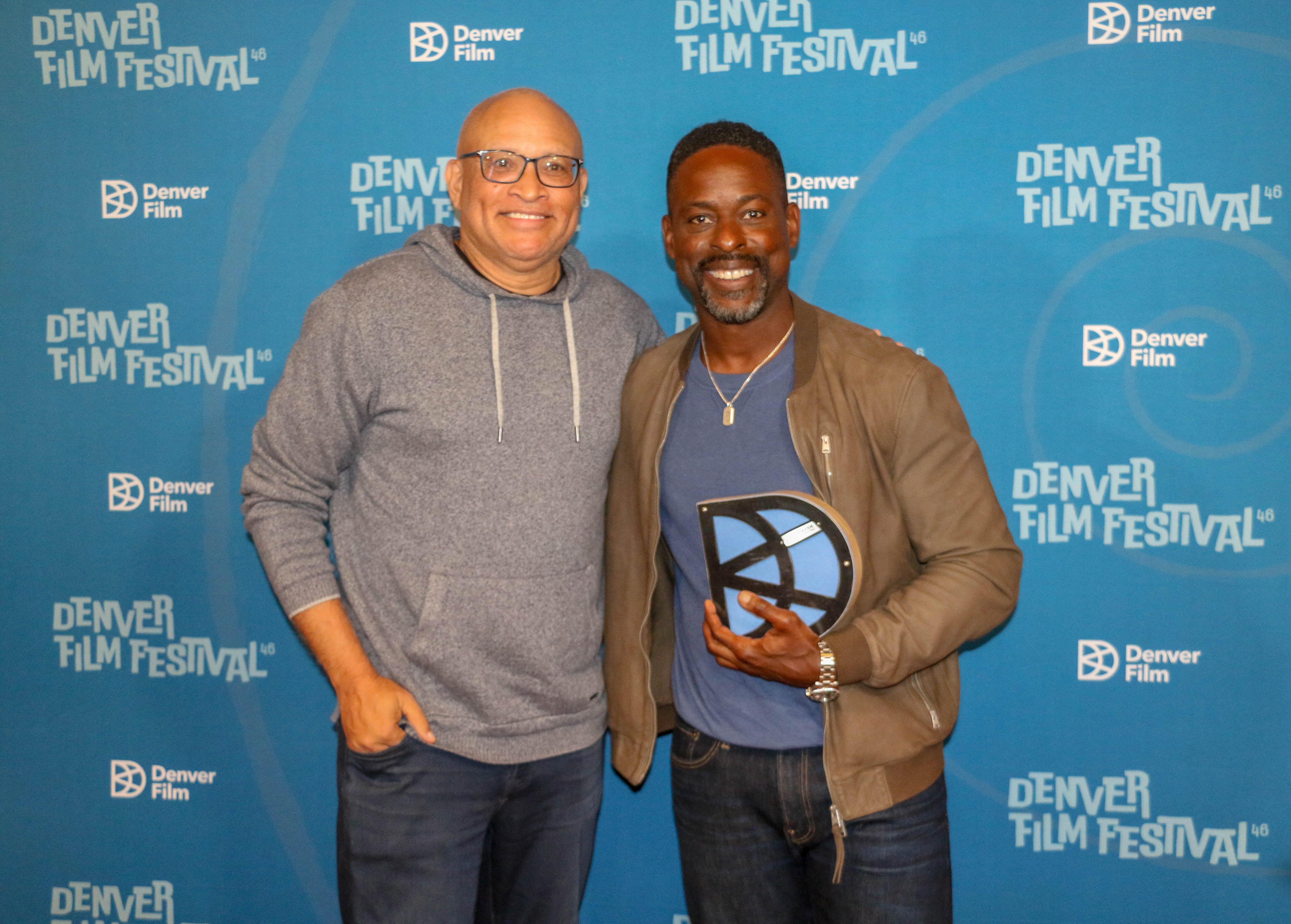
When Sterling K. Brown learned the actors’ strike was over after an agonizing 118 days Thursday, it cleared the way for him to come to Denver to receive the Denver Film Festival’s Excellence in Acting Award for the zeitgeist comedy “American Fiction.”
That had been the plan all along, but the actors’ union prohibited its 60,000 members from promoting any of their work as long as negotiations were stalled.
They officially unstalled at midnight Thursday.
Problem was, Brown was in Singapore co-hosting (with Hannah Waddingham) Prince William’s 2023 Earthshot Prize Awards ceremony honoring innovative climate solutions. Brown would have just 48 hours to get here in time for a hastily added second screening of the festival’s buzz-worthy opening-night film, accept the award and partake in a public talk moderated by podcaster Larry Wilmore.
That’s 9,000 miles. But he made it.
“I flew from Singapore to L.A. … and then got on another plane to come to Denver … and I’m going to go home tonight so I can watch my son play his two flag football games … and maybe catch the (Los Angeles) Chargers’ game tomorrow afternoon,” said Brown. “Badabing. Badaboom.” (He credited his young publicist, Michael Geiser, for pulling off all the logistics.)
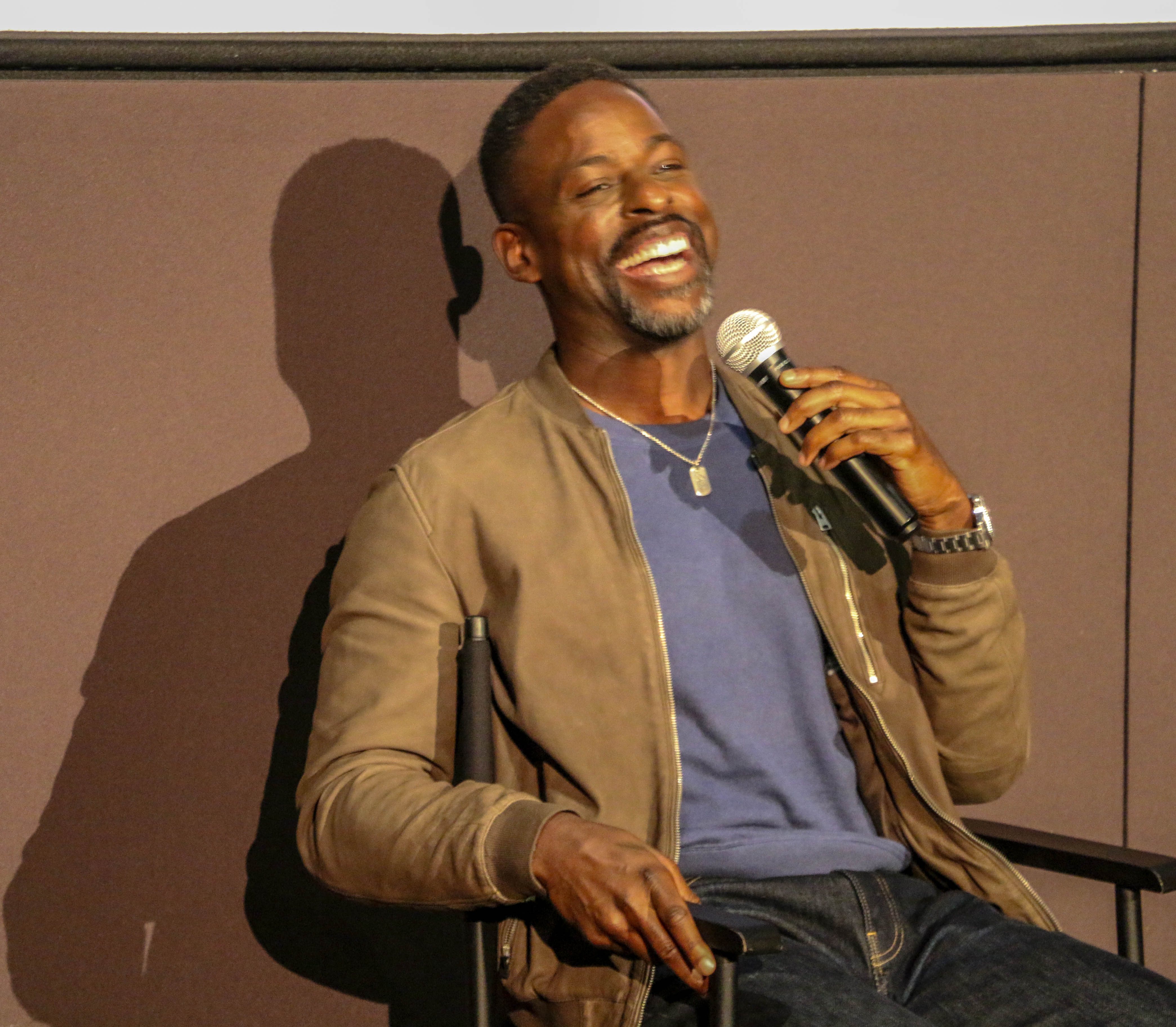
And his joy to be here was palpable.
“Oh my God,” he said. “I’m so happy to be here supporting this film.”
Cord Jefferson’s hybrid story is both a searing social satire and a tender family drama at once. It stars Jeffrey Wright as Monk, a hyper-intelligent professor and author whose writing career has gone cold because his writing is no longer considered Black enough for modern-day book buyers. Broke and disgusted by the White publishing industry’s penchant for lapping up cliched Black stories of crime, violence, police brutality and broken families – he calls it “poverty porn” – Monk uses a pen name to churn out a representative piece of trash – that publishers, of course, then want to pay him a fortune to unleash onto the buying public.
The film is smart and it’s funny – and it has aptly been called “a cinematic stick of dynamite.”
“Now, here’s the thing,” Brown said with a laugh. “Black folks by and large will be like, ‘That’s a funny movie.’ And White folks will be like, ‘I think that’s funny, but … can I laugh?’ And the answer is yes. You can get on the laugh train from the jump. There are some very dramatic things that happen, but it was important to us that there be a laugh right at the start. That is your permission to laugh.”
Wilmore bluntly asked Brown if the film has been made more for a White audience or a Black one. “Listen, it’s a business,” Brown said. “You ain’t going to make all your money with Black people going to the movie, straight up. So it’s made for everybody. I want everybody to come see this movie.”
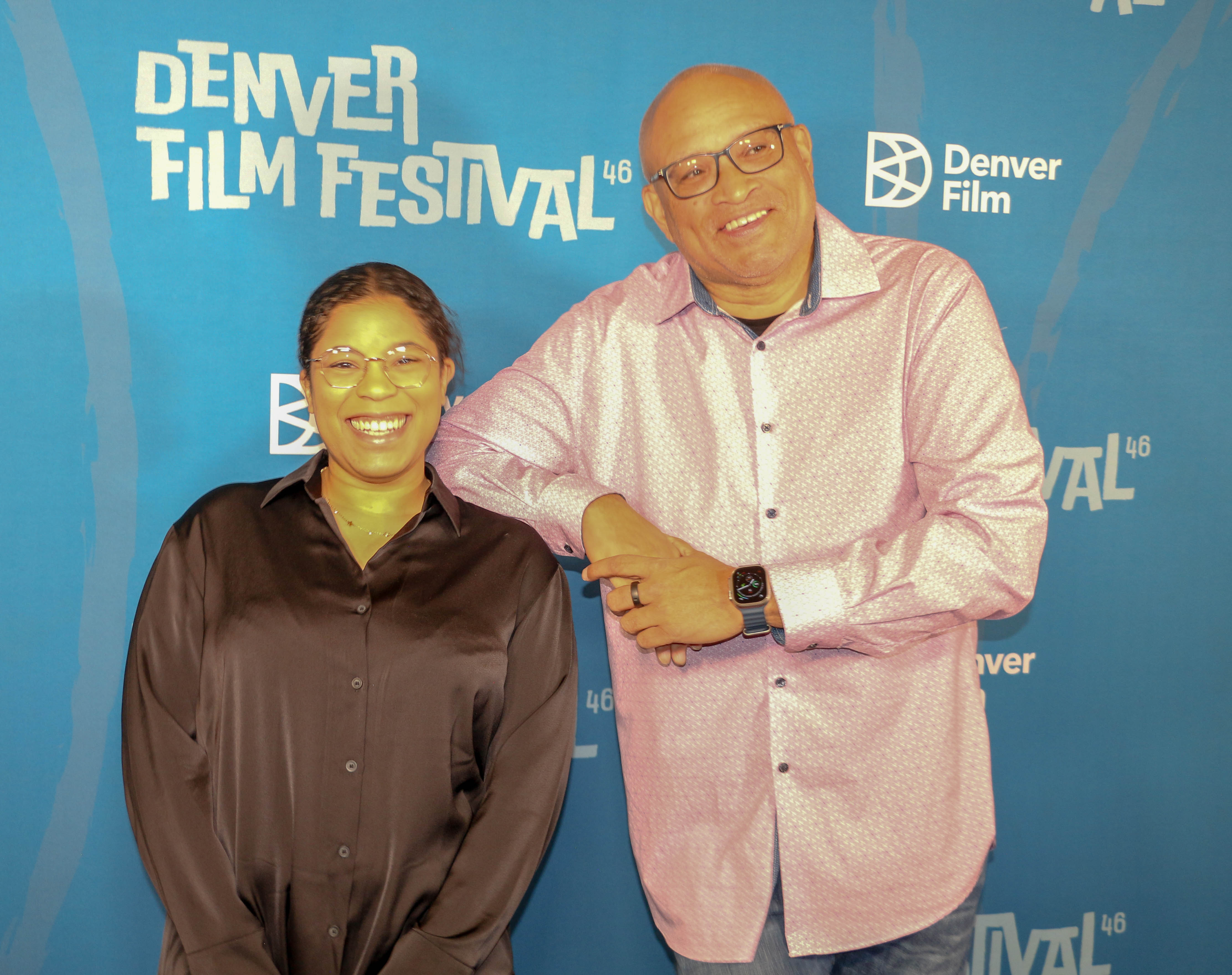
It was fun seeing Brown being interviewed by Wilmore, which I immediately recognized as “Brown and Brown” (because, you may remember, Wilmore famously played the diversity specialist Mr. Brown on “The Office.”)
Brown, as Wilmore described him, “is one of the preeminent dramatic actors of our day.” His intensity is legendary from “This is Us” to “Black Panther” to “The People V. O.J. Simpson.” Here, he plays seemingly way against type as Monk’s brother, Cliff, whose life has spun out since coming out to his wife and kids. Cliff turns out to be the comic engine for much of the film, and Brown says that’s actually closer to who he really is than his audiences typically see.

“I feel like there’s a ham in you, Sterling,” Wilmore said, which had Brown pounding on his armrest repeating the word, “Yes!”
“I’m a funny person. Very much so,” Brown insisted to cheers. “I’ve been trying to tell people for a long time.”
Brown, a married father of two and “a total soccer dad,” might not have seemed an obvious choice to play Cliff, especially at a time when some change-agents are calling for casting authenticity in all areas, including race, religion and sexual orientation.
“What I want more than anything is that when people see me, that they recognize me for a body of work that is bigger than any one character,” Brown told the audience. And afterward, elaborating to local journalist Larry Chillson, Brown said he took the part as an homage to a lesbian aunt who never came out to her parents while they were alive.
“There are Black people who grow up in the church with the love for God but have a fear of being accepted for who they are,” Brown said. “It is important for me that people are able to embrace and share the wholeness of who they are sooner rather than later. Because it’s only when you get to share the totality of you that real happiness is a possibility.”
And as for the Denver Film Festival’s acting award, Brown said, “I don’t do it for the acknowledgement. I do it so, hopefully, when people see what I do, they feel like they have been seen. That’s the goal. But this award also feels really good, so thank you very much.”

JOIN OR DIE!
Turns out perhaps the sweetest movie of the festival was also one of the more disquieting. “Join or Die” is an homage to Robert Putnam, whose groundbreaking 2000 book “Bowling Alone” chronicled a 40-year decline in Americans’ participation in clubs, which have historically offered not only social connection but, more tangibly, have been responsible for providing essential community services for two centuries.

Putnam argues that our waning interest in joining anything from the Elks Club to a bowling league is tangibly impoverishing both individual lives and the well-being of our communities. At the end of Saturday’s screening, enthusiastic co-director Pete Davis practically had the entire energized audience eager to sign up with the Odd Fellows.
“When you join something as serious as an activist group or as goofy as a pickleball league, all of that is helping to build up and bolster the foundations of our country’s democracy and institutional thriving,” Davis said.
But I don’t know. I am an anomaly in that I am not a joiner – yet I started a nonprofit that has helped hundreds of area artists pay down their medical bills. But I look at that as my civic duty as ingrained in me by my parents. I didn’t have to join a club to do it. I have an inherent misgiving when it comes to strength in numbers.
It doesn’t take too deep of a dive into American history to see that some “clubs” – an umbrella term that here includes everything from churches to political parties to hazing fraternities – often have divisive agendas that have contributed to social inequities and injustices. The film never even mentions terror cells or hate groups, or acknowledges that with membership often comes power that has been used to do some pretty terrible things to a whole lot of people.
But afterward, Davis did take on that question from Colorado Public Radio’s Nathan Heffel during a conversation with the audience.
“There is such a thing as bad clubs,” Davis said. “The Ku Klux Klan was a club. The Proud Boys are a club. What Bob (Putnam) always likes to say is social capital is a tool like a hammer. A hammer makes it easier to hit nails, but it also makes it easier to hit someone in the head. It’s what you decide to do with that power that matters. One of the messages of the movie is that if the only people who have power are the ones who get together in extremist cells, then only certain types of people have power. So if you want to challenge that power, you have to get together, too.”
MORE PHOTOS