







Aurora responders, citizen awarded for lifesaving actions after cardiac arrests
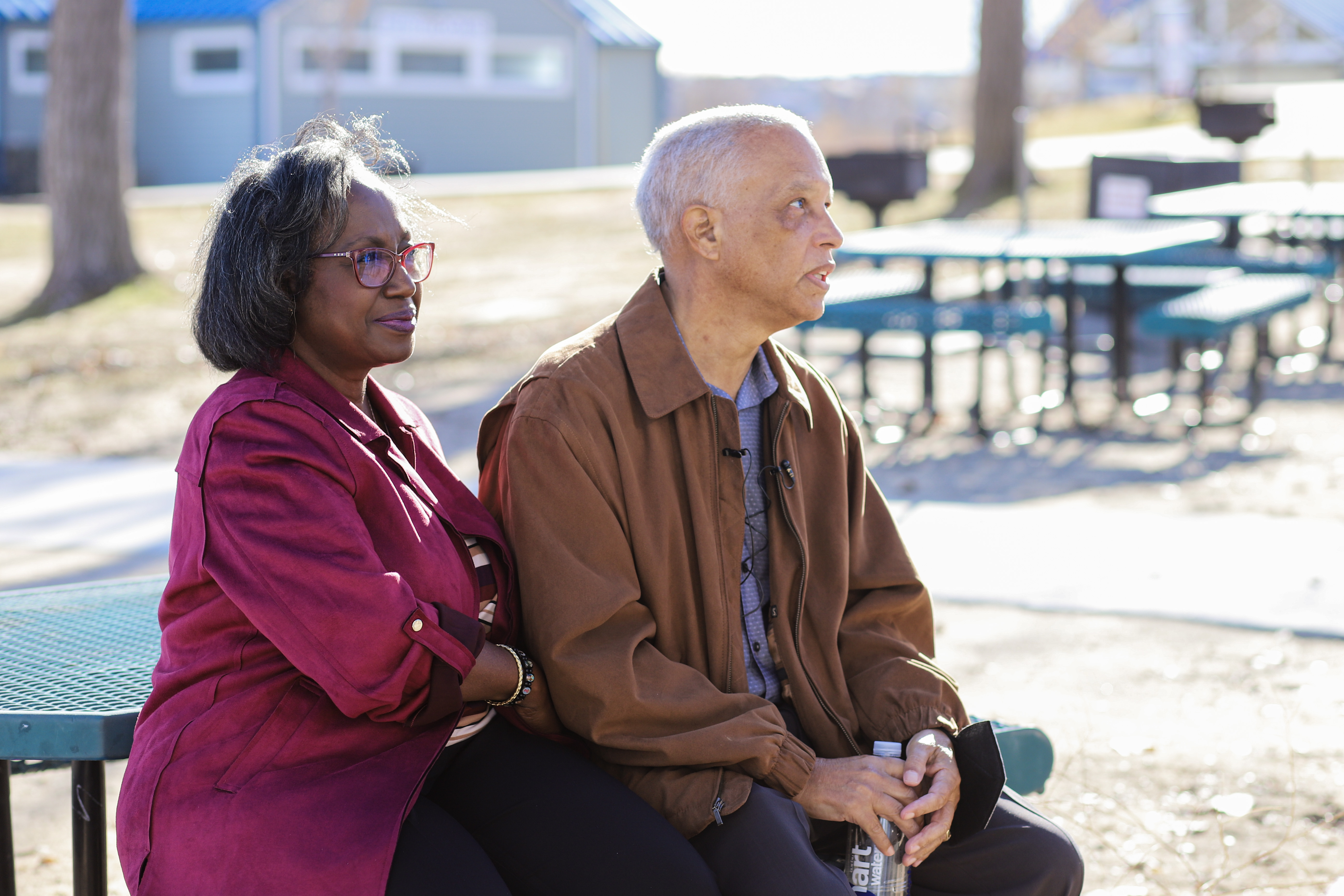
Dwayne Williams, 68, was finishing up an 8-mile bike ride he’d done a couple times a week for several years at Aurora Reservoir in late September when he had an unexpected heart attack.
“It was a normal day,” Williams said. “I took the bike back to our truck and tapped on the glass so my wife would open the truck and I could put the bike in. That’s the last thing I remember.”
Two park rangers responded quickly enough with an AED to save Williams’ life.
Aurora recognized two groups of responders and a citizen at a ceremony Wednesday with awards for saving the lives of Williams and another person.
Parks, Recreation and Open Space, Aurora Fire Rescue and ambulance service Falck Rocky Mountain received Phoenix Awards for lifesaving efforts Sept. 28 at Aurora Reservoir.
Phoenix Awards are given to Aurora employees and the city’s EMT partners who successfully resuscitate a patient who leaves the hospital neurologically intact.
The national cardiac arrest survival rate in 7-8 percent, according to city officials. Aurora’s cardiac arrest survival rate is nearly 20 percent.
When Williams collapsed, his wife, Kateri, who thought he’d just fallen, went to check on him and quickly realized something was wrong. She called 911 and started screaming for help.
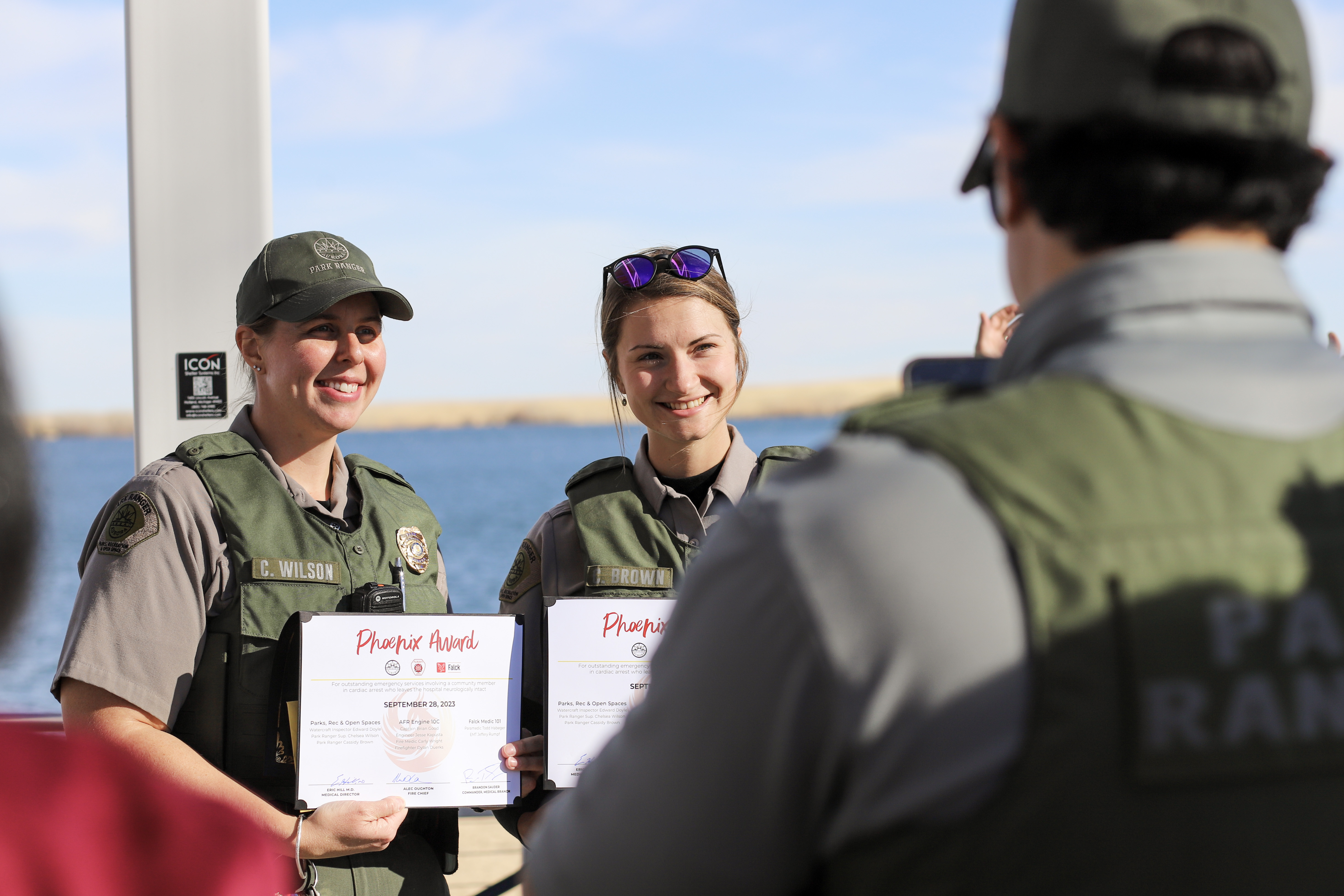
Park rangers Chelsea Wilson and Cassidy Brown quickly assisted Williams with a remote-access AED and CPR until EMTs and firefighters arrived on the scene and were able to save Williams’ life.
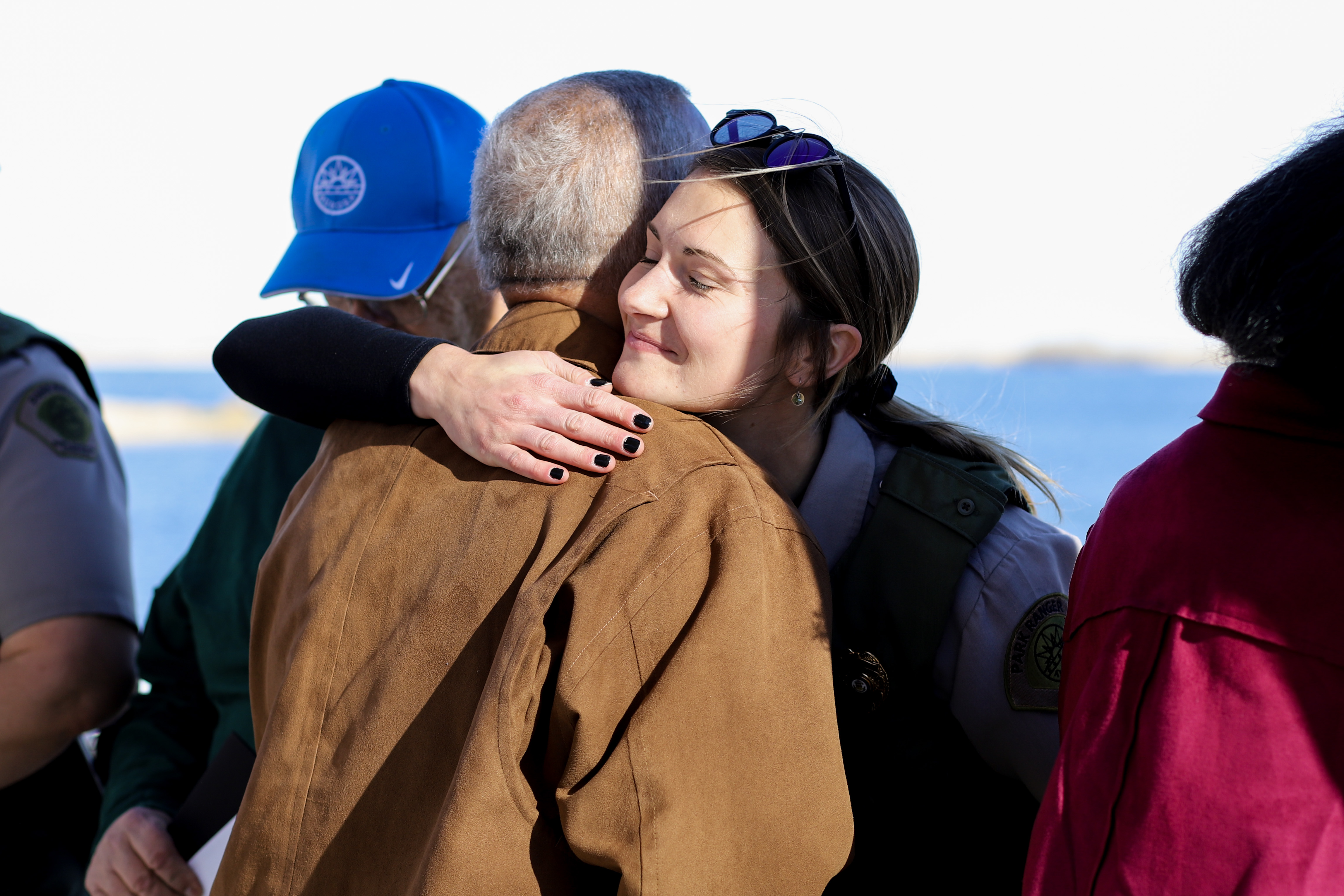
Williams and his wife shook the hands of Wilson, Brown and the responders who saved his life that day at Wednesday’s ceremony, exchanging hugs and words of thanks.
“It’s a great gift to be able to look in their faces and thank them for saving my husband’s life,” Williams said. “It’s hard to find the words, but this is a blessed opportunity.”
Williams has seen EMTs and AEDs around, but never expected to be the one needing them, he told The Denver Gazette. It made him realize how important it is for people to know CPR and have access to AEDs because it can happen to anyone, he said.
“I wouldn’t be here if it weren’t for them,” he said. “It’s something I can’t put into words and to actually put faces to the names is really special.”
A second incident happened several weeks prior.
Aurora resident Noella Gulick was working as a bartender at a local establishment when a man in the bar, Ralph Jones, went into cardiac arrest.
Gulick immediately called 911 and followed instructions from a 911 operator to perform chest compressions on Jones until responders arrived.
Gulick is the second Auroran ever to receive the Guardian Angel award for her lifesaving actions.
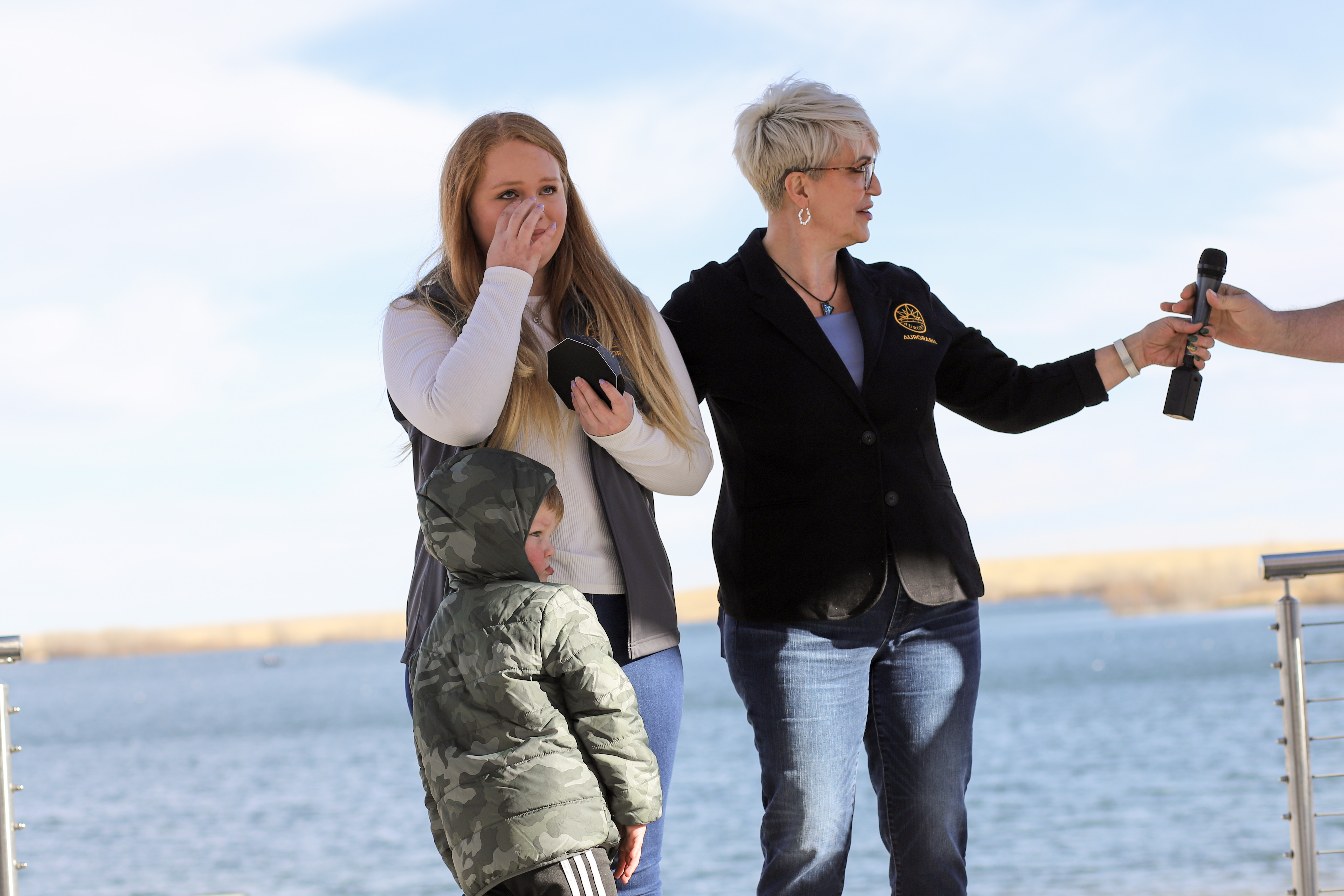
Miah Velasquez with Aurora 911 was on the other end of the call, relaying CPR instructions to Gulick.
Aurora 911 Director Tina Buneta said the two worked “seamlessly” to ensure Jones had a chance of survival that “would typically deny some odds.”
“Together, the two of these remarkable women worked hard to provide CPR instructions and execute those instructions,” Buneta said. “For us to be together today is a gift.”
Velasquez, who has been with Aurora 911 for three years, received the second of two Phoenix Awards given out at Wednesday’s ceremony.
It’s rare for Velasquez to hear about the outcomes of the calls she receives. Meeting all of the people involved in the early September incident was “really amazing,” she told The Denver Gazette.
With every minute that goes by after someone goes into cardiac arrest, they lose 10 percent of their likelihood of survival, according to Aurora Fire Chief Alec Oughton.
With the average response time of fire department crews being eight minutes, that’s an 80 percent loss of survival likelihood without someone intervening in advance, Oughton said.
“This is a testimony to the success of community members and partners all throughout the city being trained in CPR and having quick access to automatic defibrillators,” Oughton said. “These are all things in the chain of survival.”
Tyler Szabo with Aurora Fire said moments like those celebrated at Wednesday’s ceremony are what keep responders going.
“Obviously the whole point of our occupation is to serve people,” Szabo told The Denver Gazette. “All of the opportunities where we get to authentically help somebody in need are exactly what keeps us doing this job and gives us fulfillment.”
Seeing how people respond to their lifesaving actions makes it all more real, Szabo said. In the moment on an emergency scene, responders’ mindsets are very different than they are at a ceremony like that on Wednesday.
Connecting with the people whose lives they’ve impacted after the fact is a “really good experience,” Szabo said.