







Aurora panel highlights hate crime — and how to address it
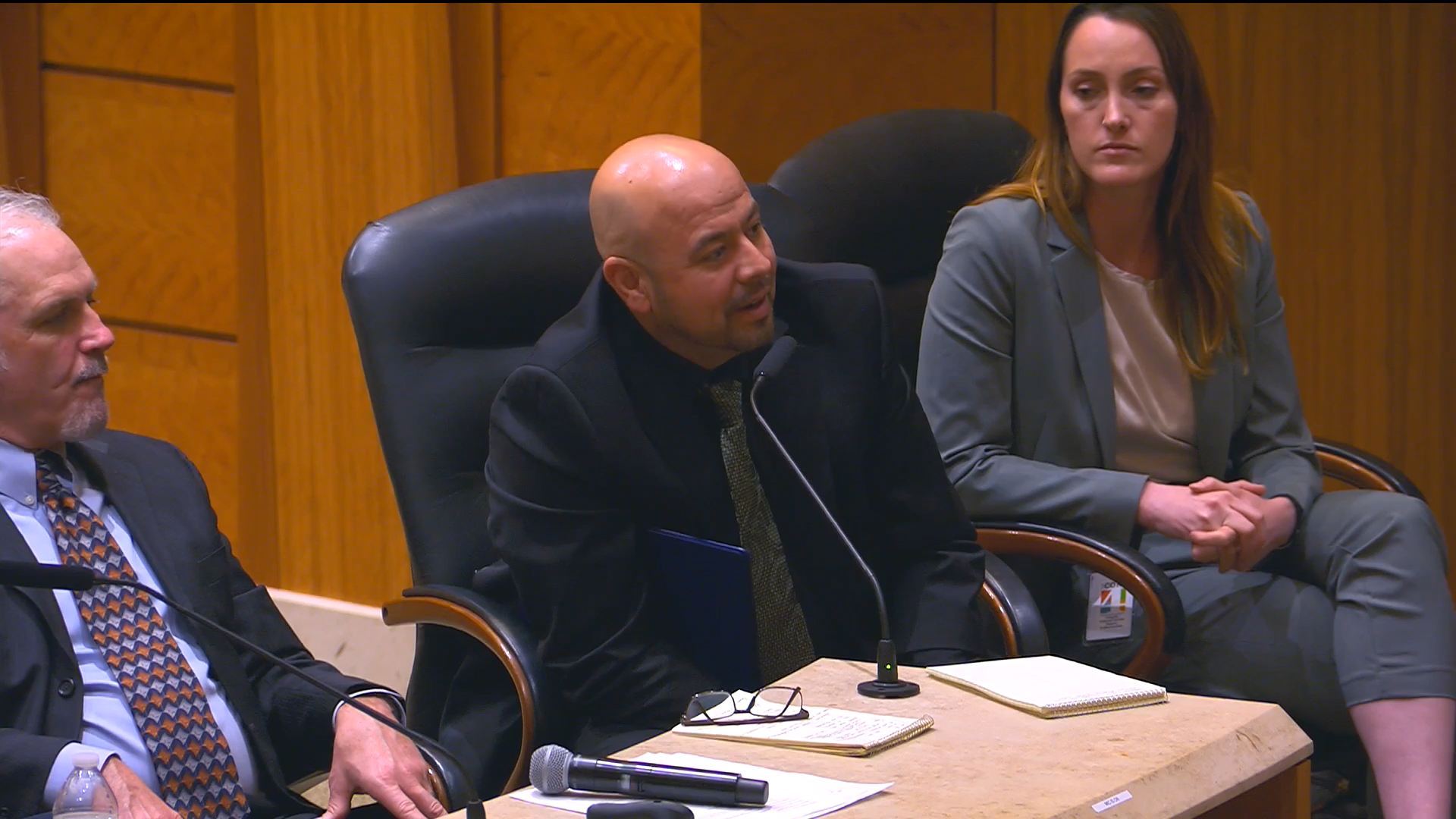
Aurora authorities are seeing an uptick in hate crime.
Since developing a bias-motivated crime investigator position in the Aurora Police Department in September 2021, the city received 24 reports of hate crime through December of that year.
In 2022, the city received 41 reports of hate crimes.
But from January of this year until now, the department already received 46 reported hate crimes, according to police agent James Salazar.
Salazar noted the hate crime statistics during a panel on Thursday that explored hate crime and how to combat it.
The panelists, who included Colorado Attorney General Phil Weiser, urged the public to stand against discrimination and prejudice.
Weiser began the conversation with a message about inclusion, saying the United States was founded on the ethos of e pluribus unum — “out of many, we are one.”
“Aurora, as an exemplar of this spirit, welcomes and includes everyone,” Weiser said. “It’s important that everyone feel welcome and live without fear of hate or discrimination.”
Community leader Maisha Fields guided the forum, which Aurora’s Office of Diversity, Equity and Inclusion hosted. In addition to Weiser, the panelists included Sgt. James March of the Aurora Police Department, NAACP president Omar Montgomery, Chief Deputy District Attorney Brian Sugioka, Sona Capital CEO Dilpreet Jammu, police agent James Salazar, Crisis Intervention Program Manager Courtney Tassin and Tim Wagner, the lead officer for the Targeted Violence Prevention program.
Fields began by asking audience members to turn to each other and say, “I love you and I care about you.”
Aurora is 3rd largest city in country for resettlement, Fields noted.
Aurora city manager Jason Batchelor called diversity the city’s “greatest community asset.”
“The need to stand together against hatred, discrimination and prejudice is more important than ever,” Batchelor said.
The panelists answered questions about various facets of hate crime prevention, including what people should do if they believe they have been a victim of a hate crime and how hate crime reports are handled legally.
March suggested three things as a response to a hate crime: Call 911, email [email protected] or call the city’s hate tip line at 303-739-1661.
There are two specific state statutes that relate to hate crimes, according to Sugioka. Both statutes elevate the potential penalties for existing crimes.
“They take crimes that have been in the books for some time and simply make the potential punishments greater if that crime was motivated in whole or in part by bias or hatred towards someone in one of the protected groups,” Sugioka said.
One of the two statues is called bias-motivated harassment, Sugioka said. The statue takes the crime of harassment and makes the potential punishment worse if it can be proven that the crime was motivated by hatred due to actual or perceived race, religion, ancestry, color, national origin, physical or mental disability or sexual orientation.
The second statute, which deals with bias-motivated crime, strengthens the potential punishments for assaulting someone, threatening to do so or threatening damage to property if the same can be proven.
The state has a specific hate crime prosecutor in Joel Zink, Sugioka said.
Jammu, CEO of Sona Capital and member of Hate Free Colorado, said hate crimes have a “ripple effect” on everything in a community and are more mentally challenging and complex than other types of crime.
“If someone holds a knife to me and says, ‘Give me all your money,’ I can rationalize that. “A hate crime is a message crime that says, ‘You are less than.’ So, it has a major impact in terms of how society functions when it says you are less than for your religion, you are less than for who you love, you are less than for your identity of any sort,” Jammu said.
Montgomery said a big barrier to reporting hate crimes is an uncertainty in the beliefs of the officer taking the report, he said.
In many cases he’s seen in the Black community, people are hesitant to report hate crimes because they are afraid the officer taking the report won’t agree that racism exists, Montgomery said.
Several panelists agreed that the biggest factor in diminishing hate crimes and making them easier to report is education.
When Sugioka was in high school, he said, slurs that are now seen as unacceptable circulated among kids and were viewed as much less offensive.
Due to wider spread education on those words, that has changed, he said.
While educators play a huge role in hate rhetoric, it also extends beyond classrooms, Montgomery said. Everybody has a role to play in prevention, he said.
“We’re all educators, it’s not just the teachers in the classroom or the people who work in school districts,” Montgomery said. “Youth watch us every single day, how we sit in restaurants, how we treat staff, how we treat each other, how we engage each other.”
Jammu echoed the statement.
“It’s like traffic. If you’re complaining about traffic, you have to remember that you are traffic,” Jammu said. “The same thing is true of society. You are society.”
Salazar, the police agent, walked through how the police department responds to a hate crime report. He said officers investigate to determine whether they have enough evidence to bring it to the district attorney’s office.
Noting the 22 instances of bias-motivated crime or harassment his office pursued last year, Sugioka said that is “nowhere near” the total number the district attorney prosecuted, in which racial or ethnic bias played a role.