







Opposition to Proposition HH was widespread through Colorado | Cronin and Loevy
Proposition HH, which would have lowered property taxes statewide and spent TABOR tax refund money on public K-12 education, went down to a major defeat at the hands of Colorado voters a few weeks ago.
Supported by a Democratic governor and unanimously adopted by all the Democrats in the state Senate and House, the omnibus revenue-raising measure failed to win in some of the more strongly Democratic areas of the state.
Or put it this way: Generating a tidal wave of “No” votes, HH tore county after county in Colorado from its normal Democratic moorings and set them adrift on a sea of conservative tax policy and anti-government spending on public education.
Here is a regional analysis:
Denver metro — In recent decades, the area has been voting strongly Democratic. Not this time. HH lost by a vote of 45% yes to 55% no. Only two metro-area counties, Boulder (59% yes) and Denver (58% yes), supported HH.
Even that is bad news for the Democrats. In a normal election, Boulder and Denver tend to vote at the level of 60% to 70% or more Democratic, not 50% to 60% Democratic.
The big losses for the Democrats in Denver metro were the large suburban counties surrounding the city. These populous counties have been the major reason for Colorado’s recent shift from being a mainly Republican voting state to a mainly Democratic voting state.
But on HH, Arapahoe County voted 56% no, Broomfield County 56% no, Jefferson County 60% no, and Adams County 61% no. Their voting no was the main driver in the outcome of the election.
For the record, HH lost Denver metro by about 100,000 votes.
Front Range not including Denver metro — The heavily populated corridor that runs from Pueblo in the south through Colorado Springs and Denver to Greeley and Fort Collins to the north.
Besides Denver metro, there are five major counties. Two of those, El Paso and Weld, are among the most Republican counties in the state. El Paso County, which contains Colorado Springs, voted 67% no. El Paso County also had the largest victory margin for the no vote of any Colorado county, some 68,000 votes.
Weld County, where Greeley is the county seat, went 71% no.
Pueblo County, with its historic steel mill and union labor, used to vote Democratic, but in recent years has been leaning Republican. It voted 59% no. Teller County (Cripple Creek) hit 68% no.
Larimer County (Fort Collins) used to be Republican but, as the home of Colorado State University, has been trending Democratic in recent years. In terms of Proposition HH, however, it voted 58% no.
Taken together, the five counties voted 65% no and sported a pro-no victory margin of about 130,000 votes.
Ski resort counties — We have long been interested in the ski resort counties high in the Rockies. Mostly solidly Republican 50 years ago, they have become liberal and progressive and strongly Democratic in recent times. Joining with the Denver metro area, these counties have become an important component of the recent shift in Colorado from Republican to Democratic.
Please note: We include with the ski resort counties those counties that have popular historic steam railroad trains (the Durango and Silverton narrow gauge railroad in La Plata and San Juan counties) or have become summer vacation spots for Texans (the city of Creed in Mineral County).
The number of ski resort counties has grown to 14, and they cast about 104,000 votes in this election, close to the same number as Adams County in the Denver area with its 101,000 or so total votes.
The ski resort counties drifted away from their recent Democratic bias and averaged 55% no on HH. Only three of the 14 counties voted yes. Pitkin County, home of the Aspen ski resort, voted 60% yes. San Miguel County, which has the Telluride ski resort, tallied 61% yes. Lightly populated San Juan County, the Silverton stop on the narrow-gauge steam railroad, came in at 55% yes.
We were surprised at the well-known and upscale counties that voted no on HH. Eagle County (Vail ski resort) went 56% no, Routt County (Steamboat Springs ski resort) 54% no, and Summit County (Breckenridge, Keystone ski resorts) 60% no.
Southern Colorado — With its deep Hispanic roots and culture, southern Colorado has traditionally been seen as pro-Democratic Party. Apparently, that Democratic bias does not apply to taxation and education matters. Southern Colorado voted 63% no on HH. Its most populous county, Alamosa County, went 67% no.
Eastern Plains — Stretching from the Front Range to the Nebraska, Kansas and Oklahoma borders, the Eastern Plains consist of large amounts of high prairie, much of it devoted to agriculture. There are 15 counties involved but with relatively small populations. The Eastern Plains are traditionally the most Republican and conservative part of Colorado.
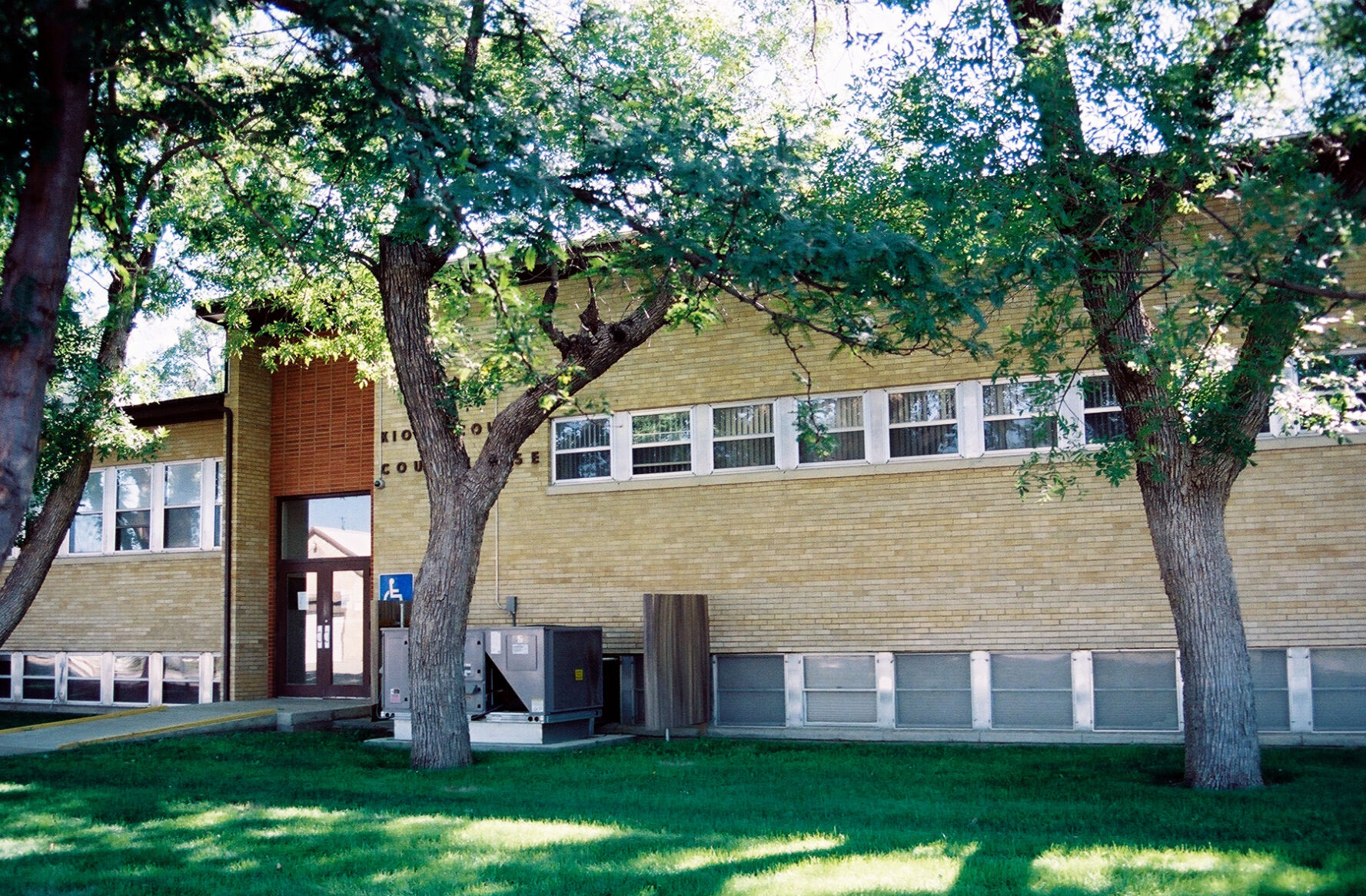
As expected, the Eastern Plains cast the highest regional percentage no vote on HH — 76% no. The 500 or so voters in Kiowa County, located on the Kansas border with the county seat at Eads, cast the highest single-county vote against HH — 85%.
Western Slope counties without ski resorts — There are eight counties on the Western Slope of the Colorado Rockies that contain no ski resorts and thus are mainly rural and agricultural in character. Similar to the Eastern Plains counties, they are conservative and Republican. They turned down HH by 68%. The most populous county in the group, Mesa County, with Grand Junction as the county seat, went 69% no.
Eastern mountains — These counties are in the Rocky Mountains but are located on the Eastern Slope of the Continental Divide. They are lightly populated and have some agriculture, mainly sheep and cattle ranching. Conservative and Republican, they voted 69% no on HH. For example, Fremont County, which boasts the Royal Gorge and the Cañon City state penitentiary, cast its ballots 72% no.
To sum up, the voter revolt against Proposition HH was widespread in Colorado geographically. Only Boulder County, Denver County and a few of the more hip and upscale ski resort counties supported it. The ruling Democratic Party in Colorado will have to go back to the drawing board if it wants to increase badly needed tax revenues for Colorado state and local governments.
Three reasons help explain the defeat of HH: 1) It was a poorly worded and confusing ballot measure; 2) Coloradans like TABOR refunds; and 3) Gov. Jared Polis, who is generally popular, seemed to be trying to sneak this through but failed to make his case.