As Aurora shifts funding priority to life-saving programs, nonprofits scramble to find revenue sources
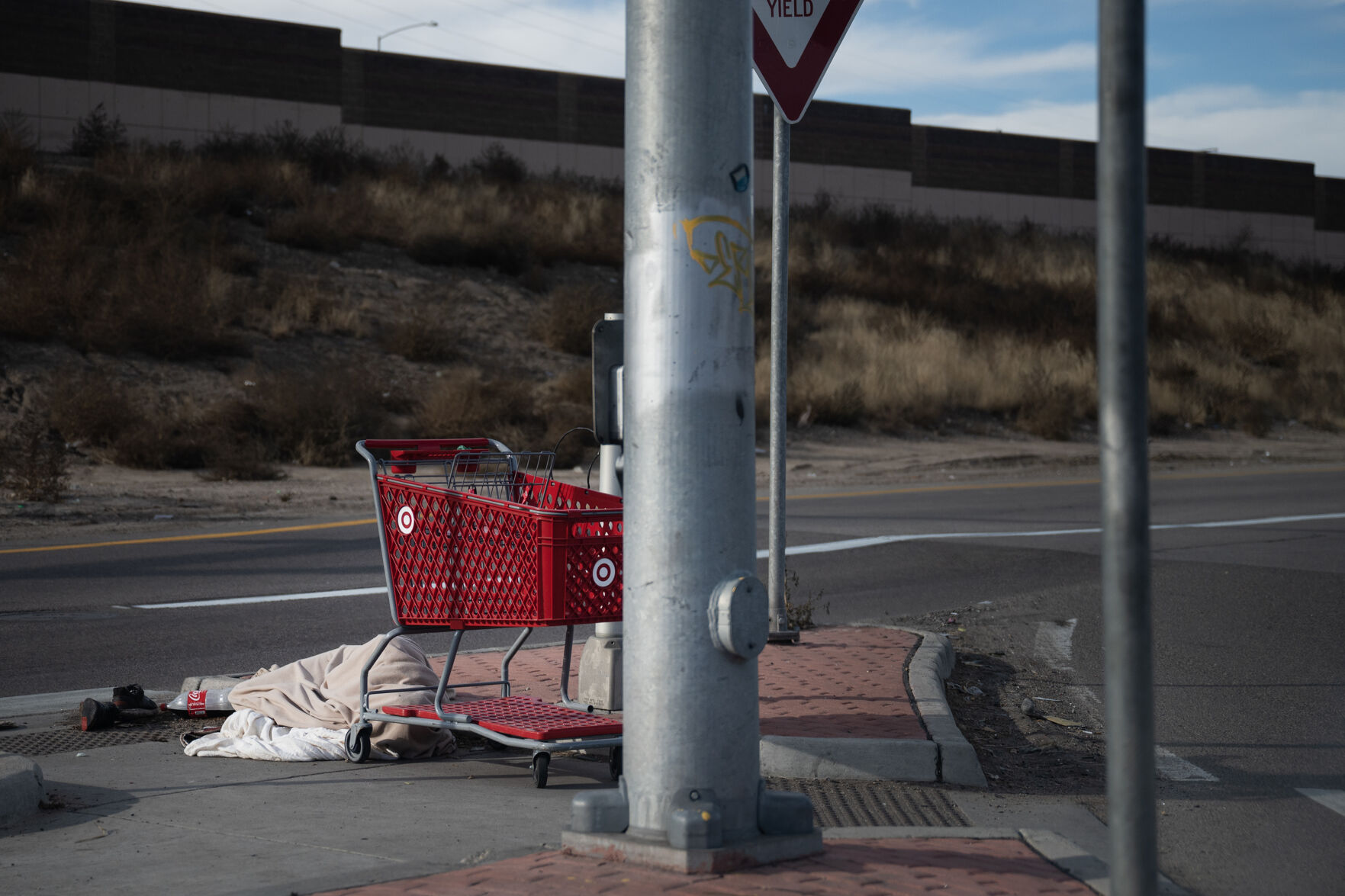
Several nonprofits that provide services to people in Aurora face cuts in the city’s proposed budget for next year following a dip in the local government’s revenues.
But they’re luckier than the groups that offer homelessness programs whose funding was completely zeroed out, a move that reflects a shift in the city’s priorities. Notably, some of the money would instead go to behavioral and recovery programs, as well as domestic violence services.
In a way, the city’s direction undergirds its leaders’ more conservative leanings, both socially and fiscally. Under pressure from a dwindling revenue source, city staffers recommended cutting funding — rather than diverting resources from other places or raising fees or taxes to keep the nonprofits whole.
It’s a familiar debate that governments annually undergo, when officials figure out how much tax revenue their coffers hold and approve spending plans for the next year. That debate is typically more pronounced at the state Capitol, where creating a new program or allocating resources for an industry almost always means lawmakers are constantly under pressure to continue the funding, often in the scores of millions of dollars.
Fiscally conservative policymakers describe the arrangement as creating — and then feeding — a “constituency.” Supporters of the programs, on the other hand, argue that the spending directly helps Coloradans, and lawmakers have an obligation to sustain the spending for those programs.
Such a scenario is playing out in Aurora, the second most populous city in metro Denver.
Councilmember Alison Coombs, who is pushing to sustain funding for the nonprofits, argued that, if the city wants the groups to provide the same amount of work, they need to receive the same or more money from Aurora.
“If we say to Salvation Army that we’re not going to provide them with level funding, then they’re not going to be able to provide us with the same level of service,” Coombs said.
Councilmember Danielle Jurinsky countered that nonprofits should not assume they would automatically get city money — or the same amount — year to year.
“This is not just a guaranteed handout,” Jurinsky said.
What’s driving the funding cuts?
Emma Knight, manager of Aurora’s homelessness and behavioral services, said funding levels, specifically from the marijuana tax revenue, are lower this year than they were going into 2023. Officials also cited depletion of COVID funding.
In particular, the city’s homelessness division, which has about $2 million available to spend, reviewed 25 applications from nonprofit and faith-based organizations and public agencies whose funding requests added up to more than $5 million.
Funding for 2024 comes from the Emergency Solutions Grant (ESG) and the Home Tenant-Based Rental Assistance Grant (Home-TBRA), both federal programs, as well as from two local sources — the marijuana sales tax revenue grant and the Public Safety Assistance Grant, formerly known as NEXUS.
The marijuana grant allocates $1.4 million to homelessness, while ESG earmarks just over $200,000. Meanwhile, the Public Safety Assistance Grant offers $140,000 and the Home-TBRA grant adds $200,000.
Homelessness division officials recommended the money go to the following:
Over $900,000 to Mile High Behavioral Healthcare
Almost $300,000 to Aurora Housing Authority
$190,000 to Restoration Christian Ministries
$180,000 to the Salvation Army
$120,000 to Aurora Mental Health and Recovery
$85,000 to Gateway Domestic Violence
$75,000 to Colorado Safe Parking Initiative
$17,000 to SungateKids
City staffers recommended zero dollars for Bridge House, Family Tree or the Colorado Coalition for the Homeless.
Essential, life-saving programs only
Put simply, nonprofits are asking for more money than what’s available to give.
In response, a city official said Aurora’s funding priority will focus on essential “life-saving” services.
Knight, the city officer, said many of the decisions to fund, or not fund, organizations went back to whether a program supports that priority.
The revenue shortfall also means some organizations that would still get city money next year will see cuts to their allocations.
Karmen Carter, the executive director for Gateway Domestic Violence Services — which is slated to receive $85,000 from Aurora — said city funding is “absolutely critical” to continue providing emergency shelter to domestic violence victims.
Gateway provides several resources, including a crisis line, residential programs, an emergency shelter, individual and group counseling, an extended stay shelter and court advocacy programs. Money from the city, she said, supports staff salaries, the emergency shelter and some operating costs for things, such as food and utilities.
People who are victims of domestic violence are often forced into choosing between living in a physically and emotionally abusive environment and being homeless, Carter said, adding that a large percentage of mothers and children who find themselves homeless arose out of a domestic violence situation.
When Gateway faces funding decreases, it creates an “all hands on deck” situation, as the nonprofit scrambles to figure out how to make up the lost dollars. Gateway’s shelters are 40 years old and “very small capacity,” said Carter, who noted that the needs are growing.
The nonprofit has begun working on a capital campaign project to build a larger emergency shelter and larger transitional shelter.
“It’s interesting to be looking at doing that when funding is getting cut,” Carter said. “But we have to because this is a need. Hopefully we will get support from the city and individuals.”
Aurora, whose officials have been taking notes from strategies like those used in Texas and Colorado Springs, is borrowing from “work-first” and “treatment-first” models by providing anyone in need with emergency services, but offering more robust services to people who are participating in the workforce and receiving any behavioral health treatment they may need.
Aurora’s homeless population stood at 572, down from 612 the year before, according to a point-in-time count that offers a single night’s snapshot of the crisis back in January.
By comparison, Denver saw the biggest increase in the number of homeless people — 5,818 as of January, up from 4,794 last year. Meanwhile, El Paso County saw a 17 percent drop in its homeless population — from a high of 1,562 in 2019 to 1,302 in January.
Lost revenue means less help for children
Diana Goldberg, the executive director of SungateKids, which has been recommended to get $17,000 from the city in 2024, expressed similar stress about its financial future.
SungateKids provides support to children who have been victims of sexual abuse or who have witnessed violent crimes, Goldberg said. Oftentimes, kids with such trauma end up homeless, she said.
Among the services SungateKids provides are forensic interviewing, family support programming, prevention programs in schools that educate kids about reporting abuse incidents, and long-term support, meaning the group will re-open case files on children who experience trauma later in life and need support even after their case has been closed.
A bulk of SungateKids’ cases come from Aurora, and the organization provides “essential services that the city needs,” Goldberg said.
“For the city council to make statements like ‘you just have to get donors to give more’ is unrealistic at best,” Goldberg said. “The city pays its employees for services and pays police and fire and EMTs and such, and they should be supporting the nonprofits who are doing the essential work that keeps the city as vibrant and healthy as it is and hopefully healthier.”
Unlike nonprofits that charge for services, SungateKids does not, making it particularly tricky for the group when its funding sources get cut, she said, adding that SungateKids is seeing an “unprecedented” level of severity in cases and it’s already being asked to “do more with less.”
Aurora’s money for SungateKids goes directly to forensic interviews and “family support coordination,” which is victim advocacy, and such services won’t stop or decline due to the decrease in city funding, she said.
“We’ve been around for 30 years and we’ve never turned a kid away, so we’re not going to stop that now,” Goldberg said. “We’re going to have to figure something out, but we’re very worried about it.”
A good portion of homeless people, particularly kids, are couch surfing, which puts them at a “much higher” risk of abuse because they’re living in homes with people they don’t necessarily know and are generally living in higher-risk situations, Goldberg said.
Additionally, familial abuse can often lead to a breadwinner leaving the home, putting the rest of the household at financial risk.
“We can’t just say it’s enough to have the kid disclose and then wash our hands, we have to make sure that when those kids walk out that door, they’re going to be safe and being safe means we know they have a roof over their head,” Goldberg said.
SungateKids, and the other homeless service providers working with the city, are just as important as any other kind of infrastructure for a vibrant city, Goldberg said.
“Especially when you’re dealing with children, that’s an investment in the city’s future and I would encourage the city to really think about it that way,” she said.
Help for the ‘newly homeless’ sleeping in cars
Terrell Curtis, the executive director for Colorado Safe Parking Initiative, said money the group receives from the city goes toward living wages for staff and hotel vouchers for people living out of their vehicles.
Colorado Safe Parking Initiative offers this population a place to park overnight, where they won’t face harassment and where they have access to services, Curtis said.
Along with providing safe spaces for parking, the nonprofit provides case management and services, such as for obtaining identification documents, navigating housing and enrolling in Medicaid or accessing other health services.
“About 75% of the people we serve are newly homeless … this is a new experience for them so they don’t quite know the systems and providers and resources that are out there,” Curtis said. “Having that case management is really, really critical.”
For Colorado Safe Parking Initiative, which is a relatively young organization, government funding is vital, she said.
Mental health nonprofit vows to sustain services
Erin Ralston, the clinical director at Aurora Mental Health and Recovery, which is recommended to get $120,000 from the city, said it is going to do everything it can to make up for the decrease in funding without cutting services.
Aurora Mental Health engages in outreach to help homeless people connect with its resources. It offers drop-in programs, outpatient care, specialty teams that cover persistent mental illness, a crisis center, refugee-specific program, among other resources as part of its homeless services.
It also works with people in the transition to permanent housing, which Ralston said can be challenging for people who have been homeless for a long time.
The city’s partnership with Aurora Mental Health ensures it can keep providing services.
“Of course, we’re going to do everything we can to figure out how to make up any differences because we don’t want there to be less services in place for a vulnerable population that ultimately needs more services than what we’re already able to offer,” Ralston said. “(The cut in funding) feels short-sighted because, ultimately, the funding is being cut from programs that are preventative programs.”
Aurora Mental Health is always fundraising, said Ralston, who added that there is a limited amount of grants and fundraising opportunities, and the process of getting new revenue sources often takes months to a year.
Organizations found out about their funding levels for 2024 in November, so the ability to make up for the difference quickly “doesn’t really exist,” she said.
Money from the city flows to staff salaries and some resources for outreach work, Ralston said.
Meanwhile, Anna Miller, the director of development and public relations at Mile High Behavioral Healthcare (MHBHC) said the decrease in Aurora money has a “pretty large impact” on its programs.
“We do realize that all of the agencies were affected, not just us, so we’ll really focus on fundraising and grant writing for those programs to make up the difference,” Miller said.
The city’s funding for the nonprofit goes mostly toward supplies and building upkeep for homeless shelters, Miller said.
“We want to continue partnering with the city of Aurora and serving people experiencing homelessness,” Miller said. “We’re very proficient in that field … we’ll try every way that we can to not cut services, and that’s all going to be dependent on additional funding.”
Editor’s note: This story has been modified to clarify that Aurora officials have taken notes of homeless strategies used in Texas, as well as in Colorado Springs.