Colorado School of Mines recruiting changes paying off in recent playoff runs
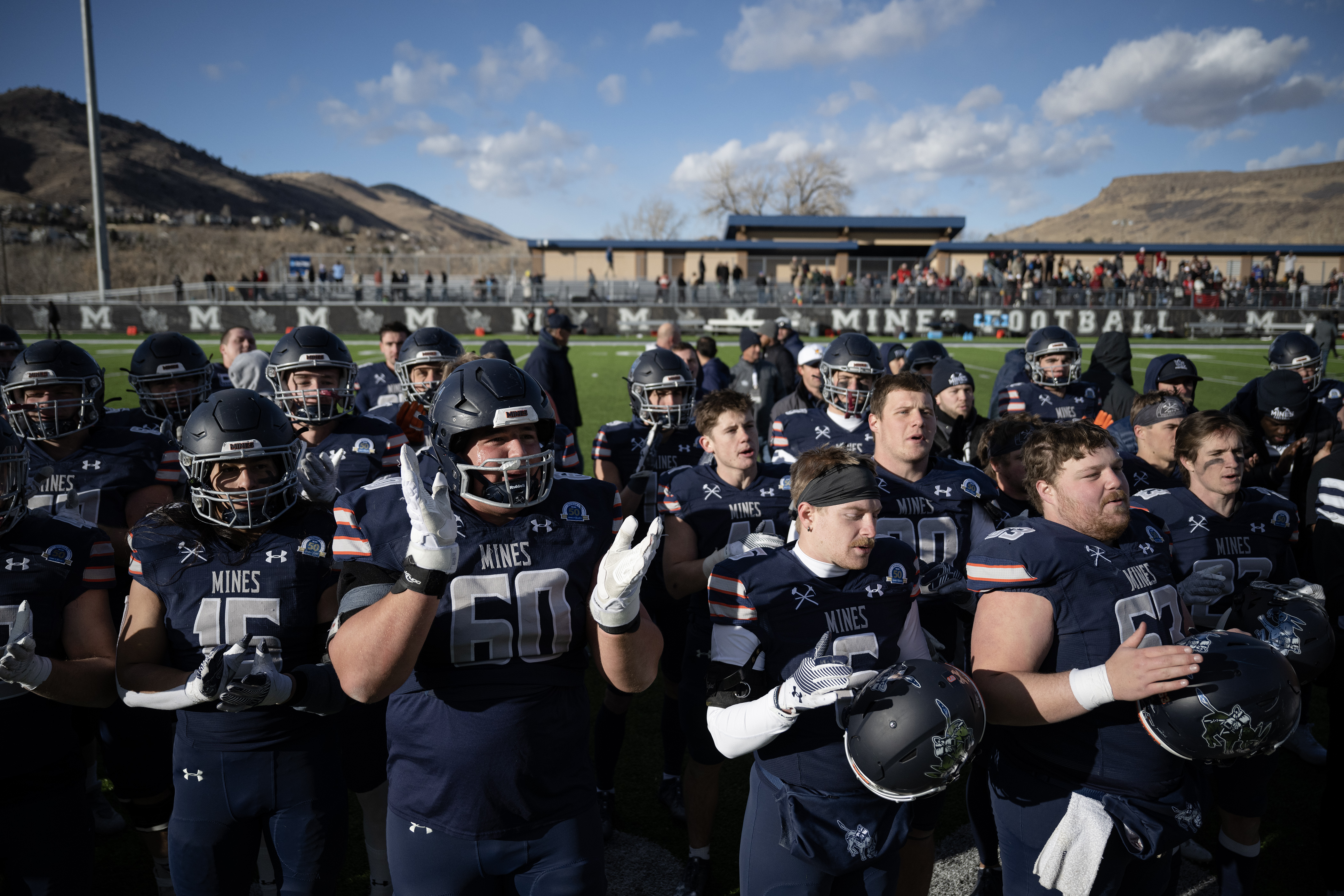
Ryan Diedrick had no idea his thesis could be the start of a new era for Colorado School of Mines football, but he knew his research would be valuable, even if that value was singularly tied to his master’s degree.
He sat and charted data about the 2017 recruiting class, and where the recruiting process may have fallen short. Departures from the program and bad fits ran rampant with the class and longtime coach Gregg Brandon took a rare loss on a recruiting class.
That class set the path for three computer systems to enter Mines’ recruiting landscape, and the Orediggers have seen nothing but success since. Finding a “Mines Guy” is the equivalent of a needle in a haystack — the academic requirements of the school take out at least 80 percent of the player pool right away.
But Diedrick, who turned his thesis findings into a spot as the team’s receivers coach and recruiting coordinator, is finding ways to make it easier. The team’s success, including its first-ever national title game appearance last season, is a direct result.
Changing the definition of a Mines Guy
Colorado School of Mines needed a coach like Brandon, and the program needed a new avenue to success.
The hard-nosed veteran coach, who retired in 2021, brought a fighting spirit to the team after Bob Stitt brought the firepower on offense in his decade-plus leading the Orediggers. Brandon had plenty of knowledge about moving the ball too, but he knew there was a problem with the way the program found players.
Mines is tucked under the shadow of Golden’s mountain ranges. The school is largely hidden for those unfamiliar with the town, and the families that he tried to recruit were not being given the full scope of what the program could do for their child’s future. The best solution: get recruits into Golden.
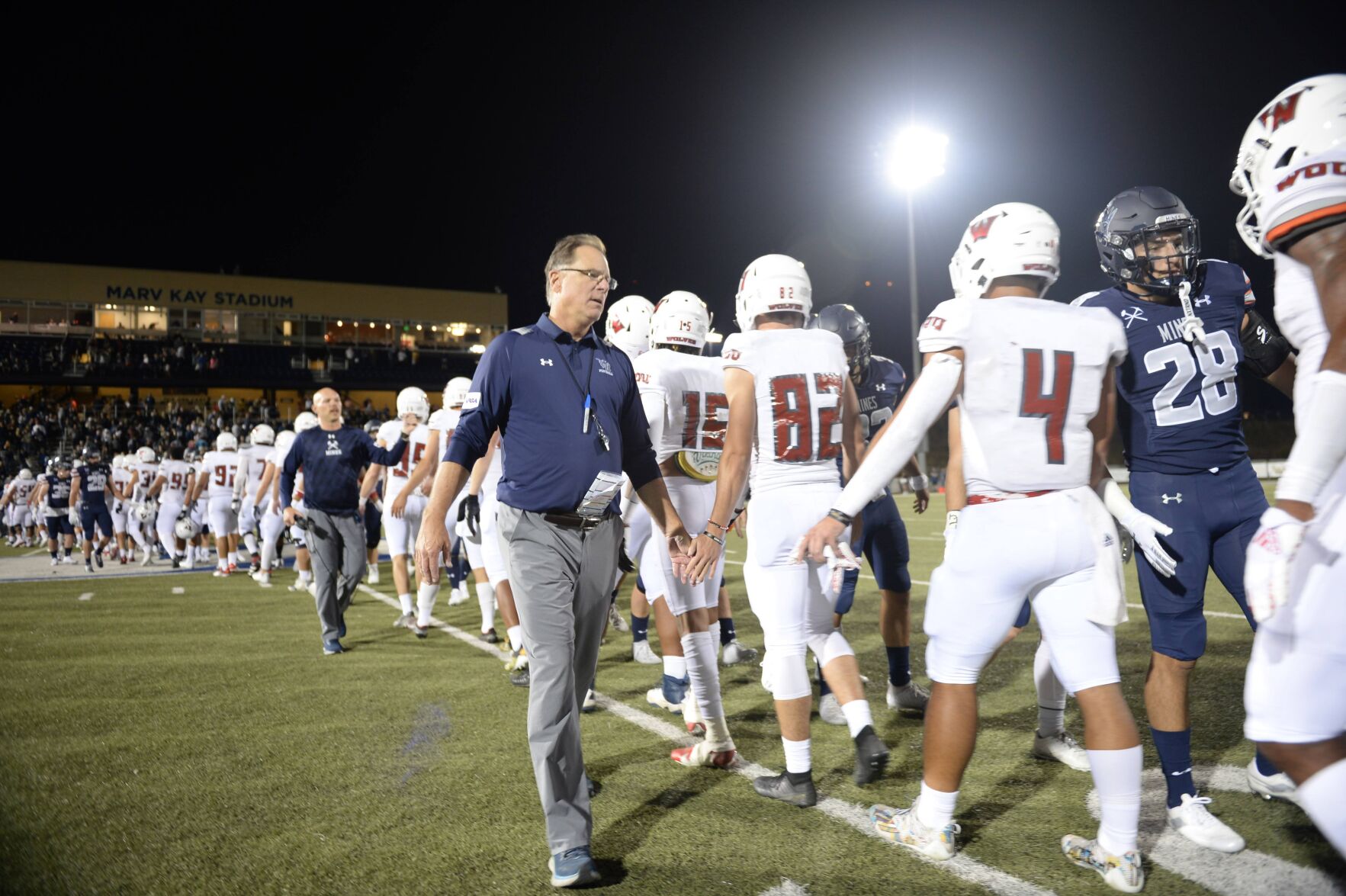
Brandon wanted to show them Marv Kay Stadium. It is one of the country’s best Division II football facilities and regularly host sellouts, especially when the Orediggers are rolling. He wanted to show them the “M” cast off Mt. Zion and the downtown walking areas with restaurants like Woody’s where football players meet regularly.
And all along, he was looking for the right characteristics from them, too. The 2017 recruiting class showed there was not enough being done to ensure an athlete could succeed academically. He switched the focus around.
“I had to learn the landscape as far as the academics,” Brandon said. “I had been at Northwestern, which is a tough academic school, so I understood you can’t recruit everybody to a place like that. I learned after I started recruiting that we needed to find guys that had a great chance to make it in school here, as well as be great football players.”
Enter Diedrick’s data.
He designed three models for recruiting — one to judge potential academic success; one to measure how a player fits in the team’s scheme and even a model to judge how a player measures up to past and present position groups. Once they find a fit through the models, he gets circled, and a recruiter goes out. The team wants to see players in person, even if many programs have resorted to using film and other digital means to skip the step altogether.
The models have allowed the team to set up action plans for incoming freshman to succeed, as well as find optimal study pairings when needed.
On top of finding players who have the traits to succeed academically, Brandon also changed his focus to loading up the program with defensive standouts. The Orediggers offenses had lit up scoreboards but failed to turn the points into deep postseason runs.
Now the defensive line alone goes seven-to-eight players deep with each rotating throughout the game to stay fresh.
It is, in part, also responsible for the team’s unique makeup. Since college football instituted its new transfer portal rules, the Orediggers have yet to see a player enter it. They have picked up a few like Noah Roper who returned to his home state from Dartmouth but have not had to deal with the loss of a player to another team through the transfer portal.
Flying with the Falcons
A checklist gives Mines a pool of potential players, but a portion of the program’s success would not be possible without the help of Air Force coach Troy Calhoun.
Brandon and Calhoun met “probably 20” years ago and began to form a friendship.
The latter has always been keen on helping other in-state programs, even conference rivals like Colorado State. Calhoun has been in the Air Force program since his time as a graduate assistant in 1989 and has stayed in the state since — Mines is likely the biggest beneficiary.
The Air Force Academy and Colorado School of Mines are very similar.
Orediggers will not be asked to salute or go through basic training, but the math, science and engineering skills of athletes directly overlap for each program. So, the two programs began to host recruiting camps together.
Colorado School of Mines has occasionally plucked players who were recruited by fellow RMAC schools, but the bulk of the program’s success has come from standing alongside Ivy League schools and Air Force to recruit, rather than finding a small percentage of players in a larger pool at larger camps.
If a player is going to succeed at Air Force, but does not have a spot, Calhoun knows exactly where to send them.
“It goes through my mind all the time — how can we help everybody in the state,” Calhoun said. “(Mines) is a tremendous school, I’d love for my son or daughter to go there. We try to encourage these kids to see all the schools. I told (Gregg) Brandon when he first came to Mines that anything we have, or anything that is ours, has at it. A good number of the kids at our camps really became good prospects for him.”
Many of the recruits who go to Mines are underdeveloped but show an ability to succeed in academics and a frame to grow into an impactful football player.
Levi Johnson, the team’s right tackle and the program’s first Gene Upshaw Award winner, fit the Mines mold. He came from Ralston Valley and chose the school for academics, not even knowing if he would end up playing football.
Since then, he has gained over 70 pounds and transformed into the team’s preeminent tackle — one who has already had the look of a potential pro.
Potential Orediggers seeing their future
The models and Air Force contributions have created momentum for the program, as have its noteworthy wins.
As the school’s postseason runs went deeper and deeper, led by last year’s title game, it has seen more football talent come through the door. Roper, for example, had never played in the collegiate playoffs and came to the program, in part, to change that.
Saturday’s game against Kutztown at 1:30 p.m. will be broadcast on ESPN+, and additional eyeballs will likely make their way to the semifinal matchup, especially after Division II football put its playoff games behind a dedicated, league-site paywall.
Success breeds success, and new players have followed the lead of Johnson, John Matocha and a coaching staff that has stuck together through each of its last three head coaching changes.
The Orediggers mined outside their walls for new recruiting tools and even found Diedrick within their walls. It has changed the outlook for Mines from a good football program to one of the nation’s elite.
And it fittingly all started with computer science and data, just the way Colorado School of Mines likes it.