







Paramedic training expert questioned about Aurora medics’ actions
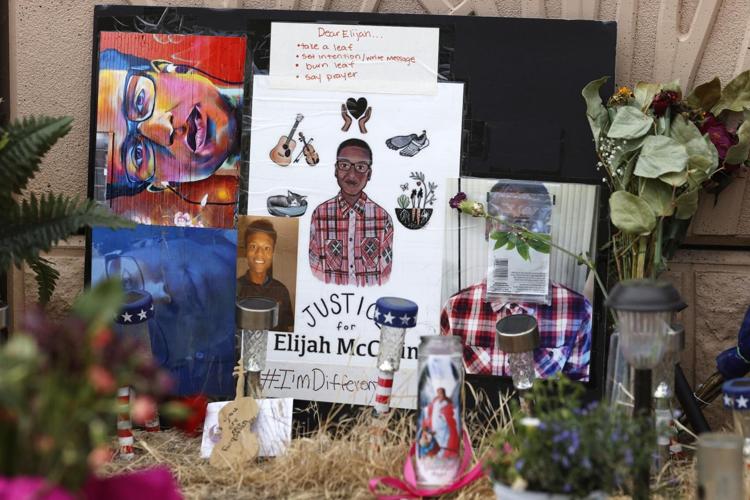
AP Photo/David Zalubowski
A paramedic training expert struggled to explain, during a morning of tense cross-examination on Friday, why he believed he saw an Aurora paramedic take Elijah McClain’s pulse before injecting him with a dose of the sedative ketamine.
Gary Ludwig, a longtime paramedic and EMT who works as a training expert in Missouri, is a defense witness for the paramedics now facing trial for McClain’s 2019 death. He spent much of Friday morning under cross-examination by Senior Assistant Attorney General Jason Slothouber.
Slothouber sought to call into question Ludwig’s opinions that the paramedics followed their training and protocols for patient care. It wove into prosecutors’ strategy to show the medics failed to take basic steps, such as checking McClain’s vital signs, to make sure administering ketamine to him following his struggle with police officers would be safe.
Aurora Fire Rescue paramedics Jeremy Cooper and Lt. Peter Cichuniec each face charges in Adams County of reckless manslaughter, criminally negligent homicide and two counts each of second-degree assault for McClain’s death. The assault charges include assault causing serious bodily injury and unlawfully administering the sedative without consent.
The fire medics have pleaded not guilty.
Ketamine dose didn't kill Elijah McClain, defense experts for Aurora paramedics say
Body-worn camera footage from that night shows paramedic Jeremy Cooper gripping McClain’s shoulder as he injects the sedative into McClain’s muscle with his other hand. When he watched the video in front of the jury, Ludwig said he believed Cooper was checking McClain’s pulse from his neck.
“It is literally impossible for him to be taking a carotid pulse from the shoulder,” Slothouber said.
“I interpreted that as he was checking the carotid pulse when I watched it,” Ludwig replied.
“So fair to say you were wrong, and he did not check the carotid pulse?”
“I think it’s fair to say that I misjudged what I was looking at,” Ludwig said.
McClain, 23, died a few days after three Aurora police officers stopped him as he walked home from a convenience store the night of Aug. 24, 2019, after buying iced tea. They subdued McClain, handcuffed him and one used a neck hold that restricts oxygen flow to the brain. The paramedics now facing trial decided to give McClain a 500-milligram dose of ketamine, a sedative used in medical settings as an anesthetic.
He went into cardiac arrest and stopped breathing within a few minutes of receiving the injection. A doctor declared him brain dead in the hospital three days later. Prosecutors say Cooper and Cichuniec made the decision to administer ketamine from only relying on police officers’ account of McClain’s behavior.
Ludwig, who first began testifying Thursday afternoon, told jurors the safety of a scene takes first priority. He said paramedics have to go into volatile situations and make assessments quickly, which frequently involves relying on information they receive from police officers.
“Victims cannot rescue victims,” he said, adding, “If you’re hurt or cannot help the victim, the victim suffers also.”
Body-worn footage captures police saying McClain was showing extreme strength, “on something” and had tried to grab one officer’s gun. The paramedics believed McClain was suffering from “excited delirium” — typically described as an onset of symptoms such as extreme aggression, strength and resistance to pain.
Slothouber sought to cast disbelief on Ludwig’s assertions that it didn’t seem practical for paramedics to speak to McClain to assess his condition or retrieve medical equipment, such as an oxygen kit or heart monitor, from an ambulance nearby.
“It is possible for a paramedic to at least say to a patient, ‘Tell me how I can help you today,’ in basically every single circumstance?” Slothouber asked.
“If the patient’s not making sense, there no point in asking,” Ludwig said.
“Well, that would be important information, wouldn’t it, that they are not responsive to your question?” Slothouber said.
“That’s part of our objective observation, yes,” Ludwig replied.
Forensic pathologist testifies Aurora paramedics caused Elijah McClain's death
The jury also heard Friday from Sri Sundaram, a heart doctor hired as a defense witness who believes McClain likely died from a heart “spasm” triggered by the struggle with police. A small blockage would explain his vomiting at the scene, Sundaram said.
The forensic pathologist who performed McClain’s autopsy, Stephen Cina, opined he did not believe a narrowed artery played any role in McClain’s death. Assistant Attorney General Ann Joyce sought to throw doubt on the possibility that a heart issue affected McClain’s health as an adult, noting he was a long-distance runner who worked out daily.
The paramedics’ defense case is scheduled to resume next week.
Two experts testified Thursday they don’t believe the ketamine dose caused McClain’s death, and one said the drug’s sedative properties have a “ceiling,” past which a person’s sedation doesn’t increase. As the case’s attorneys tussle over the role the sedative played, news reports have emerged that actor Matthew Perry died in October from effects of ketamine in his system, based on a newly released autopsy report. Perry also reportedly had coronary artery disease.
Physician: No medical reason for ketamine injection