







The colorful history and man behind Pikes Peak’s old ski area

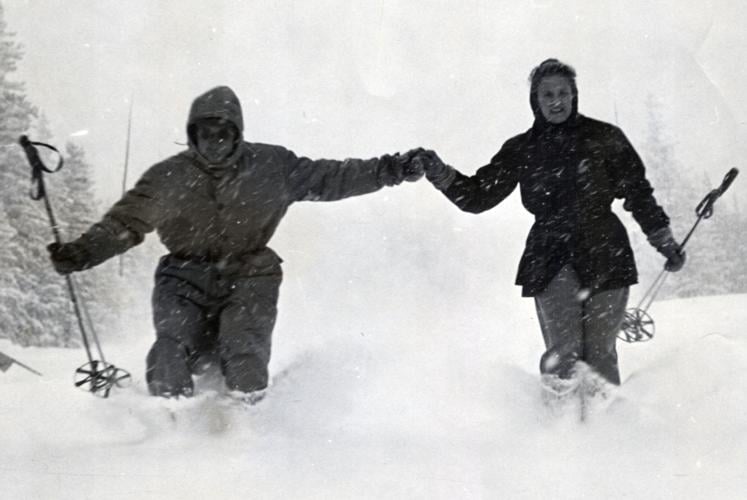
Don Lawrie, left, enjoying a powder day. He was instrumental in developing the former ski area on Pikes Peak. Courtesy of Don Sanborn
Photos Courtesy of Don Sanborn


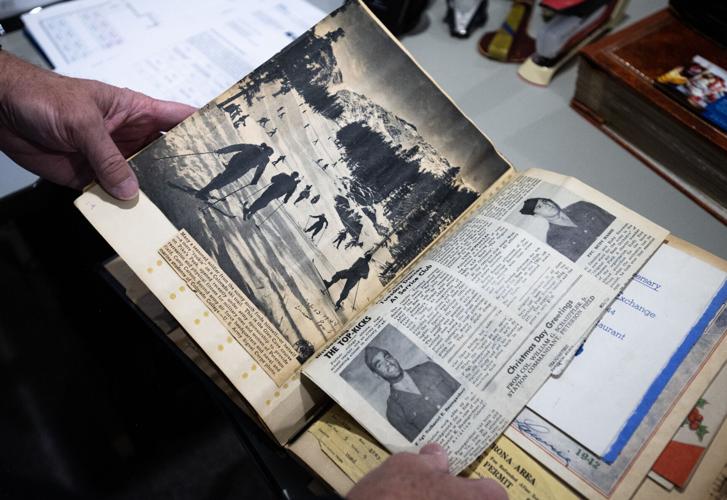
The ink has not yet faded on the yellowed pages from 1938. They are signatures and addresses from down in Colorado Springs and beyond: New Mexico, Wyoming, Nebraska, Texas, Illinois, North Dakota and elsewhere.
The names and places are found in a leather-bound guest book — some of the earliest visitors to the ski area that once was on Pikes Peak.
In the basement of his Colorado Springs home, Don Sanborn keeps other registers from the early 1940s, before World War II posed one of many pauses to lift-served skiing on America’s Mountain over the decades. The names abruptly end on the pages — not so unlike the ski area itself in 1984.


Don Sanborn flips through a sale log from his grandfather’s ski shop.
It is a colorful history Sanborn wants to keep alive. It is a history directly tied to his late grandfather, Don Lawrie, whom Sanborn has written about and spoken of at presentations over the years.
“A lot of people have no idea there was a ski area up there,” he said. “Trees are growing back in. It’s getting harder and harder to even see where it was.”


One the left is the first page of the Pikes Peak Ski Club’s sign-in book for the ski area on Pikes Peak, and on the right, Don Lawrie, the club’s first president, is the first name signed in the book.
It started around Glen Cove in 1936, about a mile below timberline, Lawrie recalled in written histories. It started thanks to the Pikes Peak Ski Club. Lawrie was the club’s first president.
He’s the top signature under the articles of incorporation that Sanborn also keeps. Begins the mission statement atop the flimsy papers: “To foster, sponsor, and encourage sports of all types in Colorado and the Pikes Peak Region.”
Locally, skiing was not yet popular. It took a certain spirit, Sanborn imagines as he looks at Granddad’s wooden skis from the ‘30s. Yes, Sanborn keeps those, too, along with the man’s old pack proudly pinned with a Pikes Peak Ski Club logo.
Looking at those rickety skis and bamboo poles, “It was clearly a young man’s sport back then,” Sanborn said.


Don Sanborn poses for a portrait with his grandfather Don Lawrie’s skis at his home in Colorado Springs on Wednesday, Dec. 13, 2023. Sanborn has become the keeper of his grandfather’s history on Pikes Peak with an assortment of scrapbooks and other relics kept safely in his basement.
A young man like Lawrie, who from Plano, Ill., came to be known around Colorado Springs as “the man of the mountain.”
In a 1999 book approaching his 100th and final year of life, “A Century in the Shadow of Pikes Peak,” Lawrie recalled coming to Colorado Springs at the age of 21 to drive tours and plow snow on Spencer Penrose’s toll road up the mountain. The mining magnate and Broadmoor visionary had finished the road in 1916.


Don Lawrie, first president of the Pikes Peak Ski Club, pictured at the area near Glen Cove that started in 1936.
Decades later, upon the city taking up management in the arrangement we know today, Lawrie was appointed the first superintendent of the Pikes Peak Highway.


The ski area at Pikes Peak’s Glen Cove was popular in the years before World War II. Skiing once thrived on Pikes Peak, having begun in the late 1920s with Don Lawrie and fellow members of the Silver Spruce Ski Club building the ski jump called Suicide Hill.
Read the city’s announcement in 1948: “Also, Lawrie will work on the planning which is expected to lead to installation of a $100,000 ski tow and other facilities at Elk Park.”
There, in the changed location from Glen Cove, he would see a short-lived Poma lift. It was the long-sought, modernized replacement to the tow lifts Lawrie first fashioned with car engines.
The Poma was the last symbol of “the running theme of skiing on Pikes Peak,” as Sanborn knew it.
“Every time they decided to try to expand,” he said, “they’d have a really dry year or no snow.”
It was “Pikes Peak or Bust” for gold miners once upon a time. It was ultimately bust for the skiing operation — forgotten in the wake of mega resorts that rose on Mother Nature’s more favored side of the Continental Divide.
But the future was of no mind to young men who craved the thrill of the present in the late 1920s.
Carrying inspiration from a contest at Genesee Park outside Denver, Lawrie learned of enthusiasts who had built a ski jump in Teller County. This was around Edlowe, near the Midland Terminal Railroad between Woodland Park and Divide.
“They had cleared the hill back in there and then they started the Silver Spruce Ski Club in 1928,” Lawrie recounted in his book.


The Silver Spruce Ski Club of the late 1920s was the precursor to the Pikes Peak Ski Club that started a ski area at Glen Cove in 1936.
They wanted him to join — wisely enlisting the fellow whose inventiveness and know-how matched his adventurous rigor.
Lawrie eyed a more suitable slope to replace the jump deemed too steep. “The only thing was (the slope) had a rock ledge up at the top of it that was in the way,” he recalled.
He went to his old boss, Mr. Penrose, “and told him we needed an air compressor to operate a rock drill and some dynamite and a bulldozer-tractor to shoot this ledge off.”
The jump was formed in a course that reportedly included a 170-foot one and others spanning 120 feet, 60 feet and 40 feet. The course, wrote one observer, “offers everything that can be desired.”


Don Lawrie, pictured in 1930, building a ski jump for the Silver Spruce Ski Club’s old base at Edlowe in Teller County.
Except for dependable snow.
Sanborn wrote of one instance ahead of a U.S. Western Ski Association-sanctioned tournament: Silver Spruce Ski Club members “had to haul snow in on trucks from wherever they could find it: remaining drifts along a snow fence, up near Catamount Reservoir, etc.”
They looked higher to Pikes Peak. They looked to seize an opportunity as Penrose ended his toll and lifted the gate on the road by 1936.


The Silver Spruce Ski Club built this jump and used it through the 1920s in Teller County. The Silver Spruce Ski Club-turned-nonprofit Pikes Peak Ski Club held downhill competitions that drew crowds upwards of 800, according to history compiled by Don Lawrie’s grandson, Don Sanborn. The Broadmoor paid to build a plush cabin, and The Gazette-Telegraph reported that 18,700 skiers had visited the slopes in 1939. With the advent of World War II, the area was turned over to the military as a training facility.
Pikes Peak Ski Club members were free to drive up to the slopes they cleared, along with any and all skiers who might support the nonprofit for “a new kind of skiing,” as Lawrie called it.
This was downhill skiing. He knew people needed a way up.
And so, with parts from a Whippet car, Lawrie put together a rope tow that his Colorado Snowsports Hall of Fame induction in 1988 recognized as the first to run in the state. (Some consider it the first rope tow west of the Mississippi River.)
In 1939, The Gazette-Telegraph reported 18,700 skiers had flocked to Glen Cove, claiming Pikes Peak’s popularity “second only to Berthoud Pass.” Read The New York Herald Tribune a couple of winters later: “Pikes Peak or Bust is now the happy call of ski enthusiasts all over America.”
Then came World War II and gas rations, keeping people from the drive up. While mostly quiet in those years — except for days when soldiers from Camp Carson and Peterson Airfield were trucked up for fun and fitness — there was one big press event in 1944. An all-military competition was dominated by 10th Mountain Division men out of Camp Hale.
As the war ended and as Lawrie stepped into his role as Pikes Peak Highway superintendent, he got around to scouting the Elk Park Winter Sports Area he envisioned.
He and partners “spent most summer weekends working at the new area and sleeping in sleeping bags under a tree,” Sanborn wrote in a remembrance.
Sanborn skied the few short runs at Elk Park as a kid through the ‘60s. The idea behind the move, he said, had to do with wind at Glen Cove.
“And then, of course, people started complaining about how windy and cold it was” at Elk Park, he said.
Nonetheless, it would be the site of a brand new Poma lift beginning in 1981, according to Sanborn’s article. It was the realization of hard-won financing under the Pikes Peak Ski Corp.
“However, immediately after installation, the area had a year with sparse snow and poor attendance,” Sanborn wrote.
So it went.
“The money suddenly dried up and they couldn’t afford to pay anything,” Sanborn said. “Basically they went defunct and had to declare bankruptcy.”
Lawrie was long retired by then. And no offense to his granddad, but Sanborn was on to much bigger and better ski areas by then; Interstate 70 had expanded to the likes of Vail and Copper Mountain.
“As soon as I got my driver’s license, Pikes Peak was in my rearview mirror,” Sanborn said.
But there was something special about the place his granddad helped build. As Lawrie remarked before he died in 2000: “We just wanted a nice, pleasant area for the home folks.”
America’s Mountain was not destined for skiing fame, he concluded. But it was fun while it lasted, he said.
“We worked hard, we skied hard and we had a wonderful time.”

It’s time to apply for big game hunting licenses in Colorado
Seth Boster
seth.boster@gazette.com
Updated 6 hours ago
Colorado Parks and Wildlife’s new big game brochure has been hitting hunters’ mailboxes ー the annual reminder to start planning for the seasons ahead. CPW also reminded in a recent social media post: “Whether you’re after a long-awaited lifetime tag...

Seth Boster
Reporter
New Dark Sky Community designated in Colorado, joining short list
Seth Boster
seth.boster@gazette.com
Updated 6 hours ago
Another part of Colorado has been recognized for its rare celestial view. In announcing the state’s next Dark Sky Community, DarkSky International described Old Snowmass as a “spectacular corner of the Roaring Fork Valley” ー an unincorporated corner between Aspen...
Seth Boster
Reporter
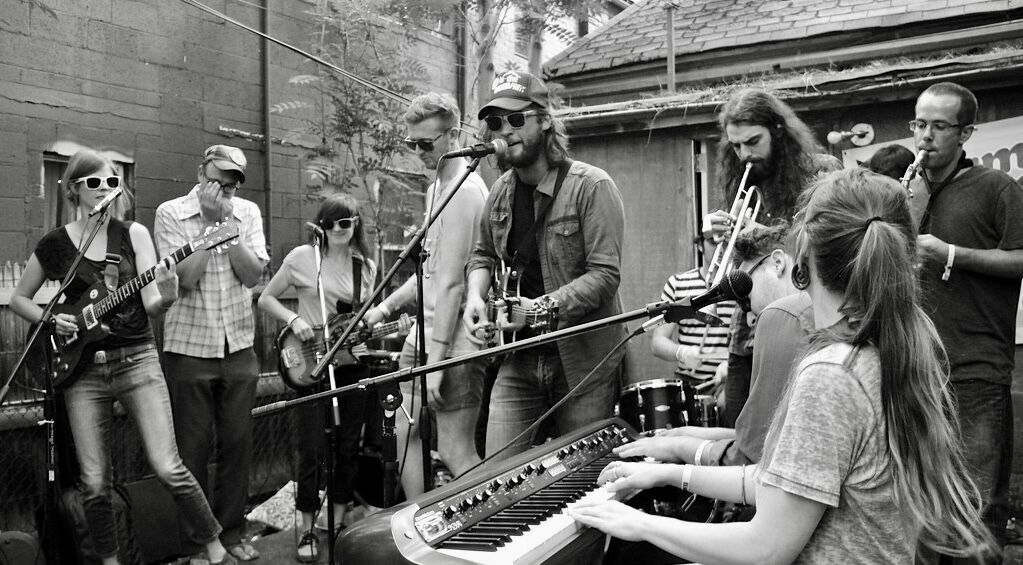
Will Denver’s dueling underground music fests face off at once?
John Moore
john.moore@denvergazette.com
Updated 4 hours ago
Less than a year ago, local music fans collectively pondered whether the summer music festival might be dead in Denver. (To our credit, we opined in this space: “Categorically not.” Actually, our exact words were: “Don’t be daft, punk!”) But...

John Moore
Reporter

Data: U.S. maternal deaths fell in 2024 and may have dropped again last year
The Associated Press
the-associated-press@denvergazette.com
Updated 13 hours ago
NEW YORK — Fewer U.S. women died around the time of childbirth in 2024, a government analysis shows, and provisional data suggests the trend may have continued last year. The U.S. Centers for Disease Control and Prevention on Wednesday reported...

The Associated Press
Reporter
Colorado hot springs celebrates ‘first-of-its-kind’ expansion
Seth Boster
seth-boster@denvergazette.com
Updated 13 hours ago
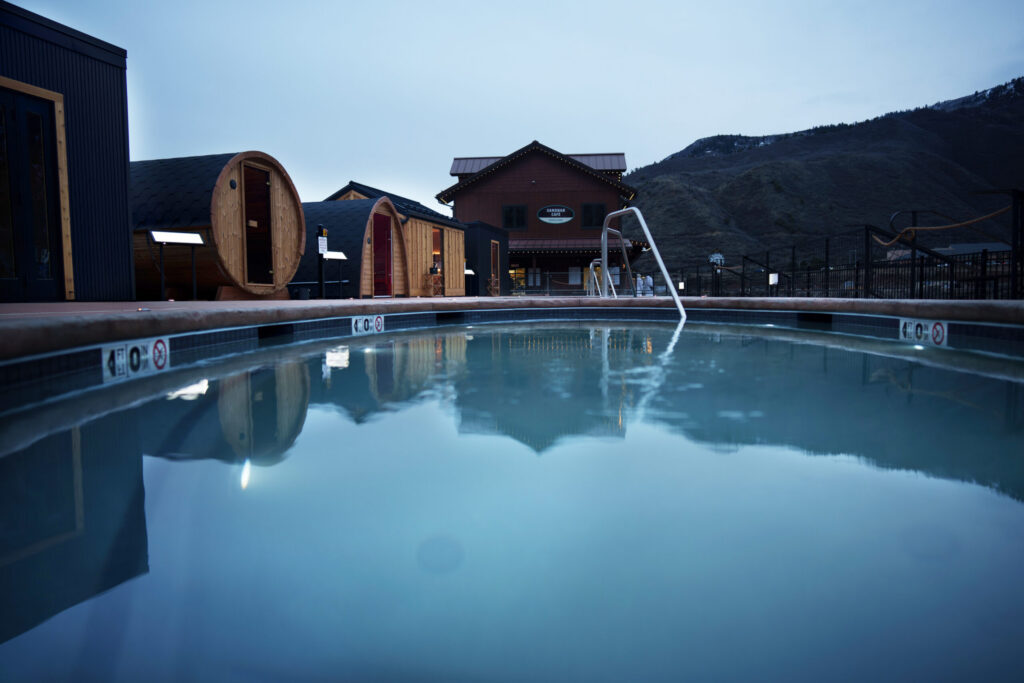
A hot springs destination in Colorado has marked a “major” expansion. And it’s not exactly the expansion you’d expect at a soaking retreat. In Glenwood Springs, Iron Mountain Hot Springs is calling its newly opened Sauna Summit “the country’s most...
Seth Boster
Reporter

Is your diet causing UTIs? Here’s how it may be at fault
Tribune News Service
tribune-news-service@gazette.com
Updated 3 days ago
Miriam FauziaThe Dallas Morning News UTIs can be painful, and they’re not something people like to talk about. But they happen often, affecting an estimated 60% of women and 20% of men in their lifetimes. While we might view these...

Tribune News Service
Reporter
What it’s like to be part of Denver’s potentially smallest parade
Bernadette Berdychowski
bernadette.berdychowski@denvergazette.com
Updated 3 days ago
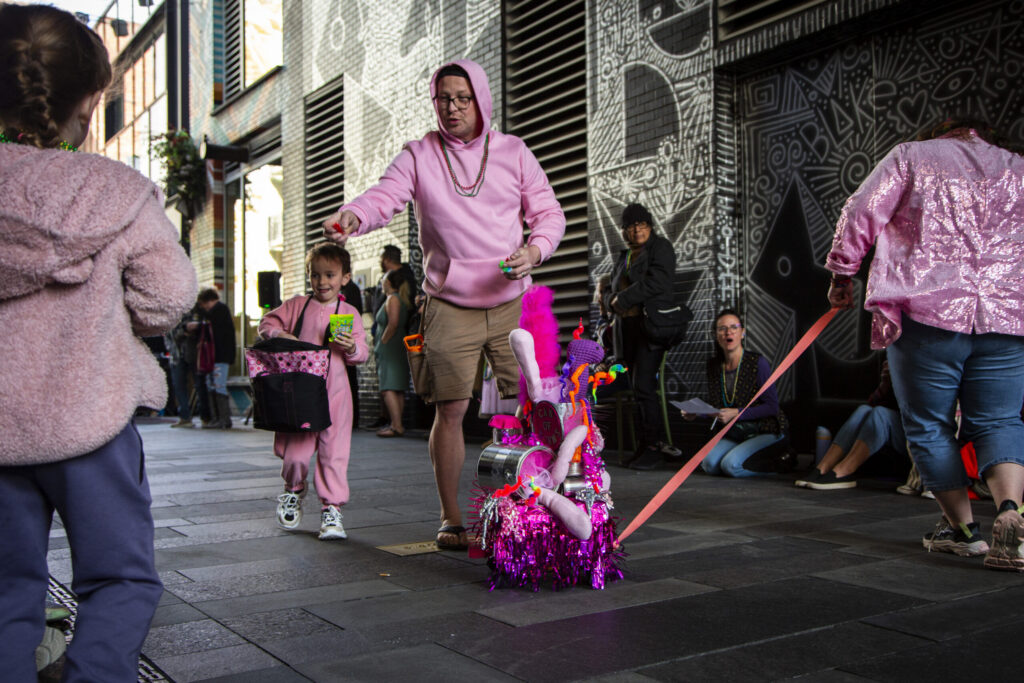
The Richey family was up until 1:30 a.m. on Sunday working on their second-ever float entry for the Dairy Block’s Petite Parade in Lower Downtown. Lexi, Scott and their son dressed up in all pink to match their float titled...

Bernadette Berdychowski
Reporter

A Colorado Life: Janelle Orsborn’s final message: ‘Definitely live big’
John Moore
john.moore@denvergazette.com
Updated 3 days ago
Actor, author and former Miss Colorado’s Teen fit a lot into her ambitiously adventurous and tragically abbreviated 33 years Janelle Orsborn was big sister to Anna, Abigail, Jake, Daniel and Natalie. But really, says Abigail: “Janelle was a big sister...
John Moore
Reporter

PIKES PICK: A ‘K-Pop Demon Hunters’ day awaits
Linda Navarro
linda-navarro@denvergazette.com
Updated 1 week ago
It’s the music that makes you move and Black Sheep plans a dance party to the soundtrack of “K-Pop Demon Hunters” coming up April 18, 11 a.m. Costumes expected and it’s for all ages. $21.12-$24.21 at blacksheeprocks.com — Linda Navarro

Linda Navarro
Reporter

Sweet and spicy Korean fried chicken will fire you up
Gretchen McKay, Pittsburgh Post-Gazette
gretchen-mckay@gazette.com
Updated 7 days ago
Bold, spicy flavors have never been more in demand, especially when they add a global element to a dish. One of my favorite foods these days is Korean fried chicken, which I ate twice on a recent trip to New York...

PREV
PREVIOUS

Have you seen a Batmobile rolling around the Denver area? It's this man's daily driver
Facebook Twitter WhatsApp SMS Email Print Copy article link Save Whether heading to work or running errands, Tom Ziegelbauer turns heads. “No way,” some remark. Others pull out their phones to snap a pic. But for Brighton-based Ziegelbauer, it’s just a normal day — a normal day driving the Batmobile, that is. “People are really […]
7 of the best sledding and tubing destinations in Colorado's mountains
Facebook Twitter WhatsApp SMS Email Print Copy article link Save If you’re in the city and you and the kids are really into sledding, surely you’ve got your favorite hill. Maybe this is the winter to take it up a notch at a true destination. Here’s a look at some sledding and tubing hills worthy […]