




Colorado Springs museum wants to send you home with an authentic piece of history
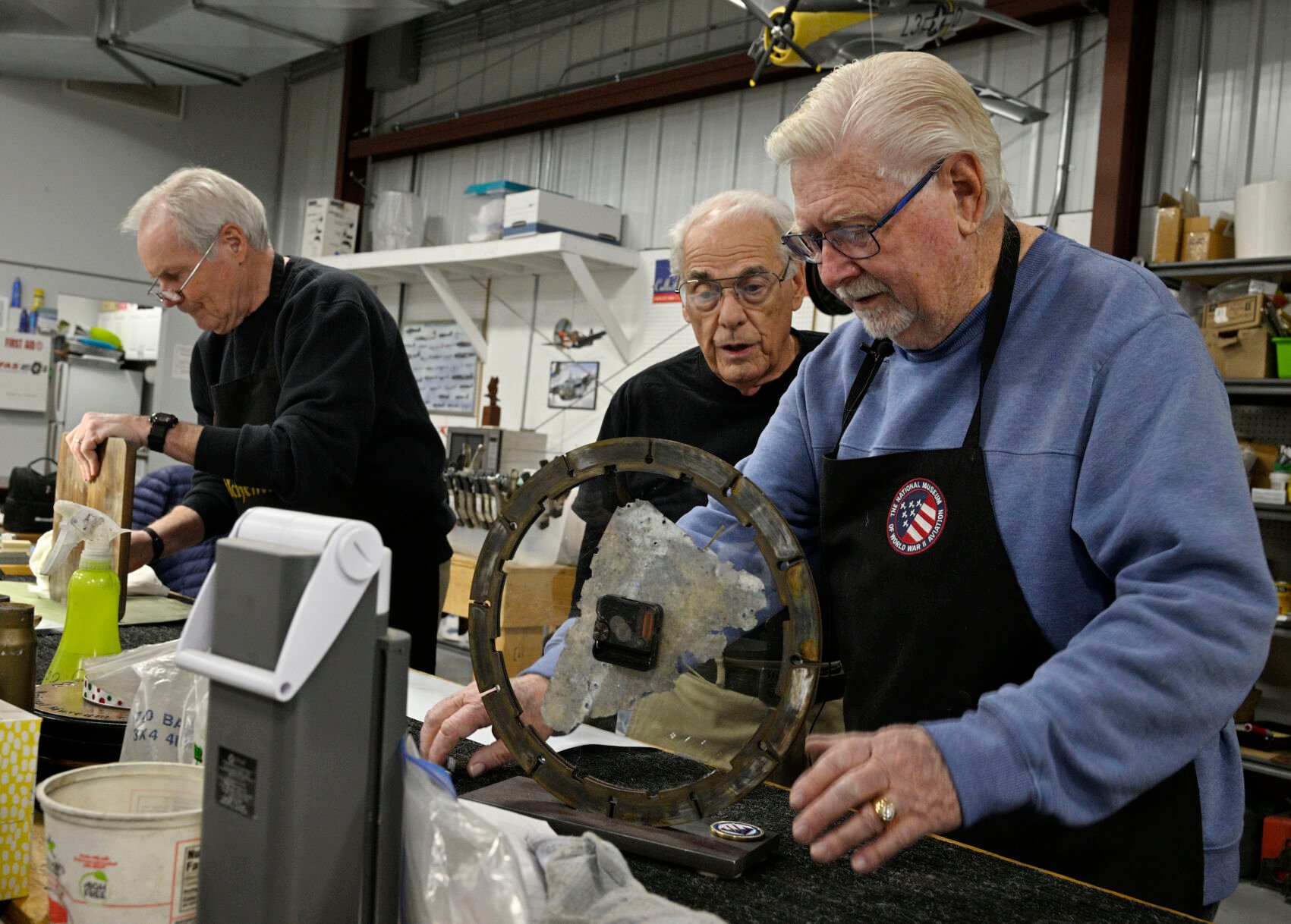
Inside a hangar at the National Museum of World War II Aviation, a coterie of tinkerer-philanthropists huddles to ponder the possibilities for history’s scrap heap.
Up for consideration on this mid-December day, a broken propeller assembly component from an 80-year-old bomber.
To the untrained eye, the heavy hunk of cool junk looks like the hip joint of a giant robot arthropod.
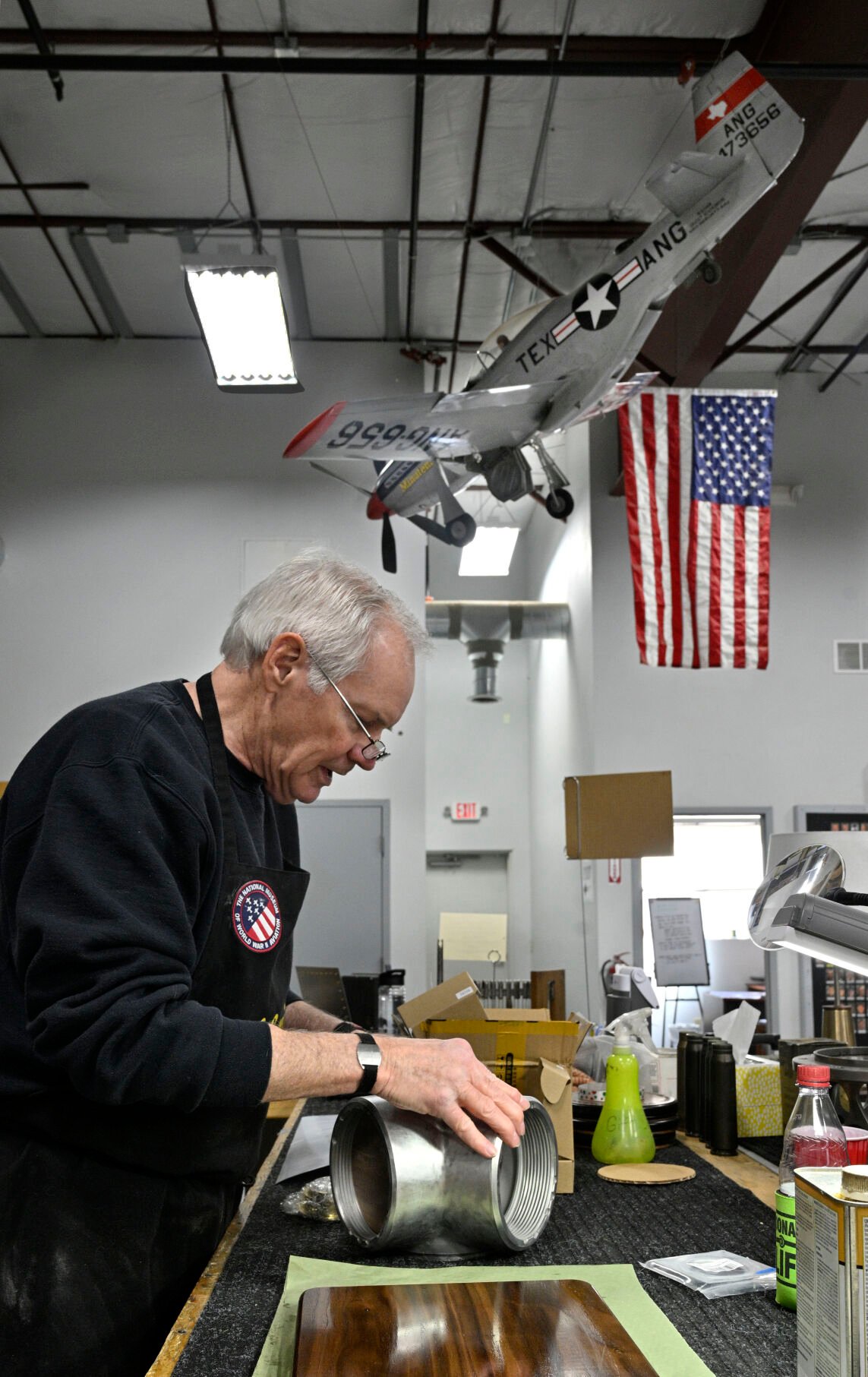
To volunteer artisan Pat O’Connell, it inspires visions of a multifaceted, multifaced piece of working art.
“This is going to be a weather station, with a clock that sits on top, and a hydrometer, barometer, thermometer …,” said O’Connell, pivoting the piece to indicate gear placement. “We’re still fine tuning the details, but it will be on a lazy Susan kind of effect, so the user can have any instrument in the front.”
Whatever the outcome when these affectionately named “Alchemists” come together, they routinely achieve what their namesakes never could:
The (re)making of history, and transformation of metal into a very real kind of gold, for the nonprofit Colorado Springs museum.
“Our gift shop is a major income generator for our museum … and it’s probably one of the most unique gift shops of any in aviation that I know of,” said museum volunteer and unofficial head “alchemist” Larry McManus. “Most of these gift shops will buy stuff that’s already built — airplane models and pins and stuff like that.”
At the Springs museum, he said, the goal is a gift shop that feels like a continuation of the experience, except with more price tags.
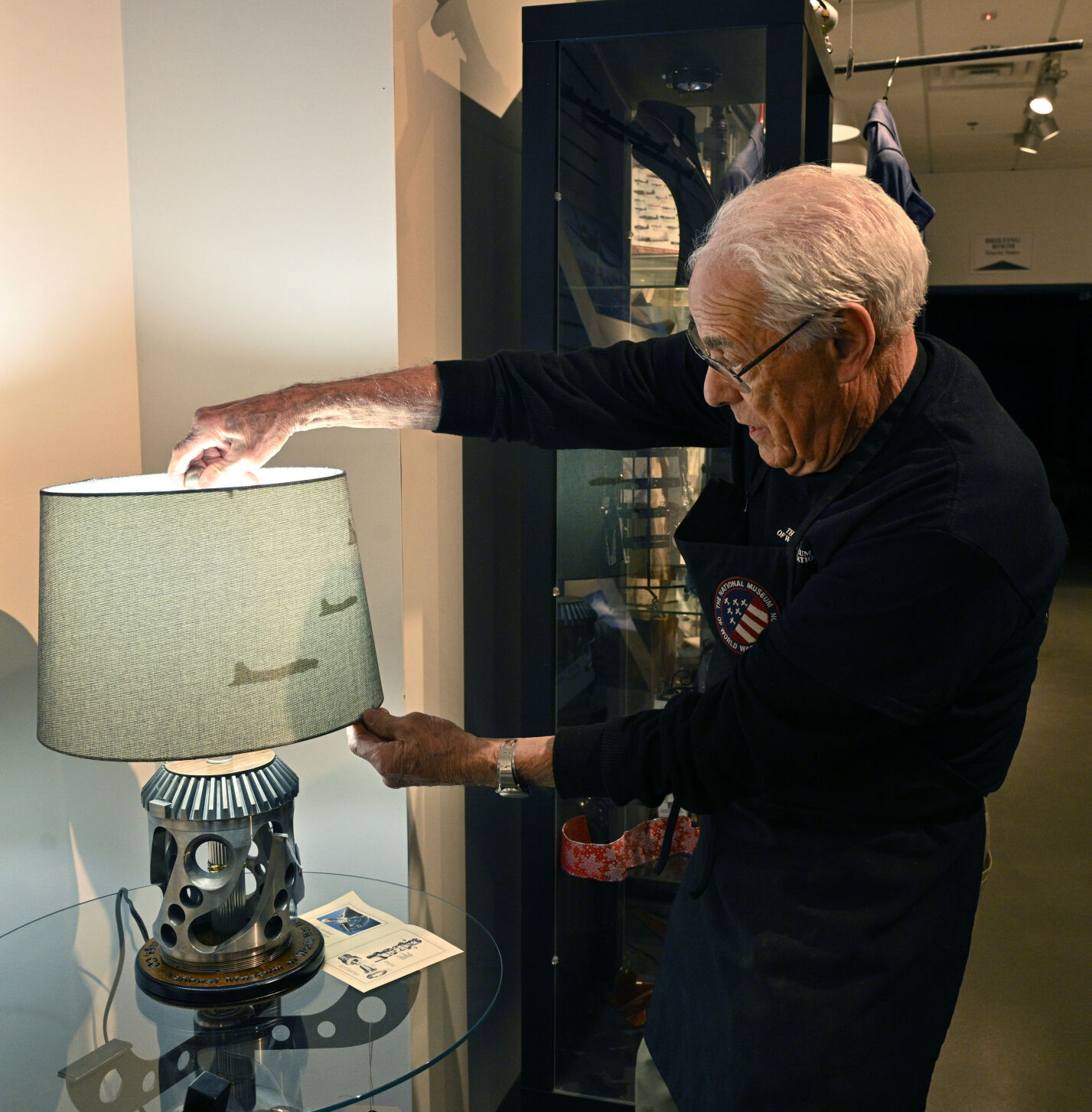
“History you can see and touch and take home with you,” said McManus, of a gift shop that’s open to visitors regardless of whether they bought a ticket to tour the museum. The revived, repurposed items there include:
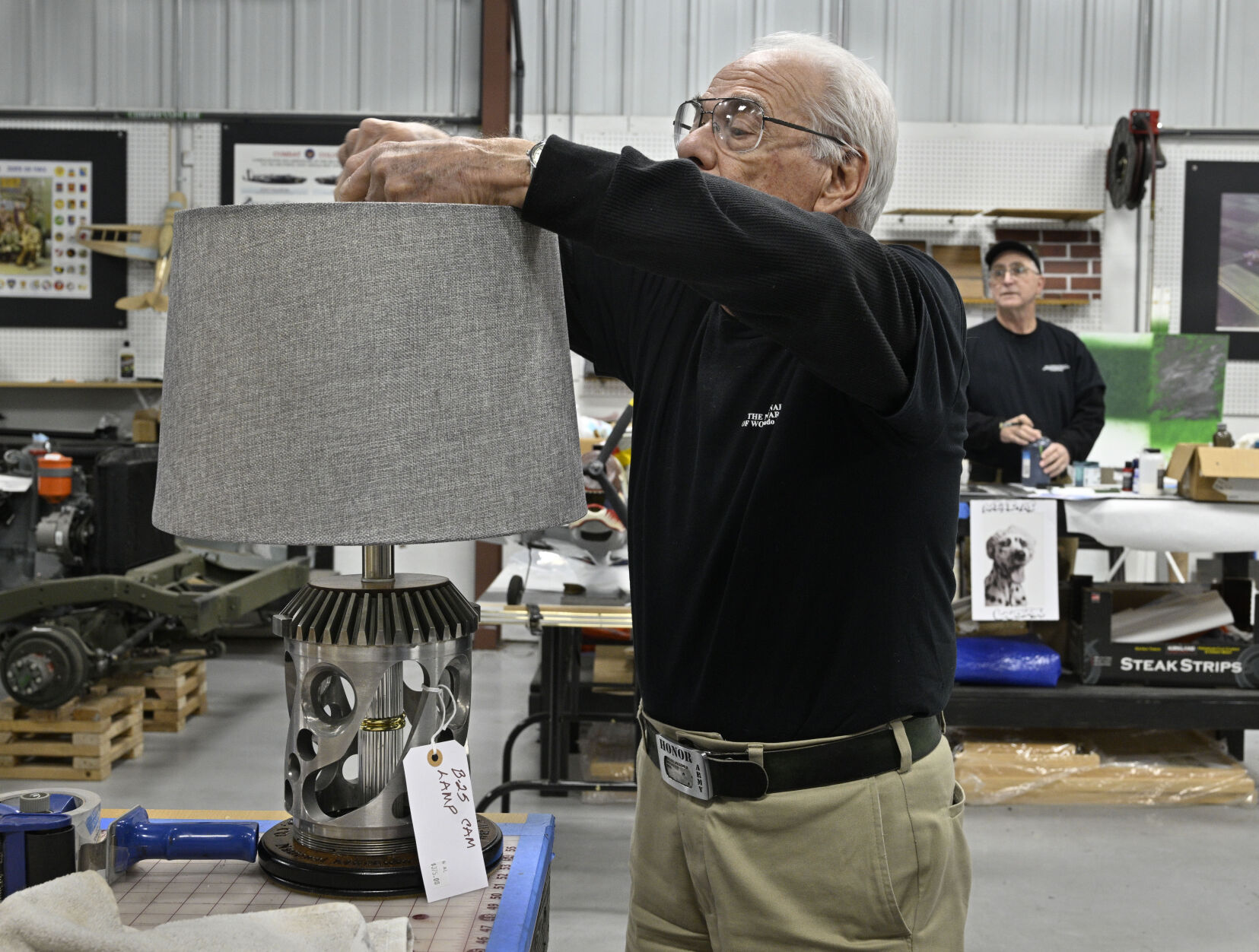
• Sundials, from B-25 stationary cams ($293).
• Toy cars, from the (oddly toy-car-shaped) phenolic blocks that help support the aircraft propeller ($16.95).
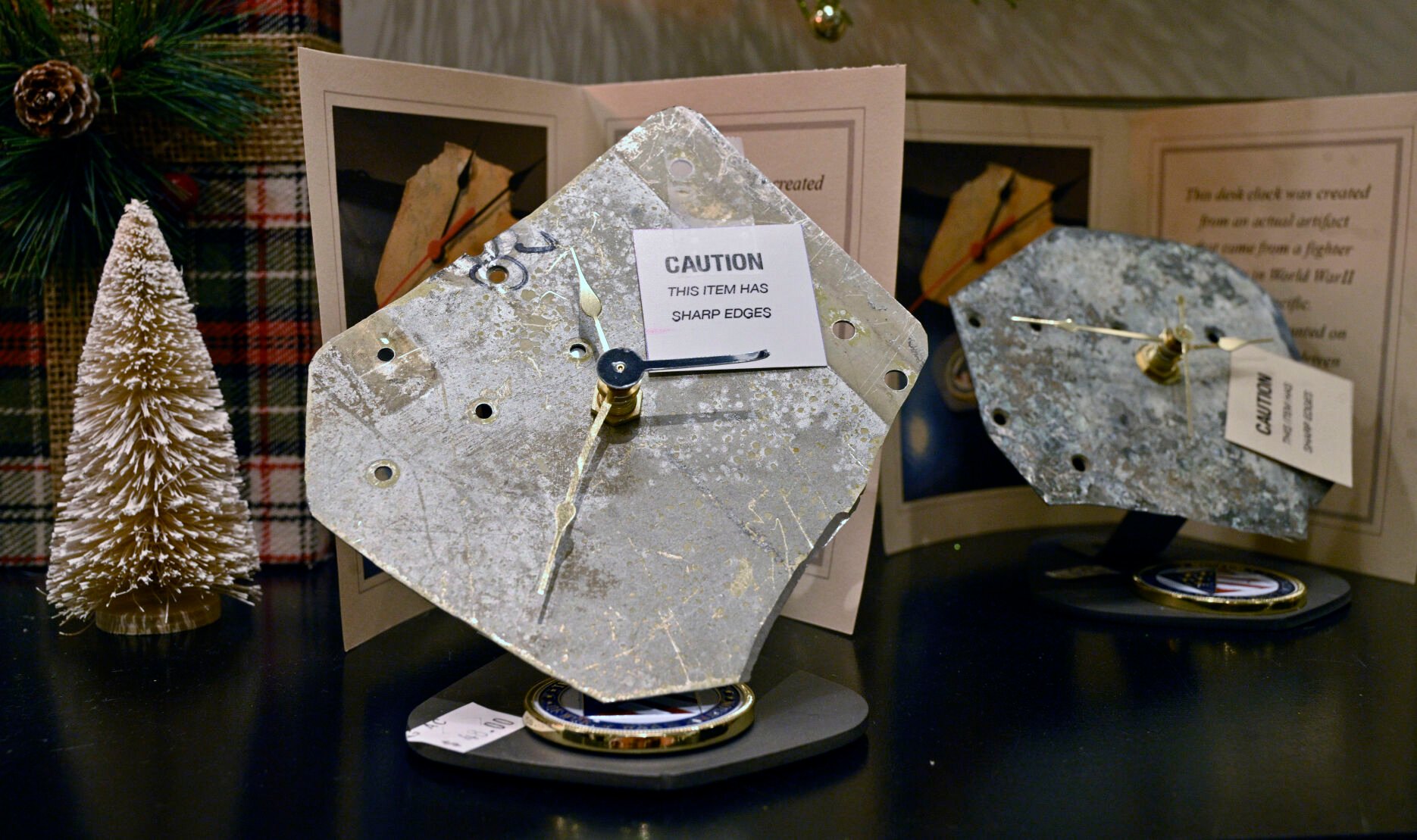
• Clocks, from the aluminum skin of a P-38 Lightning — whose pilots included the late Frank Royal, of Colorado Springs — flown in New Guinea in 1943 and then stripped of reusable parts, buried and swallowed, for decades, by the jungle ($175).
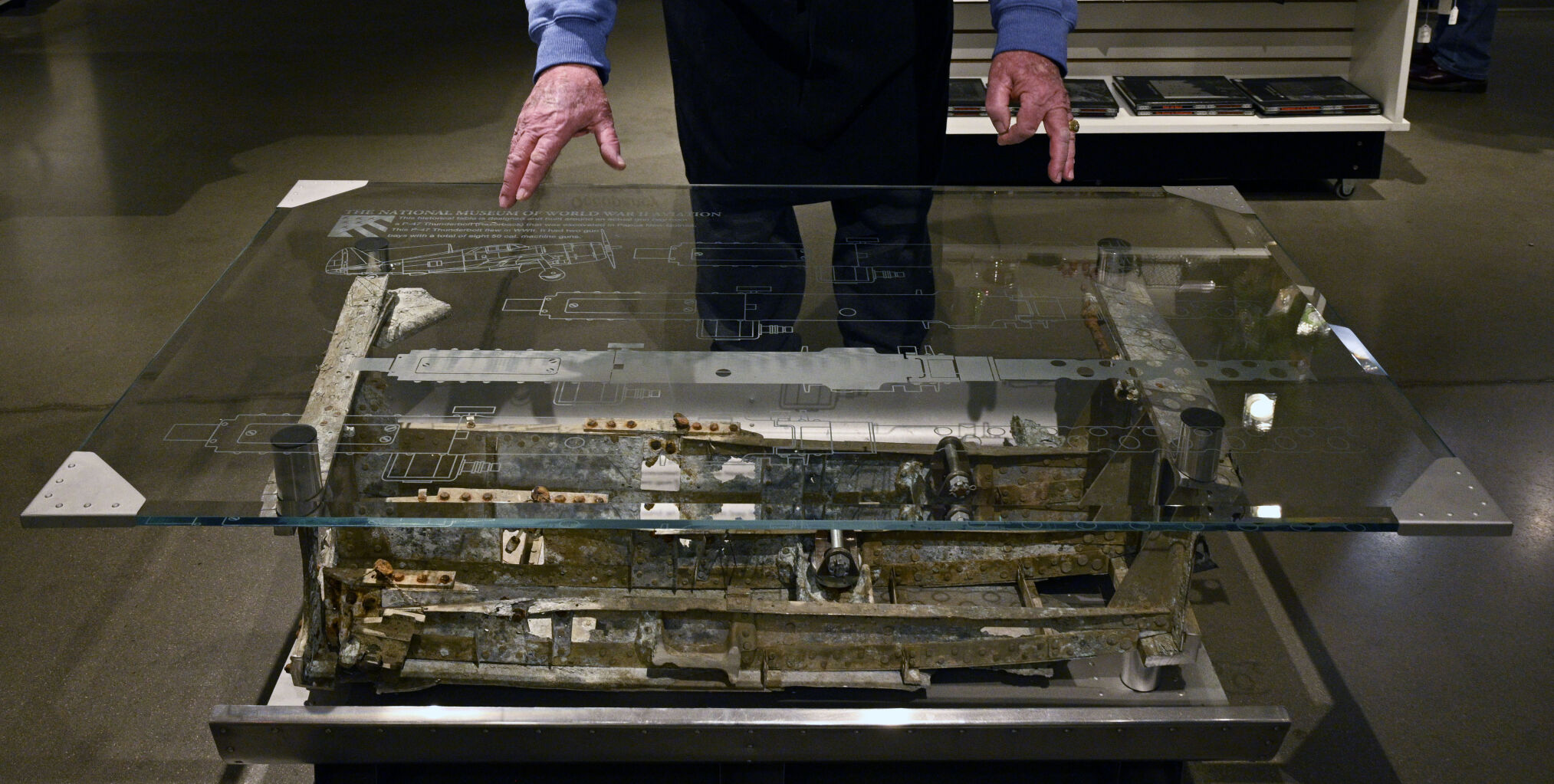
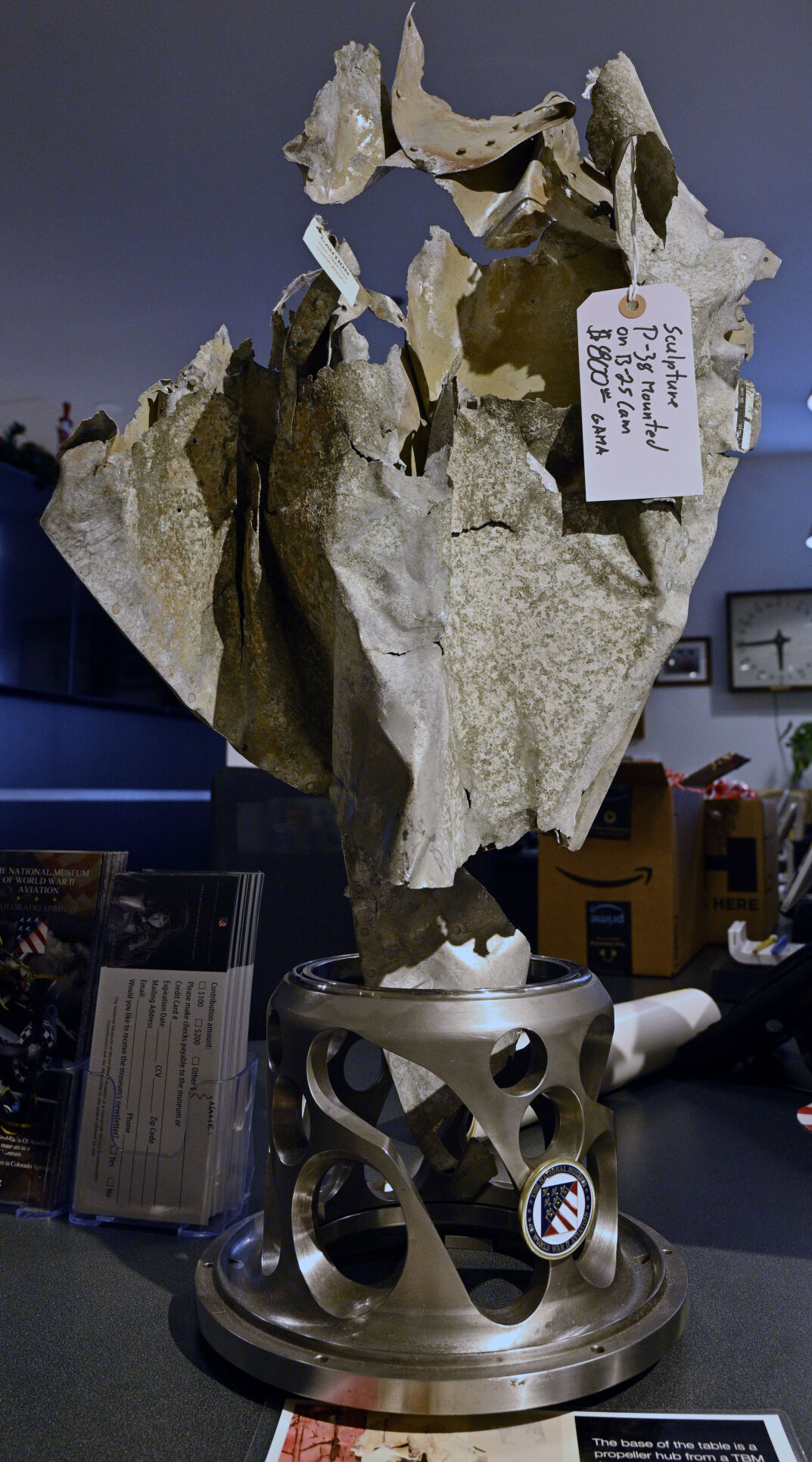
• And at the top end, a $15,000 table built around a “rare artifact,” the gun bay of a Republic P-47D Thunderbolt fighter assigned to the “famous 348th Fighter Group” in the southwest Pacific in 1943. The table’s glass top is etched with a diagram of where the .50-caliber guns would have been located when the aircraft was in service, as well as its back story.
“The beauty of it is, these pieces are created from bits and pieces that come from the restoration process,” said museum spokesperson John Henry. “I can’t think of another museum where you can buy something at the gift shop, and walk out with an actual, literal piece of history.”
Each piece comes with a certificate of authenticity, listing the plane and part of the aircraft where the piece would have been located.
“If you really think about it, everything we do is one of a kind, because no two pieces are exactly alike,” said McManus, one of about a half-dozen who volunteer their time and talents creating the refashioned relics.
Those creations are possible because of the museum’s relationship with WestPac Restorations, “one of the premier World War II aircraft restoration companies in the United States,” said Henry, whose museum shares common lineage with WestPac through the company’s co-owner, and museum president, Bill Klaers.
The museum opened in 2012 and, six years later, was designated a national museum by Congress. Unlike its industry peers, the 29 historic aircraft on display at the Springs museum — including a plane flown by Charles Lindbergh — are, thanks to WestPac’s experts, all operational and annually take to the skies during the Pikes Peak Regional Airshow, Henry said.
Klaers and his company really are “the driving force behind founding the museum here in Colorado Springs,” he said. “This is where the bits and pieces come from for the Alchemist’s work.”
How those bits and pieces are recovered, make their way to WestPac and, where possible, back to operational capacity, is another story entirely.
“What they did with a lot of these planes when the war was over, they dug a hole and buried them … and in six months the jungle had erased the site. A lot of these historic aircraft are still lost,” Henry said.
Because of the decades the recovered aircraft spent buried in the jungle, many of the original parts are too deteriorated to be repaired. Such relics nonetheless play a vital role, before the Alchemists take over.
“When they’re restoring the airplane, they take these parts out and they use them for patterns, and then they give us the old pieces. So we don’t throw anything away,” said “alchemist” Bill Ballard.
How those obsolete, rusted parts become statement pieces, and a big slice of the museum’s bread and butter, begins with a design and brainstorming phase.
“Larry’s not going to tell you this, but he’s the creative genius behind this whole thing. He’s the guy who came up with the ideas, the guy who gets this stuff and says make something out of this,” said Tom Heaney, a volunteer artist at the museum.
Volunteers are required to spend 10 hours a month at the museum. Most log more than that in a week, said McManus.
Art Baba is a retired Army helicopter pilot who still flies full time for the Army Reserve.
“I just like to tinker and everything else. They let me play with this stuff. That’s what I come in on Saturdays and do,” Baba said.
Ballard was with the 82nd Airborne, and jumped out of airplanes in the mid-1950s before turning to a more terrestrial career selling law books for more than three decades.
O’Connell was a Russian linguist in the Air Force, then a computer systems manager as a defense contractor.
“Everybody here comes from a different background,” said McManus, an artist and photographer who ran an advertising business with his wife, Jan.
Now the main designer for the gift shop and buyer of all things not made in house, Jan McManus said that watching the Alchemists turn a piece of historical junk into a thing of beauty is like watching a work of inspirational performance art.
“Larry will give them a piece of wreckage, and say, ‘Well this could be a clock,’ or ‘This could be a lamp,’ or ‘Maybe just decide what you want,’ and it’s so clear they love what they do,” she said. “They’re like little kids in a toy shop.”
Get OutThere
Signup today for free and be the first to get notified on new updates.
PREV
PREVIOUS

An outdoorsy ode to the 'winter solstice' and 5 reasons to love shorter days
I don’t know about you, but the shorter days of winter have had me in a bit of a funk. As someone that loves outdoor recreation, but also has a full-time office job making content for you to read and watch, I’ve found that the shifting hours and shortened days have pushed most of my […]
Trump ballot eligibility news: Read the latest
The Colorado Supreme Court took the unprecedented step of ordering Donald Trump removed from the 2024 presidential ballot on Dec.19, finding him constitutionally ineligible to hold future office.Trump’s campaign said it would appeal the decision to the U.S. Supreme Court. Read our latest coverage here.