







Former Kansas cop now licenses Aurora’s marijuana businesses
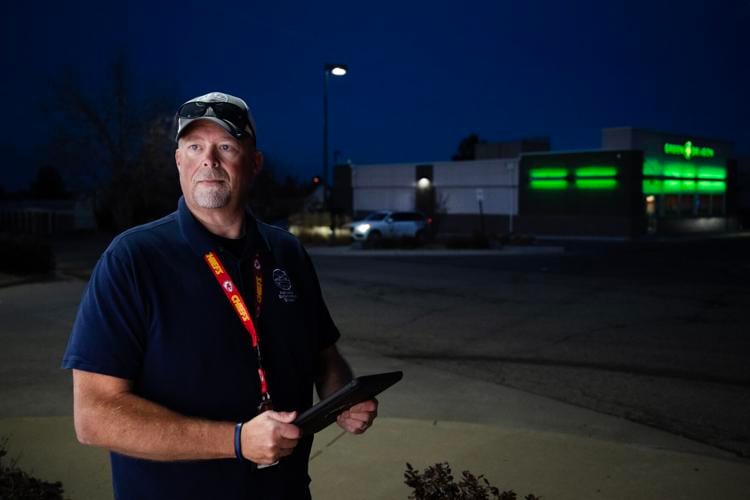
City of Aurora marijuana licensing and compliance analyst Dusty Allen stands for a photo in front of the Green Dragon Dispensary on East Quincy Avenue on Wednesday, Dec. 20, 2023, in Aurora, Colo. (Timothy Hurst/Denver Gazette)
Timothy Hurst/Denver Gazette
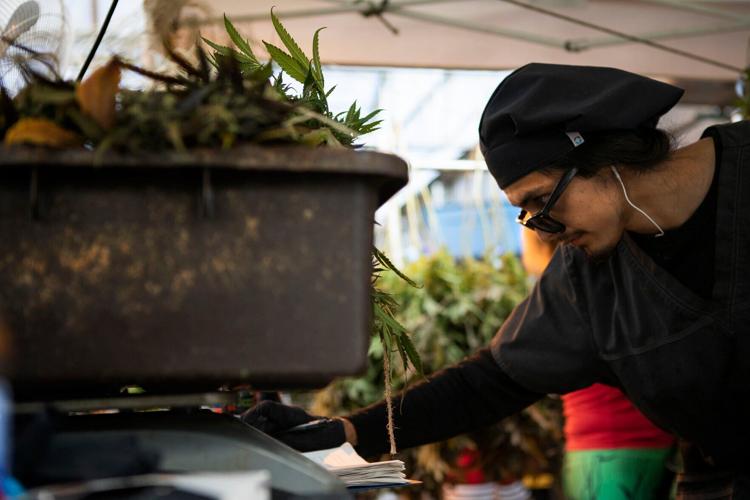
Dusty Allen used to arrest people for illegal marijuana. Now, he issues licenses to people looking to sell it legally in Aurora.
Allen is going into his seventh year working in marijuana licensing for the city of Aurora and knows the ins-and-outs of the industry — which is celebrating the 10th year of legalization on Jan. 1 — and regulations well.
When Allen does quarterly field inspections to the 24 marijuana facilities in Aurora, he looks for several things, he said, with a focus on security.
Cannabis businesses in Aurora are required to take certain security measures, such as including camera footage on everything, except bathrooms, and blocking the windows entirely so people outside the building can’t see any of the products inside.
Anytime a business makes changes, including to the floor layout or camera locations, the company has to go through a modification of premises, Allen said.
Aurora has stricter requirements for marijuana businesses than many other cities in the state, Allen said. While this can seem like a burden on the businesses, they are oftentimes thankful for the requirements because they help prevent theft, he said.
Unlike most other cities in the state, Aurora requires its businesses have a safe or vault in their business to store processed marijuana when the business is closed, Allen said.
In many cities, the product stays in the display cases on the floor overnight.
“We have very few burglaries in the city of Aurora and we lose very little product to burglaries,” Allen said. “Sometimes, people will complain about the strict requirements a little bit, but I actually think most of our licensees appreciate that we’re looking out for them too.”
Since cannabis is still illegal on a federal level, it’s often difficult to recoup money lost from product theft because it’s hard to get insurance coverage, Allen said.
Another part of Allen’s job is making sure people walking past the building can’t smell the marijuana inside, he said. Exterior odor was “big concern” for City Council members when they decided to allow marijuana sales, so it’s something Allen “won’t put up with.”
Since he does all the field inspections, he knows the businesses inside out, he said. The downside is that Allen doesn’t love the smell of marijuana, he said.
When he leaves field inspections and gets home, he immediately sheds his clothes and showers because “even 15 minutes in the store makes me smell like marijuana,” he said.
Allen’s current job is similar — and also vastly different — than his prior job with law enforcement in Kansas.
In Aurora, he issues licenses to business who sell legal marijuana and checks them for compliance.
In Kansas, he arrested people who possessed or sold marijuana.
“It’s very strange to me that I walk into these dispensaries and see all of this marijuana,” Allen said. “Back in the day, I looked for drugs, I looked for marijuana and I arrested tons and tons of people for possession and growing.”
The drug is still illegal in Kansas.
His job is ironic, he said, but his opinion of marijuana now is different than it was when he lived in rural Kansas.
“I’ve lightened up a little bit on it, even though it’s still not something I would want to use,” he said.
The career shift came about because Allen grew tired of the stress that comes with policing, he said.
Having grown up in a law enforcement family, Allen wanted to stay in enforcement without dealing with the constant stress, especially after he had a family, he said.
“It’s a totally different atmosphere than what I’m used to,” Allen said. “Dealing with licensees, they’re very cooperative most of the time. I’m still doing enforcement, but it’s a lot different.”
Allen called himself a “talker” and said his sense of humor and easygoing attitude help him respect and be respected by the people and businesses he inspects, he said.
“I’m easy to get along with, I’m easy to talk to, but I expect you to follow the rules,” he said. “I have a very good working relationship with most of my licensees, and that makes my job a lot easier to do.”
In his years doing licensing work, Allen has seen the decline of cannabis sales in Aurora and heard the laments of the licensees, he said.
“A lot of licensees have told me that they feel like they got taken advantage of initially because it was new and there was a market for it,” Allen said. “Now, with the decline in the price and the cost of everything else, like electricity and other building expenses, going up I see a lot of people going out of business.”
He’s hopeful that, post-decline, the market has stabilized, but said the industry is likely to see a takeover by bigger companies with more funding.
In recent months, Aurora’s City Council has debated funding to homeless service providers due to a significant decrease in marijuana tax dollars, which go to those providers.
With the dip in marijuana tax revenue comes a significant cut to funds for organizations, such as Colorado Coalition for the Homeless, Bridge House, and Salvation Army.
“When I started this in 2017, I saw prices per pound of marijuana at $2,500 to $3,000 per pound,” Allen said. “Currently, talking to some of my licensees, it’s anywhere from $400 to $600, so you can really see the decline there.”
Colorado cannabis sales have slipped in recent years. So far in 2023, businesses have sold $1.3 billion worth of products. The high mark was 2021, when dispensaries logged $2.2 billion in sales, according to the Colorado Department of Revenue. In 2014, the first year retail sales were legally allowed, the state tracked roughly $684 million in sales with far fewer businesses licensed.
Allen takes pride in his job because he is part of making Aurora a desirable place to live and visit, he said.
“I always try to go above and beyond to make the city look good because I want people to talk good about the city,” he said. “Aurora has one of the best marijuana programs in the state and I get a lot of compliments on it.”
In Aurora currently, there are 24 authorized stores. On top of the general sales tax rate of 3.75%, marijuana businesses pay an additional 5% special sales tax.
In 2022, the cannabis industry brought in $11.2 million in tax revenue for Aurora. About 1% of that revenue goes toward youth violence prevention programs, according to the city’s budget office.


Denver schools’ legal chief appears unsure about ICE warrants as board weighs new immigration policy
Nicole C. Brambila nico.brambila@denvergazette.com
nico.brambila@denvergazette.com
Updated 9 hours ago
Denver’s school board is considering a major policy amendment that would consider all district properties “safe zones” by requiring a judicial warrant for federal immigration agents to interact with students. If passed by the board, Denver Public Schools General Counsel...


Aurora mayor calls settlement in First Amendment lawsuit against city ‘unfortunate’
Kyla Pearce
kyla-pearce@denvergazette.com
Updated 9 hours ago
Aurora Mayor Mike Coffman spoke against a lawsuit settlement made between the City of Aurora and activist MiDian Holmes (Shofner) in a City Council meeting Monday night, saying the decision to settle was “unfortunate.” Aurora officials and Holmes announced the...
Kyla Pearce
Reporter

Know Before You Go: Denver St. Patrick’s Day Parade
Emily Bejarano
emily-bejarano@gazette.com
Updated 9 hours ago
Denver turns green this weekend, and it’s not just luck that will ensure a perfect day downtown. Plan your St. Patty’s Day with this guide that includes parade routes, restaurants, parties and more. Lean into green this weekend with St. Patrick’s Day events...

Emily Bejarano
Reporter
Douglas County woman sentenced for voter fraud
Nicholas Fogleman
nicholas.fogleman@denvergazette.com
Updated 10 hours ago
A judge sentenced a Castle Rock woman to three years in prison for voter fraud on Monday. Elizabeth Ann Davis, 62, was convicted on two counts of forgery and one count of “personating an elector,” stemming from the 2022 General...

Nicholas Fogleman
Reporter
With high winds, fire danger in Denver, Xcel says outages possible
Matt Kyle
matt.kyle@denvergazette.com
Updated 10 hours ago
With a red flag warning issued for the northern Interstate 25 corridor Tuesday by the National Weather Service’s Boulder office, Xcel Energy is warning of possible power outages later in the week as critical conditions are expected to continue. Xcel...

Matt Kyle
Reporter

U.S. energy secretary warns Colorado’s energy policies could drive up prices, deter businesses
Scott Weiser
scott.weiser@gazette.com
Updated 8 hours ago
U.S. Energy Secretary Chris Wright on Monday warned that Colorado’s energy policies could lead to higher electricity prices and deter businesses, such as data centers, from locating in the state. Wright, a former executive of a Colorado-based energy company tapped...

Scott Weiser
Reporter

Former Jeffco high school security guard sentenced for child sex assault
Sage Kelley
sage.kelley@denvergazette.com
Updated 9 hours ago
A former Jeffco Public Schools security guard and pastor will spend at least 18 years in prison after assaulting a student for more than two years. Jefferson County District Court Judge Christopher Rhamey sentenced 68-year-old Rubel Tim Martinez to a...

Sage Kelley
Reporter

Metro Moves: Coworking office with golf simulators will expand
Bernadette Berdychowski
bernadette.berdychowski@denvergazette.com
Updated 12 hours ago
Welcome to the Denver Gazette’s Metro Moves. You’ll get the latest metro Denver openings, closings, hiring and promotion news here. To submit your company’s news, drop an email to bernadette.berdychowski@denvergazette.com. DTC OFFICE WITH INDOOR GOLF ANNOUNCES TWO MAJOR EXPANSIONS The Clubhouse...

Bernadette Berdychowski
Reporter
Aurora lawmakers cast final vote to adopt tobacco, psychoactive substance retail license
Kyla Pearce
kyla-pearce@denvergazette.com
Updated 8 hours ago
Aurora City Council members cast a final vote Monday creating a retail license that limits and imposes certain restrictions on businesses that sell tobacco and other age-restricted psychoactive products. The intent of the license is to prevent youth access to...
Kyla Pearce
Reporter
JBS beef plant workers in Greeley to strike next week, union said
Matt Kyle
matt.kyle@denvergazette.com
Updated 11 hours ago
Around 3,800 union workers at the JBS-owned Swift Beef plant in Greeley plan to strike next week after failing to reach an agreement on a new contract with the meat processing giant. The strike is scheduled begin at 5:30 a.m....
Matt Kyle
Reporter
PREV
PREVIOUS
All roads maintained by Aurora now rated 'good' or better as repair program finishes early
All of the roadwork for Build Up Aurora — a program to fix roads in need of repair in the city — was completed last month, beating the program’s deadline for the work to be done and right in time for the brunt of the winter season. The program, with a goal to improve roads […]
Homelessness, public safety, consent decree: What's next for Denver, Aurora in 2024?
It was a busy year in 2023 for Colorado’s most populous metro areas, with lots of turmoil, triumph and planning for the future in Denver and Aurora. From homelessness response efforts, public safety challenges, rental assistance to curb the affordable housing crisis, court trials and elections — 2023 had it all. But what is there to […]