




Cannabis can make work outs more fun — but harder, study says
Meanwhile, another study says people who used marijuana daily were about one-third more likely to develop coronary artery disease compared with people who have never used the drug
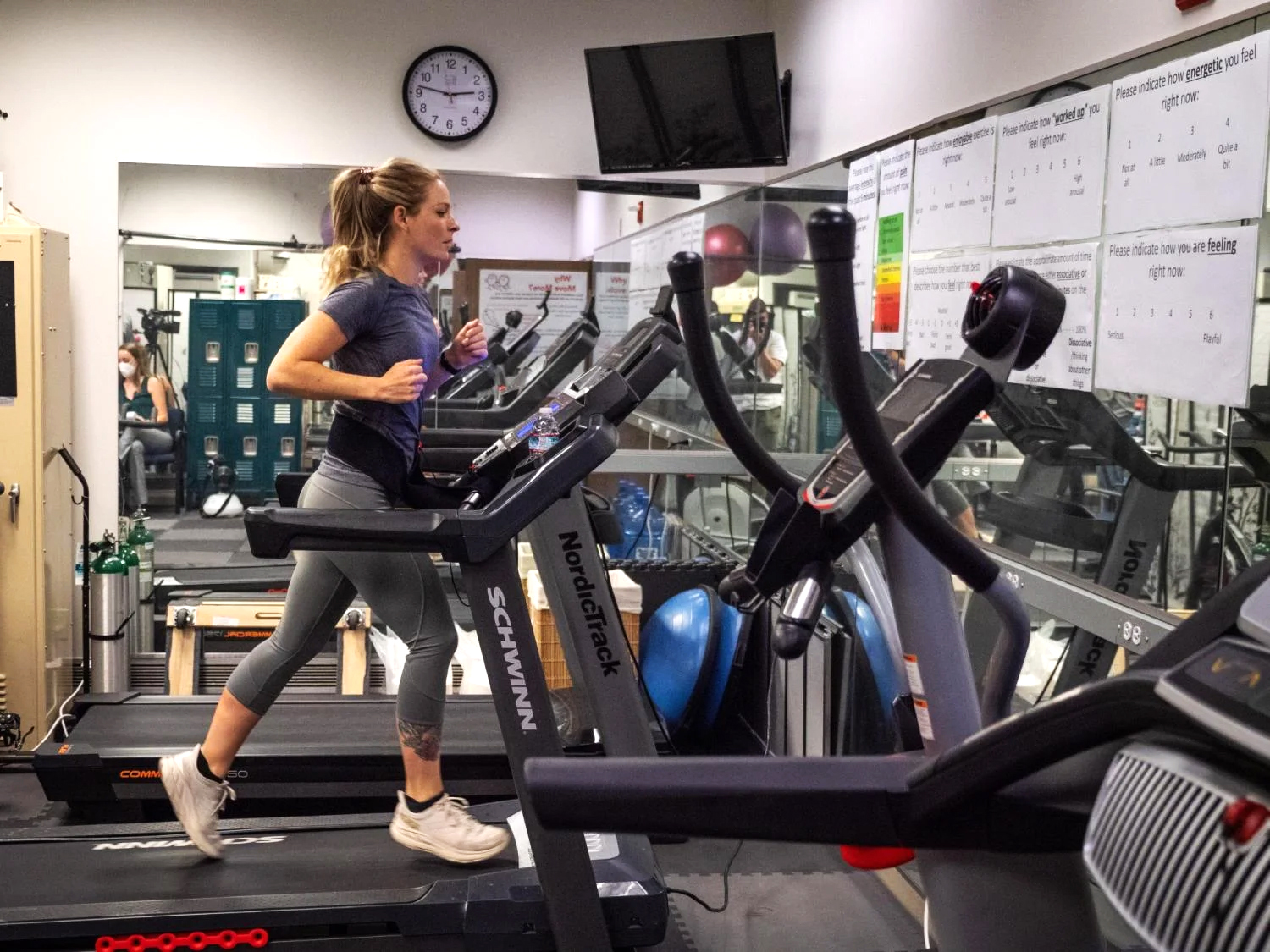
Using marijuana before a workout can boost motivation and make exercise more enjoyable, but if performance is the goal, researchers recommended skipping out using the drug.
Researchers at the University of Colorado Boulder on Dec. 26 published in the journal Sports Medicine findings from a first-ever study examining how legally available cannabis shapes how exercise feels while high.
“The bottom-line finding is that cannabis before exercise seems to increase positive mood and enjoyment during exercise, whether you use THC or CBD. But THC products specifically may make exercise feel more effortful,” first author Laurel Gibson, a research fellow with CU’s Center for Health and Addiction: Neuroscience, Genes and Environment (CU Change) said in a news release.
The University said the study of 42 Boulder-area volunteer runners comes almost nearly 10 years after Colorado became the first state to commence legal sales of recreational, or adult-use, marijuana and at a time when cannabis-users increasingly report mixing it with workouts.
The researchers said the findings and previous research by the team seem to defy long-held stereotypes that associate cannabis with “couch-lock,” and instead raised an intriguing question: Could the plant play a role in getting people moving?
“We have an epidemic of sedentary lifestyle in this country, and we need new tools to try to get people to move their bodies in ways that are enjoyable,” senior author Angela Bryan, a professor of psychology and neuroscience and co-director of CU Change said in the release. “If cannabis is one of those tools, we need to explore it, keeping in mind both the harms and the benefits.”
A first-of-a-kind study
Bryan’s research group found in one previous survey that 80% of cannabis users had used the drug before or shortly after exercise, but that very little research had been done tying usage and exercise together.
After a baseline session, in which the researchers took fitness measurements and survey data, the team assigned participants to go to a dispensary and pick up either a designated flower strain containing mostly cannabidiol (CBD) or a Tetrahydrocannabinol (THC) dominant strain.
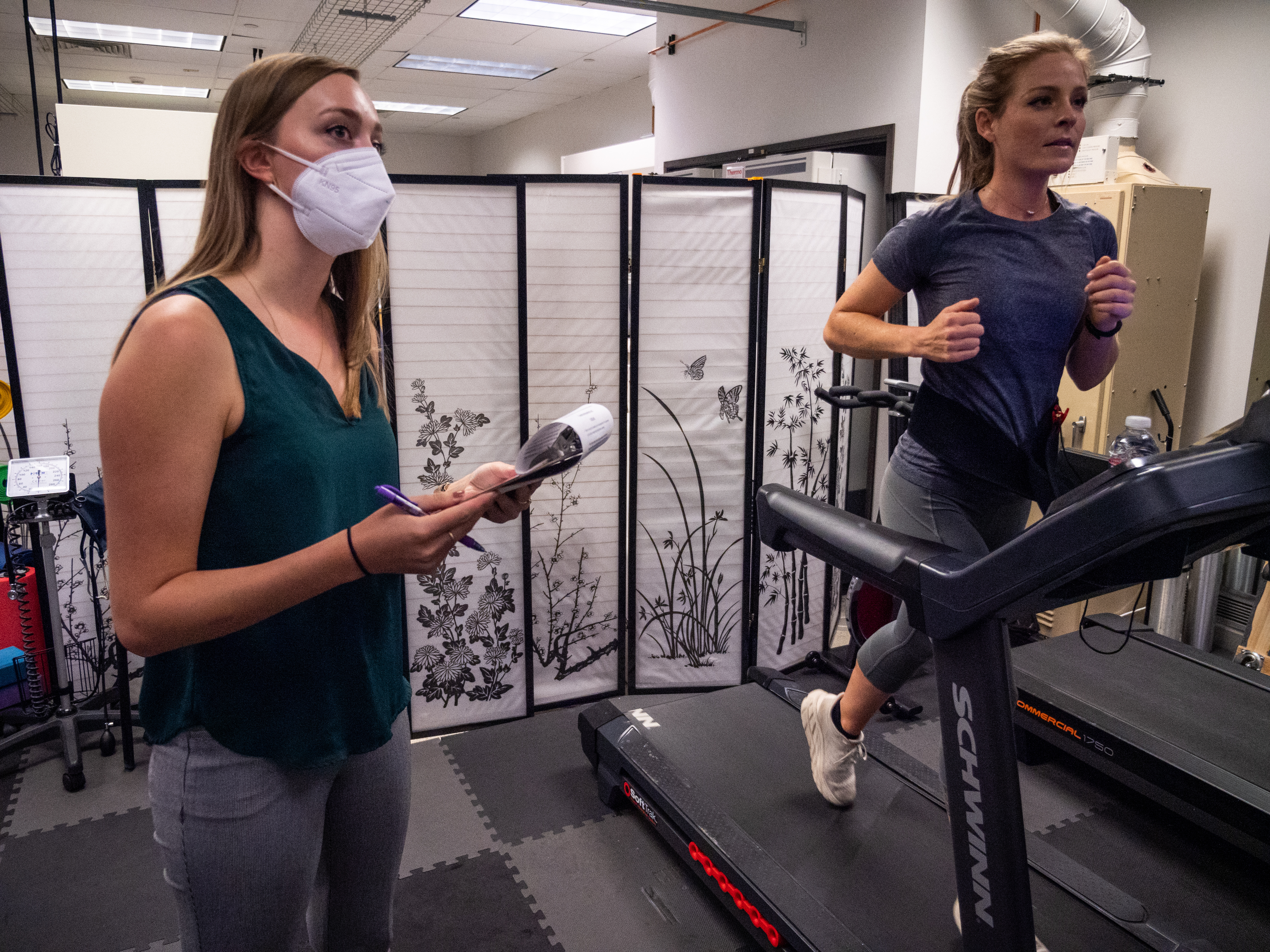
On one follow-up visit, volunteers ran on a treadmill at a moderate pace for 30 minutes, answering questions periodically to assess how motivated they felt, how much they were enjoying themselves, how hard the workout felt, how quickly time seemed to pass and their pain levels.
On another visit, volunteers repeated this test after using cannabis.
Federal law prohibits the possession or distribution of marijuana on college campuses, so the runners used it at home, before being picked up in a mobile laboratory, aka the “CannaVan,” and were brought to the lab.
Participants reported greater enjoyment and more intense euphoria or “runner’s high” across the spectrum when exercising after using cannabis, the study showed.
Surprisingly, the team said the heightened mood was even greater in the CBD group than in the THC group, suggesting athletes may be able to get some of the benefits to mood without the impairment that THC can come with.
Participants in the THC group also reported that the same intensity of running felt significantly harder during the cannabis run than the sober run.
This may be because THC increases heart rate, Bryan said.
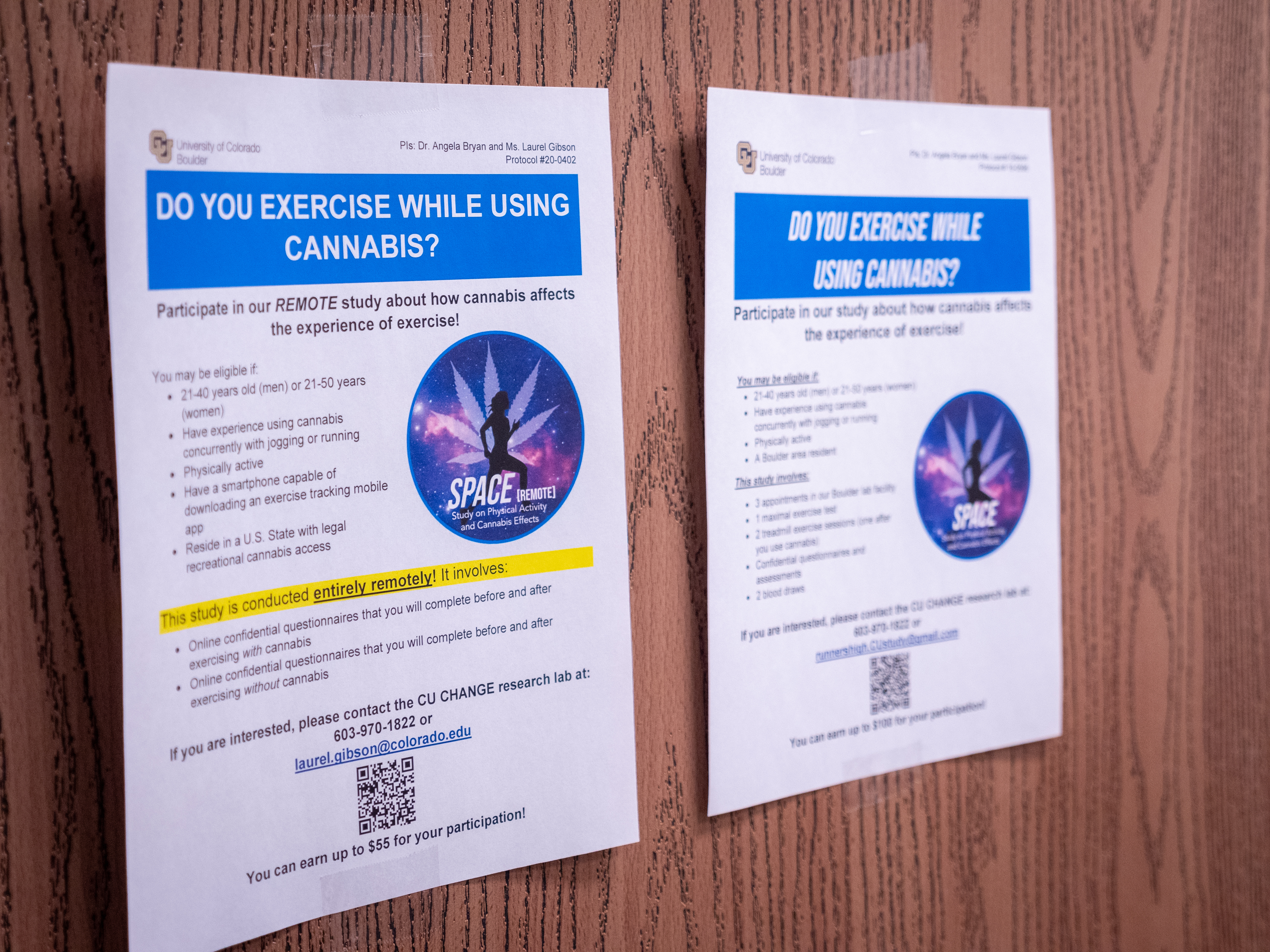
In a previous study conducted remotely, she and Gibson found that while runners felt more enjoyment under the influence of cannabis, they ran 31 seconds per mile slower.
“It is pretty clear from our research that cannabis is not a performance-enhancing drug,” said Bryan.
In fact, some studies have shown regular cannabis users are more at risk for coronary artery disease.
People who used marijuana daily were found to be about one-third more likely to develop coronary artery disease compared with people who have never used the drug, according to a 2023 study presented at the American College of Cardiology’s Annual Scientific Session Together With the World Congress of Cardiology.
The disease is the most common form of heart disease and occurs when the arteries that supply blood to the heart become narrowed due to a buildup of cholesterol, according to a news release. It commonly causes chest pain, shortness of breath and fatigue, and can lead to a heart attack.
“We found that cannabis use is linked to CAD, and there seems to be a dose-response relationship in that more frequent cannabis use is associated with a higher risk of CAD,” said Dr. Ishan Paranjpe, a resident physician at Stanford University and the study’s lead author, in a news release. “In terms of the public health message, it shows that there are probably certain harms of cannabis use that weren’t recognized before, and people should take that into account.”
The full article from CU Boulder is online at colorado.edu.
Get OutThere
Signup today for free and be the first to get notified on new updates.
PREV
PREVIOUS

From gold mining to a massive fire to serious flooding, here's how Denver came to be
Denver dates back to the Old West era, now a city full of culture and rich history that provides its residents with the extraordinary opportunity to experience Colorado’s outdoor space. The Mile High City offers thriving arts and culture, a walkable downtown, a great culinary scene, and features the stunning Rocky Mountains as a backdrop. […]

65 percent of Colorado is 'abnormally dry' or worse
Amid a dry winter thus far, drought has increased in Colorado. According to the US Drought Monitor, 65.35 percent of the state is abnormally dry or experiencing technical drought, a slight uptick from 63.31 percent last week. Included in that portion of the state, 29.59 percent of the state is in technical drought. This is […]