


Southern Colorado raptor center a place for discovery and recovery
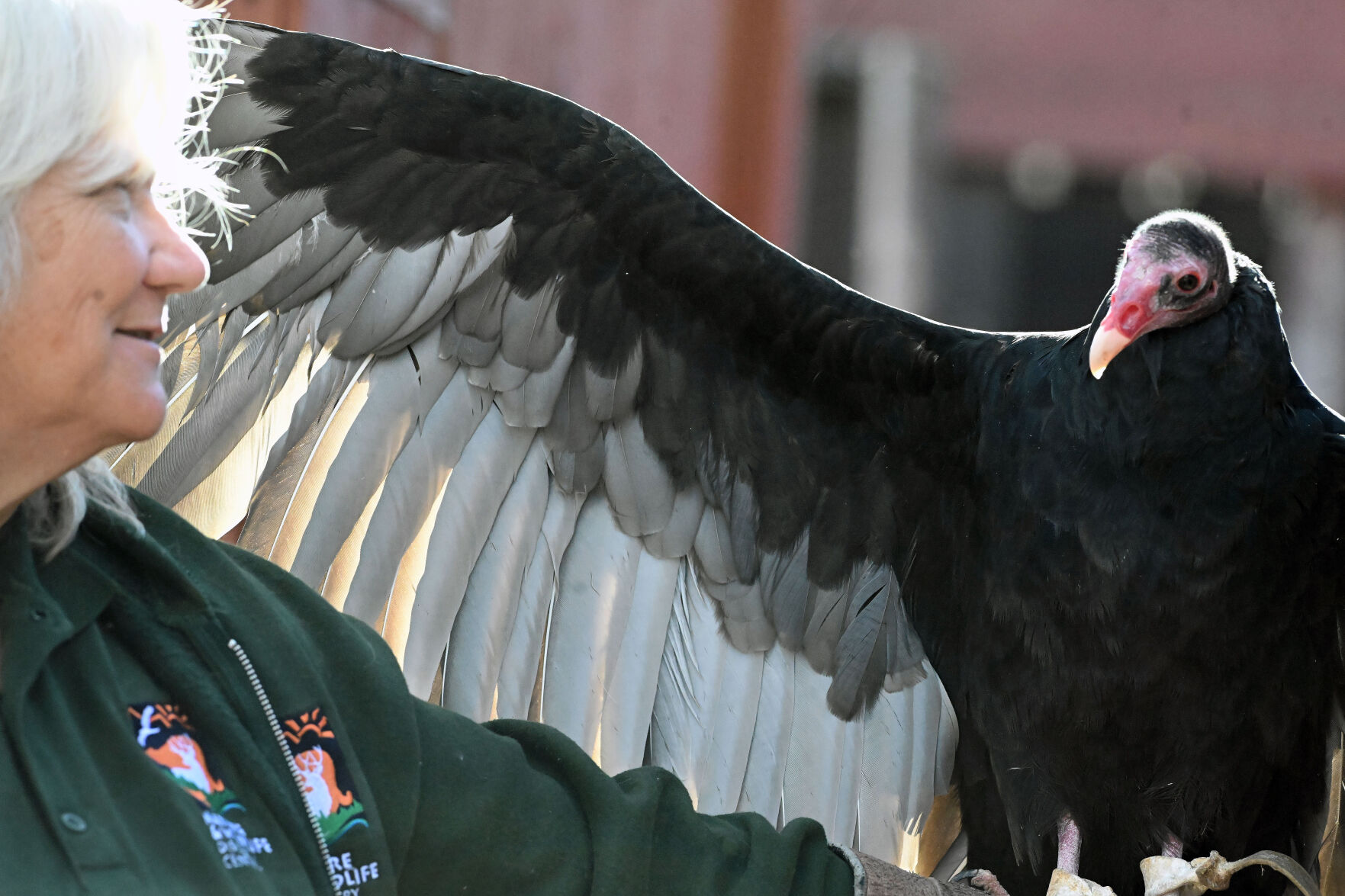
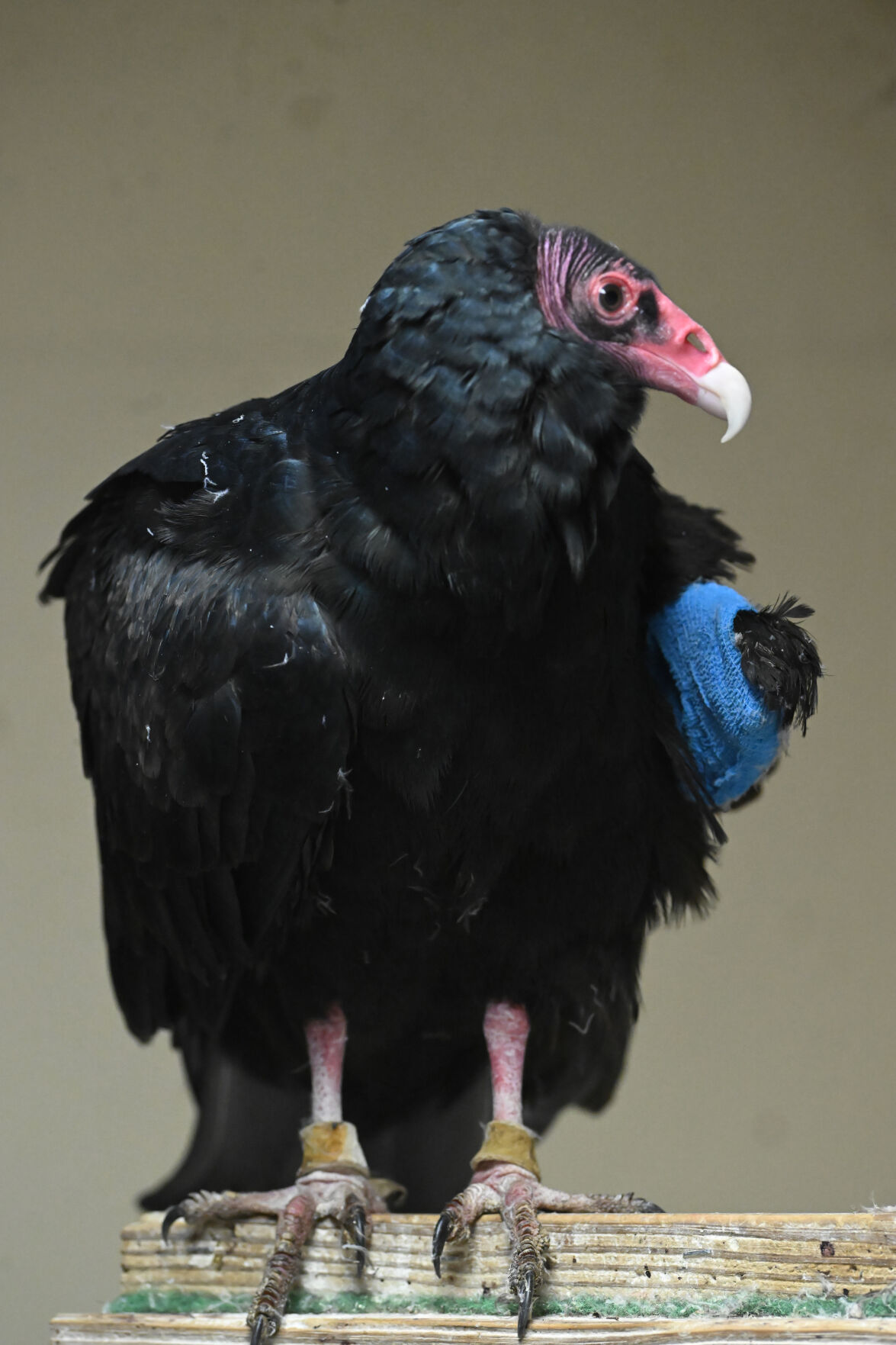
PUEBLO • There is a big, black bird that eats the dead, tends to vomit and looks at you with beady eyes from a red face that appears like rotting flesh.
Taylor Driver’s heart has been swayed by this bird.
“I don’t think I ever thought I would absolutely adore a turkey vulture,” she says.
Specifically, Driver has come to adore the turkey vulture named Lurch, who lives here at the Nature and Wildlife Discovery Center’s facility for birds of prey.
No, you don’t have to worry about Lurch vomiting, as his species does for defense.
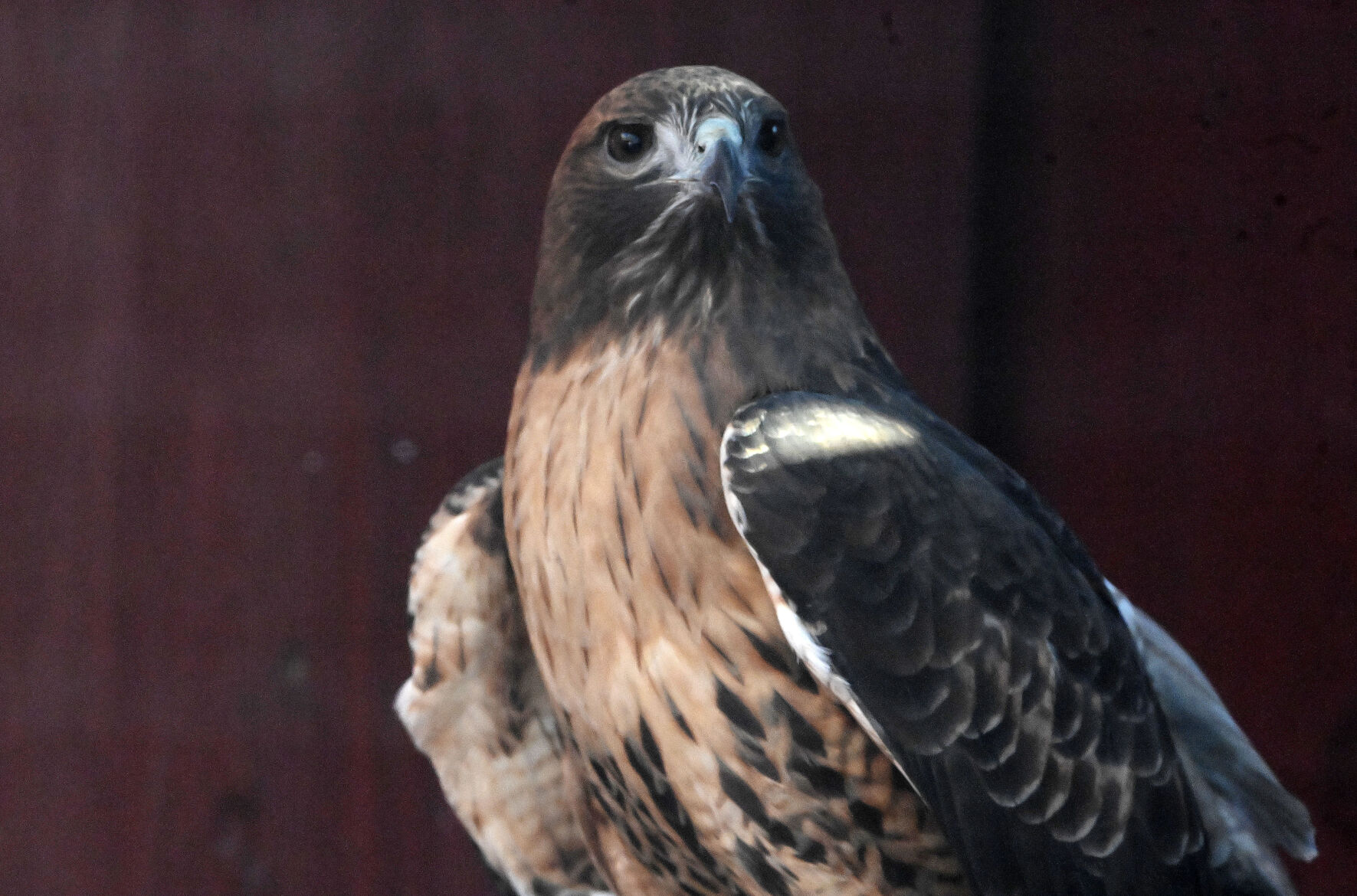
Lurch is among a team of 14 resident “educators” at the raptor center, including also Guffey the great horned owl, Piper the barn owl, Ernest and Carlos the Swainson’s hawks and Cliff and Theo the Peregrine falcons. They are injured and impaired raptors no longer flying but standing to teach visitors and classrooms about their kind.
The center reports reaching 7,500 people a year in an effort to inspire and to care for the great, winged creatures around us.
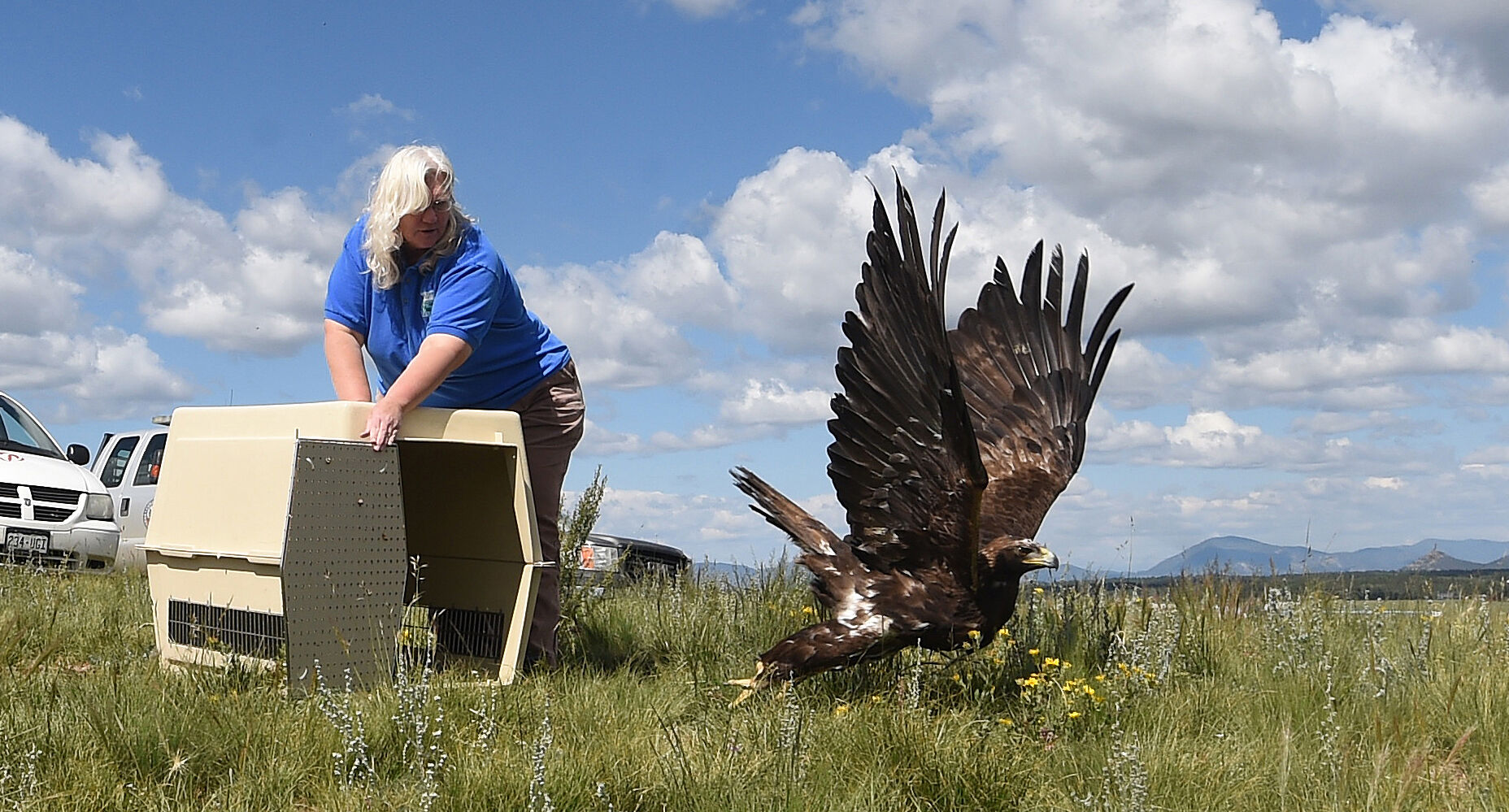
Staff and volunteers also work to rehabilitate birds found in poor conditions around southern Colorado and beyond. The center counts close to 300 birds that come through the door every year for treatment, surgery and a place to fly and build strength for a chance at new life in the wild.
Visitors come to admire the regal likes of eagles, hawks and falcons. In the case of Lurch, guests cringe at first. Then they get to know him and understand why he’s become a fan favorite over his 16 years at the center.
“You’re hard-pressed to say there’s a more charismatic bird in the facility,” says Driver, who has spent the past year as executive director of the nonprofit overseeing the center.
While others might dismiss Lurch’s kind as gross, feasting on maggot-infested roadkill, Driver is quick to make a point.
“They’re scavengers, going for dead or diseased on the road,” she says. “So they’re helping us in a way because they’re helping remove the potential spread of disease.”
It is but one point you might leave the center considering.
You might think about other things you’re told — about the power of a 3-pound great horned owl, for instance. It is said they are capable of creating 150 pounds of pressure from their talons.
And, in fact, the horns are not horns at all, notes volunteer Teresa Valenti. Guffey, tragically damaged from a car collision, is perched on Valenti’s hand now.
No, those aren’t horns, the volunteer says, but rather feathers. She says she loves to tell this to girls gathered around: “They’re called plumicorns.”
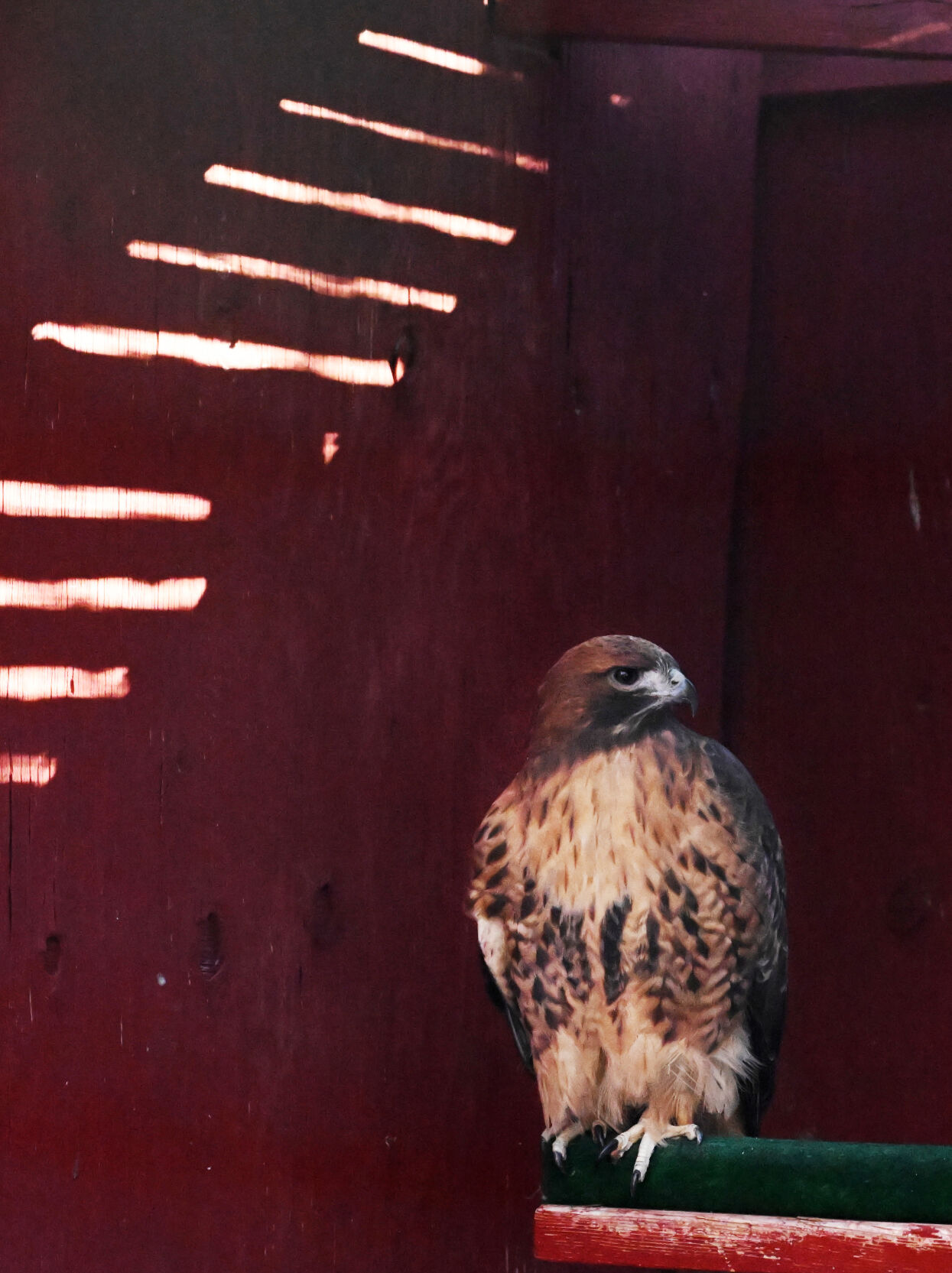
Consider this of the red-tailed hawk: They mate for life and male and female help to incubate the eggs. And the Swainson’s hawk — did you know one travels up to 7,000 miles twice a year? And have you ever heard the screech of a barn owl?
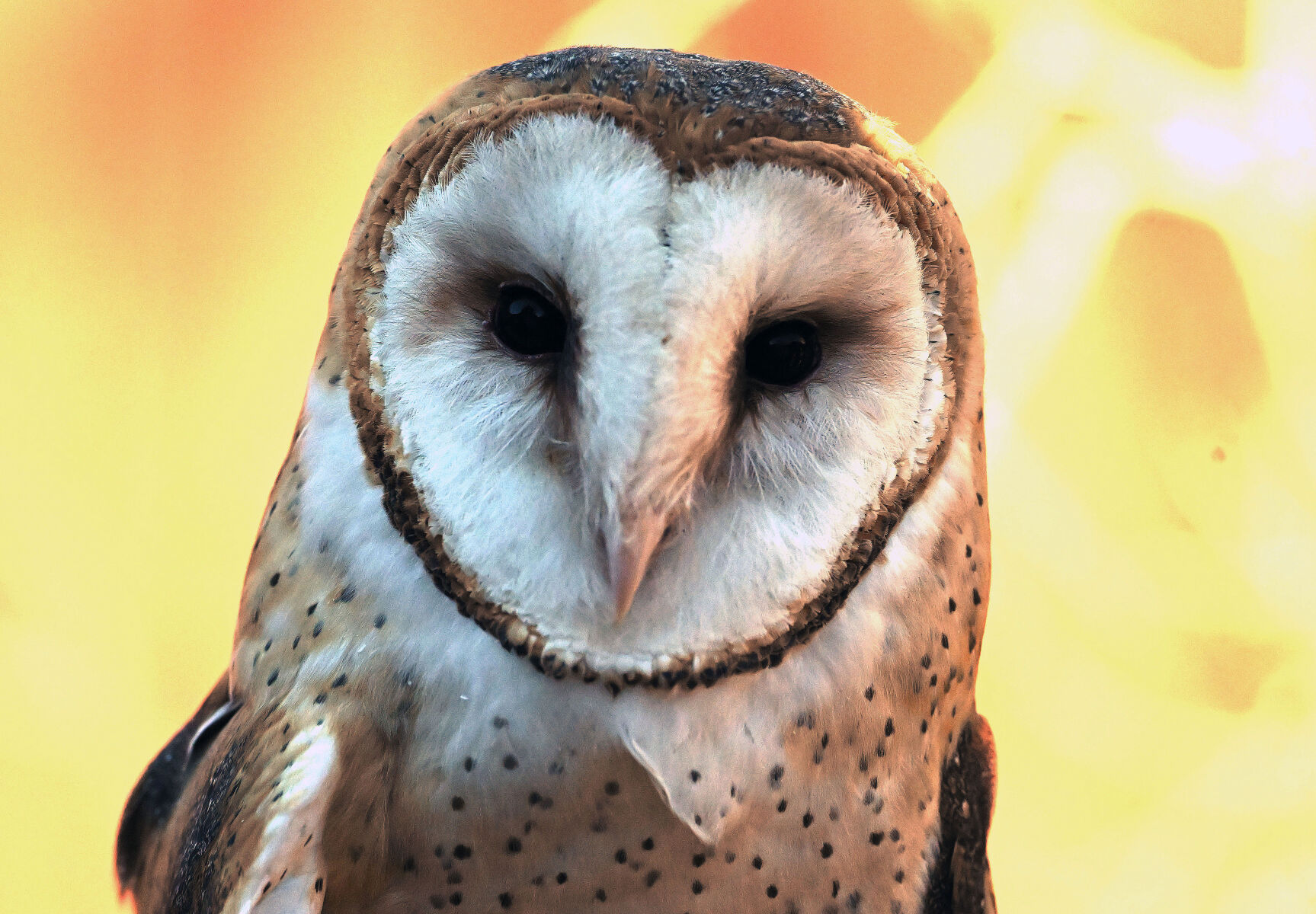
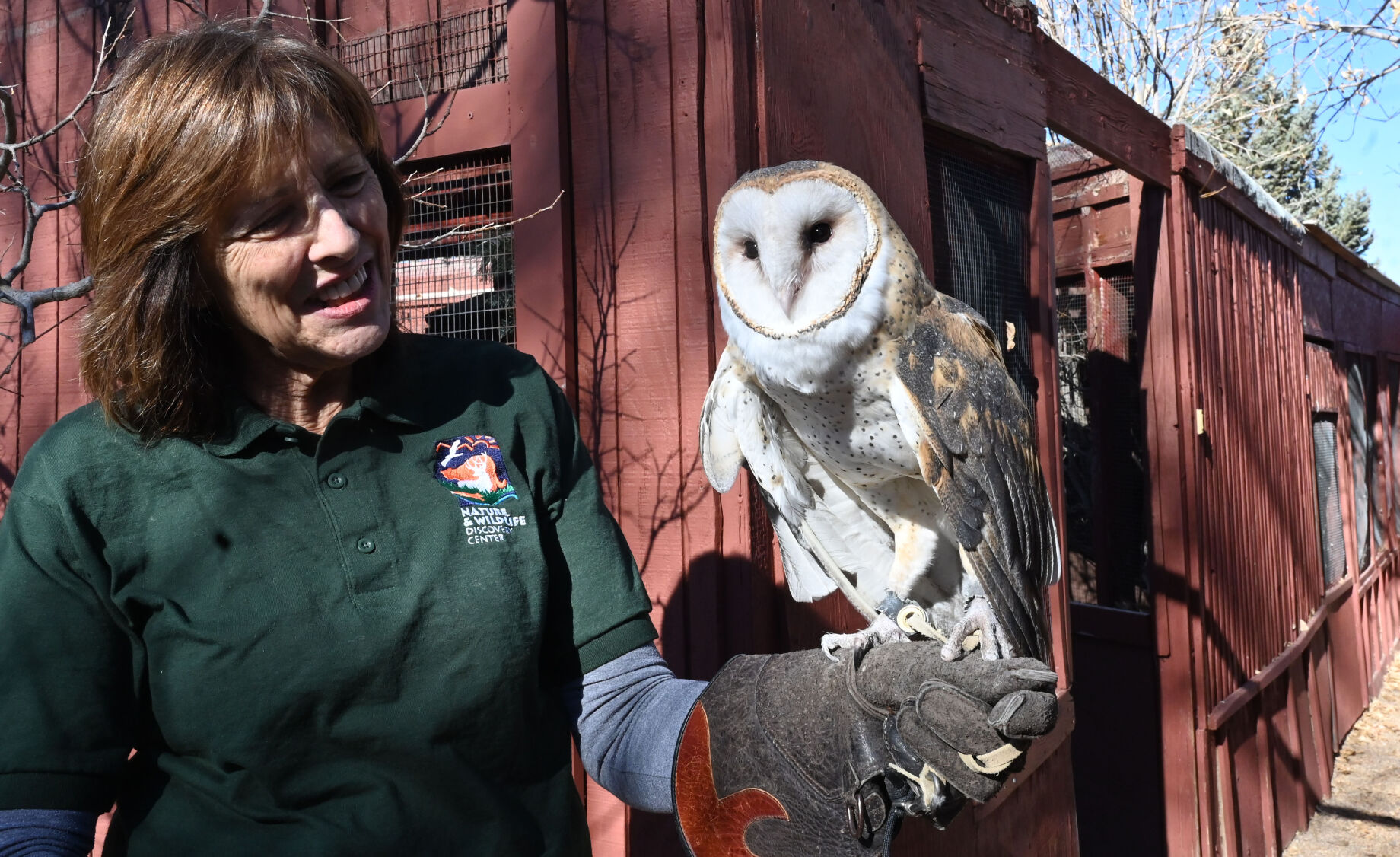
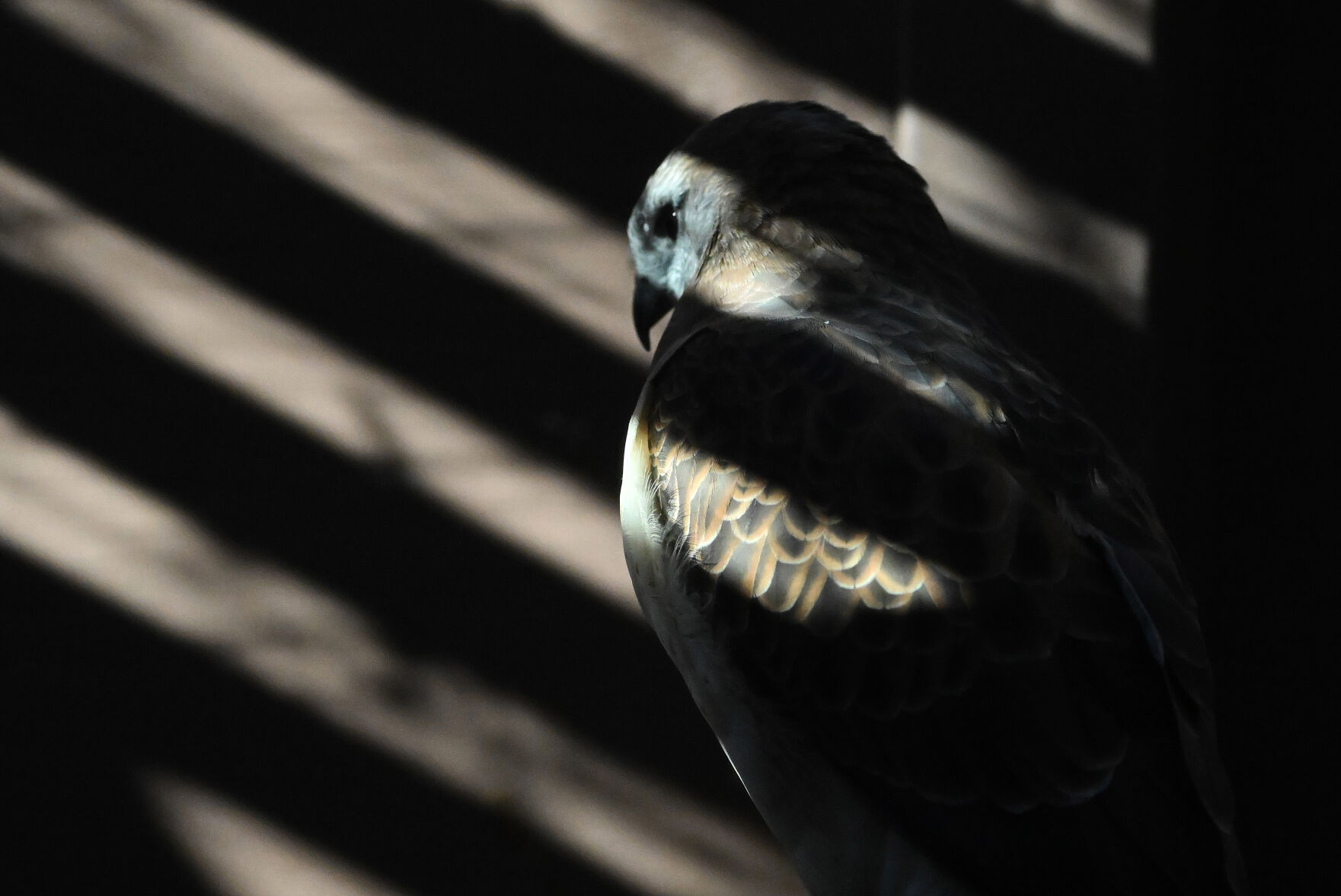
Piper, next to join Valenti, sounds like a tea kettle about to burst. Piper looks like something from a ghost story, pale and sharp with piercing eyes.
“You’re so pretty,” Valenti tells the bird that was found by a Colorado Parks and Wildlife officer, unable to fly.
Valenti is among a host of volunteers fulfilling any number of duties: educating, driving to the scene of a downed bird, packing rodents for feeding. And then there’s cleaning the cages. “Cleaning, cleaning and more cleaning,” Valenti says.
It’s rewarding, she says. She fell in love with the raptors about 20 years ago.
“The more I got to know about them, the more I recognized their strength and power,” she says.
And the more she came to respect the mission here at the raptor center, this old farm by the Arkansas River.
“I connected with the mission, which is ultimately stewardship of the Earth,” Valenti says. “This is my contribution.”
It’s been Diana Miller’s contribution for nearly 40 years here.
“My job is to help people understand and appreciate that these animals aren’t so different than we are,” she says. “They need everything we need. They need clean air, fresh air, healthy food and basically just a place to raise their families. We need to appreciate them as we appreciate each other.”
Miller is the center’s longtime director. She started as an intern in the 1980s.
The first director came to recognize the need in talking with wildlife officers around southern Colorado. “A lot of these officers were taking care of these birds in their garages,” Miller says.
Where there was prey — rabbits, prairie dogs, squirrels and such across the river-fed country — there were predator raptors. And there was a developing landscape.
“They’re losing habitat, they’re facing damage from human structures. Electricity, buildings, pesticides are a problem for a lot of species,” Miller says. “They’re just facing more and more challenges as the human population continues to expand.”
The gruesome results often are found in a room at the center — in the intensive care unit stocked with fluids, medicine and bandages. Other bloodied birds are rushed to a specialist in Colorado Springs.
Some return for more treatment, for medicating and feeding and careful watch as they get back to flying in a cage measuring 120 feet long and 20 feet high.
Many are beyond saving.
“You have to be able to release the animal as close to 100% as you can,” Miller says. “Being predators, many of them apex predators, I like to think of these birds as athletes, and they’re struggling for a gold medal all the time. Any imperfection to their bodies can hold them down and make it harder for them to catch their prey.”
Of the hundreds she meets every year, Miller says half might be deemed fit for a return to the wild.
“You’ll struggle for months trying to heal the bird to get back out there, and then the reality comes it’s not gonna happen,” she says. “You have to make those decisions to end their life.”

Those are hard decisions. That’s why Miller brings her two fluffy dogs to work.
“They’re the cuddle factor,” she says. “If you’re having a bad day, you can’t really cuddle an owl.”
But Agatha the great horned owl will say hello. For many years, she’s been a “foster mother” here; despite her missing wing and eye, she helps to socialize young, wayward ones brought to the center. “It means they’re socialized when they leave here, and their odds are better,” Miller says.
Neighboring Agatha is a pair of juvenile golden eagles learning to fly again. One is progressing well, Miller says, the other not so much. “He’s young and calm,” she says. “He could be an education candidate here or elsewhere.”
An educator, perhaps, like Lurch.
On command the turkey vulture spreads his wings, as if showing off. This is also instinct, you learn: however associated with dark shadows, the scavengers strike this “horaltic pose” to sun themselves, to let the rays bake the bacteria off their feathers.
Maybe the turkey vulture isn’t so unlike the rest of us, Miller suggests.
“The sun is critical to everybody,” she says. “Yep, you gotta have the sun.”
Get OutThere
Signup today for free and be the first to get notified on new updates.