







Denver to resume discharging immigrant families from shelters
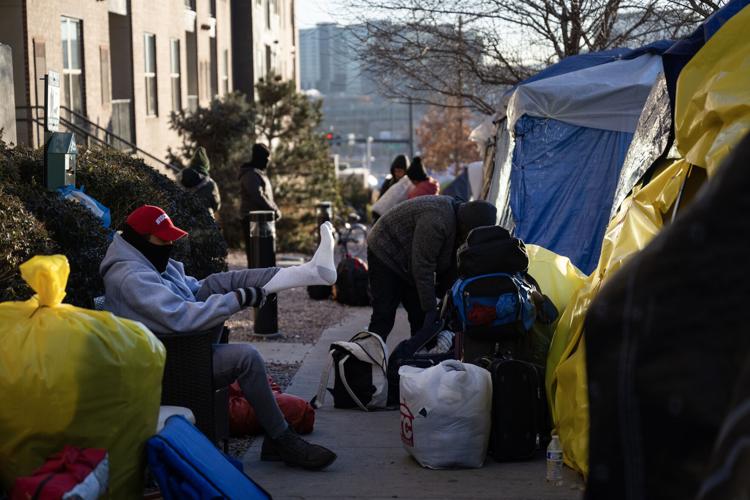
FILE PHOTO: Immigrants begin packing up their belongings during an encampment sweep at West 27th Avenue, between Zuni and Alcott Streets on Wednesday, Jan. 3, 2024, in Denver. (Timothy Hurst/Denver Gazette)
Timothy Hurst/Denver Gazette

Denver will resume discharging immigrant families with children from city-run shelters while extending its length-of-stay policy for families, city officials announced Wednesday.
The previous maximum stay for families was 37 days, which is being extended to 42 days.
“We don’t want to see people exiting the shelter and going onto the street,” said Jon Ewing, a Denver Human Services spokesperson.
Denver Human Services has been managing the humanitarian response since the city lifted the emergency declarations.
To address the homeless crisis among these new arrivals, the city shuttered a large immigrant encampment earlier this month on Zuni Street that housed roughly 300 people.
The new policy goes into effect Feb. 5.
An immigrant’s discharge from a shelter will be based on their Denver arrival date and occur on a rolling basis, Ewing said.
To qualify for a city-run shelter, immigrants must have arrived in the U.S. for fewer than 30 days before coming to Denver and possess an Alien Registration Number.
The city had paused discharges of immigrant families on Nov. 17.
Early in the humanitarian crisis — which started at the U.S. border with Mexico, but has spilled into the interior — Denver officials decided that the city would assume the cost of temporarily housing the new arrivals and paying for them to travel to the city of their choice.
Officials have speculated immigrants are drawn to Denver because of its relative proximity to the Mexico border while others believe the appeal is its status as a “sanctuary city,” a designation for cities that establish policies discouraging local law enforcement from reporting an individual’s immigration status to federal authorities.
As of Wednesday morning, Denver had received 37,580 immigrants from South and Central America, particularly Venezuela.
After more than a month of daily new arrivals breaking records, the pace has slowed to trickle — something Ewing suggested may be related to the subzero temperatures that started last weekend.
“More buses are coming,” Ewing said.
Changes to the city’s length-of-stay policy comes as Denver has endured several weeks of a significant surge in arrivals from the southern border.
Last week, Mayor Mike Johnston warned City Council that Denver had reached a breaking point and instructed department heads to identify 10% to 15% cuts to help the city brace for the escalating costs, which could hit $180 million this year.
To date, the city has reported spending more than $38 million on the humanitarian response. Despite state and federal grants totaling $14.1 million, the bulk of the cost has been assumed by Denver taxpayers.
The influx — characterized by officials as the fourth significant surge of new arrivals since November 2022 — is straining capacity.
“We simply do not have the space or the staff to continue this forever,” Ewing said.
Ewing added: “The inn is about full.”