







Bird Call: Colorado Springs raptor expert to speak about owls at Colorado bird festival
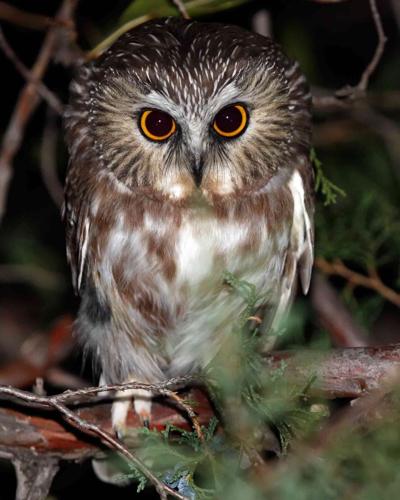
Northern saw-whet owl. Photo by Debbie Barnes-Shankster
An unusual interaction with a bird is often one way a bird lover is born.
For Debbie Barnes- Shankster, it was the black-capped chickadee that alighted on her hand when she was 6 to steal seeds a farmer had poured into her open paw.
“I was immediately charmed,” she said. “I’ve loved chickadees since then.”
But not only the tiny birds with the sweet, distinctive calls. Barnes-Shankster loves them all and also loves to help people identify raptors. She teaches raptor identification classes around the Pikes Peak region, including for the Colorado State Raptor Monitors and Cheyenne Mountain State Park.
Bird Call: Monogamy lessons from birds
“It’s a challenge to find the little ones and ID them,” said the Colorado Springs resident. “I’m always looking at wildlife when I’m out hiking. I get charmed by watching them do their thing, building nests, finding food, calling, chasing off rivals.”
Barnes-Shankster will present a program about the owls of Colorado during the Feb. 2-4 High Plains Snow Goose Festival in Lamar. Barnes-Shankster’s free program is 2 p.m. Feb. 3 at Lamar High School, 1900 S. 11th St. She’ll focus on how to prevent nest abandonment, breeding information and where they live. She’ll show her owl photos and play some of their calls to help people identify them.
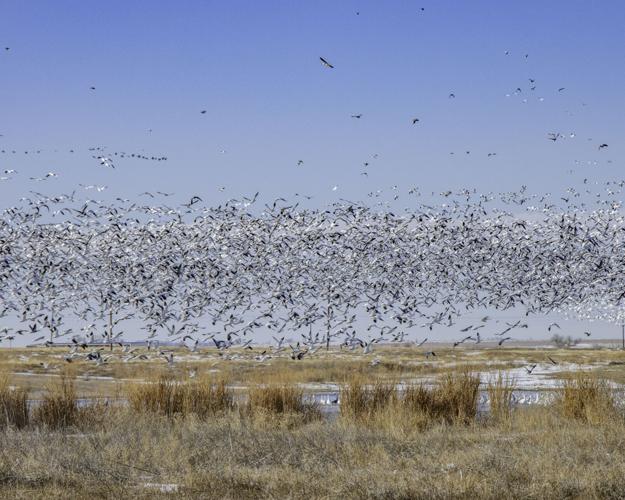
While the festival covers all flavors of birds found in southeastern Colorado, its selling point is snow geese. Over the last couple of decades the geese have grown into a breeding population close to 6 million, hundreds of thousands of which migrate through southeastern Colorado every year and take advantage of Prowers County ponds, lakes and reservoirs.
Colorado Parks and Wildlife keeps tabs on the snowy white birds and alerts festival organizers to their numbers and whereabouts. Weather is the biggest determining factor in the number of birds. The birds like cold weather, and if it warms up, they peace out.
Bird Call: There’s a murderer on the loose
The three-day festival features programs, field trips and seminars in and around Lamar, including trips to John Martin Reservoir and Colorado Mills. Many programs are free and some require pre-registration.
“There are a lot of snow geese, but it depends on the year,” Barnes-Shankster said.
“There’s Canada geese and a good amount of raptors from up north. Things are slow this year because there’s a lot less snow north of us so there are less raptors down here. We have residential raptors, but also those that come in winter. A lot will come down here to spend winter and fly north to breed. Sometimes we have wintering bluebirds down there.”
Though she fell for a chickadee early in life, it wasn’t until her 30s that Barnes-Shankster became a birder. As a photographer she would shoot landscapes and wildlife and always see little birds that fascinated her, but she couldn’t identify, though she was adept at recognizing big birds.
After falling into a crowd of bird-banders who helped school her on those smaller birds, in 2007 a park naturalist saw her raptor photos and asked if they could use them to put together a raptor identification training. Following that, she was invited to do a Colorado breeding bird atlas and eventually became an Aiken Audubon Society board member for a while and helped set up programs, lead field trips and spoke at annual raptor identification meetings. These days she also leads field trips for the annual Pikes Peak Birding & Nature Festival in May.
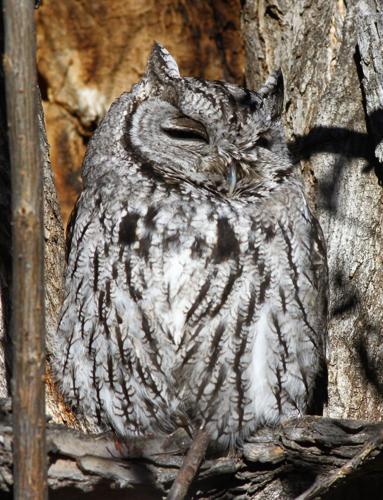
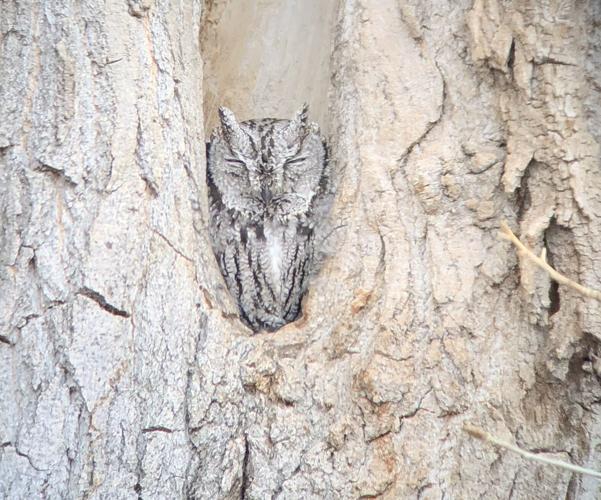
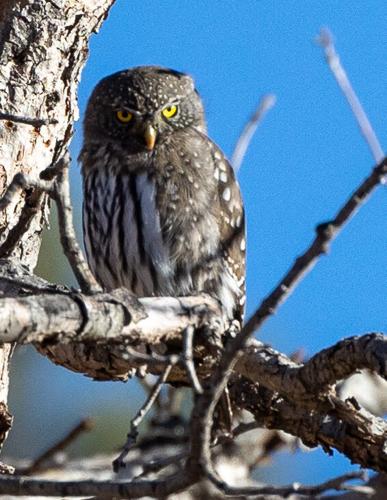
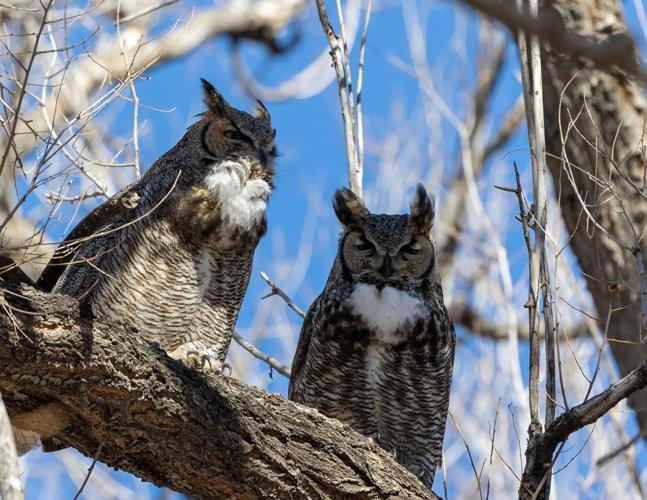
Great horned owls are the most prevalent species in the Pikes Peak region, though Barnes-Shankster also will talk about long-eared, Mexican spotted, Eastern and Western screech, boreal, northern saw-whet and Northern pygmy owls.
Heart-shaped face, puppy-like tendencies: Meet the barn owl at Cheyenne Mountain Zoo
It’s an ideal time to focus on owls, as December and January is their courtship time. They’re likely already sitting on eggs in old raptor or crow nests or in nests in old buildings.
“The great horned is the largest and easiest to find,” Barnes-Shankster said. “We call them a tree cancer — when there’s an odd branch sticking up or a bump out on a trunk, that’s usually an owl.”
This is also the time to remind humans with their cameras to curb their curiosity about owls to protect the next generation of owlets.
“People want the picture and if they get too close and if the eggs haven’t hatched they’re likely to abandon the nest because they’re being harassed,” Barnes-Shankster said. “Usually during the day they’re roosting and sitting quietly with eyes closed. If you see an owl opening its eyes and looking at you, you’re too close.”
Contact the writer: 636-0270