







Colorado traffic fatalities decrease, but pedestrians and cyclists’ deaths increase
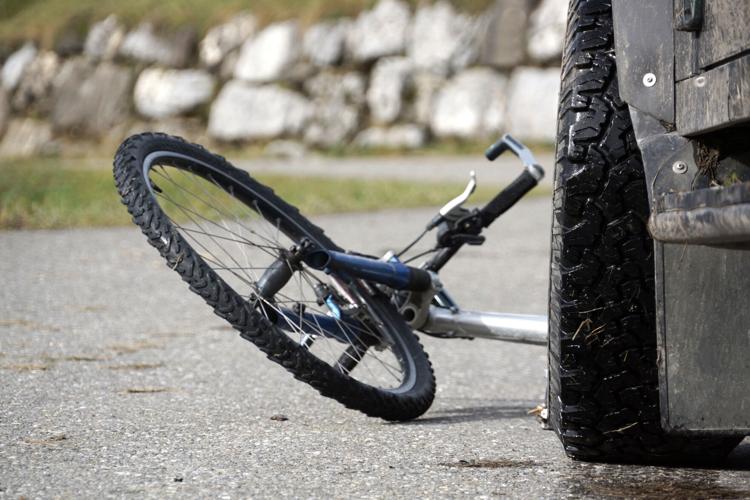
File photo. Photo Credit: cobalt (iStock).
cobalt

Colorado saw a notable decrease in overall traffic fatalities last year, but deaths among pedestrians and cyclists increased significantly, state officials reported.
Denver’s numbers mirror the trend in pedestrian deaths.
Data showed a 6% decrease in traffic fatalities on Colorado roads last year, as compared to 2022, the first decline since 2019, officials said in a news release.
The numbers are preliminary and may change as the data is solidified.
Colorado State Patrol Chief Matthew Packard said the decrease in traffic deaths is something to “celebrate,” but he added much more needs to be done, particularly for pedestrians.
He said he is “cautiously optimistic.”
“That’s something that we should celebrate and learn from to see what worked in 2023 that started this downward trajectory,” Packard said. “Make no mistake — we have work to do.”
Keith Stefanik, chief engineer at the Colorado Department of Transportation, said the only tolerable number of traffic fatalities is zero.
“We must re-commit ourselves to safety,” Stefanik said. “This includes always buckling up, keeping our speeds down, staying off our phones and never driving impaired.”
This past year, Colorado saw 716 traffic deaths. Of the total, 408 were passenger deaths; 134 were motorcycle deaths; 227 were impaired driving deaths; 216 were unbuckled seat belt deaths; 133 were pedestrian deaths; 20 were bicycle deaths; and 16 were construction zone deaths.
Pedestrian, bicycle and construction zone deaths all increased from 2022 to 2023, while the fatalities in all of the other categories decreased.
In Denver alone, there were 28 fatal pedestrian crashes in 2023, according to data from the Denver Police Department. By comparison, there were 21 in 2022, 16 in 2021 and 16 in 2020.
A separate data set from the medical examiner’s office showed that 13 homeless people died as a result of pedestrian-auto crashes. The data included both bicycle and auto-pedestrian collisions, though it didn’t break down how many of the 13 were on foot or riding bicycles.
The increase in deaths occurred five years after Denver launched “Vision Zero,” its campaign to eliminate traffic-related deaths to zero by 2030.
Meanwhile, Denver officials are doubling down on a strategy that puts primacy on mass transit, bike lanes and pedestrian traffic, pushed by activists, some of whom regard vehicles as incompatible to dense, urban living.
CDOT attributed the overall decrease in fatalities to safety initiatives. The department is also launching a new awareness campaign that officials say will motivate driving behavior changes.
The organization’s Highway Safety Office will also award over $13.5 million in federal funds from the National Highway Traffic Safety Administration to local partners in education, awareness and prevention. The office will also support law enforcement agencies doing DUI and seatbelt enforcement, officials said.
Skyler McKinley, spokesperson for Colorado AAA, said more conversations need to happen on the legislative level about what can be done to protect vulnerable road users.
The numbers, while they dropped into 2023, are still frustrating because they are preventable, McKinley said.
“At the leadership level in this state, we’ve not decided we’re going to do anything about this in a meaningful way in years,” McKinley said. “We don’t have a primary belt law.”
“There’s some low hanging fruit that we just ignore and year after year, I get a report saying hundreds of people are dead,” he added.
The biggest reason for fatal crashes in 2023 is speed, Packard of the Colorado State Patrol said, noting that speed is also the most controllable factor.
When measuring the time difference getting one place to the next with speeding, it’s often just seconds, Packard said, adding that, sometimes, it’s nothing.
Next on the list is impaired driving, which Packard says leaves him at a “loss for words,” knowing there are so many other ways to get around that don’t involve driving impaired.
“It’s a selfish decision,” he said. “It’s a decision you make to take other peoples’ lives in your hands.”
Packard said it’s as simple as staying sober, putting down the distractions and slowing down.
“The quality of life in your community is significantly influenced by your ability to travel safely on Colorado’s roads,” Packard said. “Do your part and I promise we, here at the state, will do ours.”
Jennifer Hillhouse, the director of transportation mobility for Denver’s Department of Planning, Transportation and Infrastructure, said officials have identified a high priority, high-injury network of roadways, a portion of roadways that lead to the most injuries and deaths in Denver.
Reducing traffic deaths takes a multi-pronged approach, she said.
“It’s safe streets, it’s safe road users and safe vehicles. It requires better design really focused on building that redundancy in the system that accounts for mistakes that will be made, slower speed … and reduction of risky driving behavior such as impaired driving,” Hillhouse said.
Vehicles being sold are getting faster, bigger and heavier, Hillhouse said, adding that leads to more dangerous crash situations.
“I just want to light a fire in people’s hearts that this is just such an easy thing people can do so they can go home at night,” Packard said. “When you look in that young person’s eyes, when you tell them mom or dad is not coming home, that’s a match to start a passion like none other. So many of us in this room have that and we need more people to realize that.”