







DCPA’s new road-trip comedy continues commitment to Latino storytelling
'Cebollas' follows three sisters up I-25 from Albuquerque to Denver with dead body in tow


For 15 years, the DCPA Theatre Company has been demonstrating what has proven to be an authentic and ongoing commitment to Denver’s largest ethnic minority by regularly telling stories of the Latino community for the entire community.
Going back to Adam and Eve, the bedrock of all storytelling has been sharing relatable stories about families. And since 2008, when the DCPA Theatre Company introduced a devastating play called “Lydia,” it has been showing by recurring example that stories about the specific struggles and joys of one family are stories that all American families can identify with.
“Lydia” was the story of a maid and the bond she forges with a young disabled woman. “American Mariachi” focused on a young Latina who defies her father and her history by forming an all-female mariachi band in 1970s Denver.

While it is inherently imperative that any large regional performing-arts center like the DCPA tell stories by and about Latinos, who make up 30 percent of the Denver population, it is also important for them to stage Latino stories that all audiences can learn from, laugh with and cry through together. The DCPA’s considerable body of Latino stories is one that has collectively reinforced the universal truth that no community’s story – or history – is any single story.
And the most universal language, of course, is laughter. Friday marks the premiere of Leonard Madrid’s “Cebollas,” the raucous tale of three bickering, bonded sisters who are on a 450-mile road trip up I-25 from Albuquerque to Denver with a dead body, “Weekend at Bernie’s”-style.
Who hasn’t been there?

“I think it’s the specificity of the relationships that leads to any story being universal,” said “Cebollas” director Jerry Ruiz, whose staging brings home Chatfield High School and University of Northern Colorado graduate Jamie Ann Romero to play a profusely pregnant sister named Yolie. She’s fresh off her Broadway debut in “The Cottage.”
“Denver loves Jamie Ann Romero,” Ruiz said in what has to be the least contestable statement of this election season to date.
And talk about family. Romero is coming home to be with both her blood family and her chosen theater family at the Denver Center. “Cebollas” will mark her fifth play with the DCPA Theatre Company, including a go playing another profoundly pregnant character in “The Legend of Georgia McBride.”

“When I moved back to Denver after college, I used to drive on Speer Boulevard to go to work, and I had this little mantra,” Romero said. “Whenever I drove by the Denver Center, I would say, ‘I’m going to work there someday.’
“The Denver Center has been such a big part of my life – and not just my career – that I would jump at any opportunity to come here. I love working here. The theater is always incredible. The people here are incredible. It feels like coming home.”
Home in Denver, where her blood family has to drive 20 miles, not 2,000, to see her perform.
“One of the great joys of getting to come back and do a show at the Denver Center is that my actual family can come and see the shows, when they can’t always travel to New York or wherever I happen to be,” she said.
Ruiz’s own blood and chosen families intersected in 2016 when he was here to direct a reading of a developing Latino play called “FADE,” and he got the call no one ever wants to take.
“My mom said, ‘You had better come home,’” said Ruiz, whose father had suffered a heart attack and soon passed away. But when the play was chosen to be fully staged as part of the company’s next theater season, the Denver Center invited Ruiz back to direct it.
Ruiz and Romero were both part of the team when “Cebollas” was workshopped as part of the company’s 2022 Colorado New Play Summit. Romero’s primary takeaway from that experience was just how fun it was.
“This story has so many flavors of my own life,” she said. “I’ve made this exact road trip many times – and some of the jokes this family makes are jokes that my family makes.”
While the story revolves around the ultimate fate of one comically moribund man, what it is really about, Romero said, “is the three sisters who go on this trip and discover new things about each other – and their relationship is deepened and strengthened because of that.”
Audiences will giggle at references to recognizable regional landmarks along the way, from the legendary Charlie’s Spic & Span Cafe in Las Vegas, N.M., to poor, weird Castle Rock. (“It’s not a hill. It’s not a mountain. I guess it’s a butte.”) Not to mention the IKEA that is as big as a city, and the apparently now legendarily confusing Downing Street exit.
Anyone who has a sister, Ruiz said, will identify with the story.
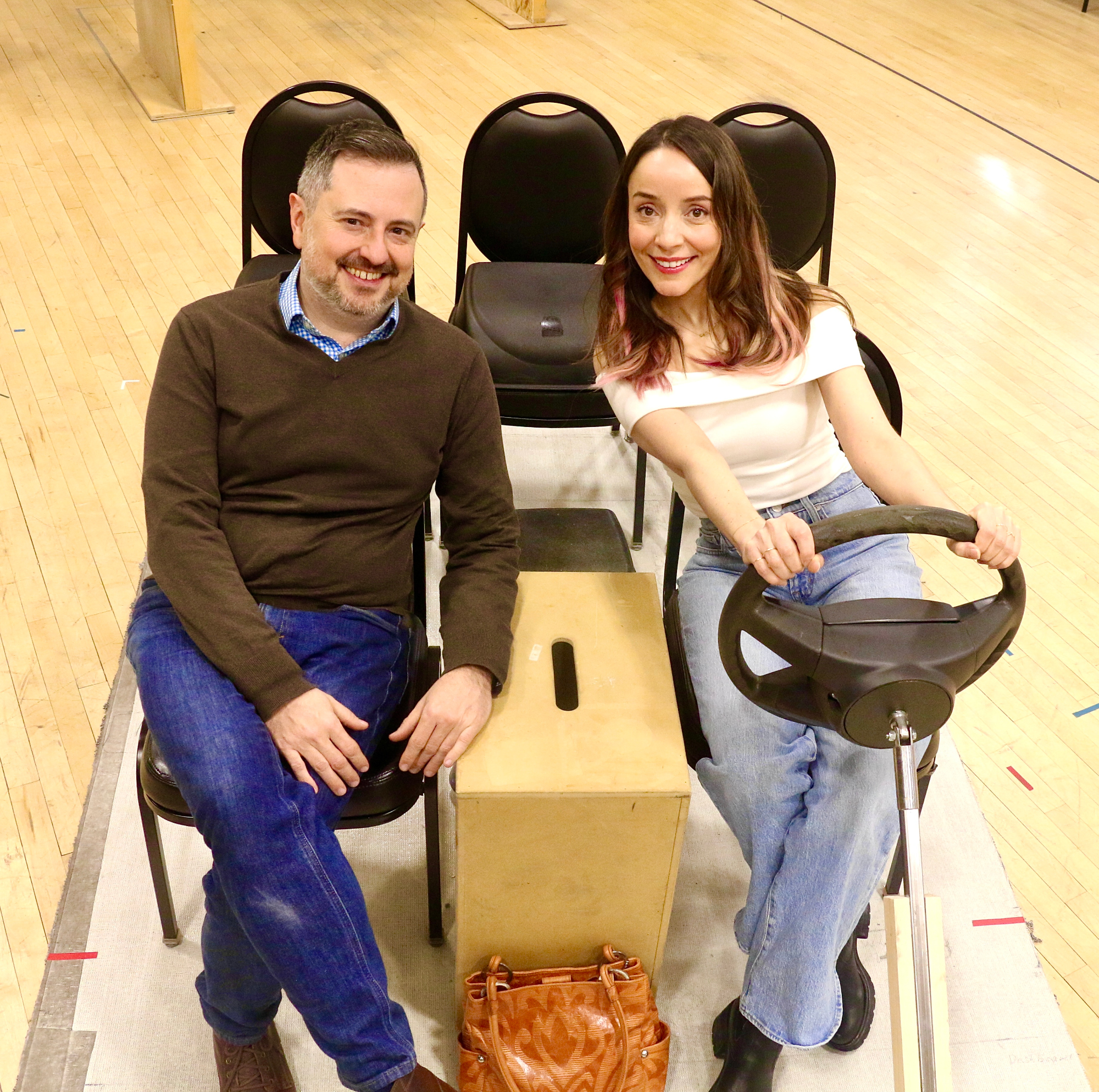
“Part of the fun of this play is how well these sisters know each other and how they’re always able to call each other out or predict what another sister is going to do next,” said Ruiz. That’s so universal, this idea of knowing someone so well and loving them completely – but they drive you kind of crazy, too. That kind of love is universal.”
The title of the play comes from the Spanish word for onion. “That’s a central image for how the sisters remember their late mother,” said Ruiz. “She was always standing in the kitchen chopping onions and crying, and in a way she was chopping onions to mask her sadness.”
“One of the metaphors of the play,” he added, “is how the layers of these sisters get pulled away and we find out more about them and this family’s story.”
One that, Romero promises, “is fun, funny, touching and moving.” And not just for those whose roots run deep right here in Colorado – but for families everywhere, no matter where their onions are planted.

DCPA Theatre Company/Latino tales since 2008
2024: “Cebollas,” by Leonard Madrid: Three sisters take a road trip from Albuquerque to Denver – with a dead body.
2023: “Laughs in Spanish,” by Alexis Scheer: Part crime comedy, part telenovela about the Latina director of a swanky modern art gallery in Miami who needs help from her TV star mother when her gallery becomes a crime scene.
2022: “Quixote Nuevo,” by Octavio Solis: A modern reimagining of the Cervantes legend (“Man of La Mancha”) set in a Texas border town where Quixote and his trusty sidekick embark on a fantastical quest for love.
2020: “twenty50,” by Tony Meneses: In the near-future, when Whites are no longer in the American majority, a man running for office must decide whether identifying himself as a Mexican American will help or hinder him on Election Day.
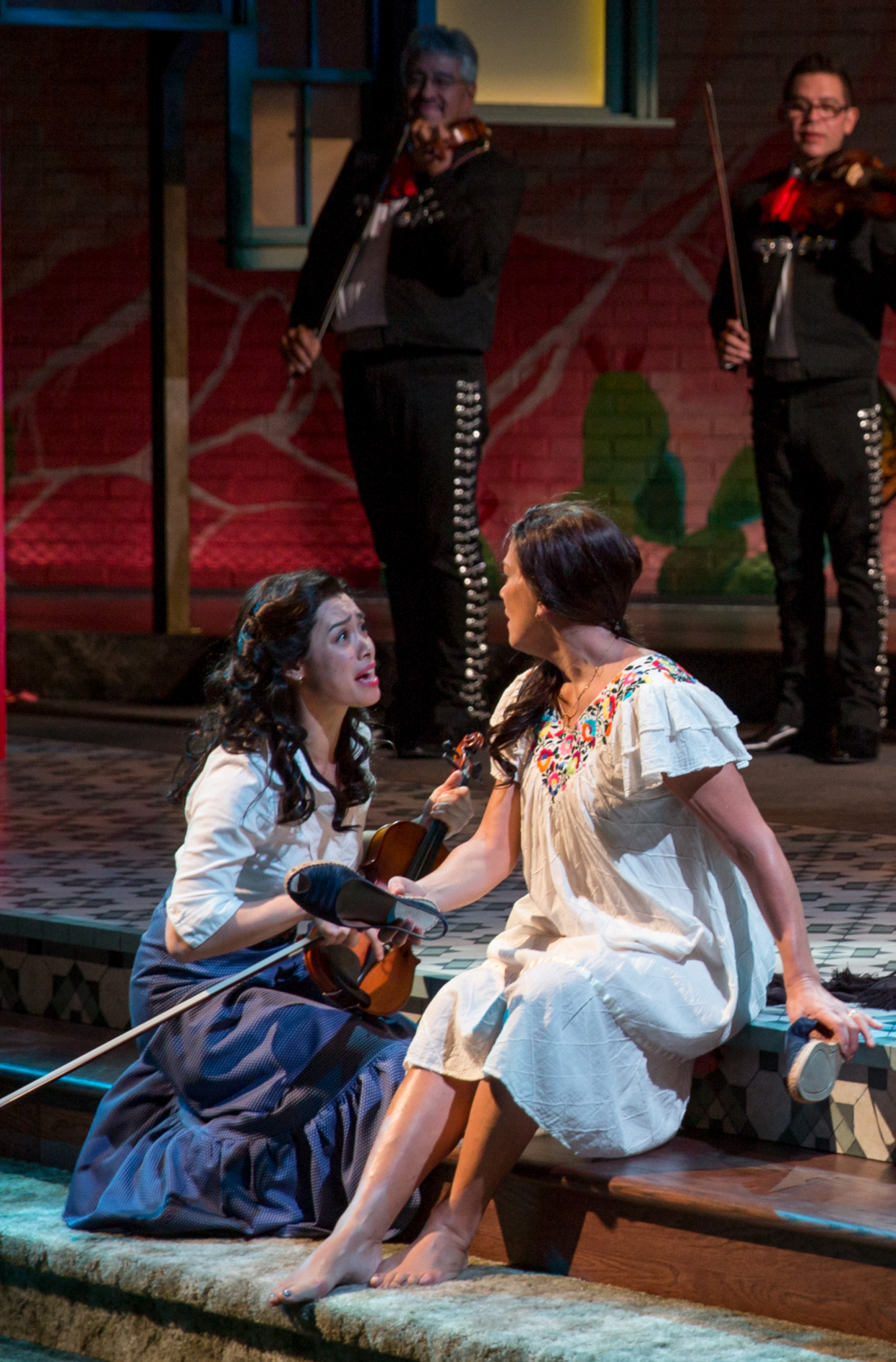
2018: “American Mariachi,” by José Cruz González: This play with live music follows a young Denver Latina who starts an all-female mariachi group in the 1970s.
2018: “Native Gardens,” by Karen Zacarías: Popular comedy about two neighboring couples who live side-by-side in an established suburb of Washington, D.C. One is older and White, the other younger and Latinx.
2016: “FADE,” by Tanya Saracho: A Latina writer hired as a diversity token by a Hollywood TV show befriends and feuds with the third-generation American Chicano who works as her custodian.
2015: “Just Like Us,” by Karen Zacarías: This world-premiere adaptation of Helen Thorpe’s bestselling book follows four Latina girls as they complete their final year at Denver North High School.
2011: “American Night,” by Richard Montoya: As a man studies for his citizenship exam, a motley crew of unsung immigrants invades his dreams, telling tales not found in history books.
2010: “The House of the Spirits”: Caridad Svich’s poetic adaptation of Isabel Allende’s historical novel spanning four generations of social and political turmoil in Chile.
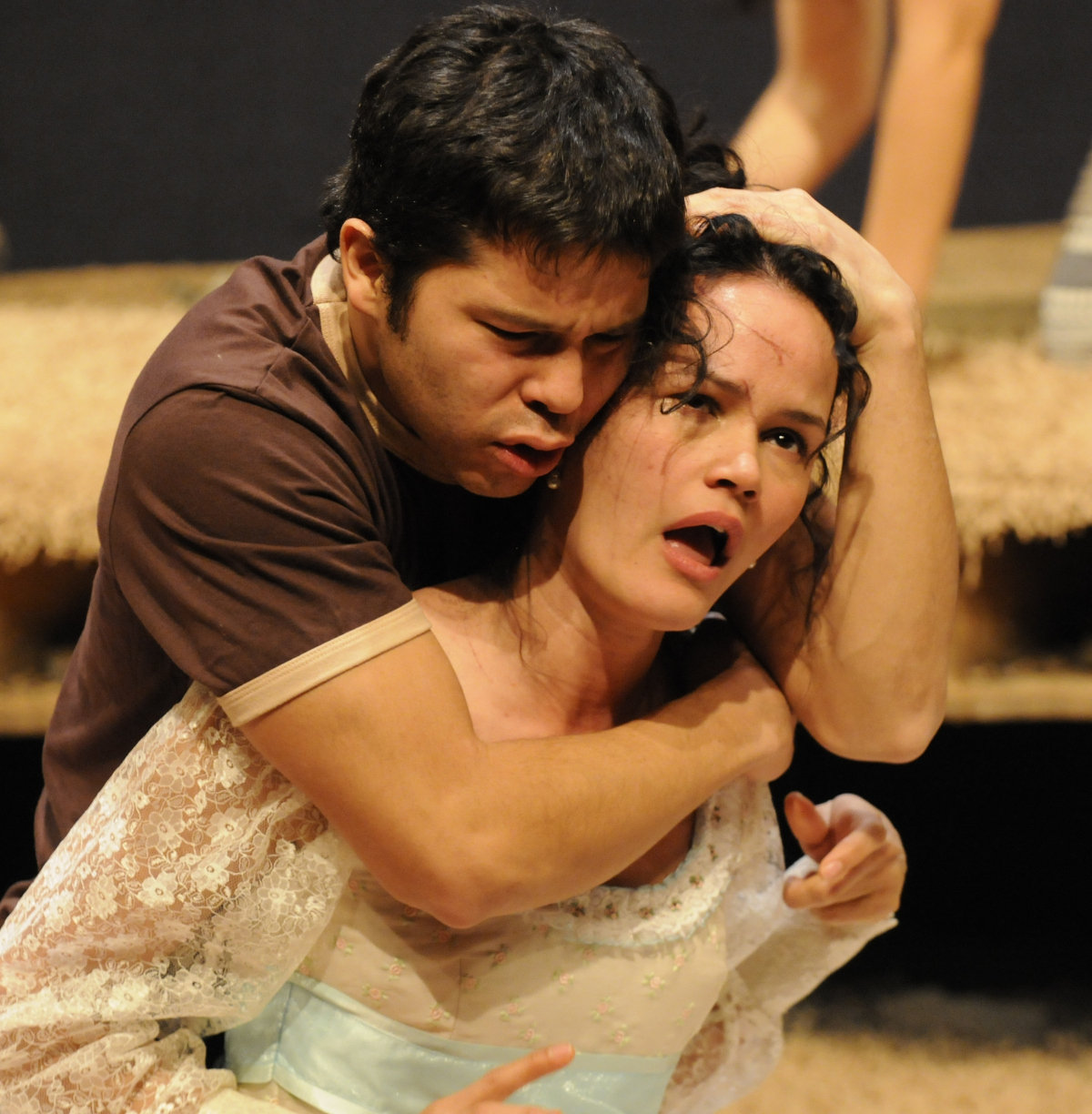
2010: “Mariela in the Desert,” by Karen Zacarías: A deadly mystery set in the northern Mexican desert in 1950 about what happens to a family when creativity is forced to dry and wither away.
2009: “Sunsets and Margaritas,” by José Cruz Gonzalez: Three generations of a Mexican American family are plunged into one comic crisis after another when the patriarch begins to lose control of his restaurant – and his family.
2008: “Lydia,” by Octavio Solis: World premiere of a riveting play about a Mexican American teenager who is disabled just as she is coming of age.
