







Aurora homeless navigation campus project draws support, worries

Xing Jiao Chen talks to a customer on the phone while working at the restaurant she owns, Zume Asian Cuisine, 15470 Andrews Dr. #22B. Her restaurant is in a strip mall right across the street from the hotel recently purchased by the City of Aurora to be used for its regional navigation campus for homelessness services.
Kyla Pearce/Denver Gazette


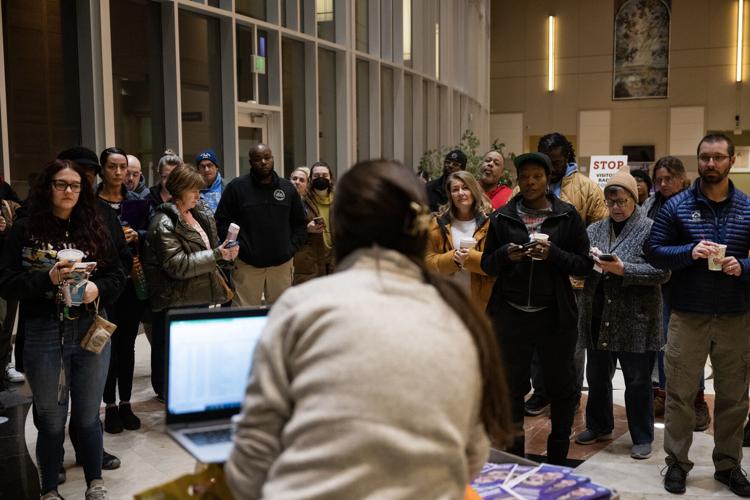
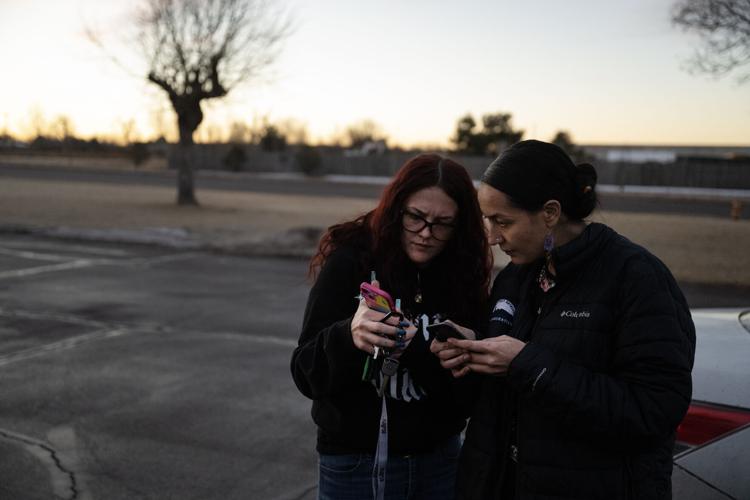
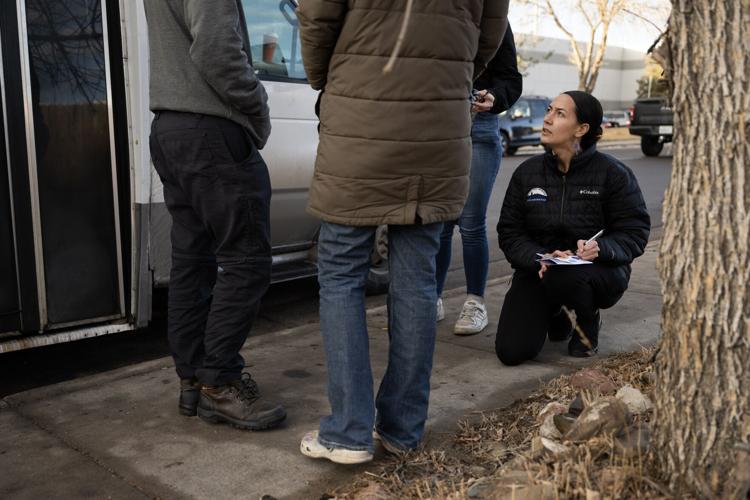

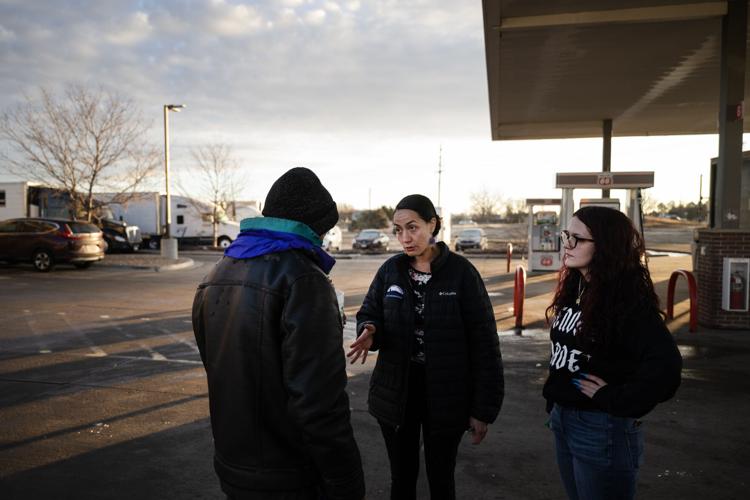


A “one-stop shop” for homelessness services in Aurora is drawing mixed reviews, with service providers calling it a good idea while others worry about its effects on the neighborhood.
Once established, the proposed regional navigation campus would consolidate services for homeless people in one location, a model similar to that of the Colorado Springs Rescue Mission. The center would be the culmination of a year-long exploration by city officials who also traveled to Texas, where they researched strategies to reduce homelessness.
As envisioned, the campus would contain a strong incentive system, in which homeless people would be offered housing based on tiers, with increasing responsibilities and requirements in exchange for better services and living arrangements.
Mayor’s vision: tiers of housing, services as built-in incentives
City officials hope the navigation campus, with its strong focus on work and treatment first, will significantly help the city tackle its homelessness challenge.
Coffman said the campus will be separated into three tiers, the first of which will be a “low-barrier” shelter for people who need services but aren’t working with case managers yet. Housing will be in a congregate setting, with minimal services.
The second tier will require people to work part time, including jobs in and around the facility, and participation in programs for addiction and mental health recovery and job training. The second tier will have “materially better” living conditions, Coffman said.
The third tier will be for people working but still in need of some services. People in the third tier will have “even better” living conditions, including a private room, he said.
“The goal is to have a facility where each tier is fully aware of the other in order to encourage work and the participation in programs,” Coffman said.
He expects to have the campus — which won’t serve families but will partner with other organizations to help families — operational by early 2025.
The city is in negotiations with a nonprofit operator to run the campus, he added.
Councilmember Curtis Gardner voted against the land purchase for the project, saying in other cities where there is a similar model homeless numbers have risen.
Councilwoman Alison Coombs also voted against it, saying in Colorado Springs — with a similar campus model — homelessness has not dropped. She also expressed concerns about the lack of family help at the campus.
But homeless service providers agree with a consolidated services model.
Navigation center models make services accessible, according to Cathy Alderman, a spokesperson for Colorado Coalition for the Homeless.
Going to various places for various services is difficult, especially for people who don’t have access to reliable transportation, she said.
“There are so many barriers associated with having to go to multiple places, including cost, transportation and just not even knowing where these offices might exist,” Alderman said. “The idea of having all of these kinds of services at one site … conceptually is going to be a big help to the population of people experiencing homelessness who don’t even know where to start.”
The campus’ effectiveness, however, will be largely dependent on how it’s staffed, Alderman said. A successful campus needs to be staffed with people who understand “trauma-informed” care, she said.
Alderman said she is concerned about the work and treatment first requirements. As a service provider of 40 years, Alderman said she knows that “housing-first” is the best way to serve homeless people.
The idea behind a “housing first” approach is to respond to an individual’s most acute need first — which proponents say is housing — and then offer other services later. Housing is offered without preconditions, such as mental health treatment or work.
Supporters like Alderman insist the approach works, while others maintain that the solution lies in tackling the “root causes” of the crisis, notably mental health issues and drug addiction.
“Housing first” is the dominant animating philosophy in Denver.
Without saying it out loud, Aurora’s leaders see Denver’s homeless situation as a cautionary tale. Of Colorado’s major cities, Denver faces the most acute challenge. The city saw the biggest increase in the number of homeless people — 5,818 as of January of last year, up from 4,794 last year, according to a point-in-time count that offered a single night’s snapshot of the crisis.
By comparison, El Paso County saw a 17% drop in its homeless population — from a high of 1,562 in 2019 to 1,302 in the same period. Aurora’s homeless population stood at 572 in the same survey, down from 612 the year before.
A new point in time count, conducted last month, will yield new numbers for the three cities in a few months.
Coffman, who prefers a “work-first” strategy, disagrees with “housing-first” models because, he argues, they measure success by how many people are taken off the streets, while he looks at employment and self-sufficiency as more meaningful yardsticks.
“Success is not getting the unsheltered homeless off the streets only to make them permanent wards of the state at taxpayers’ expense,” the mayor said in his state of the city speech in December. “The taxpayers of our city, who are asked to foot the bill, who get up every morning to go to work, and who share in the adult responsibilities of life, deserve better.”
Alderman maintained that getting people access to stable housing and “then addressing the issues that led to their homelessness or that couldn’t be resolved while they were in the cycle of homelessness is important.”
“Employment, access to healthcare, substance use and mental health services … are much easier to benefit from if you’re stably housed,” she said.
It can’t be a “one-size-fits-all” approach because everyone has their own reasons for needing services, Alderman added. For example, she said, a work requirement to get into stable housing may not work for people living with disabilities or who are seniors.
Cassie Ratliff, the chief impact officer for nonprofit Family Tree, said the campus would be a “great resource” that the Aurora community needs.
“Places that folks can go to get access to resources and housing and ensuring those services are done in trauma-informed ways and making sure that we’re meeting clients where they’re at, we’re going to see people thrive and be able to exit homelessness,” Ratliff said.
The campus model reduces barriers for people, Ratliff said. When individuals only have to go to one place to get their needs met, they are more likely to engage in services that will help them get out of the cycle of homelessness.
The Aurora City Council voted at a meeting in January to move forward with the purchase agreement for a 13-acre Crowne Plaza hotel and convention center site at 15550 E. 40th Ave.
The building has an industrial kitchen, laundry, congregate space and room for service providers to do case management, along with 255 units, according to the city.
The current property owner plans to stop doing business in coming months and the city is scheduled to close on the property in March.
In total, the city will pay $26.5 million for the property, based on an appraisal prepared by a third-party firm in November.
The city has collected almost $40 million in funds for the project so far, with funding coming from the Colorado Department of Local Affairs (DOLA), Aurora American Rescue Plan (ARPA), Aurora Housing and Urban Development (HUD), Adams County ARPA, Adams County HUD, Arapahoe County ARPA, Douglas County ARPA, and Community Development Block Grant COVID funds.
Mixed reviews from surrounding businesses
While providers think the campus is a good idea, some business owners in the area near the site are worried about negative effects.
Xing Jiao Chen, who owns Zume Asian Cuisine, 15470 Andrews Drive #22B, in a strip mall across from the site, cried while talking about her worries for the future of her restaurant.
Chen, who has operated in the area for about five years after moving from China, relies on revenue from her restaurant to care for her three children and parents.
Chen learned about the navigation campus in late January and has had trouble sleeping since, she said. She worries that the influx of homeless people at the campus across the street will drive customers away from the area.
“I’m a small business and I’m a single mom,” Chen said. “My mother and father work here. I cannot move. This is my everything.”
She is surrounded by several franchise businesses, including a Qdoba to her left and a Dominos to her right in the same strip mall.
Unlike those businesses, which can relocate or close a store without much financial impact, she will lose everything if her restaurant closes, she said.
Thom Desta, who owns Thom’s Gateway Liquors in the same strip mall, said he also worries about the business impact of having the navigation center across the street.
Many of Desta’s customers come from the convention center when events are happening, he said. Losing those customers will already have an impact on his business. Having the navigation center right across the street could scare away other customers, too, he said.
“It’s not fair to the neighborhood around it,” he said. “I’m worried it will … change the way we have to do business because customers run away from that.”
Meanwhile, Anahely Rios, the assistant manager of Gateway Park Apartment Homes, 4255 Kittredge St., just down the street from Crowne Plaza, isn’t worried at all about the navigation campus near the residential area.
In fact, Rios thinks the navigation campus is a great idea, she said.
“I don’t really have any issue with it,” Rios said. “It’s a good opportunity.”
In similar fashion, Jesus Puebla, who co-owns Puebla’s Barbershop next to Chen’s restaurant, said he, too, isn’t worried.
Puebla’s business has been in the strip mall for 10 years, and, even on a Wednesday afternoon, was bustling with customers.
“I don’t really know much about it, but I’m not worried,” Puebla said with a shrug.
While the city hasn’t reached out to talk to him about the campus coming to his neighborhood, he said he doesn’t see it having a big effect on his business.